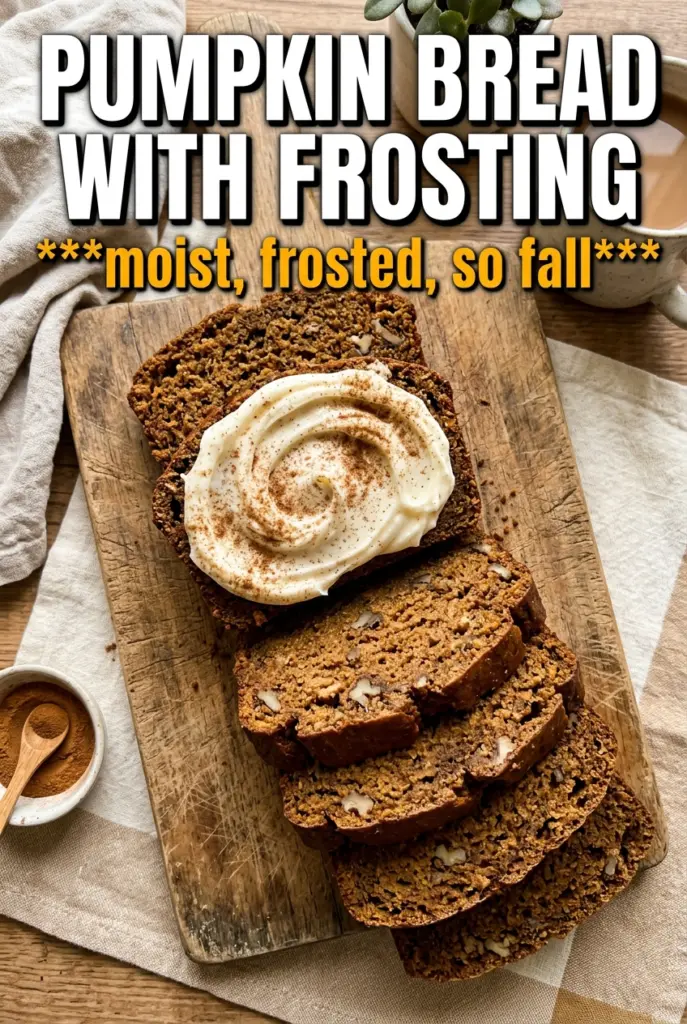
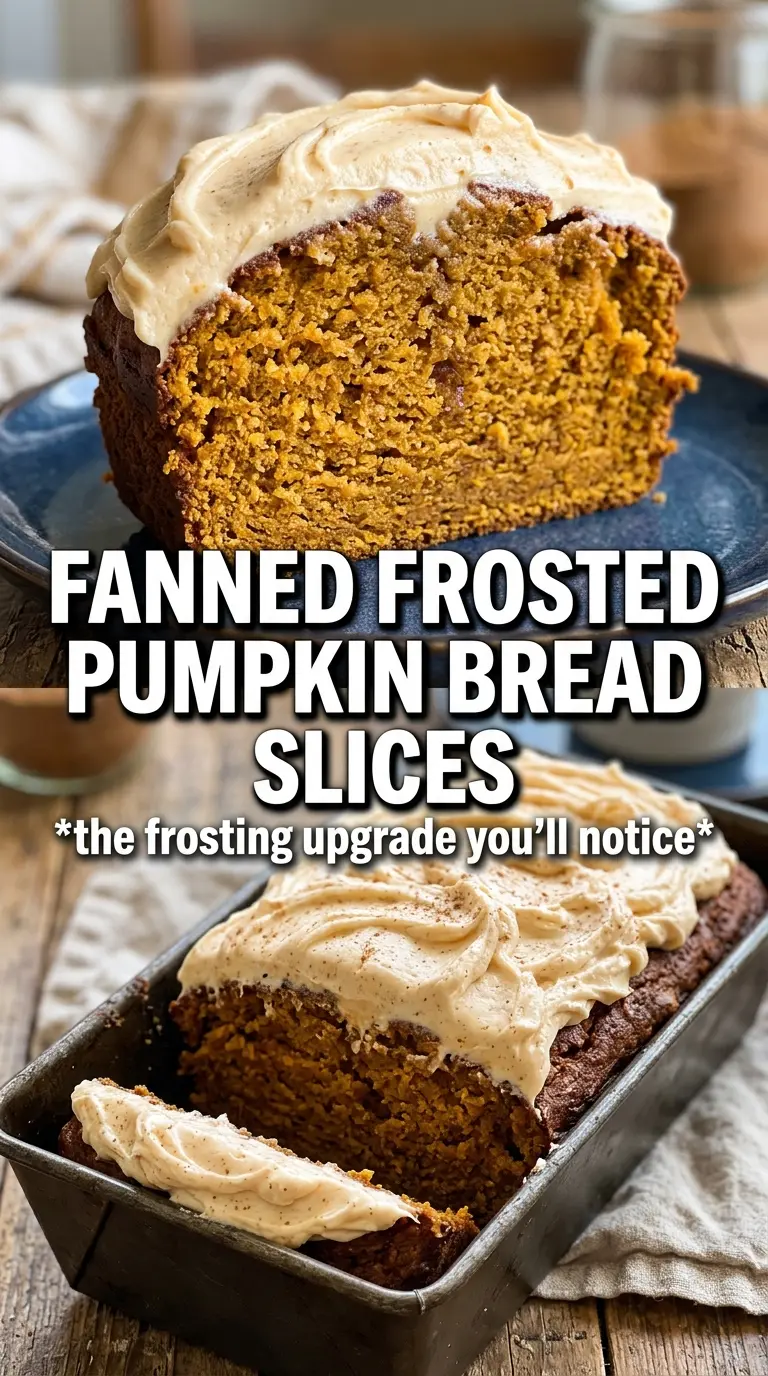
Warm pumpkin bread topped with a thick layer of cream cheese frosting has a way of disappearing faster than any loaf should. The crumb stays soft and moist for days, the spice lands gently instead of shouting, and that chilled frosting gives each slice a cool, tangy finish that makes the whole thing feel a little special without turning fussy. It’s the kind of loaf you slice once for breakfast and then keep finding excuses to cut “just one more” piece all afternoon.
This version works because the batter stays simple and balanced. Pumpkin puree brings moisture and body, oil keeps the crumb tender, and brown sugar adds a deeper note that plays nicely with cinnamon and pumpkin pie spice. The key is mixing only until the dry streaks disappear; overworking the batter is the fastest way to lose that soft texture. The frosting also matters here, and not just as a topping. Cream cheese, butter, and just enough milk beat into a spread that holds its shape but still slides cleanly over the cooled loaf.
Below, I’ve included the little details that make a difference, from the one mixing mistake that can toughen the bread to the best way to get frosting that stays thick instead of turning runny.
The loaf baked up tender and the frosting set just enough to slice cleanly. I loved that the cinnamon in the frosting didn’t get lost, and the pumpkin spice in the bread wasn’t overpowering at all.
Pin this pumpkin bread with cream cheese frosting for the softest spiced loaf with a thick, tangy frosting finish.
The Mistake That Makes Pumpkin Bread Dense Instead of Tender
Pumpkin bread can turn heavy fast if the batter gets overmixed or if the loaf is pulled too early and collapses in the center. The flour only needs to disappear into the wet ingredients; after that, stop stirring. Once the batter is smooth and streak-free, move it into the pan and let the oven do the work. A few small lumps are fine. A tough, overbeaten batter is not.
The other issue is doneness. Pumpkin bread often browns before the middle is set, which tricks people into taking it out too soon. The loaf is ready when a toothpick comes out clean or with only a few moist crumbs and the center springs back lightly when touched. If the top is getting dark before the middle is done, tent it loosely with foil for the last part of baking so the crust doesn’t overbake while the center finishes.
What Each Ingredient Is Actually Doing in This Loaf
- Pumpkin puree — This gives the loaf its moisture, color, and dense-yet-soft crumb. Use canned puree, not pumpkin pie filling; pie filling already has sugar and spices added, which throws the balance off.
- Oil — Oil keeps the bread tender for days, even after chilling. Butter can work, but it sets firmer once cooled, which makes the loaf feel less plush.
- Brown sugar — This adds a deeper molasses note and helps the bread stay moist. If you only have white sugar, the bread will still work, but the flavor will be a little flatter.
- Pumpkin pie spice and cinnamon — The blend gives the bread warmth without making it taste like a candle. If your spice blend is old, the loaf will taste muted, so fresh spice matters here.
- Cream cheese and butter — Both need to be softened so the frosting beats smooth instead of turning lumpy. Cold cream cheese is the quickest way to get a grainy finish.
- Powdered sugar — This thickens the frosting and helps it hold on top of the loaf. Add the milk slowly, because once frosting goes loose, there’s no easy way to pull it back.
Building the Loaf and Frosting It Without Breaking the Texture
Mixing the Dry and Wet Ingredients
Whisk the flour, baking soda, pumpkin pie spice, cinnamon, and salt in one bowl so the leavening and spices are evenly distributed. In another bowl, whisk the pumpkin puree, sugars, oil, eggs, and vanilla until the mixture looks smooth and glossy. When the dry ingredients go in, fold just until the flour disappears. The batter should look thick and a little rough, not whipped and airy.
Baking Until the Center Finishes
Pour the batter into a greased 9×5 loaf pan and smooth the top. Bake at 350°F for 60 to 65 minutes, checking near the end with a toothpick in the center. If it comes out with wet batter, give the loaf more time; if it comes out clean and the top springs back lightly, it’s done. Let the bread cool completely before frosting, or the topping will melt and slide right off.
Beating the Frosting to the Right Thickness
Beat the cream cheese and butter until there are no visible lumps. Add the powdered sugar, vanilla, and cinnamon, then thin with milk a teaspoon at a time until the frosting is thick but spreadable. The texture should hold a ridge when you lift the spoon, not run back into the bowl like glaze. If it looks loose, add more powdered sugar before it gets any softer.
Spreading and Serving
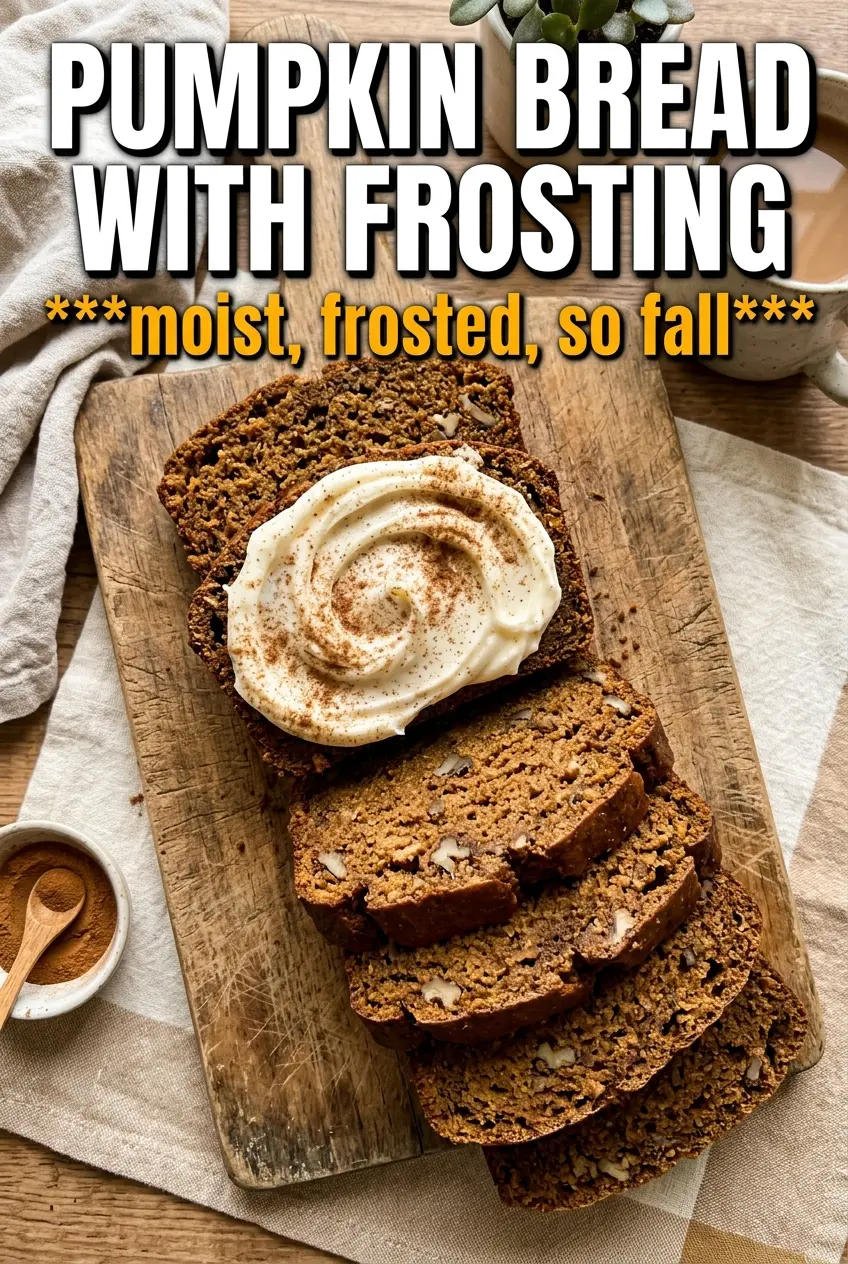
Spread the frosting generously over the cooled loaf, letting it drift slightly over the edges. A dusting of cinnamon on top gives it that finished look and adds a little extra warmth in each bite. Slice with a sharp knife for cleaner cuts, especially if the frosting has chilled and firmed up. The loaf tastes great right away, but the flavors settle even more after a short rest.
How to Adjust This Pumpkin Bread for Different Kitchens and Appetites
Dairy-Free Version
Use a dairy-free cream cheese and plant-based butter for the frosting, then add the milk only as needed. The bread itself is already dairy-free, so this swap keeps the texture close to the original without changing the loaf.
Less Sweet, More Breakfast-Forward
Cut the granulated sugar slightly and use a thinner layer of frosting instead of piling it high. The bread still bakes up moist, but the pumpkin and spice come forward more clearly, which is nice if you want a loaf that leans breakfast instead of dessert.
Walnut or Pecan Add-In
Fold 1/2 cup chopped walnuts or pecans into the batter at the very end. You’ll get a little crunch in each slice, but don’t add too many or the loaf can turn crumbly and fall apart when sliced.
Storage and Reheating
- Refrigerator: Store covered for up to 5 days. The frosting firms up in the fridge, so the slices cut cleaner after a short chill.
- Freezer: Freeze the unfrosted loaf for best results, tightly wrapped, for up to 3 months. Frosting doesn’t freeze as neatly, so add it after thawing if you can.
- Reheating: Warm individual slices for 10 to 15 seconds in the microwave if you want a softer crumb. Don’t heat too long or the frosting will melt and the bread can turn gummy.
Answers to the Questions Worth Asking
Pumpkin Bread With Cream Cheese Frosting
Ingredients
Equipment
Method
- Preheat oven to 350F, then grease a 9x5 loaf pan.
- Whisk together the dry ingredients until evenly combined.
- Whisk together the wet ingredients until smooth.
- Fold the wet into the dry just until combined, then pour the batter into the loaf pan.
- Bake 60-65 minutes, until a toothpick comes out clean.
- Cool the loaf completely before frosting.
- Beat the cream cheese and butter until smooth.
- Add powdered sugar, vanilla, cinnamon, and enough milk to make a thick but spreadable frosting; beat until smooth.
- Spread generously over the cooled loaf, then dust with cinnamon and serve.