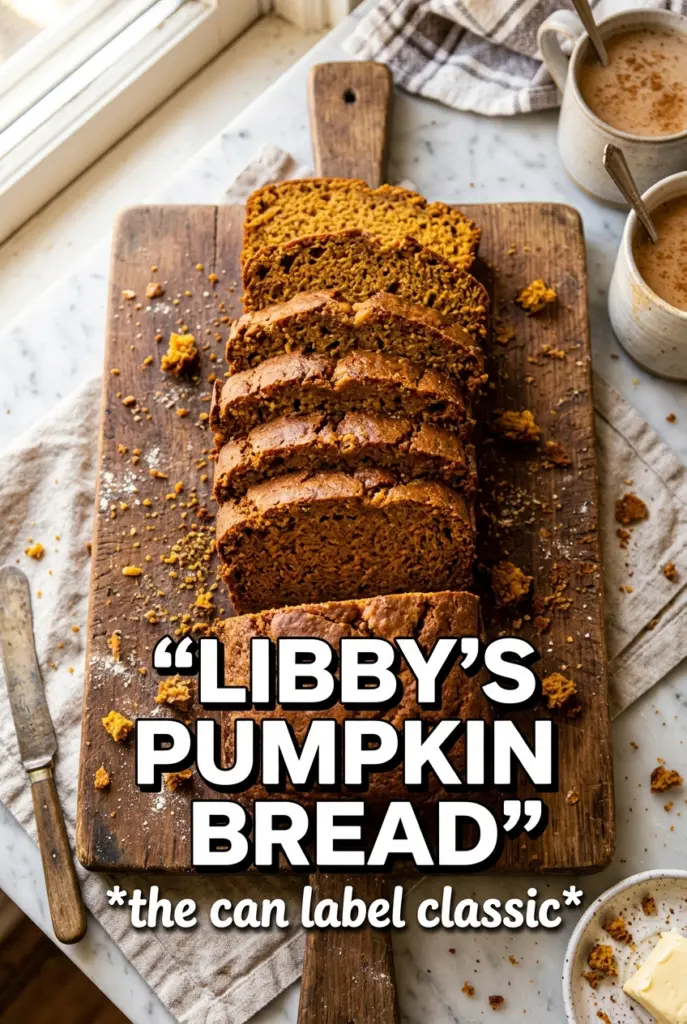
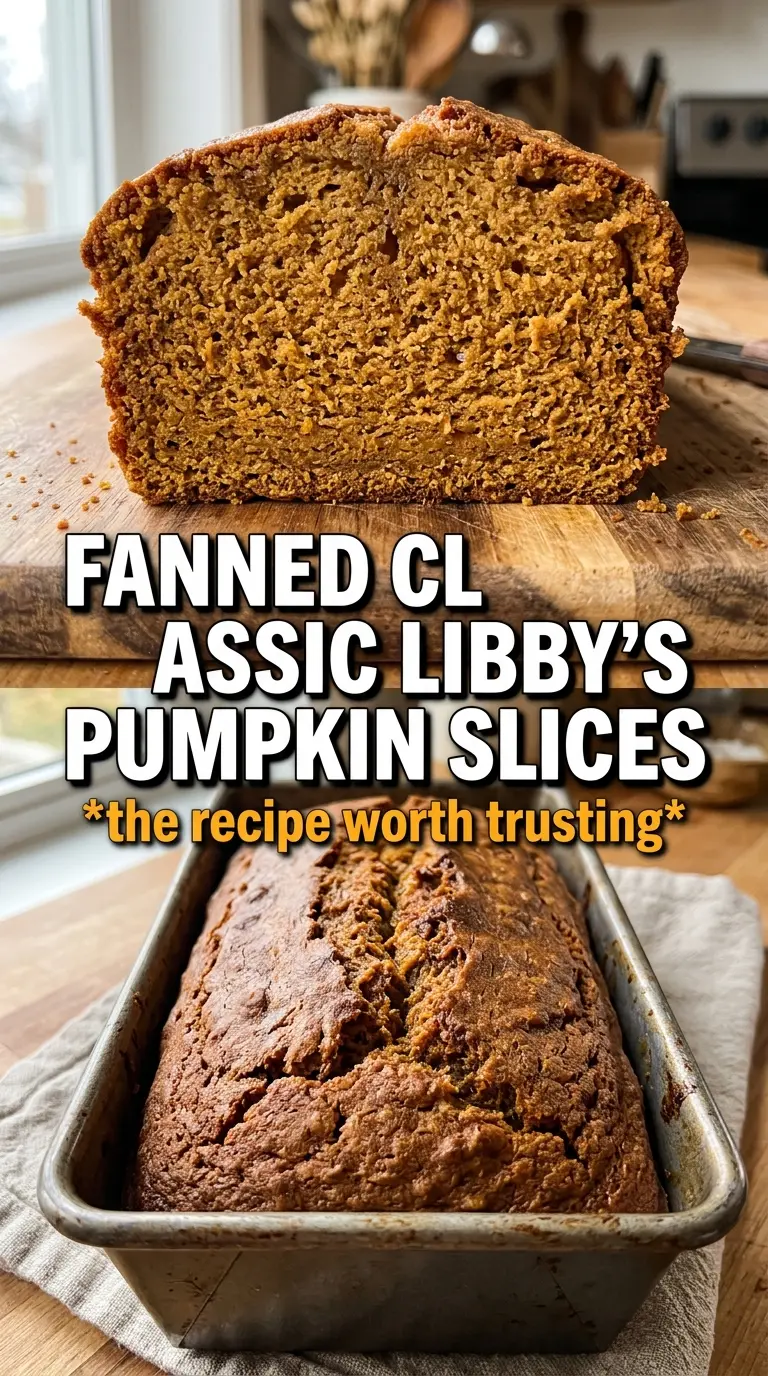
Libby’s Pumpkin Bread bakes up with a tall, domed top, a fine tender crumb, and that deep pumpkin-spice smell that fills the whole kitchen before the loaf even comes out of the oven. It slices cleanly once cooled, but the texture stays moist for days, which is exactly why this loaf earns a permanent spot in the breakfast rotation. It’s simple in the best way: no mixer, no complicated steps, just a straightforward batter that delivers the classic loaf people remember.
What makes this version work is balance. Libby’s pumpkin brings body and moisture without making the bread heavy, while the oil keeps the crumb soft long after baking. The spices are measured to taste like pumpkin bread, not just cinnamon bread with orange-colored batter, and the small amount of water loosens the mixture enough for an even rise. The key is stirring only until the flour disappears. Overmix it, and you’ll lose that tender crumb before the loaf ever goes in the oven.
Below, you’ll find the detail that matters most for a loaf like this: how to know when it’s baked through without drying it out, plus a few smart swaps if you want to make mini loaves or adjust the spice level.
The loaf rose beautifully and stayed moist all the way through the next day. I baked mine in a 9×5 pan, and the spice level was spot on without tasting too strong.
Save this classic Libby’s Pumpkin Bread for the mornings when you want a tall, moist loaf with the exact pumpkin spice balance people expect.
The Part That Keeps This Loaf Soft Instead of Dry
Most quick breads dry out because the batter gets worked too much or baked past the point of done. This loaf avoids both problems if you respect the mixing stage and start checking the center at the lower end of the bake window. The pumpkin puree and oil do the heavy lifting here, but they only help if the structure stays tender instead of tight.
The other detail that matters is the pan. A standard 9×5 loaf bakes differently than two smaller pans, so the timing changes more than people expect. If you use a smaller pan or divide the batter, the bread will set faster at the edges, and the center can go from perfect to dry in a matter of minutes.
- Libby’s 100% Pure Pumpkin — This is the ingredient that gives the loaf its body and signature flavor. Use the canned puree, not pumpkin pie filling, which already contains sugar and spices and throws off both the texture and balance.
- Vegetable oil — Oil keeps the crumb soft even after the bread cools completely. Butter can work, but it sets firmer once chilled, so the loaf won’t stay as tender on day two.
- Eggs — The eggs hold everything together and help the bread rise evenly. Bring them to room temperature if you can; cold eggs don’t blend as smoothly and can leave streaks in the batter.
- All-purpose flour — This gives the loaf its structure without making it heavy. Spoon it into the measuring cup and level it off, because packing in too much flour is one of the fastest ways to get a dry loaf.
What Each Ingredient Is Actually Doing in This Recipe
- Primary ingredient (the star) — Quality matters most. Choose the best you can find.
- Cooking medium (oil, butter, or broth) — This carries flavors and prevents dryness.
- Seasonings (salt, pepper, spices, herbs) — Layer flavors so nothing overpowers. Build depth gradually.
- Aromatics (garlic, onion, herbs) — Cook with fat to bloom flavors. Become the foundation.
- Supporting ingredients — Complement the main ingredient without overpowering it.
- Sauce or liquid (if applicable) — Brings flavors together. Balance richness with acid.
- Acid (lemon, vinegar, wine, or other) — Brightens and prevents flat-tasting results.
- Final finish (garnish, glaze, or sauce) — Prevents one-dimensional taste and adds visual appeal.
How to Mix It So the Crumb Stays Tender
Whisking the dry ingredients first
Start by whisking the flour, sugar, baking soda, spices, and salt in a large bowl until the color looks even all the way through. That step matters more than it sounds, because baking soda and spices need to be distributed before the wet ingredients go in. If you skip a thorough whisk, you can end up with bitter pockets of soda or uneven spice in the finished loaf.
Making the pumpkin mixture smooth
In the second bowl, whisk the pumpkin, oil, eggs, and water until the mixture looks glossy and uniform. The batter should look loose and smooth, not separated or streaked with egg whites. If the pumpkin is cold straight from the can, that’s fine, but don’t rush this part; a smooth wet mixture folds into the dry ingredients more evenly and keeps the crumb fine.
Stopping the batter at just combined
Pour the wet ingredients into the dry and stir only until the flour disappears. A few streaks are fine right before you stop, because the batter finishes combining as it settles in the pan. Overmixing develops the flour and makes the loaf tough, which is the opposite of what you want in a quick bread. Scrape the bowl from the bottom so no dry pockets are left behind, then get it into the pan right away.
Baking until the center sets
Bake until a toothpick inserted in the center comes out clean, or with just a few moist crumbs. The top should be deeply golden and the loaf should spring back lightly when touched in the middle. If the center still looks shiny, give it a few more minutes and check again. Pulling it too early leaves a gummy middle, but overbaking steals the moisture that makes this bread good for days.
Mini loaves for gifting
Divide the batter between two 7×3 pans and start checking them around the 50-minute mark. Smaller loaves bake faster at the edges, so they need closer attention near the end. You’ll get the same flavor in a more giftable size, but the crust-to-crumb ratio will be a little higher.
Dairy-free as written
This recipe already skips dairy, so no adaptation is needed there. That’s part of why the loaf stays soft after baking, since the oil keeps it tender without needing butter or milk. If you want a richer finish, serve it with butter or cream cheese at the table instead of baking that richness into the batter.
Warm spice variation
If you want a stronger spice presence, add a little extra cinnamon and a pinch more cloves, then keep the nutmeg restrained. That keeps the bread aromatic instead of sharp. Adding too much clove can take over the loaf fast, so small changes go a long way here.
Storage and Reheating
- Refrigerator: Store tightly wrapped for up to 5 days. The crumb stays moist, though the texture firms slightly when chilled.
- Freezer: Wrap the cooled loaf or individual slices well and freeze for up to 3 months. Slice first if you want grab-and-go portions.
- Reheating: Warm slices in a toaster oven or microwave just until soft and fragrant. Don’t overheat it, or the bread can turn dry at the edges before the center warms through.
Questions I Get Asked About This Recipe
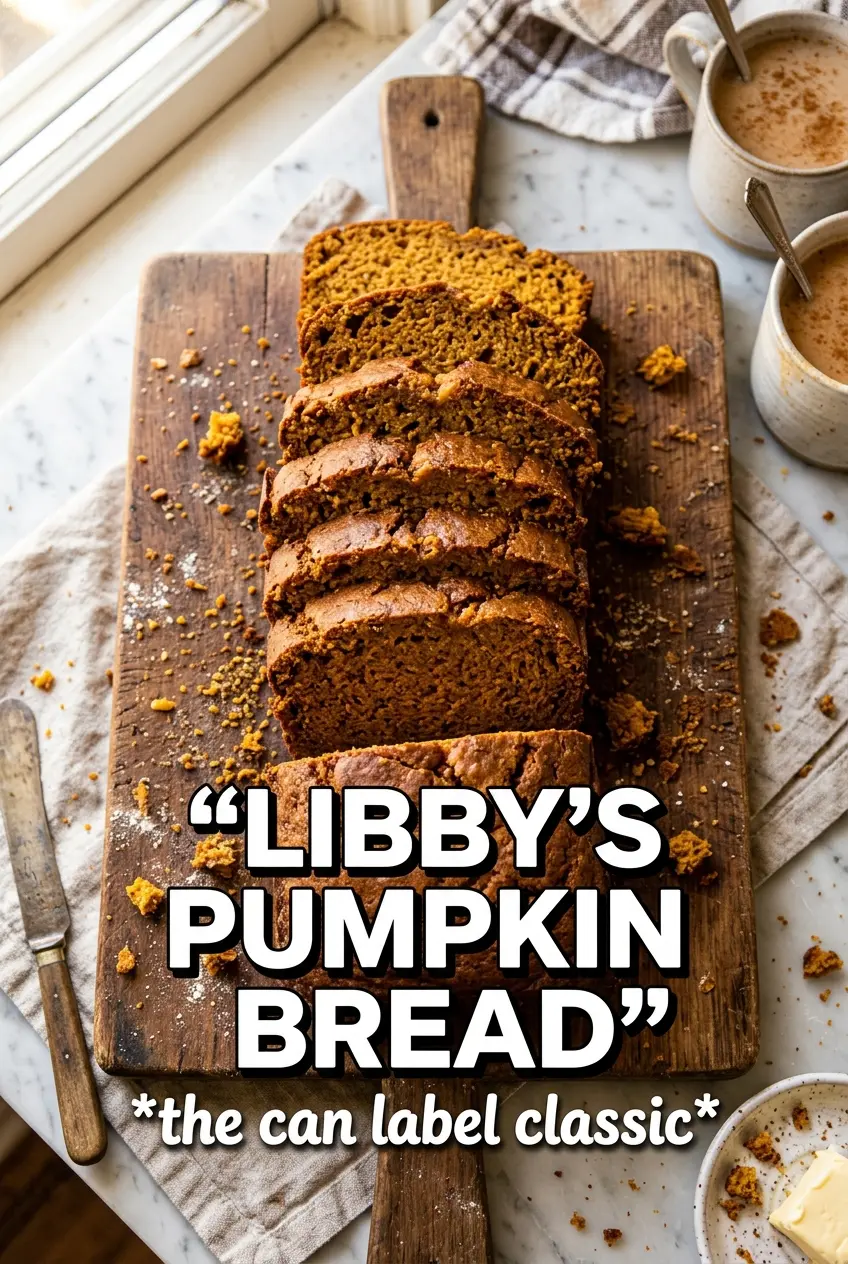
Libby's Pumpkin Bread
Ingredients
Equipment
Method
- Preheat the oven to 350F, then grease and flour one 9x5 loaf pan (or two 7x3 pans for mini loaves).
- Whisk all-purpose flour, granulated sugar, baking soda, cinnamon, nutmeg, cloves, allspice, and salt in a large bowl until evenly combined.
- Whisk Libby's 100% Pure Pumpkin, vegetable oil, eggs, and water in a separate bowl until smooth.
- Pour the wet ingredients into the dry ingredients and stir until just combined—do not overmix.
- Pour the batter into the prepared pan, then level the top so it bakes evenly.
- Bake at 350F for 60-65 minutes for a large loaf (or 50-55 minutes for mini loaves) until a toothpick inserted in the center comes out clean.
- Cool in the pan for 10 minutes, then remove and cool on a wire rack until warm.