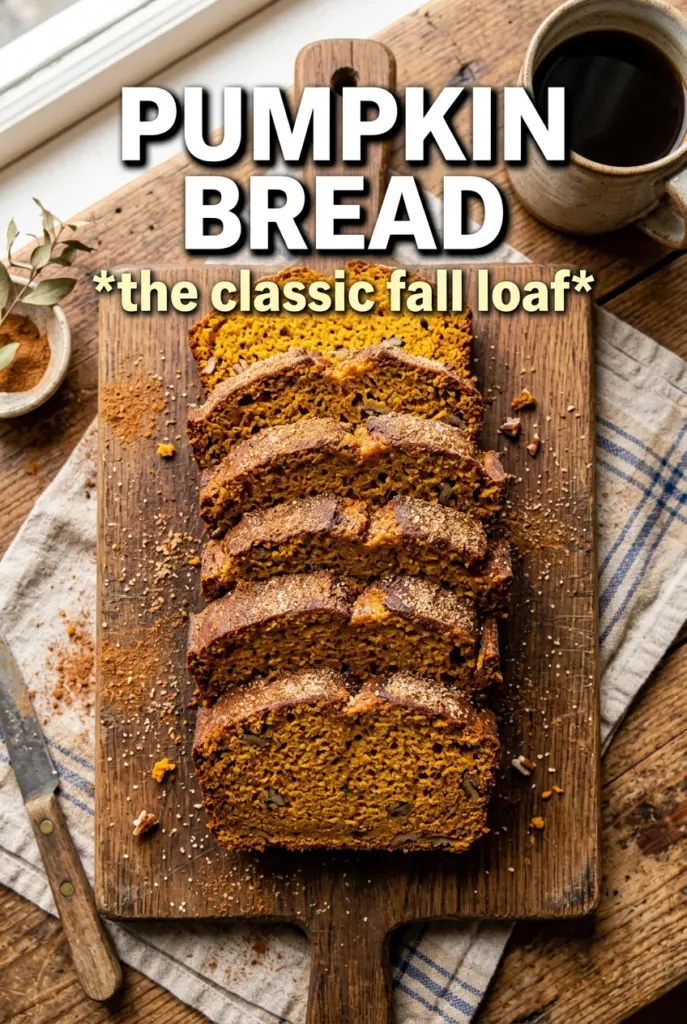
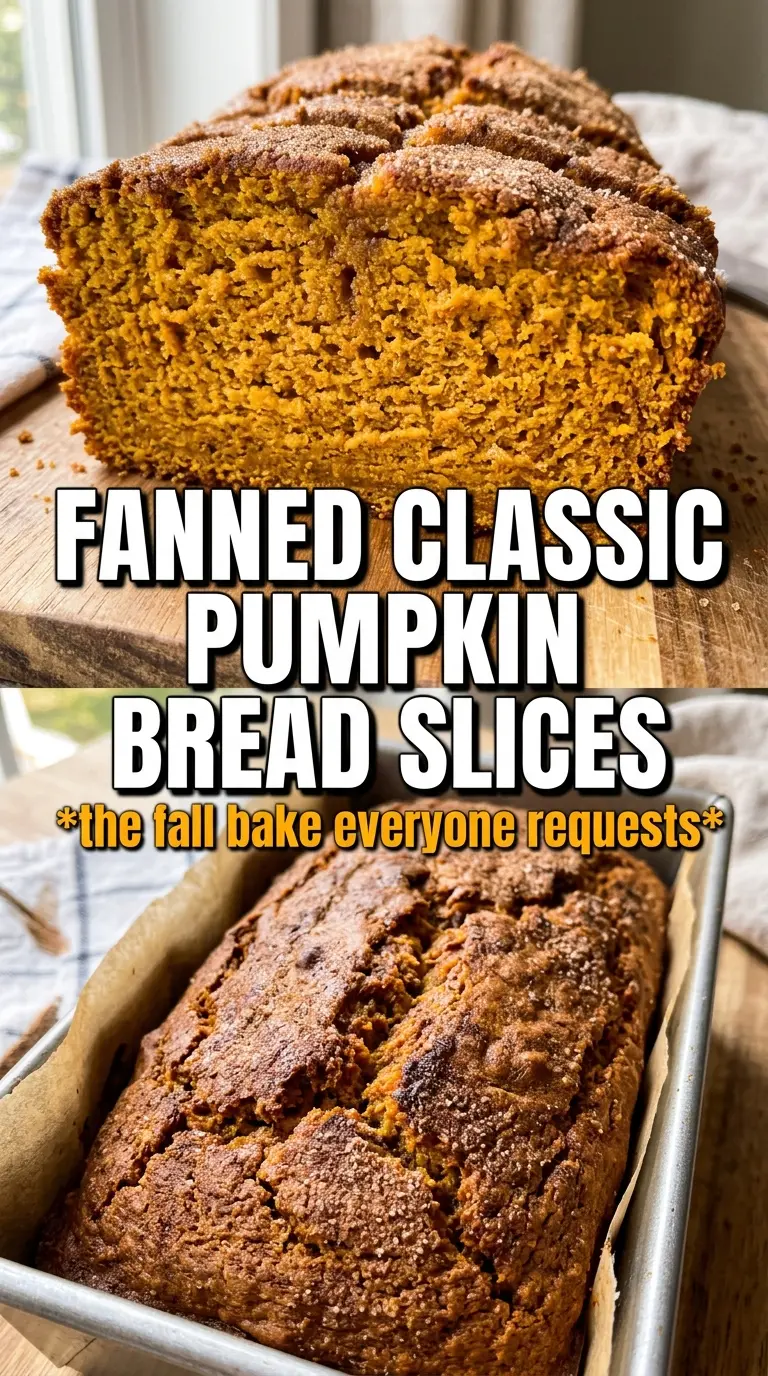
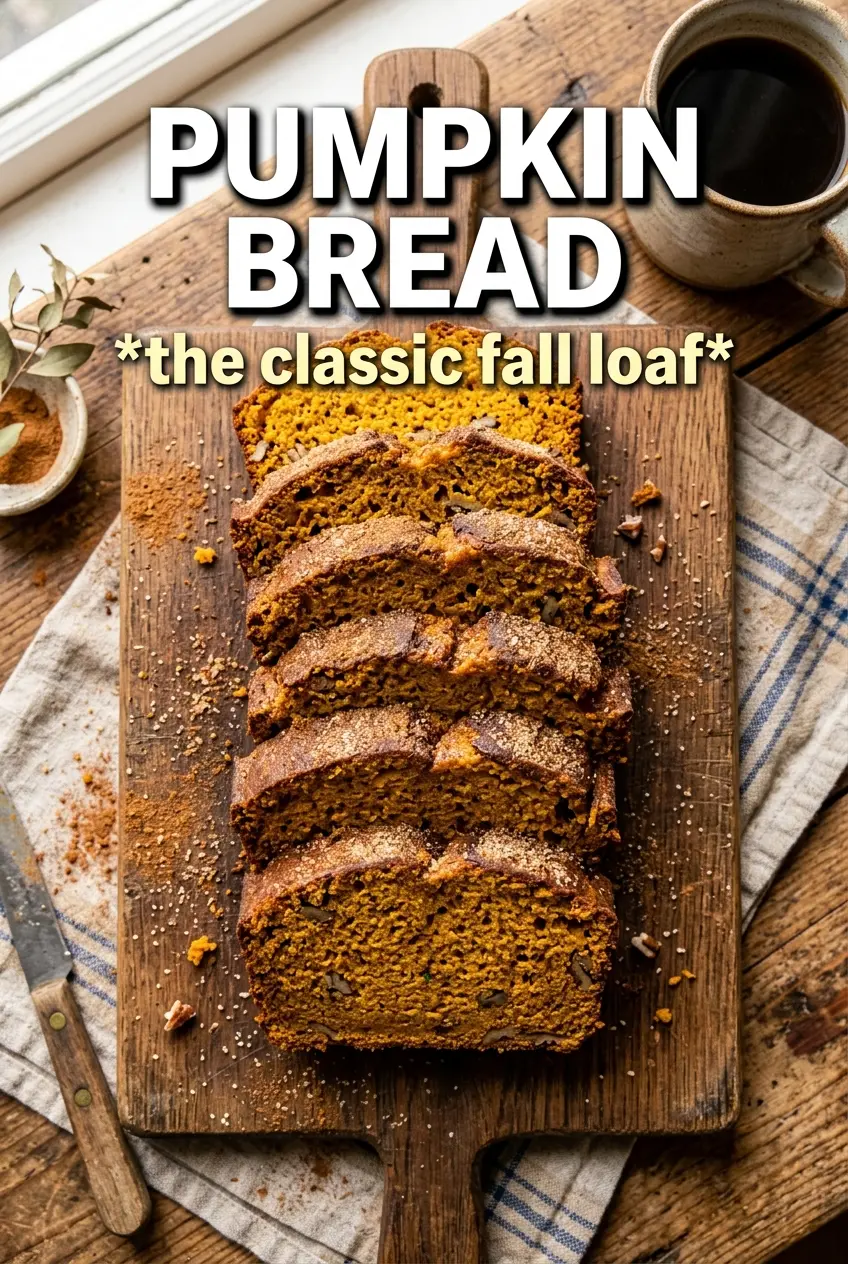
Sweet pumpkin bread bakes up with a deep golden crust, a soft, moist crumb, and that classic split right down the center that tells you the loaf rose the way it should. The flavor lands somewhere between cozy spice cake and a quick bread you can eat plain, buttered, or toasted with coffee. It holds together beautifully, but it still feels tender on the first bite, which is exactly why this loaf disappears fast.
The balance matters here. Pumpkin puree brings moisture and body, brown sugar adds a little depth, and the oil keeps the crumb soft even after the loaf cools. The spices are warm without taking over, so you still taste the pumpkin instead of just cinnamon. A gentle hand with the batter is the other key piece — once the flour goes in, overmixing is what turns a tender loaf dense and tough.
Below, you’ll find the small details that make this pumpkin bread bake evenly, slice cleanly, and stay moist for days. I’ve also included a few smart swaps and the storage notes I rely on when I want to bake one loaf now and keep another for later.
The loaf rose with that perfect crack on top and stayed so moist after cooling. I used buttermilk and the crumb was tender without being heavy, even on day three.
Like this pumpkin bread? Save it for the days when you want a moist loaf with warm spice and a crackly golden top.
The One Mistake That Makes Pumpkin Bread Heavy
Pumpkin bread fails most often for one simple reason: the batter gets worked too much after the flour goes in. Once you add the dry ingredients, stir only until the flour disappears. A few streaks are fine. They’ll finish blending in the oven, and that small restraint is what keeps the crumb tender instead of tight and rubbery.
The other trap is underbaking the center while waiting for the top to look done. This loaf needs enough time for the middle to set fully, or it sinks a little after cooling and slices gummy. A toothpick should come out clean from the center, not just the edges, and the loaf should feel set when you gently press the top.
- Mix gently: Fold the batter instead of beating it. That keeps the loaf soft.
- Bake long enough: Pumpkin batter is moist and needs the full 60 to 65 minutes in most ovens.
- Cool before slicing: Cutting too early releases steam and makes the crumb seem underdone.
What Each Ingredient Is Doing in This Loaf
- Pumpkin puree — This is the backbone of the loaf. It adds moisture, body, and that deep orange color. Use plain pumpkin puree, not pumpkin pie filling, or the sweetness and spices will throw off the balance.
- Brown sugar — This adds a little molasses depth and helps the bread stay tender. If you swap in all white sugar, the loaf will still work, but it won’t taste as rich.
- Vegetable oil — Oil keeps quick breads softer than butter does once they cool. Melted butter gives a slightly richer flavor, but the crumb won’t stay quite as plush for as long.
- Milk or buttermilk — Milk gives you a straightforward tender crumb. Buttermilk adds a slight tang and makes the loaf taste a little fuller; if you use it, the bread bakes up with a softer finish.
- Pumpkin pie spice and cinnamon — These do the seasoning work without making the loaf taste like dessert overload. If your spice blend is old, the bread will taste flat, so fresh spice matters here more than in many baked goods.
How to Build the Batter So the Loaf Stays Tender
Whisk the dry ingredients first
Start with the flour, baking soda, pumpkin pie spice, cinnamon, nutmeg, and salt in one bowl. Whisking them together now spreads the leavener and spices evenly, which keeps the loaf from tasting patchy. If you skip this step, you can end up with little pockets of baking soda or a spice-heavy bite in one slice and a bland one in the next.
Stir the wet ingredients until completely smooth
In the second bowl, whisk the pumpkin, both sugars, oil, eggs, vanilla, and milk until the mixture looks glossy and even. The sugar should be mostly dissolved, and there shouldn’t be streaks of egg white left behind. This step matters because a smooth wet base blends into the dry ingredients more evenly and helps the finished loaf bake with a fine, even crumb.
Fold just until the flour disappears
Pour the wet mixture into the dry ingredients and fold with a spatula. Stop as soon as the batter looks combined, even if you still see a few flour streaks. Overmixing develops the flour and makes the loaf dense, which is the fastest way to lose that soft, sliceable texture.
Bake until the center is set
Scrape the batter into a greased 9×5 loaf pan and smooth the top. Bake at 350°F for 60 to 65 minutes, watching for a deep golden top and a toothpick that comes out clean from the center. If the top browns before the middle is done, lay a loose sheet of foil over the pan for the last 10 to 15 minutes.
Make It Dairy-Free
Use the milk option and keep the rest of the recipe as written. The loaf is naturally dairy-free this way, and you won’t lose any moisture or structure. Buttermilk adds a little tang, but it’s not needed for success.
Swap in Melted Butter
If you want a slightly richer, more buttery flavor, replace the oil with melted butter in the same amount. The crumb will be a little firmer once cooled, and the loaf may not stay soft quite as long, but the flavor turns more bakery-style.
Gluten-Free Version
Use a 1:1 gluten-free baking flour that contains xanthan gum. The loaf should still rise and slice well, but don’t overmix it after the flour goes in, since gluten-free batters can turn gummy if they’re handled too long.
Add Chocolate Chips or Nuts
Fold in up to 3/4 cup of chocolate chips or chopped walnuts at the very end. Tossing them in a spoonful of flour helps them stay suspended instead of sinking. Chocolate makes it more dessert-like, while walnuts add a little crunch and contrast.
Storage and Reheating
- Refrigerator: Store wrapped or in an airtight container for up to 5 days. The crumb stays moist, though the spices mellow a little by day two.
- Freezer: This freezes well. Wrap the cooled loaf or individual slices tightly in plastic, then foil, and freeze for up to 3 months.
- Reheating: Warm slices in the toaster or a low oven until just heated through. If you microwave it too long, the crumb turns sticky instead of tender.
Questions I Get Asked About This Pumpkin Bread
Pumpkin Bread
Ingredients
Equipment
Method
- Preheat oven to 350F. Grease a 9x5 loaf pan so the bread releases cleanly.
- In a large bowl, whisk all-purpose flour, baking soda, pumpkin pie spice, cinnamon, nutmeg, and salt until evenly combined. Stop when the spices are fully dispersed and you don’t see streaks.
- In a separate bowl, whisk pumpkin puree, granulated sugar, brown sugar, vegetable oil, eggs, vanilla extract, and milk or buttermilk until completely smooth. The mixture should look glossy with no sugar lumps.
- Pour the wet mixture into the dry ingredients and fold until just combined. Do not overmix—stop when the batter looks uniform with a few streaks of flour remaining.
- Pour the batter into the prepared loaf pan and smooth the top. This helps encourage an even crack along the surface.
- Bake for 60–65 minutes at 350F until a toothpick inserted in the center comes out clean. The loaf should be golden and spring back lightly when pressed.
- Cool in the pan for 15 minutes. This sets the crumb before you move the loaf.
- Remove the loaf from the pan and cool completely before slicing. Wait until fully cool to keep the crumb moist and tidy.