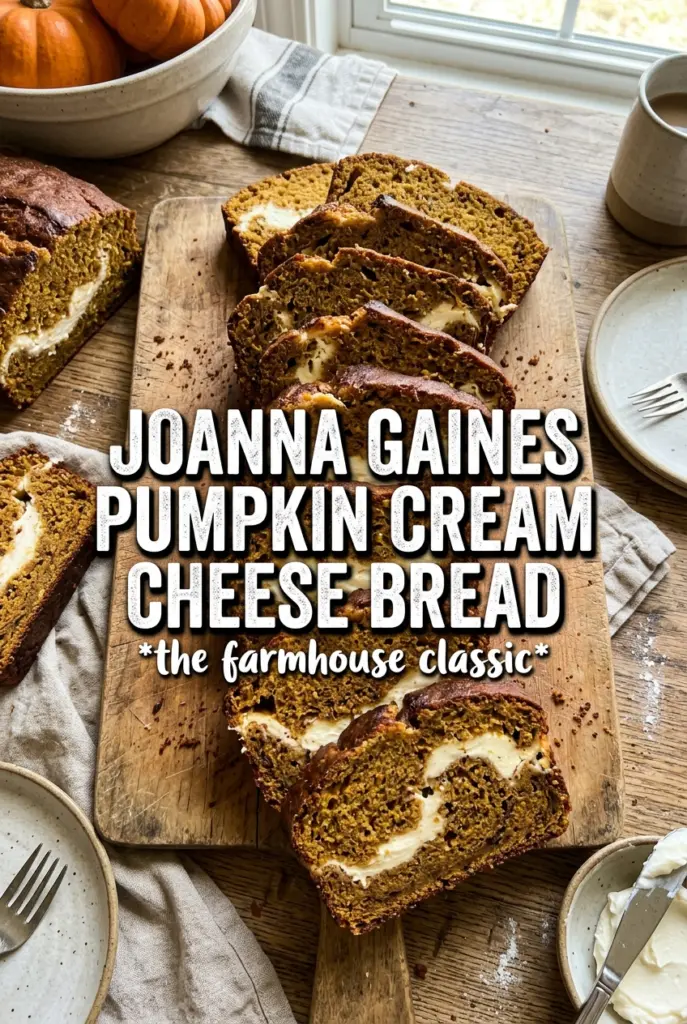
Pumpkin cream cheese bread is the kind of loaf that disappears one slice at a time, starting with the end pieces and ending with someone standing at the cutting board for “just one more”. The pumpkin crumb stays soft and moist for days, while the cream cheese layer bakes into a rich ribbon that cuts cleanly when the loaf has cooled all the way. It looks rustic, slices beautifully, and tastes like a bakery loaf made at home.
What makes this version work is the balance. The batter is sweet enough to feel like a treat, but the pumpkin and spices keep it grounded, and the cream cheese filling adds a tangy middle that keeps every bite interesting. The loaf pans matter here too; using two standard 9×5 pans gives the batter room to bake through without the center staying gummy. If you rush the cooling, the swirl will smear and the slices will break apart, so patience pays off.
Below, I’ll walk through the little details that keep the cream cheese layer smooth and the pumpkin loaf tender. There’s also a simple way to keep the tops from overbrowning before the centers are done, which is the part most people need once they’ve made a loaf like this more than once.
The cream cheese swirl baked up perfectly instead of sinking, and the loaf stayed super moist even on day three. I used two pans like you said and the centers were done right on time.
Save this pumpkin cream cheese bread for the mornings when you want a soft, spiced loaf with that thick cream cheese ribbon in every slice.
The Trick to Keeping the Cream Cheese Layer from Disappearing into the Loaf
The cream cheese filling needs to be smooth and thick before it ever touches the batter. If it still has cold little bits in it, those pieces melt unevenly and can leave gaps instead of a clean swirl. I beat the filling until it looks satiny, then stop. Overmixing adds too much air, and airy filling is more likely to drift into the batter instead of sitting in a distinct layer.
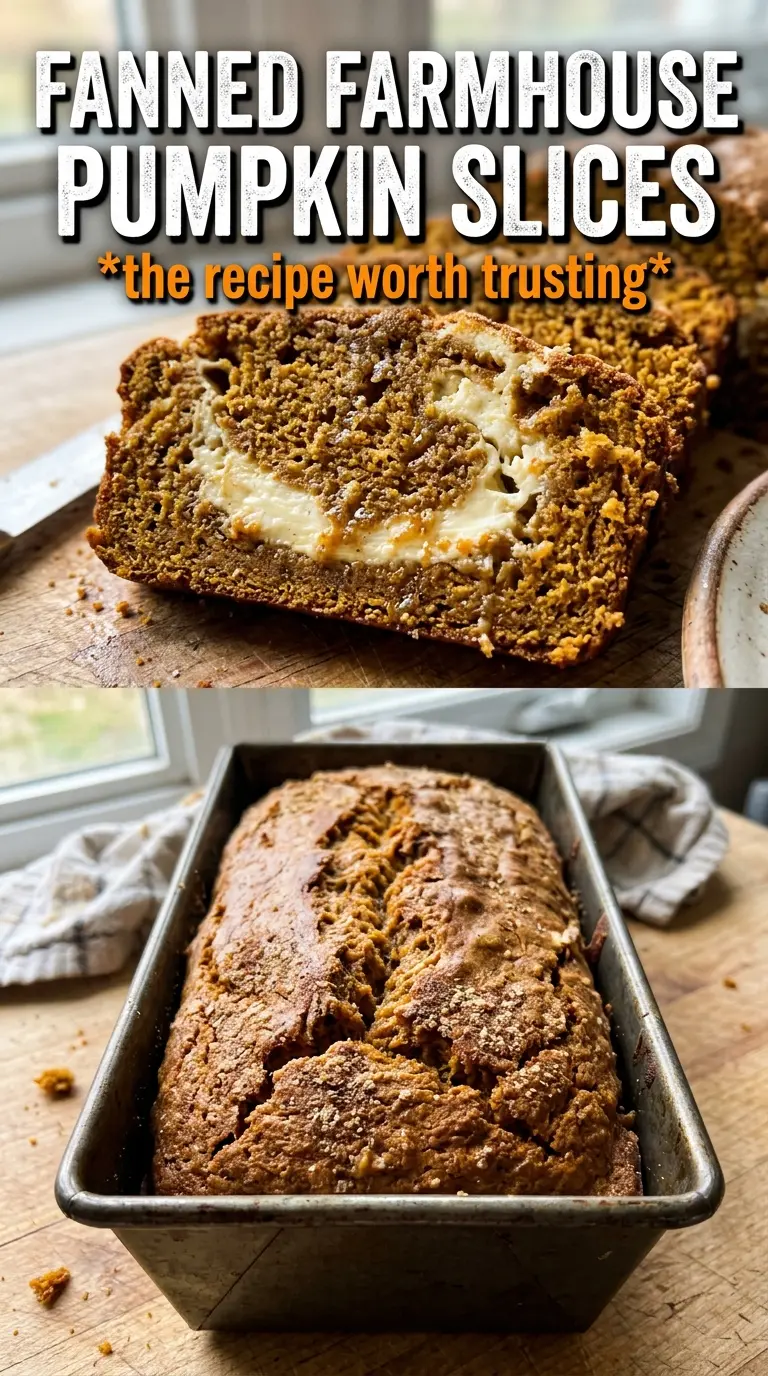
The other piece people miss is the batter thickness. This pumpkin batter is heavy enough to support the filling, which is why the loaf can hold that center ribbon without collapsing. When you divide the batter and spoon the filling down the middle, don’t dig it all the way to the pan edges. A center line gives you the best swirl and the cleanest slice.
- Pumpkin puree — Use plain pumpkin puree, not pumpkin pie filling. Pie filling already has sugar and spices added, and it throws off both the texture and the sweetness of the loaf.
- Vegetable oil — Oil keeps this bread tender longer than butter would. It’s the reason the crumb stays moist even after a full day on the counter.
- Cream cheese — Full-fat cream cheese gives the filling the right body. Neufchâtel works in a pinch, but the layer will be looser and a little less rich.
- Warm spices — Cinnamon, nutmeg, and cloves bring depth, but the cloves need to stay in the small amount listed. Too much clove takes over fast and makes the loaf taste sharp instead of cozy.
- All-purpose flour — This is the right choice for a loaf that slices neatly. Bread flour makes the crumb tougher, and cake flour can make the structure too delicate for the cream cheese filling.
What Each Ingredient Is Actually Doing in This Recipe
- Primary ingredient (the star) — Quality matters most. Choose the best you can find.
- Cooking medium (oil, butter, or broth) — This carries flavors and prevents dryness.
- Seasonings (salt, pepper, spices, herbs) — Layer flavors so nothing overpowers. Build depth gradually.
- Aromatics (garlic, onion, herbs) — Cook with fat to bloom flavors. Become the foundation.
- Supporting ingredients — Complement the main ingredient without overpowering it.
- Sauce or liquid (if applicable) — Brings flavors together. Balance richness with acid.
- Acid (lemon, vinegar, wine, or other) — Brightens and prevents flat-tasting results.
- Final finish (garnish, glaze, or sauce) — Prevents one-dimensional taste and adds visual appeal.
Building the Batter and Filling So the Loaf Bakes Evenly
Smoothing the Cream Cheese First
Beat the cream cheese filling until it’s completely smooth, with no tiny lumps left in the bowl. Add the sugar, egg, and vanilla just until the mixture looks uniform and glossy. If the cream cheese is still cold, it will fight the egg and turn grainy, so let it soften on the counter before you start. A smooth filling spreads in a clean line and bakes into a distinct center instead of a patchy pocket.
Bringing the Pumpkin Batter Together
Whisk the dry ingredients in one bowl and the wet ingredients in another until the pumpkin mixture is silky and the sugar no longer looks gritty. Fold the dry into the wet just until the flour disappears. If you keep stirring past that point, the loaf gets tighter and a little chewy instead of tender. A few streaks of flour are better than a batter that’s been beaten smooth for no reason.
Layering for a Center Swirl
Divide half the batter between the two pans, then spoon the cream cheese filling down the middle of each loaf. Top with the remaining batter and use a knife to make one or two gentle passes through the center. Don’t over-swirl or the filling will vanish into the batter. The goal is a visible ribbon, not marbling from edge to edge.
Baking Until the Middle Sets
Bake until a toothpick inserted near the edge comes out clean and the tops spring back lightly when touched. The center can still look a little softer than the edges, and that’s fine because the loaf keeps setting as it cools. If the tops brown too quickly, tent them loosely with foil near the end of the bake. Pulling the loaves too early leaves you with a gummy middle, especially right under the cream cheese layer.
Make It Gluten-Free Without Losing the Swirl
Use a 1:1 gluten-free baking blend that includes xanthan gum. The loaf will still be moist and sliceable, but the crumb may be a touch more delicate, so let it cool completely before moving it from the pans.
Swap the Oil for Melted Butter
Melted butter gives the loaf a slightly richer, more cake-like flavor, but it won’t stay as soft on day three. Keep the butter warm, not hot, so it doesn’t start cooking the eggs when you mix the batter.
Cut the Sugar for a Less Sweet Slice
You can reduce the granulated sugar in the loaf by up to 1/2 cup without hurting the structure. The bread will taste more pumpkin-forward and a little less bakery-style sweet, which works well if you’re serving it for breakfast.
Storage and Reheating
- Refrigerator: Store covered for up to 5 days. The cream cheese layer means it’s best kept chilled once cooled.
- Freezer: Freeze individual slices or whole cooled loaves tightly wrapped for up to 2 months. Thaw in the refrigerator overnight for the best texture.
- Reheating: Warm slices briefly in the microwave or toaster oven until just heated through. Don’t overheat it or the cream cheese center can turn soft and a little greasy.
Answers to the Questions Worth Asking
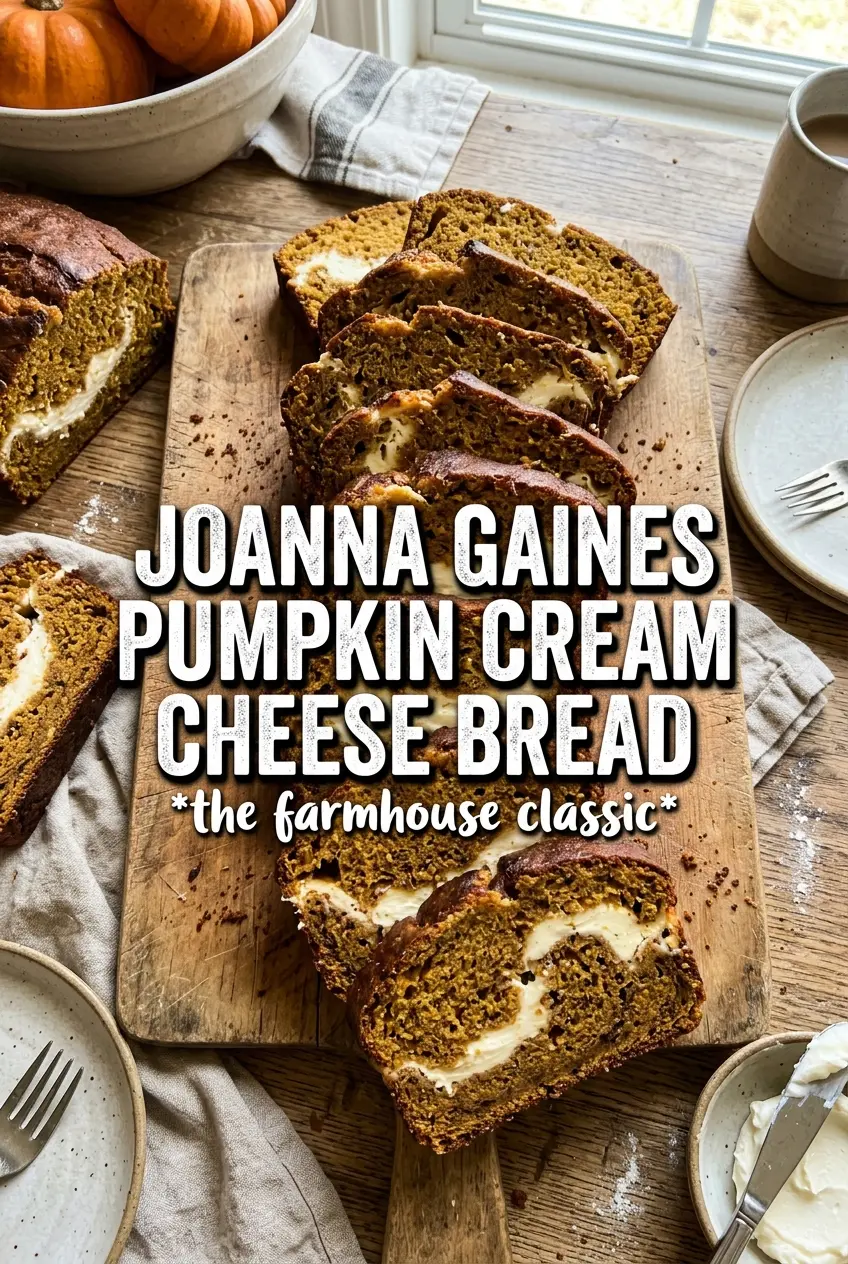
Joanna Gaines Pumpkin Cream Cheese Bread
Ingredients
Equipment
Method
- Preheat the oven to 350°F and grease two 9x5 loaf pans.
- Beat the cream cheese filling until completely smooth, then set it aside.
- Whisk the all-purpose flour, baking soda, cinnamon, nutmeg, cloves, and salt in a large bowl.
- Whisk the granulated sugar, pumpkin puree, eggs, vegetable oil, and water until smooth.
- Fold the dry mixture into the wet mixture until just combined.
- Divide half the batter between both pans and spoon the cream cheese filling down the center of each loaf.
- Top each loaf with the remaining batter and swirl gently with a knife.
- Bake for 60-65 minutes, until a toothpick inserted at the edge comes out clean.
- Cool completely before slicing.