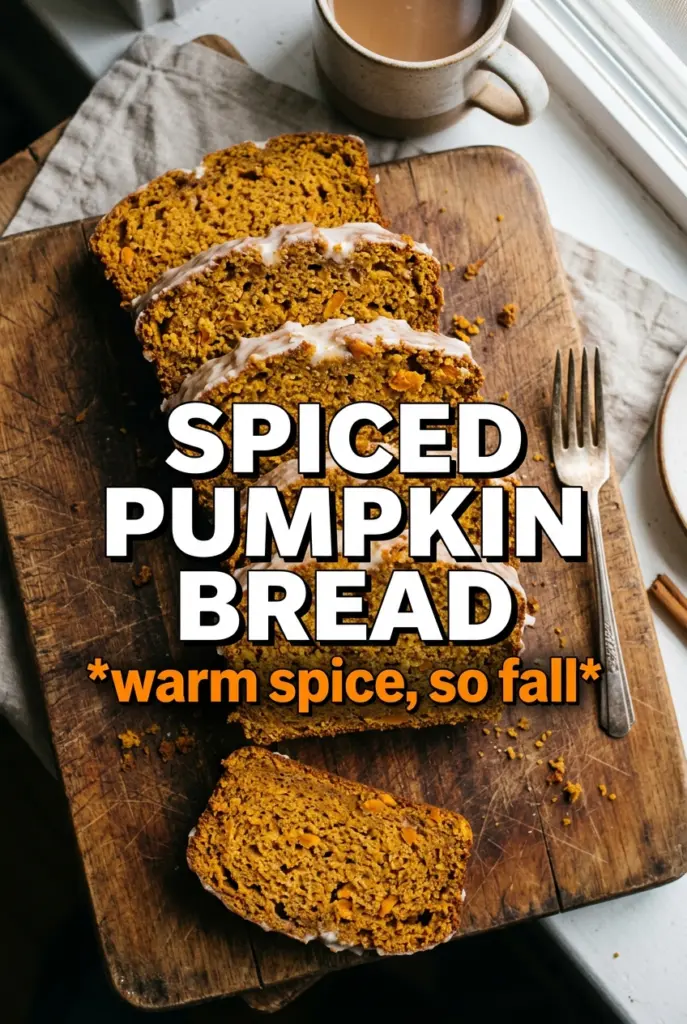
Spiced pumpkin bread should taste deep, plush, and warmly aromatic, with a tender crumb that stays moist for days and a top that bakes into a dark golden cap. The best loaves don’t just smell like cinnamon. They carry layers of spice that build on each other — ginger for brightness, cardamom for perfume, cloves for depth, and a little black pepper to wake everything up.
This version works because the pumpkin puree, brown sugar, molasses, and oil all pull in the same direction. Pumpkin brings moisture, brown sugar adds softness and caramel notes, and molasses gives the loaf a richer edge that keeps it from tasting flat. The spice blend is balanced, not crowded, so every bite still tastes like bread, not potpourri.
Below, I’ll show you the small details that keep the crumb tender and the flavor layered, plus how to finish it with a brown butter glaze that tastes as good as it looks.
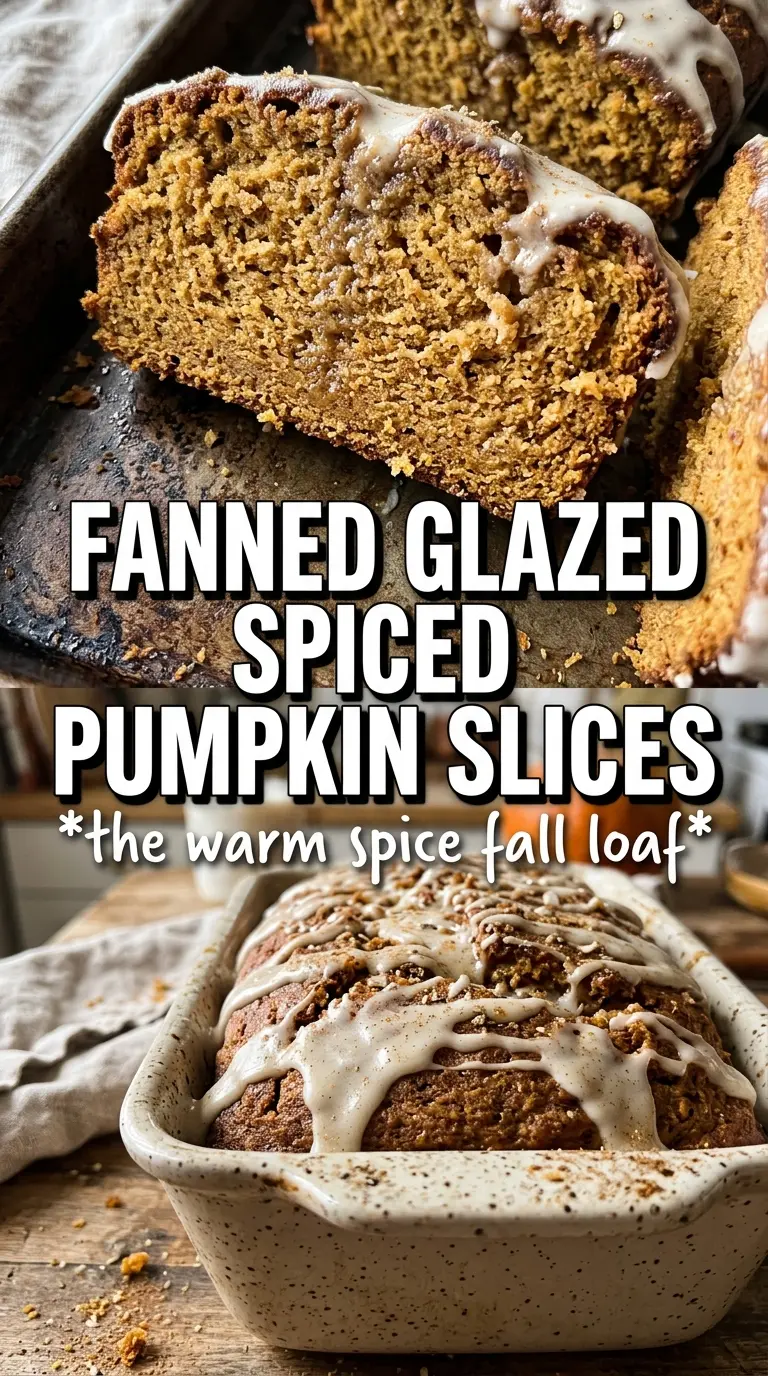
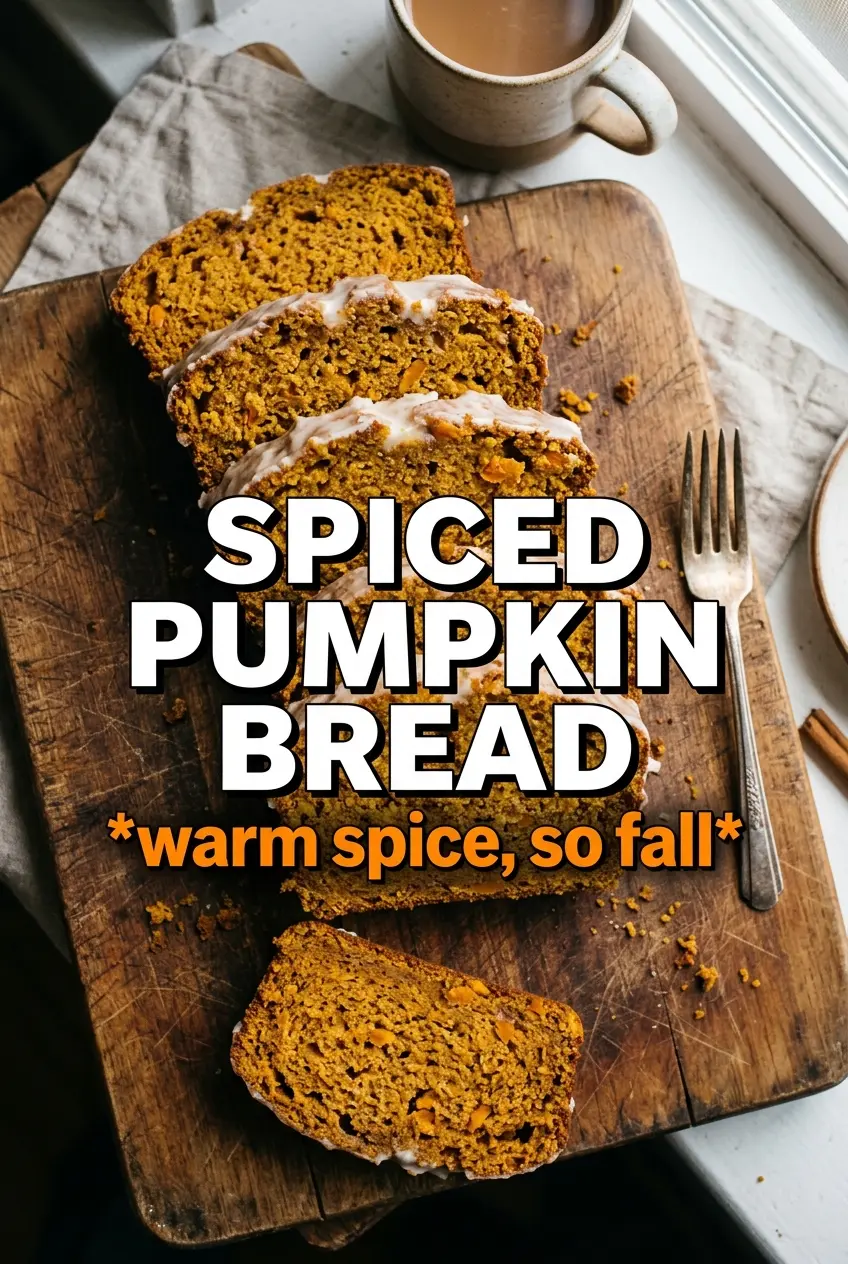
The loaf baked up with a perfect domed top and the crumb stayed moist for days. The black pepper and cardamom made the spice flavor taste deeper instead of just sweet.
Love the deep spice and brown butter glaze? Save this spiced pumpkin bread for cozy breakfasts and late-afternoon slices with coffee.
The Extra Spices Keep the Loaf from Tasting Flat
Most pumpkin breads lean hard on cinnamon and stop there, which is why they can taste sweet but one-note. Here, the cardamom, cloves, allspice, ginger, and black pepper give the loaf a longer finish. That doesn’t mean it tastes spicy in a hot way; it means the flavor keeps changing as you chew.
The other thing that matters is not overmixing once the flour goes in. Pumpkin batter should look thick and a little glossy, not whipped. If you stir until it looks completely smooth, you’ll tighten the crumb and lose that soft, bakery-style texture.
- Pumpkin puree — Use plain canned puree, not pumpkin pie filling. Pie filling is already sweetened and spiced, which throws off both the texture and the balance of this loaf.
- Molasses — Just two tablespoons deepens the color and gives the bread a rounded, almost smoky edge. It’s not enough to make the loaf taste like molasses cake, but it is enough to make the spices taste bigger.
- Black pepper — It sounds unusual, but it quietly sharpens the cinnamon and ginger. Don’t skip it unless you have to; you won’t taste pepper, just more depth.
What Each Ingredient Is Actually Doing in the Batter
- All-purpose flour — This gives the loaf enough structure to slice cleanly without turning dense. Bread flour would make it chewier than you want; cake flour would be too fragile for this kind of batter.
- Baking soda — Pumpkin is acidic enough to help the soda do its job, which gives the loaf lift and a lighter crumb. If your loaf comes out too heavy, stale baking soda is one of the first things I’d check.
- Brown sugar and granulated sugar — The granulated sugar sweetens cleanly, while the brown sugar brings moisture and a hint of caramel. If you swap in all brown sugar, the loaf gets a little heavier and more compact.
- Vegetable oil — Oil keeps the bread soft even after it cools, which is what you want in a quick bread that you’ll slice for several days. Melted butter tastes great, but it sets firmer and won’t stay as tender.
- Eggs — These bind everything together and help the loaf rise evenly. Cold eggs can be used in a pinch, but room-temperature eggs blend faster and help the batter emulsify more smoothly.
Getting the Batter Mixed So the Crumb Stays Tender
Whisk the dry ingredients first
Whisk the flour, baking soda, salt, and every spice together until the mix looks evenly speckled. That step matters because the spices are fine and potent; if they aren’t dispersed now, you’ll get little pockets of heat and bland bites later. This is also the easiest moment to catch a clump of cinnamon or baking soda before it ends up in the loaf.
Build the wet mixture until it looks smooth and glossy
Whisk the pumpkin, sugars, oil, eggs, vanilla, and molasses until the mixture thickens slightly and looks completely blended. You’re not trying to whip in air here. You’re dissolving the sugars and dispersing the molasses so the loaf bakes with an even color and a moist, dense-but-light crumb.
Stop mixing as soon as the flour disappears
Fold the dry ingredients into the wet just until no streaks of flour remain. A few small lumps are fine; overmixing is what gives quick bread a tough, tunneled interior. Scrape the bottom of the bowl with a spatula, because unincorporated flour likes to hide there and bake into a gummy stripe.
Bake until the center is set, not dry
Pour the batter into a greased 9×5 loaf pan and bake until the top is deeply browned and a tester comes out with a few moist crumbs, about 60 to 65 minutes. If the top is darkening too fast before the center is done, tent it loosely with foil for the last 15 minutes. Let the loaf cool completely before glazing, or the glaze will melt right off instead of sitting in that glossy layer on top.
How to Adapt This for a Different Pantry or a Different Finish
Dairy-Free as Written
The loaf itself is already dairy-free because it uses oil instead of butter. For the glaze, swap the milk for any unsweetened non-dairy milk. Oat milk gives the smoothest finish, while almond milk keeps the glaze a little lighter.
Skip the Glaze for a Less Sweet Breakfast Loaf
The bread is rich enough to stand on its own. If you want something better suited to toast-and-butter mornings, leave off the glaze and dust the top with a little cinnamon sugar before baking for a gentle crunch instead of a sugary finish.
Make It with a Gluten-Free Blend
Use a 1:1 gluten-free baking flour that includes xanthan gum. The loaf will still be moist, but it may need the full bake time and a longer cool before slicing because gluten-free quick breads set a little more slowly.
Storage and Reheating
- Refrigerator: Keep tightly wrapped for up to 5 days. The loaf stays moist, but the spice flavor softens a little after day two.
- Freezer: This freezes well. Wrap the cooled loaf or individual slices tightly in plastic, then foil, and freeze for up to 3 months.
- Reheating: Warm slices in a toaster oven or microwave just until heated through. If you overheat it, the crumb dries out fast and the glaze turns sticky instead of silky.
Answers to the Questions Worth Asking
Spiced Pumpkin Bread
Ingredients
Equipment
Method
- Preheat the oven to 350F, then grease a 9x5 loaf pan.
- Whisk all-purpose flour, baking soda, cinnamon, ginger, cardamom, nutmeg, cloves, allspice, black pepper, and salt until evenly combined.
- Whisk pumpkin puree, granulated sugar, brown sugar, vegetable oil, eggs, vanilla, and molasses until smooth.
- Fold the dry ingredients into the wet ingredients until just combined, then pour the batter into the greased loaf pan.
- Bake at 350F for 60-65 minutes, until a tester comes out clean and the top is set and deeply golden.
- Cool the loaf completely in the pan before glazing.
- Stir browned butter, powdered sugar, milk, and cinnamon until smooth, then drizzle over the cooled pumpkin bread.