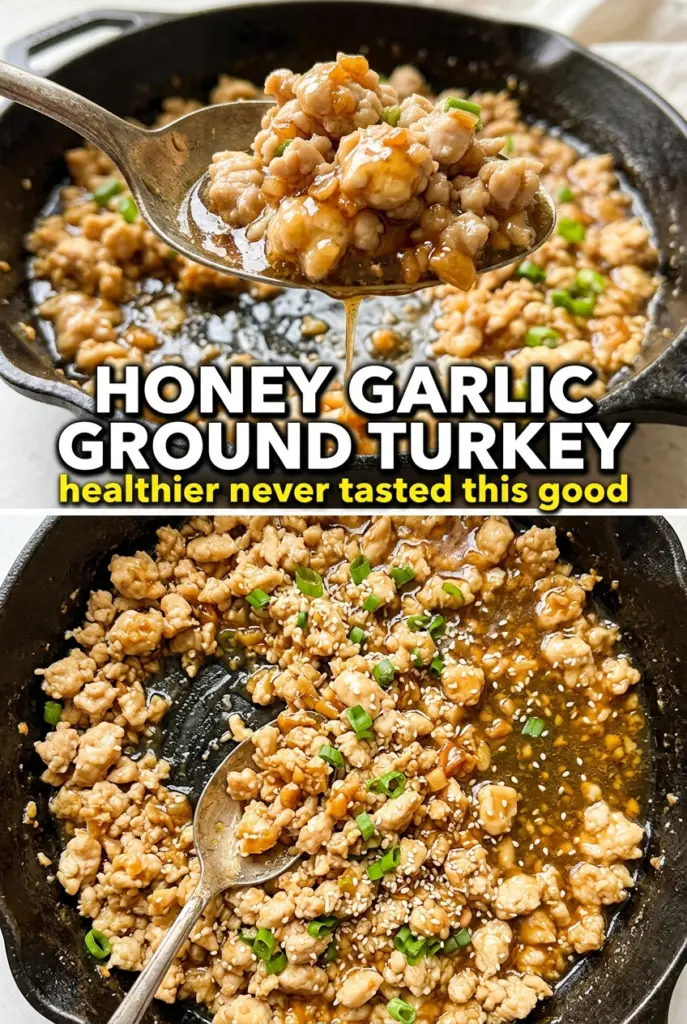
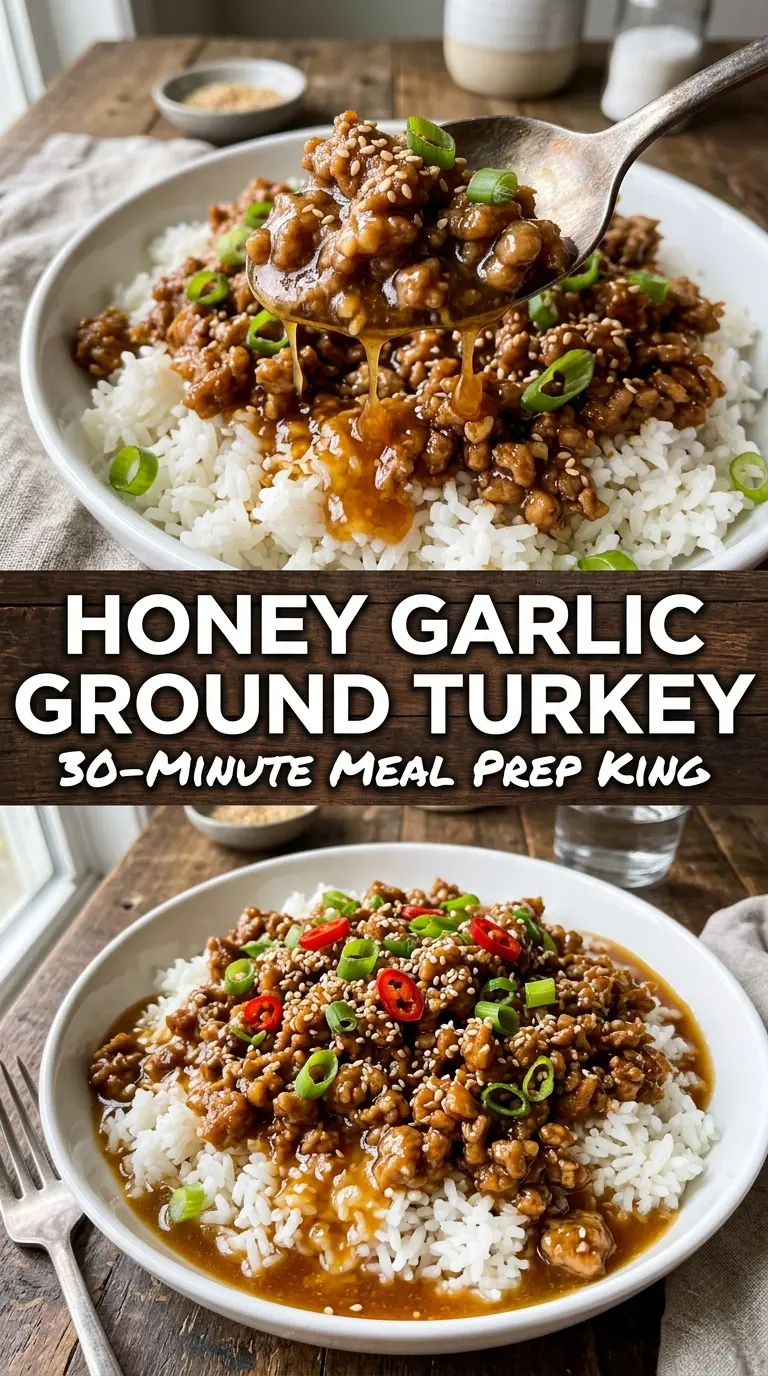
Sticky, glossy honey garlic ground turkey hits the table fast, but it still tastes like you spent time building the sauce instead of just dumping everything into a pan. The turkey turns savory and lightly caramelized around the edges, then gets coated in a sweet-salty glaze that clings to every crumble instead of pooling at the bottom of the skillet. Spoon it over rice and you get the kind of weeknight dinner that disappears before anyone starts asking what else is for dinner.
What makes this version work is the order. The turkey browns first so it can pick up a little color before the sauce goes in, and the garlic and ginger only cook for a minute so they stay fragrant instead of bitter. The cornstarch slurry goes in at the end, which gives the sauce that glossy, takeout-style finish without turning the whole pan gummy.
Below, I’ve included the timing cues that keep the sauce from getting too thick too fast, plus a few variations if you want to turn this into a bowl, a lower-carb dinner, or a meal-prep staple.
The sauce thickened up right in the pan and coated the turkey instead of turning watery. I served it over rice with green onions, and my husband asked if we could put it on the meal plan again next week.
Save this honey garlic ground turkey for fast rice bowls, sticky skillet dinners, and those nights when you want big flavor with almost no cleanup.
The Part Most Ground Turkey Skillets Get Wrong
Ground turkey can go from pale and bland to dry and crumbly in a hurry, especially when the sauce gets added before the meat has a chance to brown. The key here is to let the turkey sit undisturbed for a minute or two after it hits the pan so it can pick up some real color before you start breaking it apart. That little bit of browning gives the finished dish more depth and keeps the honey garlic sauce from carrying the whole load on its own.
The other trap is adding the sauce too early. Honey can scorch, soy sauce can reduce fast, and once the cornstarch goes in, the sauce starts tightening almost immediately. You want the turkey cooked through first, the aromatics cooked just until fragrant, and the sauce added only when the pan is ready for its final two or three minutes on the heat.
What Each Ingredient Is Doing In The Pan
- Lean ground turkey — This is the base, so the quality matters more than with a heavily sauced dish. Lean turkey keeps the texture light and lets the glaze shine, but if yours is extra lean and you’re worried about dryness, a splash of olive oil in the pan helps keep the crumbles tender.
- Garlic and ginger — These give the dish its backbone. Fresh is worth using here because dried substitutes taste flat next to honey and soy sauce, and ginger in particular brings the sharp, warm note that keeps the sauce from tasting one-dimensional.
- Honey, soy sauce, and rice vinegar — This is the balance point. Honey gives the glaze its shine, soy sauce brings salt and umami, and rice vinegar keeps the sweetness from getting heavy. If you need a gluten-free version, use tamari instead of soy sauce and the rest of the sauce stays the same.
- Sesame oil and red pepper flakes — Sesame oil is used for aroma, not bulk, so a little goes a long way. The red pepper flakes don’t make the dish hot-hot; they just give the sweet sauce enough edge to taste finished.
- Cornstarch slurry — This is what turns the sauce from thin and glossy into sticky enough to coat the turkey. Mix it with cold water first so it disperses cleanly; if you dump dry cornstarch straight into the pan, it clumps and leaves chalky spots.
Build The Glaze Before It Tightens
Brown The Turkey First
Heat the olive oil in a large skillet over medium-high heat, then add the ground turkey and leave it alone for a minute before breaking it up. That pause helps the meat develop some color instead of steaming in its own moisture. Keep cooking until it’s no longer pink and you’ve got a few browned bits stuck to the pan. Those browned bits are part of the flavor, so don’t scrape the pan clean.
Wake Up The Garlic And Ginger
Add the minced garlic and grated ginger and stir for about a minute, just until fragrant. If the heat is too high here, the garlic can turn bitter before the sauce even goes in, so keep the pan moving and don’t let the aromatics sit in one hot spot. You’re looking for that fresh, sharp smell that hits the second the ginger warms through.
Turn It Sticky At The End
Whisk the honey, soy sauce, rice vinegar, sesame oil, and red pepper flakes together, then pour it into the pan. Stir in the cornstarch slurry and cook for 2 to 3 minutes until the sauce turns glossy and clings to the turkey. If it looks thin at first, stay with it; cornstarch needs a little heat to activate, but once it starts thickening, it moves fast. Pull it off the burner as soon as the meat looks lacquered and coated.
Three Ways To Use This Honey Garlic Turkey
Make It Into Rice Bowls
Spoon the turkey over white rice, then add sesame seeds, green onions, and a squeeze of lime if you want a brighter finish. The rice catches the extra sauce, which is exactly what you want here. If you’re feeding people with different appetites, this is the easiest way to stretch the dish without changing the recipe.
Make It Lower Carb
Serve it over cauliflower rice, shredded cabbage, or steamed broccoli instead of regular rice. The sauce is already doing most of the heavy lifting, so the swap keeps the meal satisfying without changing the cooking method. Just know that you’ll want a little extra green onion or sesame seed on top for contrast, since the base will be milder.
Make It Dairy-Free And Gluten-Free
This recipe is naturally dairy-free, and it becomes gluten-free as soon as you swap the soy sauce for tamari or a certified gluten-free soy sauce. The texture stays the same, but tamari tends to taste a touch deeper and less sharp. Check your cornstarch label too if you’re cooking for someone with strict gluten needs.
Meal-Prep It Without Losing The Sauce
Cool the turkey before packing it into containers with rice on the side so the sauce doesn’t soak into the grains and turn them mushy. The glaze thickens a little more as it sits, which works in your favor for lunch the next day. Add the green onions after reheating so they stay crisp and fresh.
Storage And Reheating
- Refrigerator: Store leftovers in an airtight container for up to 4 days. The sauce will thicken more in the fridge, and the turkey will still stay tender if you reheat it gently.
- Freezer: It freezes well for up to 2 months. Freeze the turkey and sauce together, then thaw overnight in the refrigerator before reheating so the glaze comes back evenly.
- Reheating: Warm it in a skillet over medium-low heat with a splash of water to loosen the sauce. The common mistake is blasting it in the microwave until the edges dry out before the center is hot.
Questions I Get Asked About This Recipe
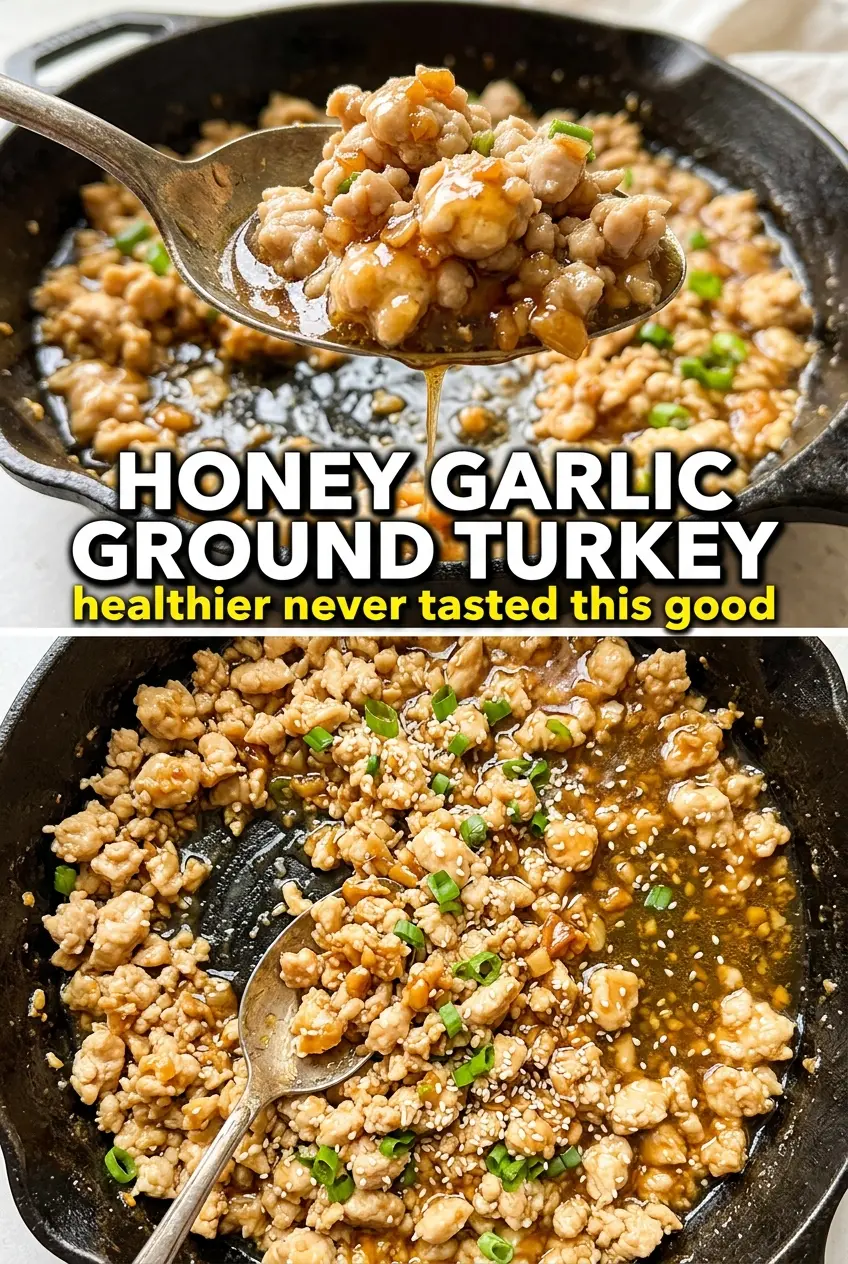
Honey Garlic Ground Turkey
Ingredients
Equipment
Method
- Heat the olive oil in a large skillet over medium-high heat, then add the lean ground turkey and cook until no longer pink, breaking it into crumbles with the back of a spatula.
- Add the garlic and grated fresh ginger and cook for 1 minute until fragrant.
- Whisk together honey, soy sauce, rice vinegar, sesame oil, and red pepper flakes, then pour the mixture over the turkey.
- Stir in the cornstarch slurry and cook for 2–3 minutes, until the sauce thickens and coats the turkey.
- Serve the honey garlic turkey over cooked rice and garnish with sesame seeds and sliced green onions.