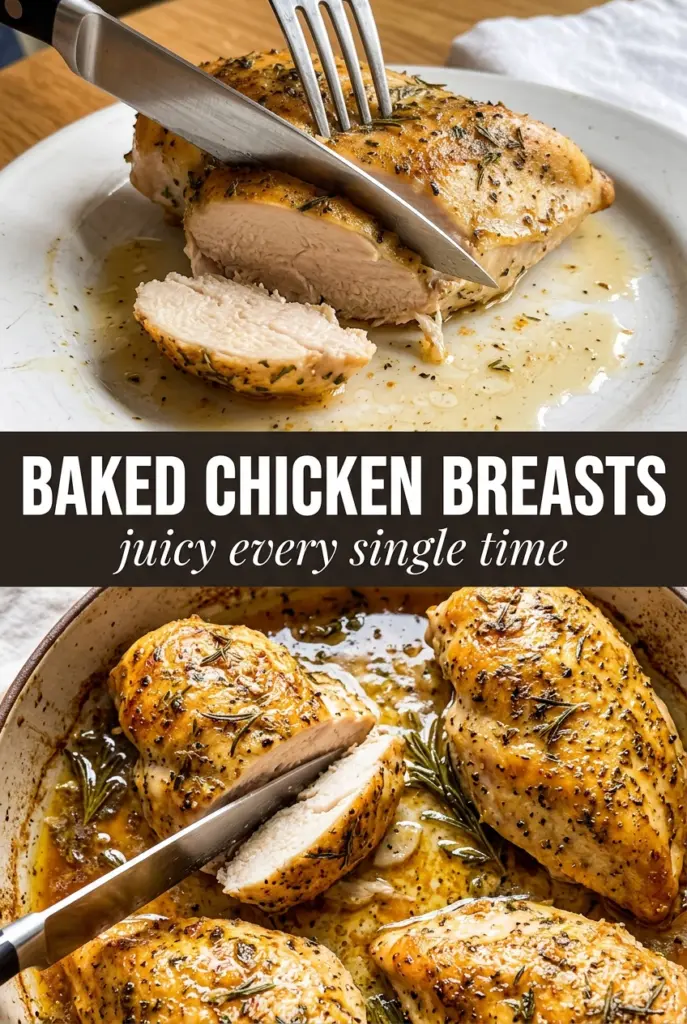
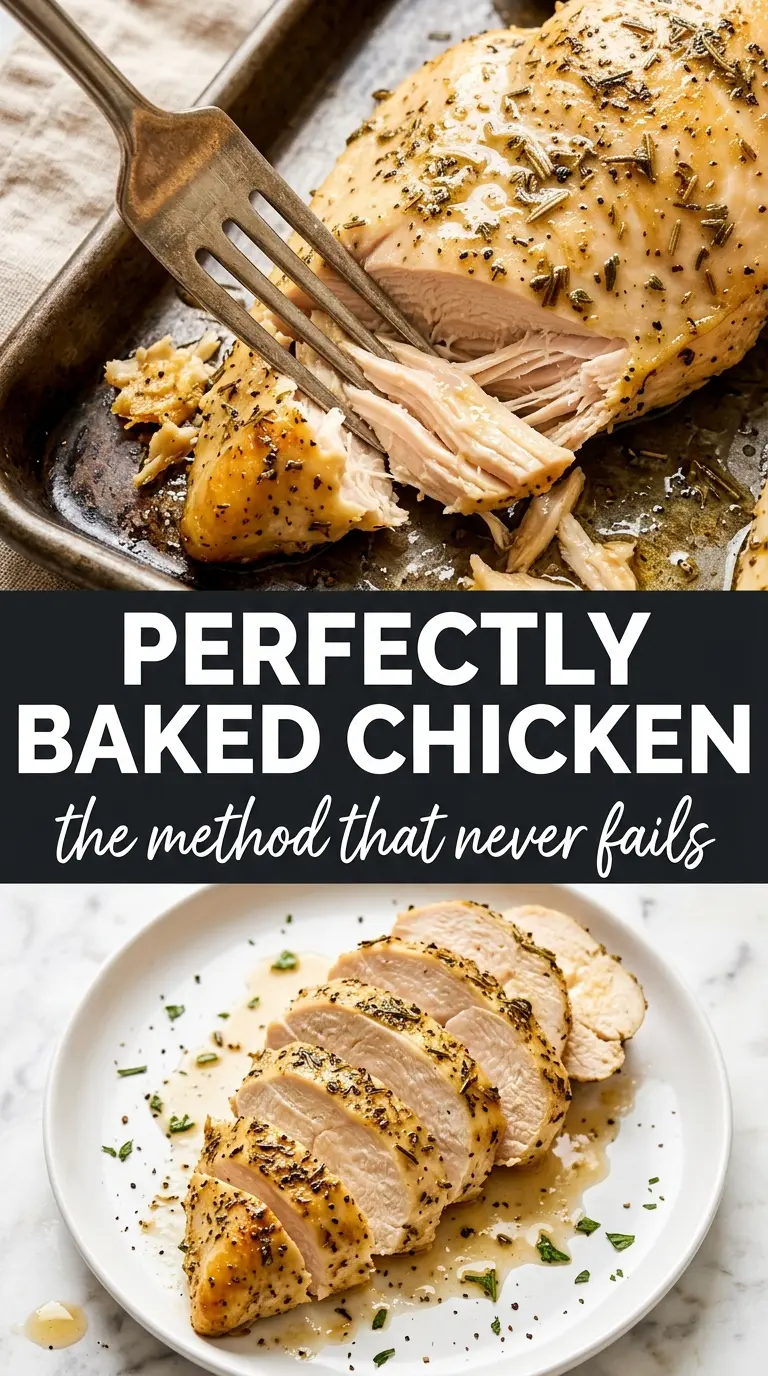
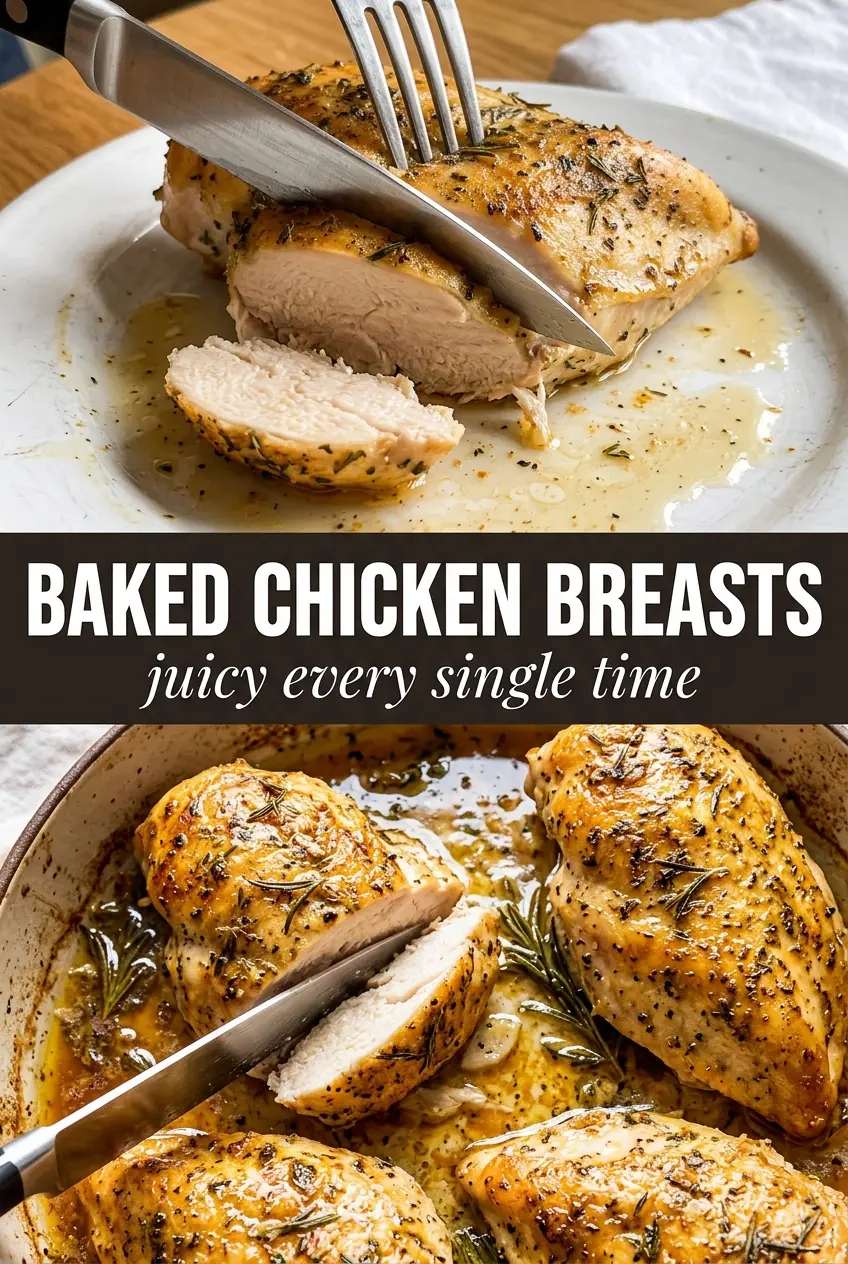
Juicy baked chicken breasts with a golden herb crust earn their place in the regular dinner rotation because they stay tender instead of drying out into something bland and stringy. The seasoning clings to the outside, the top takes on a light caramelized edge, and the center stays moist enough to slice cleanly without losing its juices.
The difference here is in the shape of the chicken and the heat of the oven. Pounding the breasts to an even thickness keeps the thin end from drying out while the thick end catches up, and 425°F gives you enough heat to brown the surface before the meat overcooks. The olive oil helps the spices bloom on the chicken instead of falling off into the pan.
Below, I’ll walk through the small details that matter most, including how to tell when the chicken is done without guessing and what to change if your chicken breasts are extra large or small.
The chicken stayed juicy all the way through, and the spice rub formed that little crust on top instead of sliding off. I followed the timing exactly and pulled it at 165°F, and it sliced beautifully for salads the next day.
Like these herb-baked chicken breasts? Save them for the nights when you need a fast oven dinner with a crisp seasoned crust and a juicy center.
The Reason Chicken Breasts Dry Out Before the Timer Ends
Chicken breasts usually go from perfect to chalky in a narrow window, and the problem starts long before they hit the oven. Uneven thickness is the big one. The thin side is done while the thick side is still catching up, so by the time the center is safe, the edges have already gone dry. That is why a quick pound to even thickness matters more than any fancy marinade here.
The other mistake is baking at a temperature that is too low. Chicken breast needs enough heat to set the outside quickly and keep the juices trapped while the inside finishes. A 425°F oven gives you that balance. Pulling it at 165°F is the safety line, but the real cue is a firm top with juices that run clear when you slice into the thickest part after resting.
What Each Seasoning Is Actually Doing Here
- Olive oil — This is what helps the spice blend stick and keeps the surface from baking dry before the inside is done. A neutral oil works in a pinch, but olive oil gives the chicken a better finish and a little more depth.
- Smoked paprika — This is where the color and that savory edge come from. You can swap in regular paprika if that’s what you have, but you’ll lose some of the gentle smoky note that makes the crust taste fuller.
- Italian seasoning — This rounds out the garlic and onion powder with herbs that taste familiar and balanced. If yours is old and dusty, it won’t do much; fresh dried herbs matter here more than on a slow-simmered dish.
- Chicken breasts of even size — Size matters more than brand. If one breast is huge and one is tiny, cut the larger one in half horizontally or pound it wider so the whole batch finishes together instead of overcooking one while waiting on another.
Getting the Chicken Into the Oven Without Losing the Juices
Pound for Even Thickness
Place the chicken between two sheets of parchment or in a zip-top bag and pound it to an even 3/4-inch thickness. You’re not trying to flatten it into cutlets; you’re creating a level surface so the heat moves through at the same rate. If one end is much thicker, it will stay in the oven long enough to dry out the rest.
Season So It Actually Sticks
Brush both sides with olive oil first, then rub on the spice mix with your hands. The oil keeps the seasonings from clumping and gives the top that seasoned, slightly crisped crust after baking. If the chicken looks patchy before it goes in, it will look patchy when it comes out.
Bake Until the Center Just Reaches 165°F
Set the chicken in a lightly greased baking dish and bake until the thickest part reaches 165°F and the tops are golden. Start checking at 18 minutes, especially if the breasts are on the smaller side. If you wait for deep browning before checking temperature, you’ll likely overshoot and lose the moisture you were trying to keep.
Rest Before You Slice
Let the chicken rest for 5 minutes before cutting. That short pause lets the juices settle back into the meat instead of spilling onto the board. Slice too soon and the inside will still be juicy, but the plate will look like the chicken gave everything away.
How to Adapt These Baked Chicken Breasts for Different Nights
Dairy-Free and Gluten-Free as Written
This recipe already works for both dairy-free and gluten-free cooking without any changes. The seasoning blend is straightforward, so the only thing to watch is making sure your Italian seasoning and paprika are pure spice blends with no added fillers.
For Smaller or Larger Chicken Breasts
Small breasts may be done in closer to 16 minutes, while very large ones can take closer to 24. The best fix is still even thickness, because time in the oven becomes much more predictable when the pieces are similar in size.
Make It Spicier
Add 1/4 to 1/2 teaspoon of cayenne or a pinch of crushed red pepper to the seasoning mix. That gives the crust a sharper finish without changing the texture, and the heat plays well with the lemon at the table.
Storage and Reheating
- Refrigerator: Store in an airtight container for up to 4 days. The coating softens a little, but the chicken stays useful for slicing over salads, rice, or vegetables.
- Freezer: Freeze cooked chicken breasts for up to 2 months, wrapped tightly and then sealed. Thaw overnight in the refrigerator so the outside doesn’t turn rubbery while the center is still cold.
- Reheating: Reheat covered in a 300°F oven with a spoonful of water or broth in the pan until just warmed through. High heat dries chicken out fast, so skip the microwave if you want the slices to stay tender.
Questions I Get Asked About This Recipe
Baked Chicken Breasts
Ingredients
Equipment
Method
- Preheat oven to 425°F and lightly grease a baking dish so the chicken browns evenly with minimal sticking.
- Pound chicken breasts to an even 3/4-inch thickness if they vary in size for uniform cooking through the center.
- Brush both sides of each chicken breast with olive oil to help the herb seasonings adhere and promote browning.
- Mix garlic powder, onion powder, smoked paprika, Italian seasoning, salt, and pepper, then rub the spice blend evenly over both sides.
- Bake for 18-22 minutes until internal temperature reaches 165°F and the tops are golden; do not overbake to keep the interior juicy.
- Rest for 5 minutes before slicing so juices redistribute, then garnish with fresh parsley and lemon wedges for a bright finish.