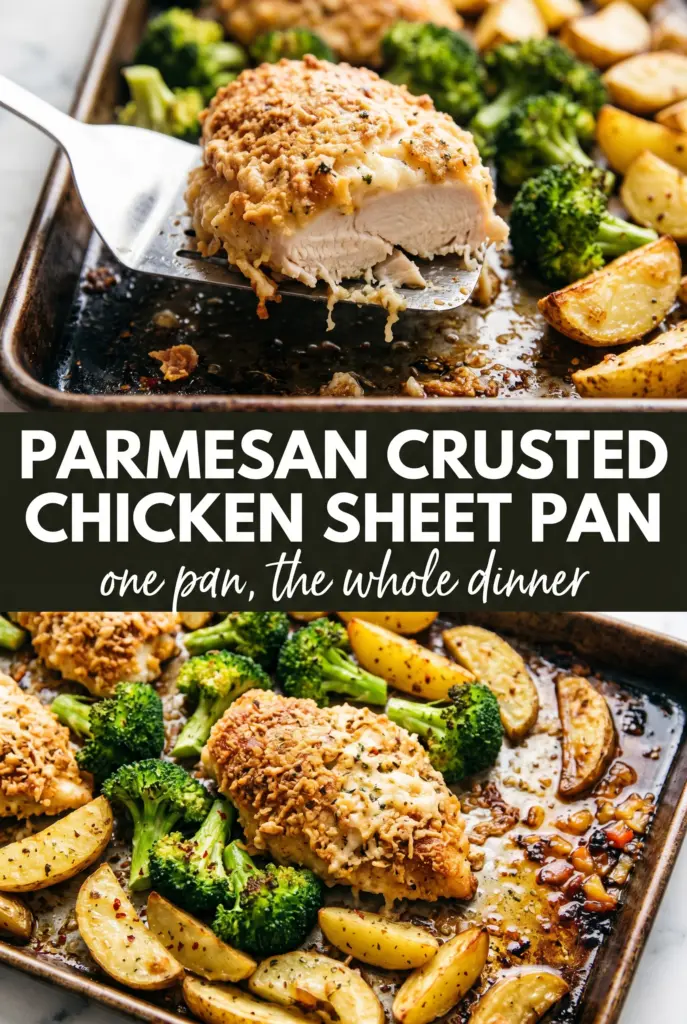
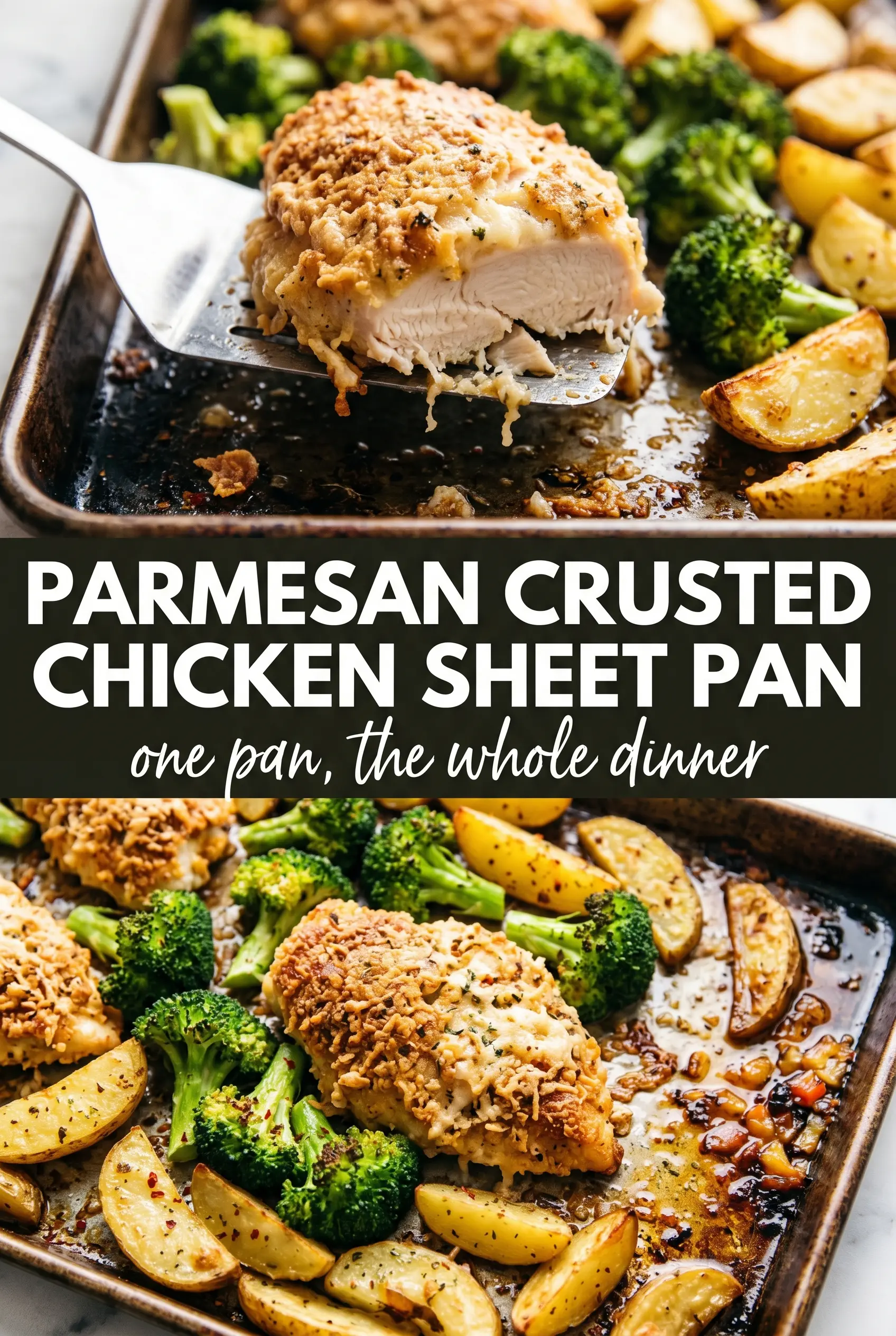
Golden parmesan crusted chicken with roasted asparagus and blistered cherry tomatoes is the kind of sheet pan dinner that earns its place in the regular rotation fast. The chicken stays juicy under a crisp, savory topping, and the vegetables pick up just enough of the drippings and roasted edges to taste like they were part of the plan from the start. It’s the sort of meal that lands on the table looking like more work than it was.
The trick here is the mustard-mayo layer under the parmesan and panko. It doesn’t just add flavor; it helps the crust cling to the chicken and brown evenly without drying the meat out. That thin coating gives you a deep golden top instead of a patchy one, which is the difference between “good enough” and something you’ll want to make again next week.
Below, you’ll find the small details that matter most: how to keep the crust crisp, when to add the vegetables so they roast instead of steam, and the easiest swaps if you need to work with what’s already in your kitchen.
The parmesan crust came out crackling crisp, and the asparagus roasted right alongside the chicken without going soggy. I loved that the tomatoes burst into their own little sauce under the lemon at the end.
Pin this parmesan crusted chicken sheet pan dinner for the nights when you want a crispy chicken dinner and roasted vegetables on one pan.
The Part That Keeps the Crust Crisp Instead of Soggy
Sheet pan chicken usually fails in one of two ways: the crust slides off, or the vegetables steam the pan instead of roasting. This version avoids both by giving the chicken a sticky base before it ever touches the crumb mixture, then spacing the vegetables around it so the hot air can do its job. The mayonnaise and Dijon don’t just add tang. They help the coating adhere and brown into a hard, savory shell.
The other detail that matters is the oven temperature. At 425°F, the chicken cooks through in the same window that the parmesan topping turns deeply golden. If you bake it too low, the crust stays pale before the chicken is done. Too hot, and the panko browns before the center reaches temperature.
- Press the coating on firmly — don’t just sprinkle it over the top. The crust needs contact to hold through roasting.
- Keep the vegetables in a single layer — crowded asparagus turns limp fast, and the tomatoes won’t blister.
- Use a large sheet pan — if the ingredients are packed in, they’ll steam instead of roast.
- Watch for deep golden color — that’s your better cue than the clock alone.
What Each Ingredient Is Actually Doing in This Dish
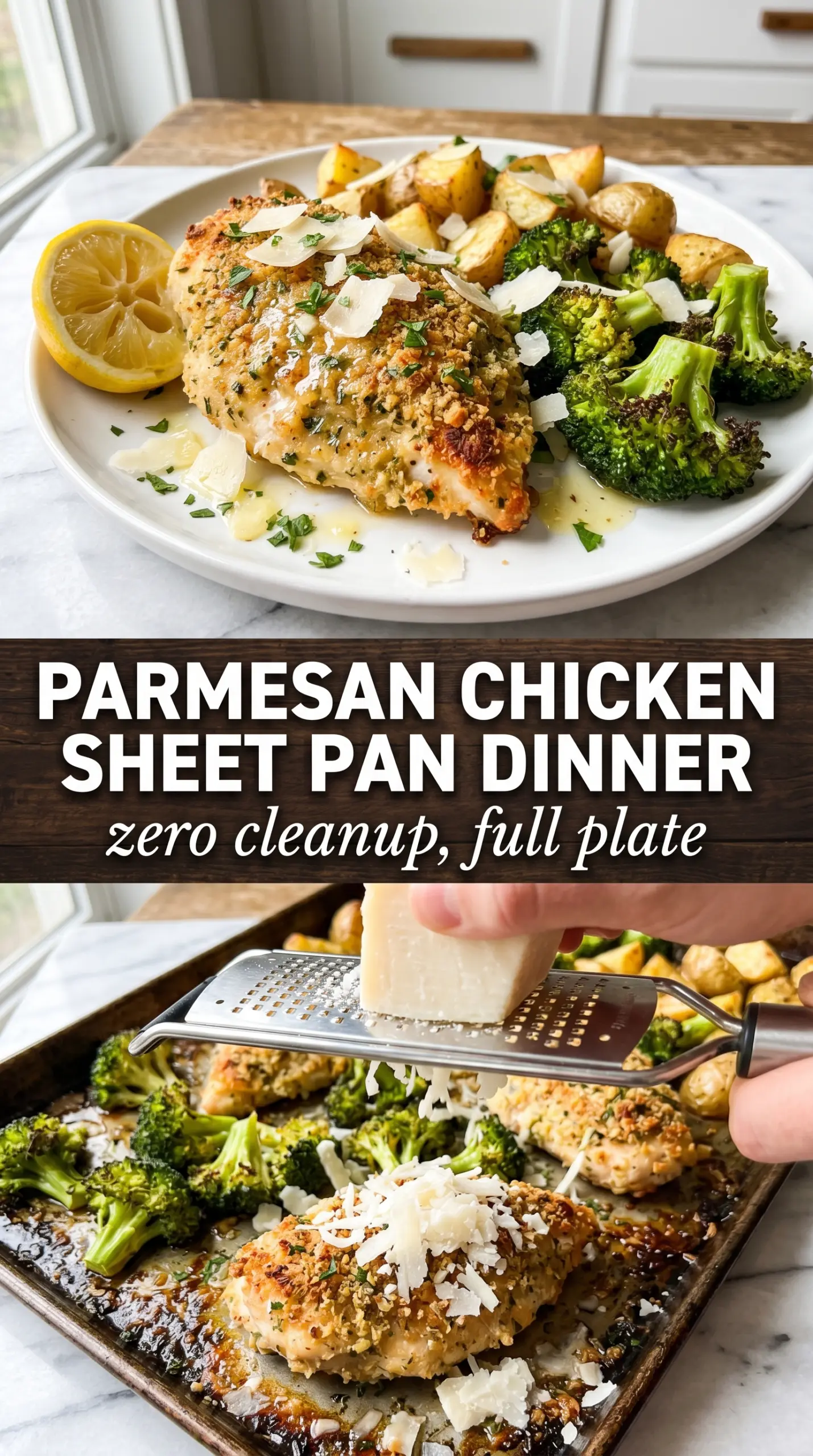
The crust starts with grated parmesan and panko breadcrumbs. Parmesan brings salt, fat, and that nutty browned edge, while panko keeps the texture lighter and more crackly than fine breadcrumbs. Use the real grated parmesan here, not the shelf-stable powdery kind, or the coating can bake up sandy instead of crisp.
Dijon mustard and mayonnaise sound like a strange pair until you taste the result. Dijon gives sharpness and depth; mayo adds fat and helps the topping brown evenly. If you want the closest substitute, use plain Greek yogurt in place of the mayonnaise, but expect a slightly tangier crust and a little less browning.
- Chicken breasts — choose pieces that are similar in size so they finish at the same time. If one breast is much thicker, pound it lightly for even cooking.
- Parmesan cheese — grate it fresh if you can. It melts and browns better than pre-shredded cheese with anti-caking agents.
- Panko — this is what gives the crust its airy crunch. Regular breadcrumbs work, but the topping will be denser.
- Asparagus and cherry tomatoes — they roast fast and hold up well next to the chicken. If your asparagus is very thick, give it an extra minute or two in the oven before serving.
Building the Crust, Roasting the Vegetables, and Timing the Finish
Mix the Coating Before the Chicken Touches It
Stir the parmesan, panko, garlic powder, and Italian seasoning together first so the seasoning spreads evenly through the crust. If you dump the spices on top of the chicken later, the seasoning lands unevenly and you end up with bland patches. The mixture should look sandy and coarse, with the parmesan distributed through the breadcrumbs instead of clumped in one spot.
Brush, Then Press
Spread the Dijon and mayonnaise over the top of each breast in a thin layer. You only need enough to coat the surface, not a thick blanket. Then press the chicken firmly into the crumb mixture so the whole top is covered. If the coating looks loose or dusty, it will fall off in the oven; a solid press is what locks it on.
Roast the Chicken and Vegetables Together
Place the coated chicken on the sheet pan and scatter the asparagus and tomatoes around it after tossing them with olive oil, salt, and pepper. Leave some space between the pieces so the vegetables roast instead of sitting in their own juice. The tomatoes should start to wrinkle and split, and the asparagus should be tender at the tips but still have a little snap when the chicken is done.
Serve the Lemon at the End
Pull the pan when the crust is deeply golden and the chicken hits 165°F in the thickest part. Let it rest for a couple of minutes so the juices settle, then serve with lemon wedges. The acid wakes up the parmesan and cuts through the richness of the crust, which is what keeps the whole pan from tasting heavy.
Three Ways to Adjust This Sheet Pan Dinner Without Losing the Crunch
Gluten-Free Version
Swap the panko for gluten-free breadcrumbs or crushed gluten-free crackers. The texture stays crisp, though the crust may brown a little faster, so keep an eye on it near the end of baking.
Dairy-Free Adaptation
Use a dairy-free parmesan-style topping in place of the cheese and add a little extra salt if needed. You won’t get quite the same nutty finish, but the coating still bakes up crisp and savory.
Swap the Vegetables for What You Have
Broccoli florets, zucchini chunks, or green beans all work here as long as you cut them into even pieces and keep the pan uncrowded. Dense vegetables may need a few extra minutes, while softer ones should be cut larger so they don’t collapse before the chicken is done.
Storage and Reheating
- Refrigerator: Store leftovers in an airtight container for up to 3 days. The crust softens a bit in the fridge, but the flavor holds up well.
- Freezer: You can freeze the cooked chicken, but the topping will lose some crunch. Wrap pieces tightly and freeze for up to 2 months.
- Reheating: Reheat on a sheet pan in a 375°F oven until warmed through. The oven brings the crust back better than the microwave, which turns the coating soggy and overcooks the chicken edges.
Questions I Get Asked About This Recipe
Parmesan Crusted Chicken Sheet Pan Dinner
Ingredients
Equipment
Method
- Preheat the oven to 425°F and line a large sheet pan with foil.
- Mix parmesan cheese, panko breadcrumbs, garlic powder, and Italian seasoning together until evenly combined.
- Brush each chicken breast with the Dijon mustard and mayonnaise mixture, then press firmly into the parmesan mixture to coat the top.
- Place the coated chicken breasts on the sheet pan.
- Toss asparagus and cherry tomatoes with olive oil, salt, and black pepper, then arrange them around the chicken on the sheet pan.
- Bake for 22–25 minutes at 425°F until the crust is deeply golden and the chicken is cooked through; serve with lemon wedges.