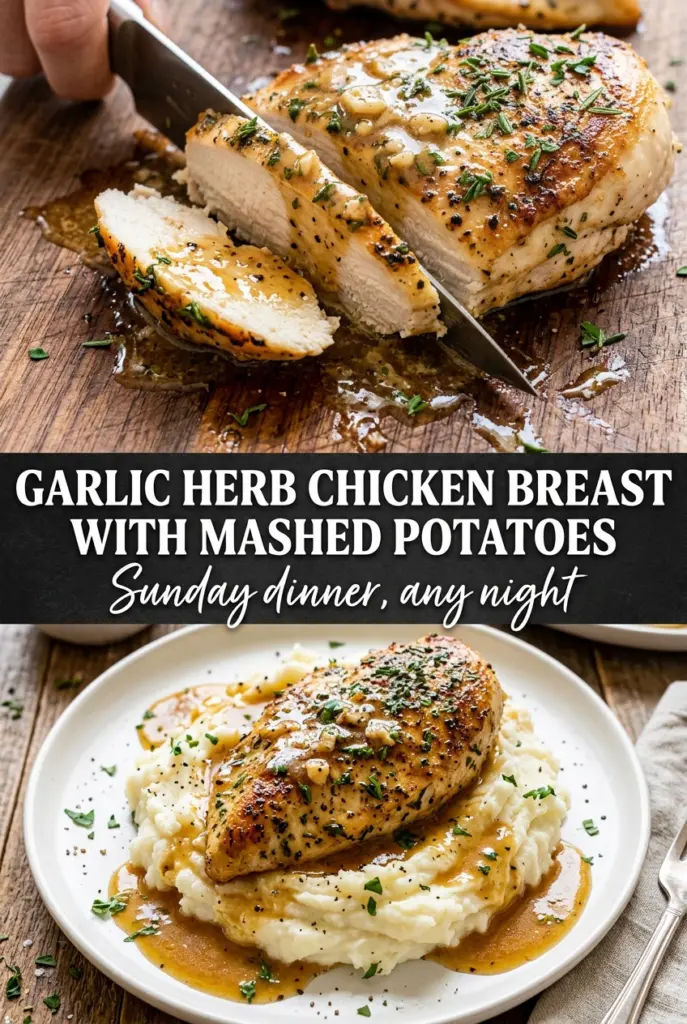
Golden-seared chicken breast with mashed potatoes is the kind of dinner that disappears fast because every part of it pulls its weight. The chicken stays juicy under a savory garlic herb pan sauce, and the potatoes catch all that buttery, garlicky gravy in the best possible way. It’s simple food, but when each piece is cooked with care, the plate tastes like more than the sum of its parts.
What makes this version work is the order. The chicken gets a hard sear first, which builds the browned bits that turn into the sauce later. Then the sauce comes together in the same pan with butter, garlic, broth, and cream, so nothing gets wasted and the flavor stays deep instead of flat. The mashed potatoes use Yukon Golds, which break down into a smooth, naturally buttery mash without needing a lot of extra fuss.
Below, I’ll walk through the little details that keep the chicken tender, the sauce silky, and the potatoes fluffy instead of gluey. If you’ve ever had pan sauce split or chicken breasts dry out, the fixes are here.
The sauce thickened up beautifully and the chicken stayed juicy instead of dry. I made it on a Tuesday night and my husband asked if we could keep this in the regular dinner rotation.
Save these garlic herb chicken breasts and buttery mashed potatoes for the nights when you want a pan sauce dinner that feels comforting without taking all evening.
The Part Most People Miss: Building Flavor Before the Sauce Exists
The biggest mistake with chicken breast and pan sauce is rushing past the sear. If the chicken never gets deep golden color, the sauce has nothing to grab onto, and it ends up tasting thin no matter how much butter you add. You want the chicken to release cleanly from the pan before you turn it, with browned edges and an internal temperature that’s already close to done.
The other trap is crowding the pan. Two chicken breasts fit comfortably; four usually don’t unless your skillet is large. If the pan is packed, the chicken steams instead of browning, and that soft surface won’t give you the fond you need for the sauce.
- Dry the chicken first — Moisture on the surface blocks browning. Pat the breasts dry before seasoning so the spices cling and the crust sets faster.
- Use medium-high heat, not screaming heat — You want steady browning, not scorched spices. If the outside is darkening too fast, lower the heat before the center falls behind.
- Don’t move the chicken early — Let it sit until it lifts easily. If it sticks, it usually needs another minute.
What the Potatoes, Cream, and Herbs Are Really Doing Here
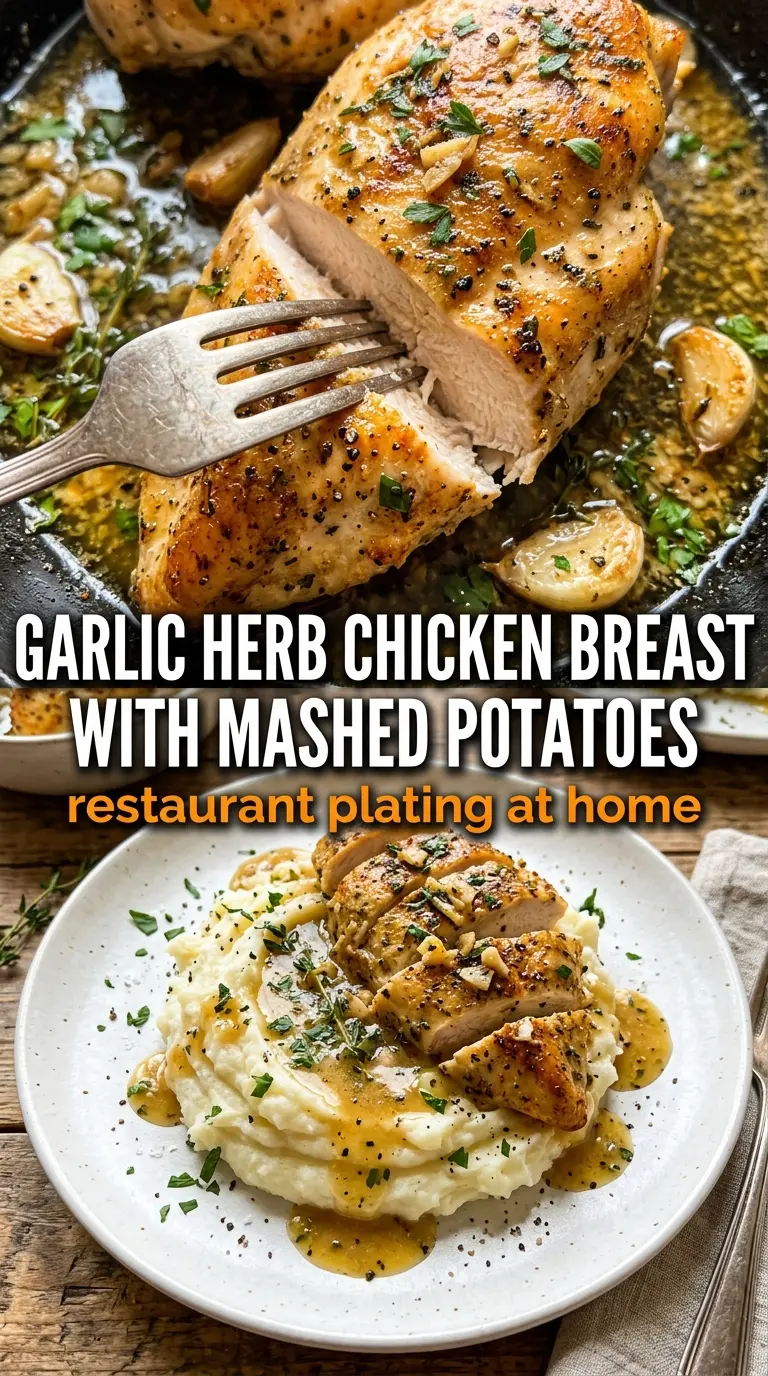
- Yukon Gold potatoes — These are the best balance of creamy and sturdy. Russets can work, but they turn lighter and drier; Yukon Golds mash into a rich texture that holds the sauce beautifully.
- Heavy cream — Both the potatoes and the pan sauce rely on cream for body. Half-and-half will work in a pinch, but the sauce will be thinner and the potatoes less plush.
- Fresh thyme and rosemary — Dried herbs won’t give you the same finish here. Fresh herbs added at the end keep the sauce fragrant instead of muddy, and they’re worth using if you have them.
- Butter — This is more than richness. Butter carries the garlic flavor, helps the sauce gloss over the chicken, and gives the potatoes their clean, round finish.
Getting the Chicken, Sauce, and Mash to Finish at the Same Time
Boiling the Potatoes Until They Collapse Easily
Start the potatoes first because they need the most passive time. Salt the water well, then boil the cubes until a fork slides through with no resistance at all. If you stop at merely tender, they’ll mash lumpy and leave little hard bits behind. Drain them well before adding butter and cream, or the extra water will thin the mash and wash out the flavor.
Searing the Chicken for Color and Juiciness
Season the chicken evenly, then lay it into the hot oil and leave it alone. After 5 to 6 minutes, the underside should be deeply golden and release without tearing. Flip it and cook until the center is done but still juicy. If your chicken breasts are thick, pound them to even thickness first; otherwise the thin end dries out before the thick end is ready.
Building the Garlic Herb Pan Sauce
Once the chicken comes out, keep the pan on the stove and drop in the butter. Add the garlic and stir for about a minute, just until fragrant; if it browns, it turns bitter fast. Pour in the broth and cream and scrape the bottom with a wooden spoon so all the browned bits dissolve into the liquid. Let it simmer gently until it lightly coats the spoon, then add the fresh herbs at the end so their flavor stays bright.
Mashing the Potatoes So They Stay Fluffy
Mash the potatoes while they’re still hot, using warm cream and butter so everything blends smoothly. Cold dairy can make the potatoes seize up and turn pasty. Stop mashing as soon as they’re smooth; overworking them makes them gluey instead of light.
Use Chicken Thighs for a Richer Version
Boneless skinless thighs give you a juicier, slightly richer result and are more forgiving if you cook them a minute too long. They need a little extra time in the pan, but they handle the sauce beautifully and stay tender.
Make It Dairy-Free
Use olive oil instead of butter, swap in a full-fat unsweetened oat or coconut cream, and add a little extra salt to balance the lighter body. The sauce won’t taste quite as round, but it still clings well if you simmer it until it reduces slightly.
Skip the Cream and Keep It Lighter
Use extra chicken broth and finish with an extra tablespoon of butter. The sauce will be thinner, more like a light pan jus, but the garlic and herb flavor still comes through cleanly.
Storage and Reheating
- Refrigerator: Store chicken, sauce, and potatoes in separate airtight containers for up to 3 days. The potatoes will firm up a little as they chill.
- Freezer: The chicken freezes well for up to 2 months. The mashed potatoes and cream sauce can separate after thawing, so I don’t recommend freezing the full meal together.
- Reheating: Reheat the chicken gently in a covered skillet with a splash of broth, and warm the potatoes over low heat with a little cream or milk. Don’t blast everything in the microwave on high or the chicken dries out and the sauce turns greasy.
Questions I Get Asked About This Recipe
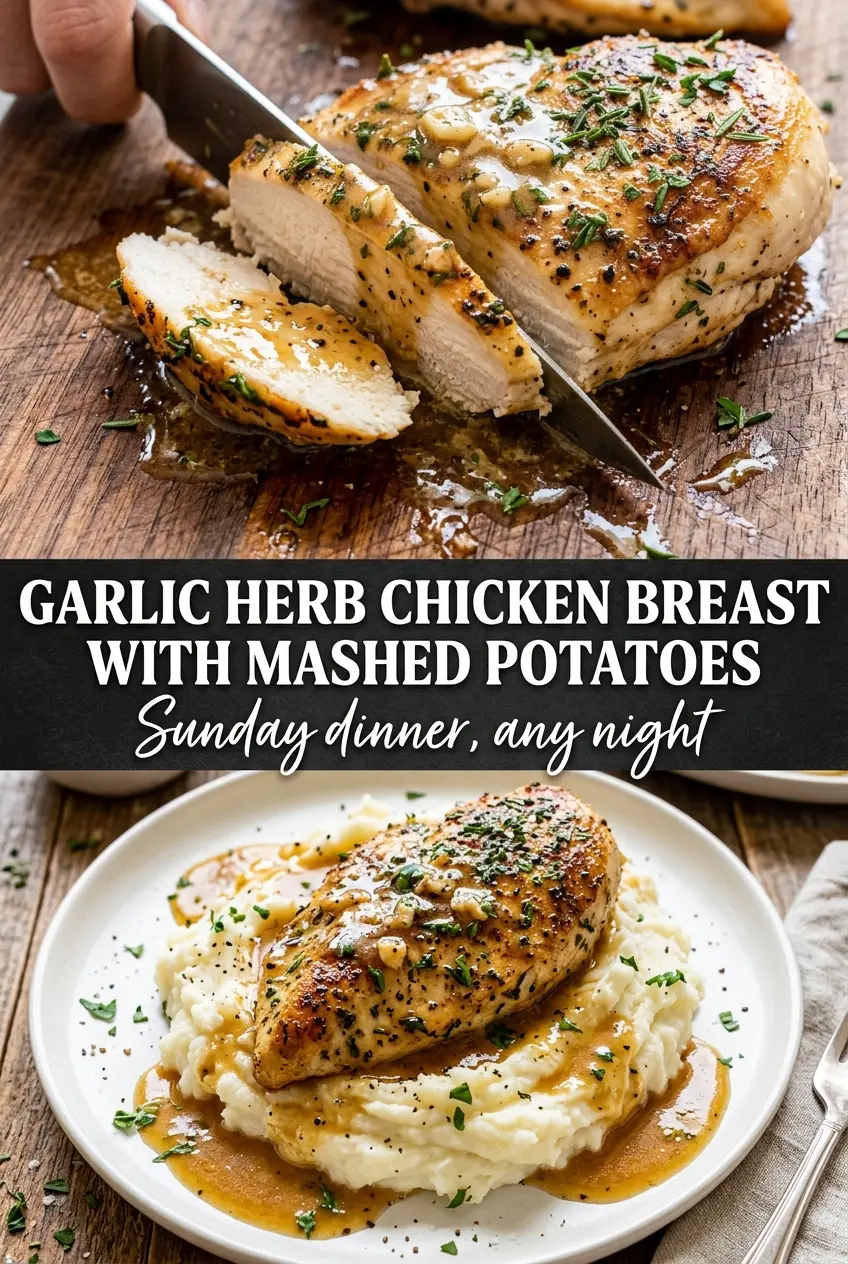
Garlic Herb Chicken Breast with Mashed Potatoes
Ingredients
Equipment
Method
- Boil the Yukon gold potatoes in salted water until completely tender, about 15 minutes, then drain thoroughly. Mash with butter and warm heavy cream until smooth, then season with salt and pepper to taste.
- Season the boneless skinless chicken breasts with salt, black pepper, garlic powder, and dried herbs. Heat olive oil in a cast iron skillet over medium-high heat and sear until golden and cooked through, 5–6 minutes per side, then set aside.
- Melt the remaining butter in the same pan, then add minced garlic and cook for 1 minute until fragrant. Add chicken broth and heavy cream, scraping up all the browned bits from the bottom of the pan.
- Simmer the pan sauce for 3–4 minutes until slightly thickened, then add fresh thyme and rosemary. Spoon the garlic herb pan sauce over the chicken and drizzle generously onto the mashed potatoes so some sauce pools and runs into the potatoes.