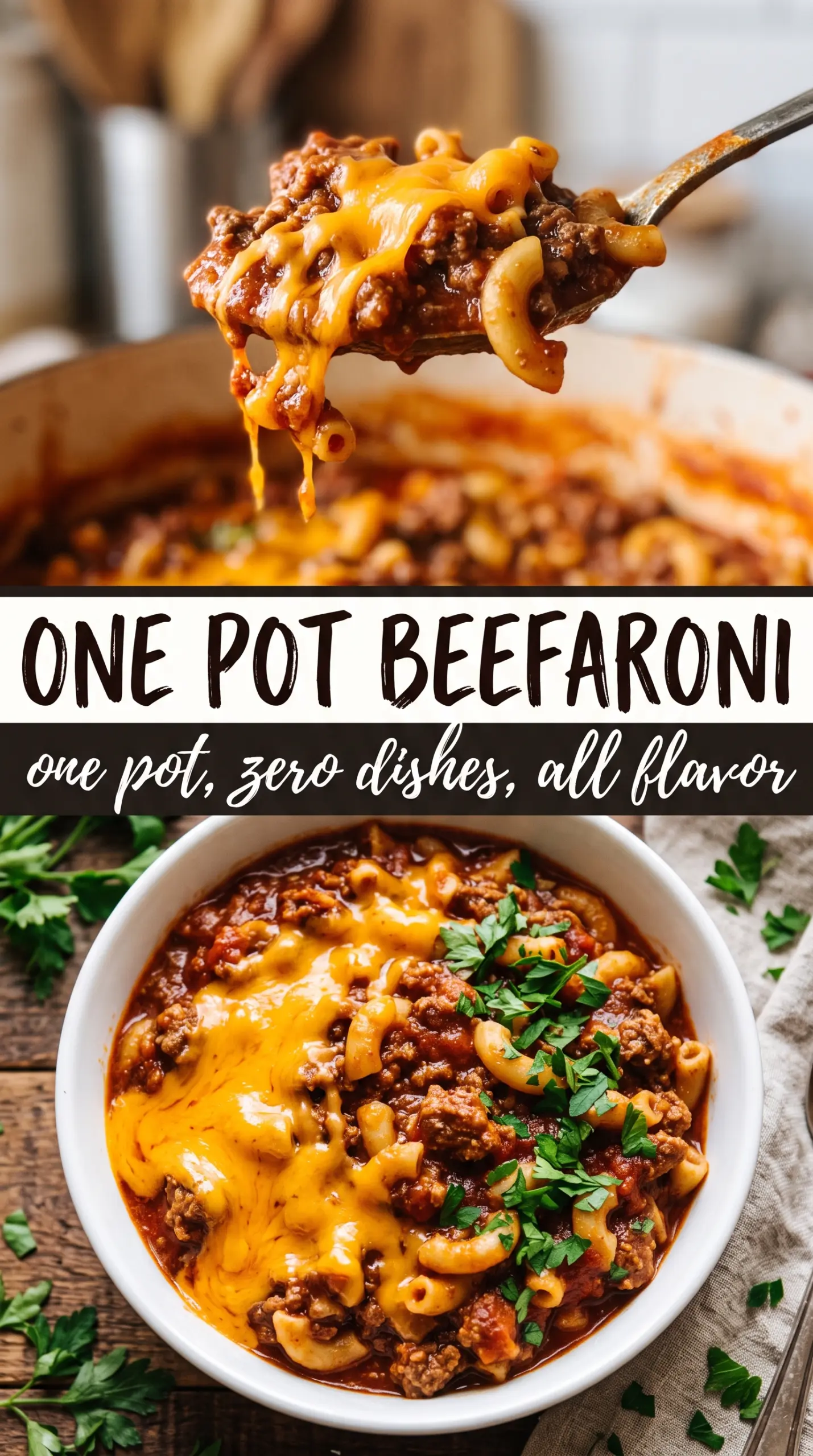
One pot beefaroni delivers the kind of dinner that disappears fast: tender elbow macaroni coated in a thick tomato-beef sauce, with cheddar melting through every bite. It tastes like the boxed version a lot of us grew up with, but the sauce is deeper, the beef is savory instead of greasy, and the pasta absorbs all that flavor as it cooks. The best part is that it all happens in one pot, which means less cleanup and a richer sauce than you get from boiling the pasta separately.
The trick is letting the macaroni cook directly in the sauce and broth. That does two jobs at once: it seasons the pasta from the inside out and naturally thickens the pot as the starch releases. I also like to add the cheese off the heat so it melts into a smooth, creamy finish instead of turning grainy or stringy.
Below, I’ve laid out the little details that keep this dinner hearty instead of soupy, plus a few smart swaps if you need to stretch it, lighten it up, or work with what’s already in the pantry.
The macaroni stayed perfectly tender and the sauce thickened up right on time. I usually worry about one-pot pasta getting gummy, but this came out creamy, hearty, and not watery at all.
Save this one pot beefaroni for the nights when you want cheesy macaroni, rich beefy sauce, and one pan to wash.
The Reason One Pot Beefaroni Stays Creamy Instead of Turning Gluey
The biggest mistake with one-pot pasta is adding too little liquid and walking away too soon. Elbow macaroni needs enough broth and tomato sauce to cook evenly, and it also needs a brief stir now and then so the starch doesn’t settle and stick to the bottom. When the pot starts to look thick before the pasta is tender, that’s normal. The sauce will tighten as the macaroni finishes cooking and then tighten again after the cheese goes in.
Another thing that matters here is heat control. A steady simmer is enough. If the pot boils hard the whole time, the liquid reduces too quickly and the pasta can go soft on the outside before the center is done. Keeping the heat at medium-low once the macaroni is in gives you tender pasta and a sauce that clings instead of breaking.
What Each Ingredient Is Actually Doing in This Pot
- Ground beef — This gives the dish its savory backbone. An 85/15 or 90/10 blend works well; anything much leaner can taste dry unless you add a little extra oil.
- Onion and garlic — These build the base flavor before the tomatoes go in. Cook the onion until it softens and starts to turn translucent, and add the garlic at the end of browning so it doesn’t taste bitter.
- Crushed tomatoes and tomato paste — The crushed tomatoes provide the body of the sauce, while the paste deepens it and keeps the dish from tasting flat. Tomato paste is worth keeping in the pan for that minute before the liquid goes in so it loses its raw edge.
- Beef broth — This seasons the pasta as it cooks and keeps the sauce from tasting one-note. Water will work in a pinch, but the finished pot will taste thinner.
- Sharp cheddar — Sharp cheddar melts into the sauce and gives the finish a little bite. Pre-shredded cheese works, but block cheese melts smoother because it doesn’t carry the anti-caking starch that can dull the texture.
How to Build the Pot So the Pasta Cooks Right
Brown the Beef Until the Pan Has Real Flavor
Start by cooking the beef and onion together over medium-high heat until the meat loses its raw pink color and the onion turns soft. You want a little browning on the bottom of the pot, not a gray stew. If the beef is flooding the pan with liquid, keep cooking until that moisture evaporates; that is where the flavor starts. Drain off excess fat if the pot looks greasy, but leave enough behind to keep the garlic and tomato paste from sticking.
Let the Tomato Base Simmer Before the Macaroni Goes In
Once the crushed tomatoes, broth, paste, and seasonings are in, bring everything to a boil, then drop it to a lively simmer. This gives the tomato paste time to dissolve and the dried spices time to bloom into the sauce. If you add the pasta before the liquid is hot, the macaroni can soften unevenly and the sauce won’t thicken with the same body. The pot should smell rich and a little tangy before you move on.
Cook the Pasta in the Sauce, Not in a Hurry
Stir in the uncooked macaroni, cover the pot, and cook at medium-low until the pasta is just tender. Give it a stir once or twice so the elbows don’t settle into a clump at the bottom. If the sauce looks too thick before the pasta is done, splash in a little extra broth. If it looks soupy at the end, leave the lid off for a minute or two so the excess steam can cook off.
Finish With Cheese Off the Heat
Pull the pot off the burner before stirring in the cheddar. Residual heat is enough to melt it smoothly, and that gentler finish keeps the sauce creamy instead of grainy. Taste after the cheese melts, then add salt and black pepper as needed. The cheese adds richness, but it doesn’t replace the need to season the sauce properly.
How to Adapt This for a Bigger Batch, a Lighter Pot, or What’s in the Pantry
Gluten-Free Beefaroni
Use a sturdy gluten-free elbow pasta and watch the pot closely near the end, because gluten-free noodles can go from firm to soft fast. Add an extra splash of broth if the sauce tightens before the pasta is done. The texture will still be comforting and rich, but the pasta won’t have quite the same chew as traditional elbows.
Lighter Version With Ground Turkey
Ground turkey works if you want a leaner pot, but it needs a little help to taste full-bodied. Add a teaspoon of olive oil with the onion, and don’t skip the tomato paste and smoked paprika. The finished dish will be a touch milder than the beef version, but still hearty enough for dinner.
Use What Cheese You Have
Sharp cheddar gives the strongest classic flavor, but a mix of cheddar and Monterey Jack melts even creamier. Avoid very oily cheese blends if they’re all you have, because they can separate instead of melting into the sauce. If you’re using a mild cheese, add a little extra black pepper to keep the pot from tasting flat.
Storage and Reheating
- Refrigerator: Store leftovers in an airtight container for up to 4 days. The pasta will keep absorbing sauce, so expect it to thicken as it sits.
- Freezer: It freezes well for up to 2 months, though the pasta softens a bit after thawing. Cool it completely first, then pack it in portioned containers for easier reheating.
- Reheating: Reheat gently on the stovetop or in the microwave with a splash of broth or water. High heat dries out the sauce and can make the cheese separate, so warm it slowly and stir often.
Questions I Get Asked About This Recipe

One Pot Beefaroni
Ingredients
Equipment
Method
- Heat a large pot over medium-high heat and brown the ground beef with the diced onion. Cook until the beef is browned, drain excess fat, then add minced garlic and cook for 1 minute while stirring.
- Add crushed tomatoes, beef broth, tomato paste, Italian seasoning, garlic powder, smoked paprika, salt, and black pepper to the pot. Stir well and bring to a boil.
- Add the uncooked elbow macaroni and stir to coat the pasta in the sauce. Reduce heat to medium-low, cover, and cook for 12–15 minutes until the pasta is al dente and the sauce has thickened.
- Remove the pot from the heat and stir in the shredded sharp cheddar until fully melted and evenly mixed throughout. Taste and adjust seasoning, then serve topped with fresh parsley.