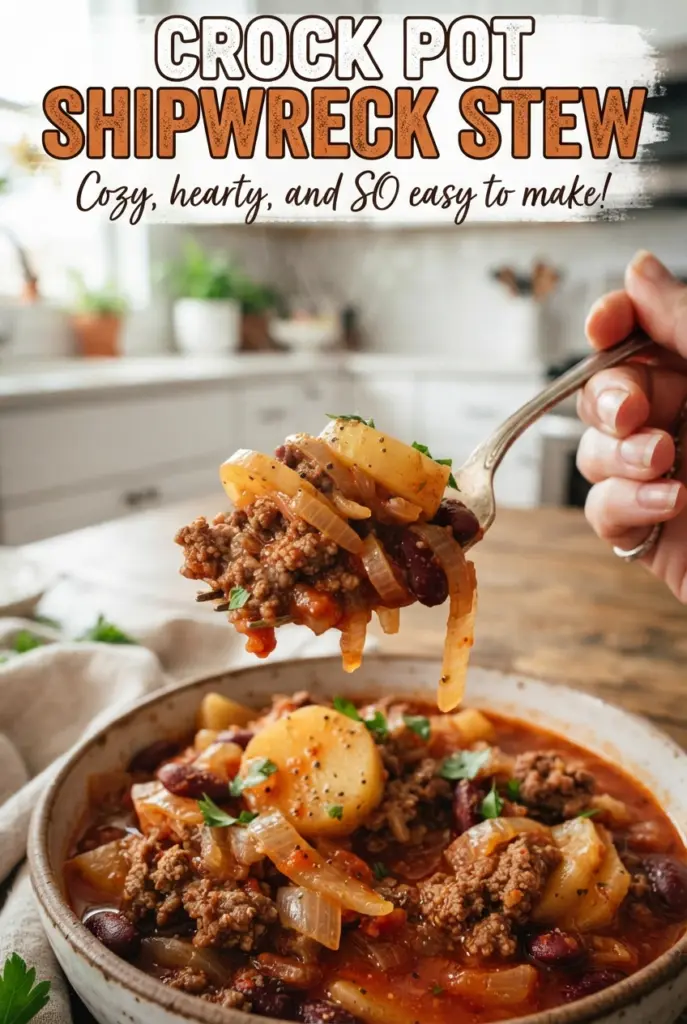
Hearty, layered, and built to feed a crowd, Crock Pot Shipwreck Stew lands somewhere between a weeknight dinner and a pantry-saving pot of comfort. The potatoes soften into the tomato broth, the rice thickens the base as it cooks, and the ground beef gives every spoonful enough richness to stand up on its own. Topped with melted cheddar, it’s the kind of slow cooker meal that tastes like it simmered all day because it did.
What makes this version work is the order. Browning the beef first gives the stew a deeper, meatier base, and layering the potatoes under the meat mixture helps them cook evenly without turning mushy. The rice goes in uncooked, where it drinks up the broth and helps thicken the pot naturally. If you’ve ever ended up with hard potatoes or gummy rice in a slow cooker stew, the details below will keep that from happening.
Keep reading for the layering trick that matters most, the ingredient swaps that actually hold up, and the reheating notes that keep the leftovers from going bland or dry.
The potatoes were tender all the way through and the rice soaked up the broth without turning mushy. I added a little extra cheddar on top and my kids went back for seconds.
Love the layered, cheesy comfort of this Crock Pot Shipwreck Stew? Save it to Pinterest for an easy slow cooker dinner that feeds a crowd.
The Layering Order That Keeps the Rice Tender and the Potatoes Done
Shipwreck stew can go wrong in two predictable ways: the rice turns gluey, or the potatoes stay firm while everything else is done. The fix is in the order. Browning the beef before it goes into the slow cooker keeps the finished stew from tasting flat, and placing the potatoes underneath the meat mixture gives them direct contact with the hot liquid as it starts to build. The rice needs that fully measured broth around it from the start, but it also needs enough space to hydrate without being smashed into a paste.
Another detail that matters here is slicing the potatoes thin and evenly. Thick chunks need longer than the rice, and by the time they soften, the beans and beef can start to lose their texture. Thin slices cook through in the same window as the rest of the pot and hold their shape better when you stir at the end.
What Each Ingredient Is Actually Doing in This Stew

- Ground beef — This is the backbone of the stew. Browning it first builds flavor in the pan and keeps the meat from tasting boiled. Lean beef works fine, but if you use a very lean blend, don’t skip draining off the excess fat or the broth can turn greasy.
- Potatoes — Thin slices cook evenly and help give the stew that old-school, filling texture. Russets soften the most and thicken the broth a little more, while Yukon Golds hold their shape better. Slice them no thicker than 1/4 inch or they’ll lag behind everything else.
- Rice — Uncooked long-grain white rice thickens the broth as it cooks and turns this from soup into stew. Long-grain holds up better than short-grain or instant rice, which can get mushy. If you only have instant rice, add it during the last 45 minutes instead of at the start.
- Tomato soup and diced tomatoes — The soup gives the broth body and a gentle sweetness, while the diced tomatoes add acidity and texture. That combination keeps the stew from tasting thin. You can swap in a second can of diced tomatoes plus a few extra spoonfuls of broth if you want a looser finish, but it won’t be as creamy.
- Cheddar — The cheese should go on at the end so it melts into the top instead of disappearing into the pot. Sharp cheddar gives the stew the best contrast against the tomato base. Pre-shredded cheese works in a pinch, but freshly shredded melts smoother.
Building the Crock Pot So Nothing Turns Mushy
Brown the beef with the onion first
Cook the beef and onion together until the beef loses its pink color and the onion turns soft and translucent. You want the pan to smell savory and a little sweet, not wet or steamed. Drain off the excess fat before adding the garlic, then stir it in for just 30 seconds so it turns fragrant without burning. If the garlic goes in too early, it can turn bitter by the time the stew finishes.
Stack the ingredients in the right order
Spread the sliced potatoes across the bottom of the slow cooker, then add the beef mixture, kidney beans, rice, and celery. That setup helps the potatoes get the most direct heat and keeps the rice from settling into one dense layer at the bottom. Don’t stir everything together before cooking; a layered slow cooker stew holds texture better and cooks more evenly. The vegetables and grains will absorb the tomato broth as it moves downward through the pot.
Pour the broth mixture over the top
Whisk the tomato soup, diced tomatoes, broth, chili powder, salt, and pepper until smooth, then pour it evenly over the layers. The liquid should reach most of the way through the ingredients without leaving dry pockets, but it doesn’t need to drown them. If you see dry rice or potato edges on top, press them down gently with a spoon before covering. Slow cookers trap moisture, so adding too much liquid can leave you with a looser stew than you intended.
Finish with cheddar after cooking
Cook on LOW until the potatoes are tender and the rice is soft but still separate, then stir gently once. Sprinkle the cheddar over the top and cover the pot for about 10 minutes so it melts without turning stringy or oily. If you stir the cheese in too early, it can disappear into the broth instead of giving you that stretchy, savory topping. A short rest after cooking helps the stew thicken a little before serving.
How to Adapt Shipwreck Stew Without Losing the Point of the Dish
Make it with ground turkey
Ground turkey works if you want something lighter, but it needs a little help. Use a good drizzle of oil while browning and don’t skip the onion, since turkey brings less built-in flavor than beef. The stew will taste cleaner and less rich, but the tomato broth and cheddar still give it plenty of body.
Make it gluten-free
Use a gluten-free tomato soup and check the broth label, since those are the two places gluten usually hides. The rice and vegetables are already naturally gluten-free. The texture stays the same as long as the soup you choose still has enough body to help thicken the broth.
Swap the rice for barley or pasta
Barley gives the stew a chewy, heartier texture, but it needs a longer cook time and a little extra broth. Small pasta can work too, but add it near the end or it will overcook and soak up too much liquid. Rice remains the easiest choice because it thickens the stew without requiring any timing changes.
Storage and Reheating
- Refrigerator: Store leftovers in an airtight container for up to 4 days. The rice will keep absorbing liquid, so the stew gets thicker by day two.
- Freezer: It freezes well for up to 2 months, though the potatoes soften a bit after thawing. Cool completely before freezing in portions.
- Reheating: Reheat gently on the stovetop or in the microwave with a splash of broth or water. Stir a few times as it heats so the rice doesn’t clump and the bottom doesn’t dry out.
Questions I Get Asked About This Recipe
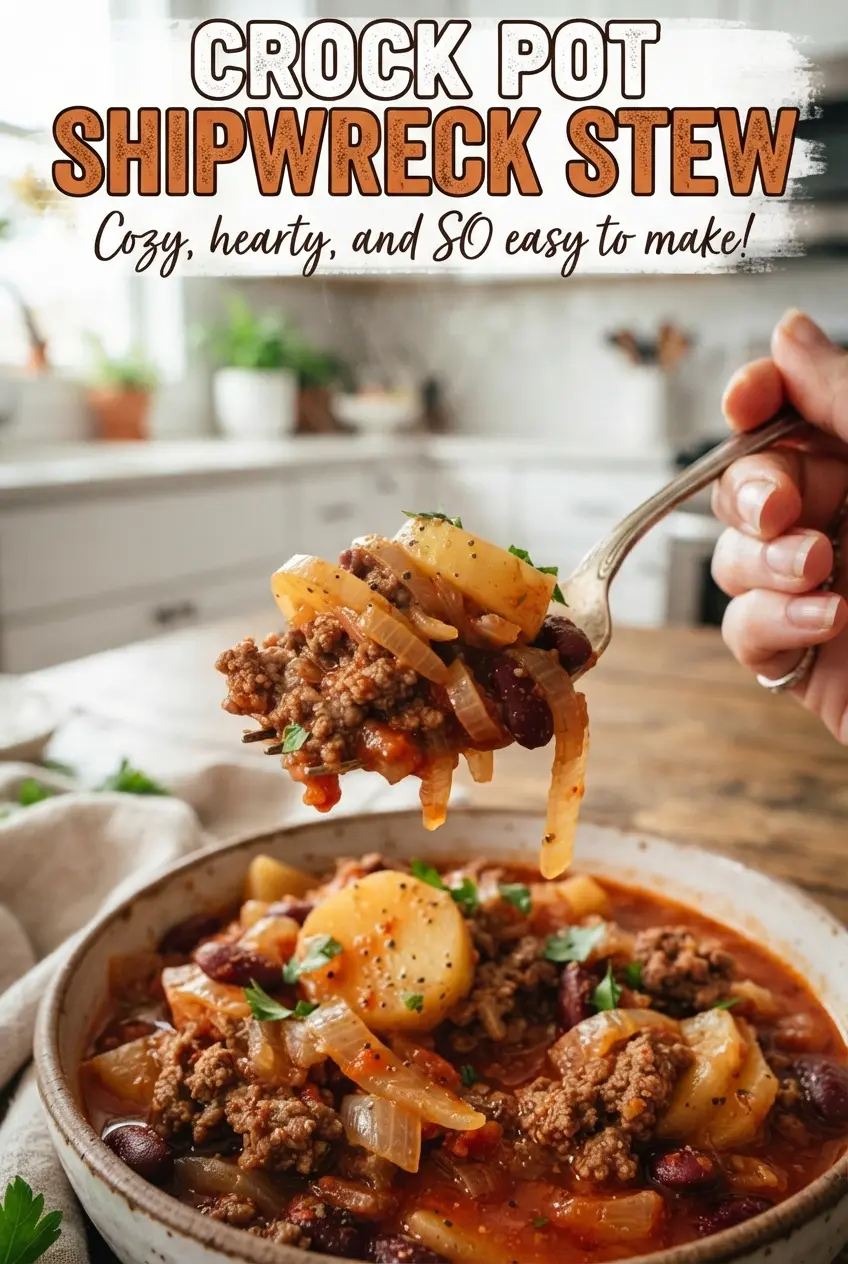
Crock Pot Shipwreck Stew
Ingredients
Equipment
Method
- Heat a cast iron skillet over medium-high heat and brown the ground beef with the diced onion for 8 minutes, stirring until the beef is no longer pink and the onion is softened (visual cue: browned beef and translucent onion). Drain the beef, then add the minced garlic and cook for 30 seconds until fragrant (visual cue: garlic becomes aromatic but does not brown).
- In the crock pot, layer the thinly sliced potatoes, the browned beef mixture, the drained kidney beans, the uncooked long-grain white rice, and the sliced celery in even layers (visual cue: layered bands you can see through the top).
- In a bowl, whisk the tomato soup, diced tomatoes, beef broth, chili powder, salt, and black pepper until smooth, then pour the mixture over the layers (visual cue: top is fully covered with red broth).
- Cover and cook on LOW for 6-7 hours until the potatoes and rice are tender (visual cue: potatoes yield when pierced and rice looks tender throughout).
- Stir gently to combine, then top with shredded cheddar (visual cue: cheese melts from the top as it warms).
- Cover and cook 10 minutes until the cheese melts, then serve hot (visual cue: cheddar is fully melted and slightly pooled over the stew).