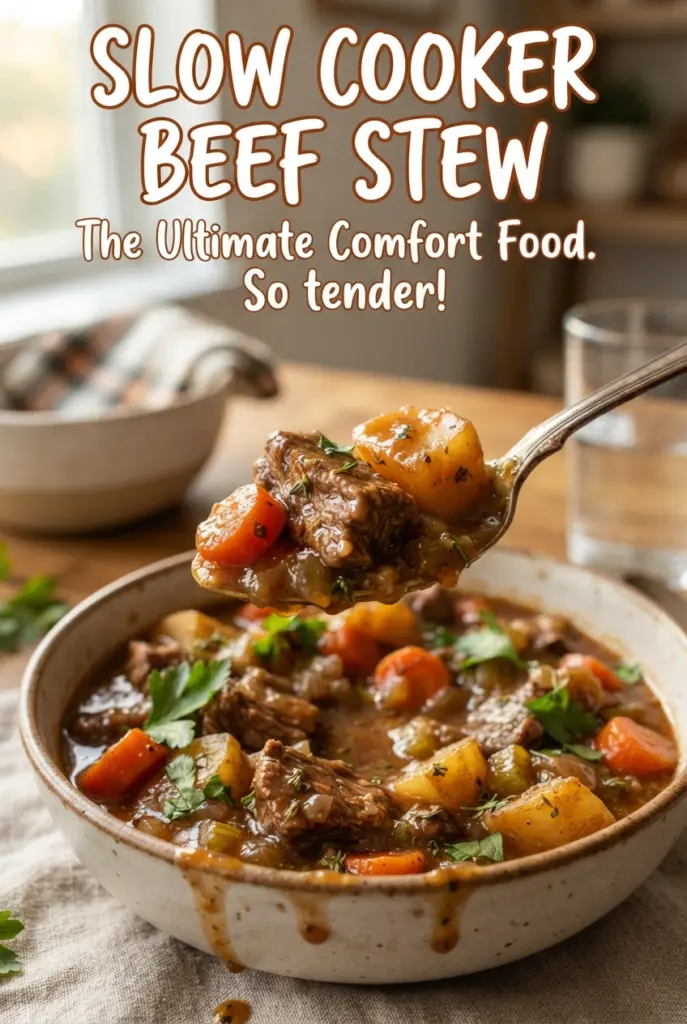
Thick, glossy slow cooker beef stew is the kind of dinner that tastes like it took all day because it did, but most of the work happens while you’re doing something else. The beef turns fork-tender, the potatoes soak up the broth, and the carrots soften just enough to hold their shape without going mushy. It’s the bowl you want when you need dinner to be steady, hearty, and unfussy.
The part that makes this version worth making is the browning step. Tossing the beef with flour before it hits the pan helps the stew thicken naturally, and scraping up the browned bits after the onion and tomato paste build a deeper base than just dumping everything into the slow cooker. That extra step gives you a stew with body instead of a thin broth with meat in it.
Below, I’ll walk through the one part people rush, why the order of ingredients matters, and the small finishing touch that keeps the peas bright instead of dull.
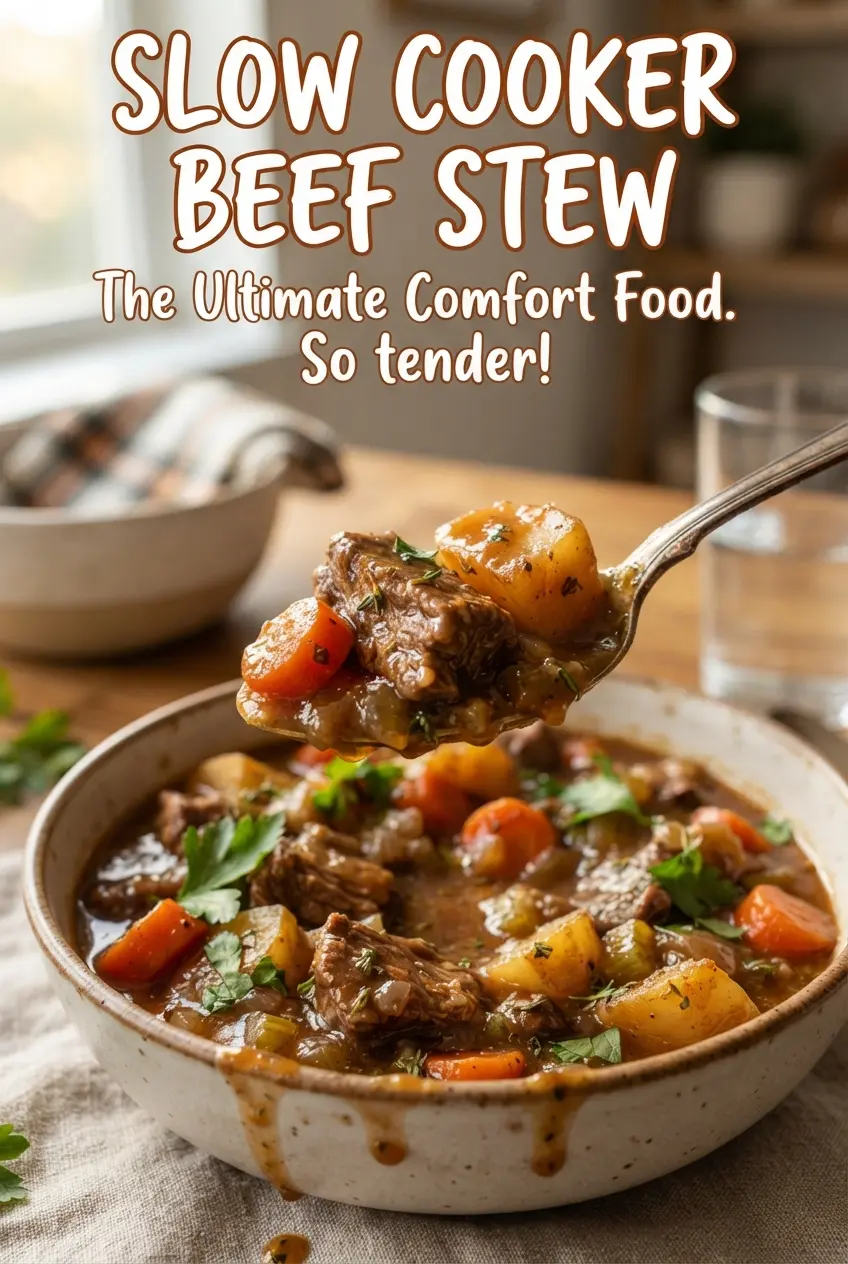
The stew came out rich and thick, and the beef was fall-apart tender after 8 hours on low. I loved that the potatoes held their shape and the peas stayed bright at the end.
Save this slow cooker beef stew for the night you want fork-tender beef, thick broth, and a no-stress dinner that cooks itself.
The Brown Bits Are the Difference Between Good and Flat
The most common mistake with slow cooker beef stew is skipping the sear and expecting the slow cooker to build flavor on its own. It won’t. Browning the beef in batches gives you a crust on the meat, and that crust leaves behind browned bits in the pan that dissolve into the broth and give the stew its deep, savory backbone. If you crowd the pan, the beef steams instead of browns, and the stew tastes thinner even after hours of cooking.
The flour on the beef helps more than thickening. It also encourages a light coating that clings to the meat and lightly thickens the sauce as it simmers. That’s why this stew ends up glossy instead of watery. The other key move is deglazing the pan with broth before everything goes into the slow cooker; if you leave those browned bits behind, you’re tossing out the best flavor in the recipe.
What Each Ingredient Is Actually Doing in the Pot
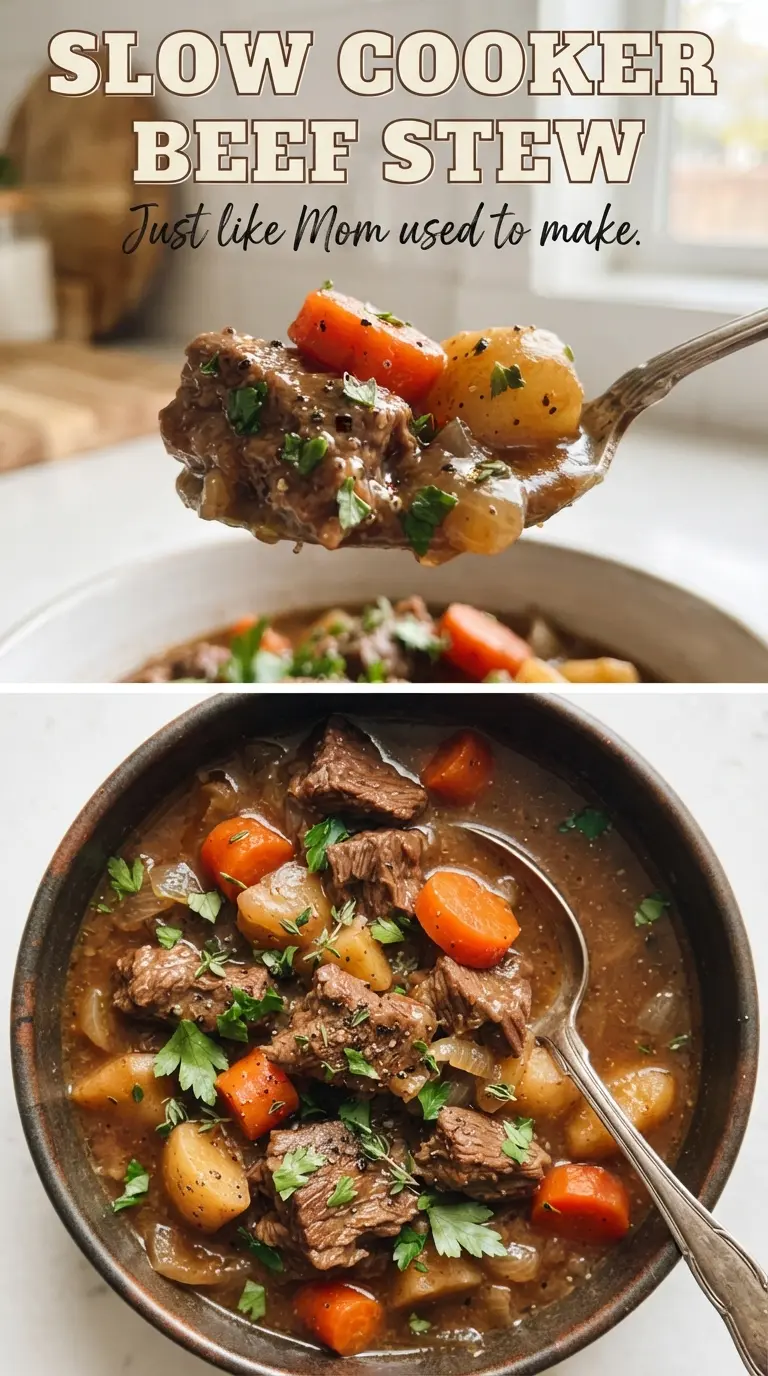
- Beef chuck roast — This is the cut that turns silky and tender in long, moist heat. Leaner stew meat can work in a pinch, but it won’t get quite the same rich, soft texture.
- Flour — It coats the beef and gives the broth body. If you need a gluten-free version, use a 1:1 gluten-free flour blend and brown the beef the same way.
- Tomato paste — Just a small amount adds depth and makes the broth taste cooked, not flat. Let it cook for a full minute with the onions and garlic so the raw edge softens.
- Yukon gold potatoes — They hold their shape better than russets and give the stew a creamy bite without falling apart. Cut them into even chunks so they finish at the same time as the carrots.
- Worcestershire sauce and beef broth — These do the heavy lifting for the stew base. Use a broth you actually like tasting on its own, because there isn’t much to hide behind here.
- Frozen peas — They go in at the end for color and sweetness. Add them too early and they lose their bright taste and turn soft.
How to Build a Thick Stew Without Overcooking the Vegetables
Coating and Browning the Beef
Toss the beef with flour, salt, and pepper until every piece has a light dusting, then brown it in hot oil in batches. You want a deep brown crust on the outside, not gray beef sitting in a puddle. If the pieces won’t release from the pan, they need another minute. Once they lift cleanly, they’re ready to turn. Move the browned beef straight to the slow cooker so the coating stays on the meat instead of sticking in the skillet.
Building the Flavor Base
Cook the onion in the same pan so it picks up the browned flavor left behind by the beef. When the garlic and tomato paste go in, stir constantly for about a minute until the paste darkens slightly and smells less sharp. Then pour in some broth and scrape the pan well. Those browned bits should dissolve into the liquid. That step is what keeps the stew from tasting like separate parts instead of one finished dish.
Slow Cooking Until the Beef Softens
Add the remaining broth, Worcestershire sauce, potatoes, carrots, celery, thyme, and bay leaves, then cover and cook on LOW for 8 hours or HIGH for 4 to 5 hours. The beef is done when it breaks apart easily with a fork and the vegetables are tender but not collapsing. If you cook it past that point on high heat, the potatoes can start to break down before the beef is ready. Low and slow gives the best texture here.
Finishing With Brightness
Stir in the peas during the last 10 minutes so they warm through without turning dull. Pull out the bay leaves before serving, then shower the top with parsley. That fresh green finish matters more than it sounds like it should. It lifts the whole bowl and keeps the stew from tasting heavy all the way through.
Three Ways to Adapt This Stew Without Losing the Point
Gluten-Free Stew
Swap the all-purpose flour for a gluten-free 1:1 blend. The stew still thickens nicely, though the coating on the beef may brown a touch less evenly. Keep the browning step the same, because the flavor still comes from the crust and the pan drippings.
Extra-Hearty Vegetable Version
Add mushrooms with the onions or swap half the potatoes for parsnips. Mushrooms deepen the savory flavor, while parsnips add a little sweetness that works well with the carrots. Keep the total volume about the same so the slow cooker doesn’t get overcrowded.
Lighter, Less Rich Stew
Trim any large pieces of fat from the chuck roast before cubing it and use a low-sodium broth. You’ll lose a little richness, but the stew still gets body from the flour, the beef itself, and the long simmer. Don’t skip the tomato paste or Worcestershire sauce, because they carry the flavor when the broth is lighter.
Storage and Reheating
- Refrigerator: Store in an airtight container for up to 4 days. The broth thickens as it chills, which is normal.
- Freezer: This freezes well for up to 3 months. Cool it completely first, then freeze in portions for easier reheating.
- Reheating: Warm gently on the stove over medium-low heat or in the microwave in short bursts. Add a splash of broth if it looks too thick, and don’t boil it hard or the potatoes can start to break apart.
Questions I Get Asked About This Recipe
Slow Cooker Beef Stew
Ingredients
Equipment
Method
- Toss the beef with flour, salt, and black pepper until evenly coated. Brown in batches in hot olive oil for 4-5 minutes per batch, until browned on the outside, then transfer to the slow cooker (look for deep-brown edges).
- Cook the diced onion in the same pan for 4 minutes, stirring, until softened and lightly golden. Add the minced garlic and tomato paste and cook for 1 minute, until fragrant (don’t let it burn).
- Pour in 1 cup of beef broth and scrape up the browned bits from the pan. Transfer the loosened browned fond to the slow cooker (the liquid should look brown and glossy).
- Add the remaining beef broth, Worcestershire sauce, potatoes, carrots, celery, dried thyme, and bay leaves to the slow cooker. Cover and cook on LOW for 8 hours or on HIGH for 4-5 hours, until the beef is fork-tender (you should be able to press a beef cube with a spoon and it yields).
- Stir in the frozen peas and cook uncovered or covered for the last 10 minutes, until bright green (avoid overcooking). Remove the bay leaves and top with chopped fresh parsley before serving for a fresh color cue.