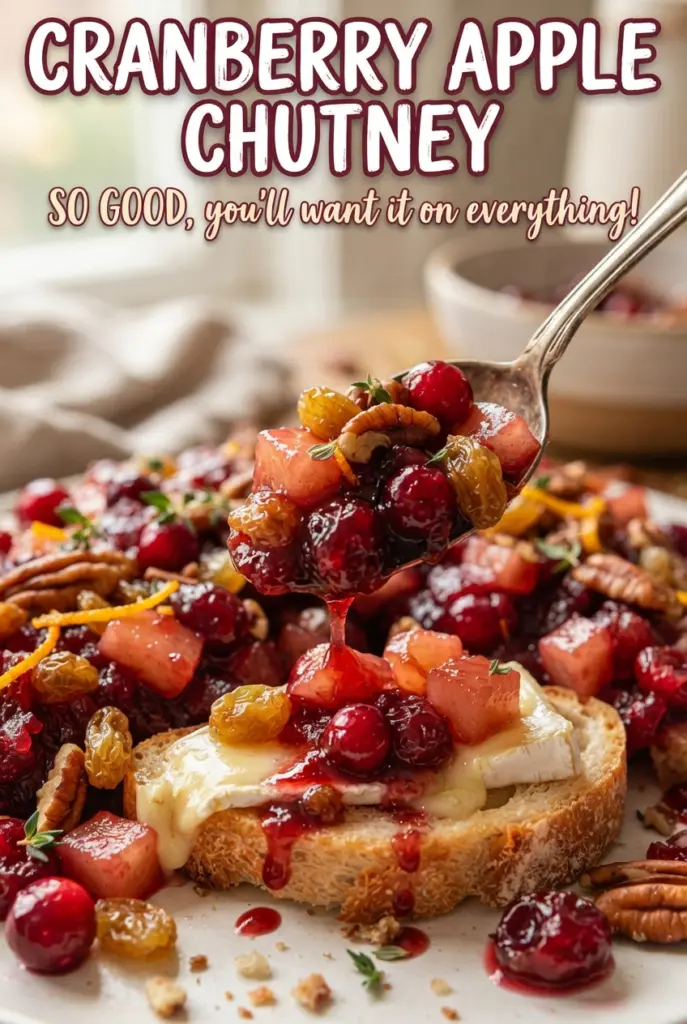
Thick, glossy cranberry apple chutney has a way of turning an ordinary plate of turkey, pork, or cheese into something people keep reaching for. The cranberries soften into a tart, jammy base while the apples hold just enough shape to give each spoonful a little bite. Golden raisins round out the sharpness and the warm spices keep the whole thing from tasting flat.
The balance matters here. Brown sugar and apple cider vinegar do the heavy lifting, but the onions, ginger, cinnamon, and cloves need a few minutes in the simmering liquid before the fruit goes in. That step takes the edge off the raw onion and blooms the spices so the chutney tastes layered instead of one-note. A small pinch of red pepper flakes adds a quiet heat that shows up at the back end, not the front.
Below, I’ve included the small timing and texture cues that keep the chutney thick instead of watery, plus a few ways to adapt it for different meals. It’s one of those make-ahead dishes that gets better after a night in the fridge.
The chutney thickened up beautifully and the apples stayed tender without turning mushy. I served it with leftover turkey sandwiches and my husband kept sneaking spoonfuls from the jar.
Save this cranberry apple chutney for holiday leftovers, cheese boards, and any time you want a sweet-tart condiment with real spice.
The Difference Between Jammy Chutney and Watery Fruit Sauce
The biggest mistake with chutney is rushing the simmer. Cranberries need time to burst and release their natural pectin, and that pectin is what gives the finished chutney its body. If you pull it off the heat too soon, you’ll have a loose sauce that slides off the spoon instead of sitting in a tidy mound beside the food it’s meant to support.
The other trap is adding everything at once. The onion and spices need a short head start in the sweetened vinegar mixture so they soften and lose their raw bite. Once the fruit goes in, the mixture should bubble gently and steadily, not boil hard. A hard boil pushes moisture off too fast and can make the sugar taste sharp instead of rounded.
What Each Ingredient Is Doing In This Chutney
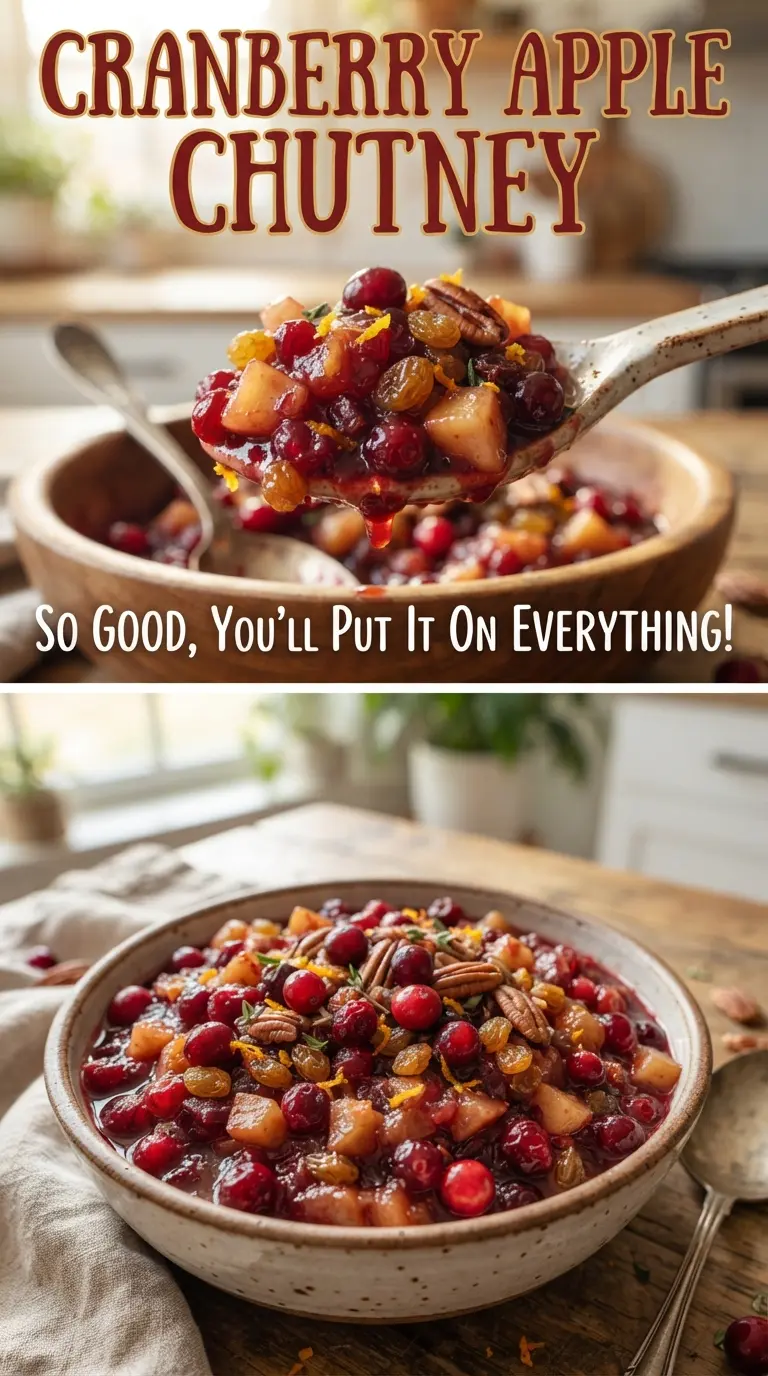
- Cranberries — These are the backbone of the chutney. Fresh cranberries burst and thicken the mixture as they cook, giving you that tart, glossy finish. Frozen cranberries work too; use them straight from the freezer and add a few extra minutes of simmering time.
- Apples — Apples bring sweetness and texture. A firm, crisp variety like Granny Smith, Honeycrisp, or Braeburn holds its shape better than a mealy baking apple. Dice them small so they soften evenly without disappearing.
- Apple cider vinegar — This is what keeps the chutney bright enough to cut through rich food. Regular white vinegar will taste harsher, and balsamic changes the character completely. If you need a swap, use unfiltered cider vinegar first; it gives the cleanest, most natural match.
- Golden raisins — They add little pockets of sweetness and help the chutney feel full instead of one-dimensional. Regular raisins work, but golden raisins stay lighter in color and blend more naturally into the fruit. If you don’t have them, chopped dried apricots are the best substitute.
- Brown sugar and spices — Brown sugar gives deeper caramel notes than white sugar, and the cinnamon-clove combination makes the chutney taste warm instead of candy-sweet. The cloves are strong, so don’t overmeasure them. A small excess will dominate the whole batch.
Getting the Pot to the Right Texture Before It Cools
Building the Syrup Base
Start by boiling the brown sugar, vinegar, and water until the sugar disappears and the liquid looks clear and glossy. That first boil does more than dissolve the sugar; it sets the flavor foundation so the fruit can cook in a seasoned liquid instead of plain water. If the sugar is still grainy when the fruit goes in, the texture can turn sandy later.
Softening the Aromatics
Add the onion, ginger, cinnamon, cloves, red pepper flakes, and salt, then simmer for about five minutes. The onion should lose its raw bite and turn translucent around the edges, and the spices should smell fuller as they bloom in the hot liquid. If the heat is too high here, the mixture can reduce before the onion softens, which makes the final chutney taste sharp.
Cooking the Fruit Until It Mounds
Stir in the cranberries, apples, and raisins, then keep the pot at a steady simmer for 20 to 25 minutes, stirring often. You’re looking for the cranberries to burst and the apples to turn tender while still holding their shape. The chutney is ready when it looks thick, shiny, and jammy enough to leave a trail on the spoon. It will still loosen a little while hot, so don’t chase a fully set texture in the pot.
Cooling for the Final Thicken
Let the chutney cool completely before judging the texture. This is where it tightens up the most, and it can go from spoonable to perfectly spreadable as it sits. If it looks a touch loose right off the stove, that usually fixes itself once the pectin and sugar finish settling in the fridge.
How to Adapt This Chutney for Different Meals
For a smoother chutney
Cook the apples a few minutes longer and stir more often so they break down into the cranberries. You’ll lose some of the chunky texture, but you’ll gain a softer spread that works especially well on sandwiches or alongside roast pork.
For a less sweet version
Cut the brown sugar back by 1/4 cup and let the vinegar and spices carry more of the flavor. The chutney will taste sharper and more savory, which pairs nicely with rich meats and aged cheese, but it won’t have quite as glossy a finish.
For a vegan holiday spread
This recipe already works for a vegan table as written. Serve it with roasted vegetables, crackers, or dairy-free cheese, and it still gives you the same tart-sweet contrast that makes it useful beside richer dishes.
Storage and Reheating
- Refrigerator: Store in a covered jar or airtight container for up to 2 weeks. The flavor deepens after a day, and the texture firms up as it chills.
- Freezer: It freezes well for up to 3 months. Leave a little headspace in the container because the chutney expands as it freezes.
- Reheating: Most of the time you can serve it cold or at room temperature. If you want it warm, heat it gently on the stove over low heat. High heat can loosen the texture and dull the bright vinegar finish.
Answers to the Questions Worth Asking
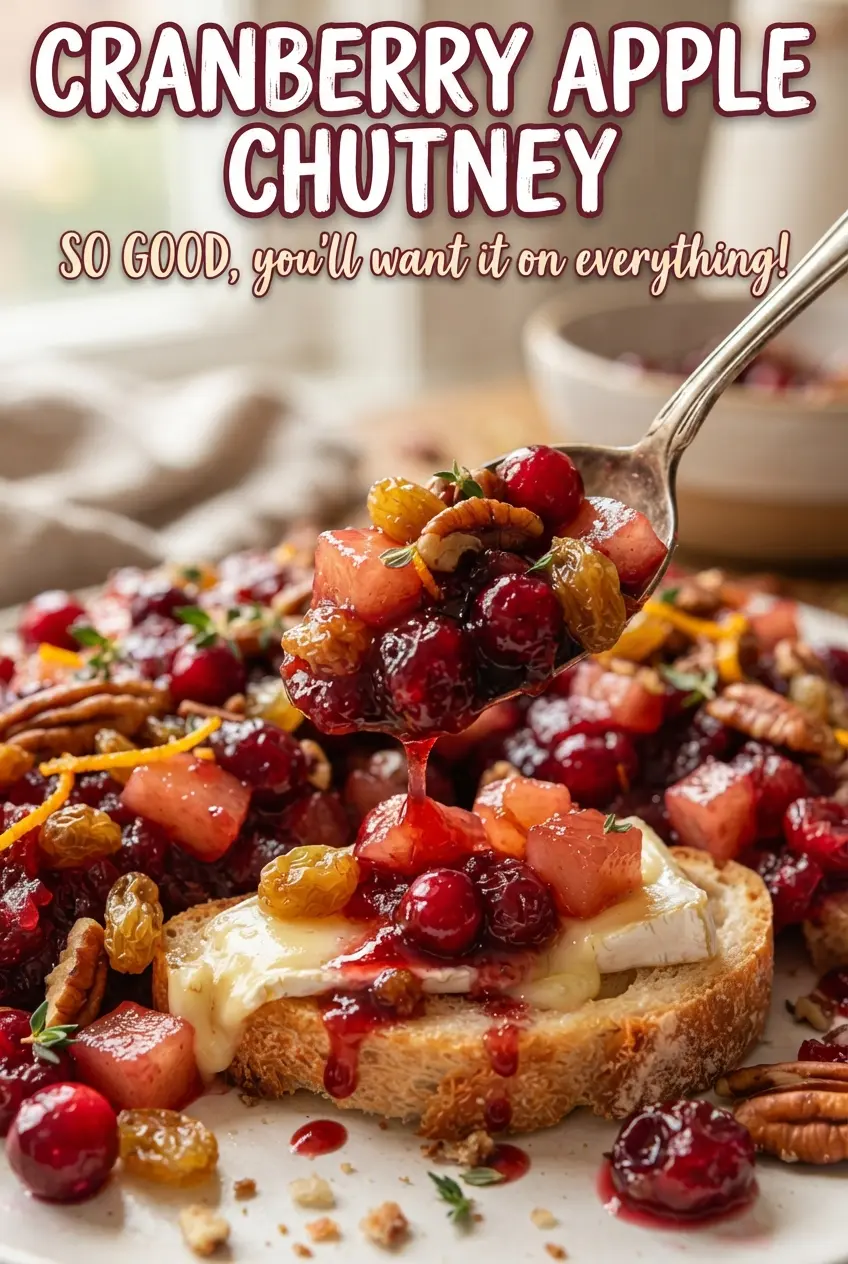
Cranberry Apple Chutney
Ingredients
Equipment
Method
- In a saucepan, combine brown sugar, apple cider vinegar, and water; heat until the mixture reaches a rolling boil, about 2-4 minutes. Visual cue: you should see steady bubbling across the surface.
- Add red onion, fresh ginger, ground cinnamon, ground cloves, red pepper flakes, and salt, then stir to combine. Simmer for 5 minutes, stirring occasionally, until the flavors meld.
- Stir in fresh cranberries, peeled and diced apples, and golden raisins. Bring back to a gentle simmer, then keep the heat at a steady simmer.
- Simmer for 20-25 minutes, stirring often, until the chutney turns thick and jammy. Visual cue: the spoon should leave trails and the mixture should cling to the pan.
- Cool the chutney completely at room temperature, about 1 hour, then refrigerate until chilled. Visual cue: it will thicken further as it cools.
- Serve chilled or slightly warmed alongside turkey, pork, or as part of a cheese board. Visual cue: spoon a mound so it holds its shape.