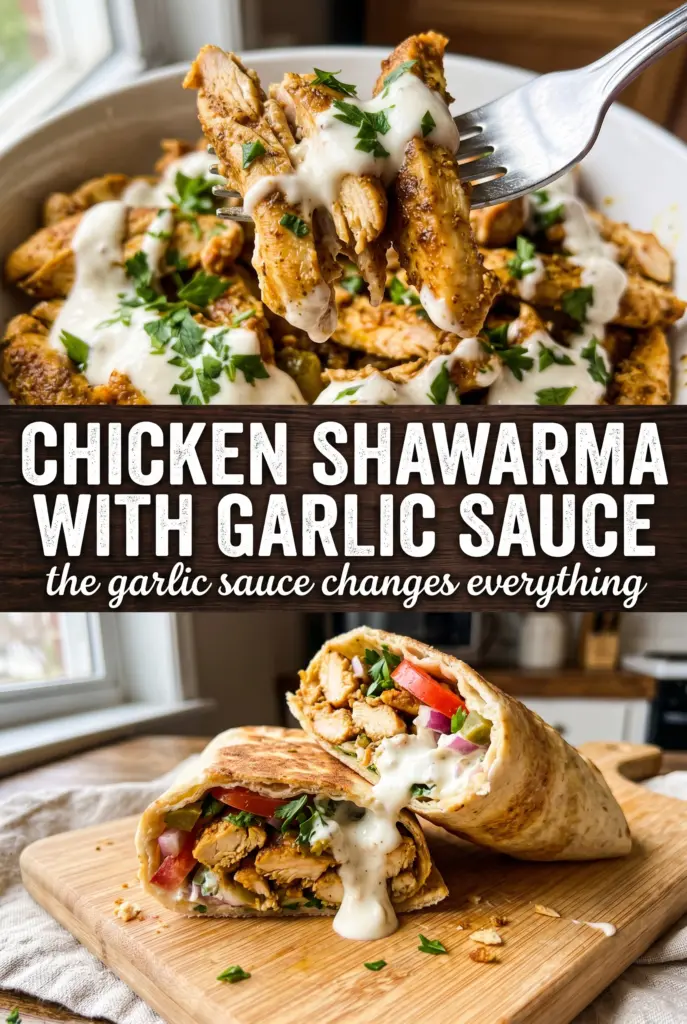
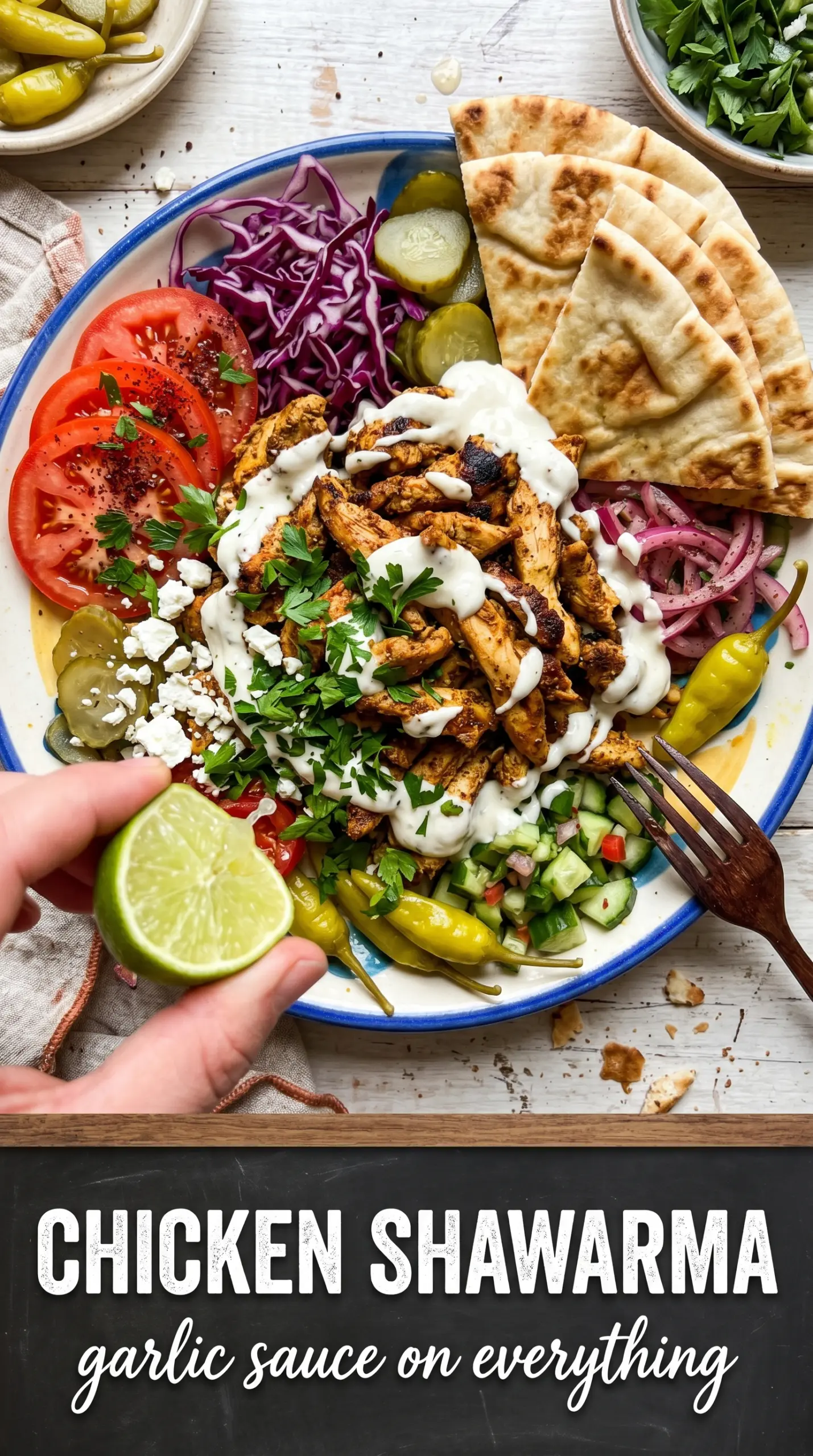
Deeply golden chicken shawarma has a way of disappearing fast once it hits the table. The edges turn crisp and caramelized in the pan, the center stays juicy, and the warm spice rub clings to every slice without tasting heavy. Paired with a cool garlic sauce, fresh tomato, cucumber, and pickled onions, it lands in that sweet spot where dinner feels exciting but still completely doable on a weeknight.
The trick is giving the chicken time to marinate so the spices and lemon can work into the meat before it ever touches the skillet. Chicken thighs are the right choice here because they stay tender under high heat and take on browning better than breasts. A hot cast iron pan matters too. You want those dark, fragrant edges that make shawarma taste like shawarma, not pale chicken with seasoning on top.
Below, I’m breaking down the part that matters most: how to get the spice coating bold without burning it, how to keep the garlic sauce sharp and creamy, and how to adjust the dish if you want a lighter or dairy-free version.
The chicken got those crispy little browned edges in the skillet, and the garlic sauce was thick enough to stay in the pita instead of running everywhere. My husband asked if I could put it on the menu again next week.
Like this chicken shawarma with garlic sauce? Save it to Pinterest for warm pita nights when you want spiced, juicy chicken with a creamy toum-style finish.
Why the Marinade Needs Time Before the Pan
The biggest mistake with shawarma at home is rushing the marinade and expecting the spice mix to do all the work on the surface. Cumin, coriander, paprika, turmeric, cinnamon, and cayenne need time with the lemon and garlic to season the chicken all the way through, especially when you’re using thighs. A quick toss before cooking leaves the flavor one-note. Two hours gives you a noticeable difference. Overnight gives you chicken that tastes seasoned from the inside out.
The other thing that matters is heat management. If the pan isn’t hot enough, the chicken steams and the spices taste dull. If the heat is too high from the start, the garlic in the marinade can scorch before the chicken browns. Medium-high heat in a heavy skillet is the sweet spot here. You want a steady sizzle the moment the chicken hits the pan, plus enough time for the edges to go dark gold without drying out the meat.
- Chicken thighs — These stay juicy under high heat and are much more forgiving than breasts. If you use breasts, slice them thinner and pull them the second they hit 165°F so they don’t dry out.
- Turmeric and cinnamon — These are what give shawarma its recognizable warmth. Don’t skip them. Even small amounts change the whole dish.
- Lemon juice — It brightens the marinade and helps the chicken taste fuller, not just spicier. Too much can toughen the surface if you marinate far past overnight, so keep it in the 2-hour to 12-hour range.
- Cast iron skillet — It holds heat better than a thin pan and gives the chicken the browned edges that make this recipe work. A nonstick pan will cook the chicken through, but it won’t give you the same crust.
What Each Part Is Doing in the Garlic Sauce
The sauce is intentionally simple because the chicken already brings the spice. Mayonnaise gives you a thick, clingy base that won’t break when it hits warm chicken. Greek yogurt makes it tangier and lighter, but it does loosen the texture a little. Either way, the garlic should be minced finely so it spreads through the sauce instead of hitting in sharp little chunks.
Lemon juice is doing more than adding brightness. It cuts through the richness and keeps each bite from feeling heavy. If you want a sauce that tastes sharper and more like toum, use mayo. If you want something a little fresher and lighter, use Greek yogurt. Salt matters here more than people think. Underseasoned garlic sauce tastes flat no matter how much garlic you add.
- Mayonnaise — Best for a thick, wrap-friendly sauce. It gives the closest texture to a shawarma shop style garlic sauce without extra effort.
- Greek yogurt — A good lighter swap, but the sauce will be looser and tangier. Use full-fat yogurt if possible so it doesn’t turn watery.
- Fresh garlic — This is the flavor backbone. Jarred minced garlic won’t give the same clean bite.
- Lemon juice — Start with the stated amount, then taste. The sauce should feel bright enough to wake up the chicken, not sour.
Building the Browning Without Drying Out the Chicken
Coating the Chicken Evenly
Work the marinade into every surface of the thighs until they look glossy and evenly coated. Dry patches won’t brown the same way, and uneven coverage means some bites taste heavily spiced while others taste plain. If you have time, let the chicken sit uncovered in the refrigerator for the last 20 to 30 minutes of marinating so the surface dries slightly and browns better in the skillet.
Getting the Pan Hot Enough
Preheat the cast iron before the chicken goes in. The oil should shimmer, not smoke aggressively. When the chicken hits the pan, you should hear an immediate, confident sizzle. If the sound is weak, the meat will release liquid before it browns, and that liquid is what keeps the flavor muted.
Searing and Resting
Cook the thighs for 6 to 7 minutes per side, depending on thickness, until they’re deeply browned and the centers read 165°F. Don’t keep poking and moving them around; let them sit long enough to form that crust. Once they’re done, rest them for 5 minutes before slicing. If you slice too soon, the juices run out and the meat looks drier than it is.
Finishing the Wrap
Warm the pita before assembling so it bends without tearing. Slice the chicken thinly against the grain, then layer it with garlic sauce, tomato, cucumber, and pickled onions. The pickles matter because they cut through the richness and keep the wrap from tasting one-note. Build it while the chicken is still warm so the sauce softens the pita in the best way.
Three Ways to Make This Shawarma Fit Your Table
Dairy-Free Garlic Sauce
Use mayonnaise instead of Greek yogurt and you’ll get a richer sauce that holds up beautifully in wraps. It’s the better choice if you want a more classic shawarma feel and don’t want any chance of the sauce thinning out from the chicken’s heat.
Chicken Breast Version
Breasts work if that’s what you have, but they need thinner slices and a shorter cook time. They won’t be as forgiving as thighs, so pull them as soon as they’re cooked through. The flavor stays the same, but the texture is leaner and a little less plush.
Low-Carb Shawarma Bowl
Skip the pita and serve the sliced chicken over chopped lettuce, cucumber, tomato, and pickled onions. You still get all the spiced chicken and garlicky sauce, just without the bread. It’s a good option when you want the same meal with a lighter base.
Storage and Reheating
- Refrigerator: Store the chicken and sauce separately for up to 4 days. The chicken holds up well, and the sauce may loosen a little if it sits.
- Freezer: The cooked chicken freezes well for up to 2 months. Freeze it sliced or whole, then thaw in the refrigerator before reheating. The garlic sauce doesn’t freeze well, so make that fresh.
- Reheating: Reheat the chicken in a skillet over medium heat with a small splash of water just until hot. Microwaving works in a pinch, but it softens the browned edges, which is the part you want to keep.
Questions I Get Asked About This Recipe
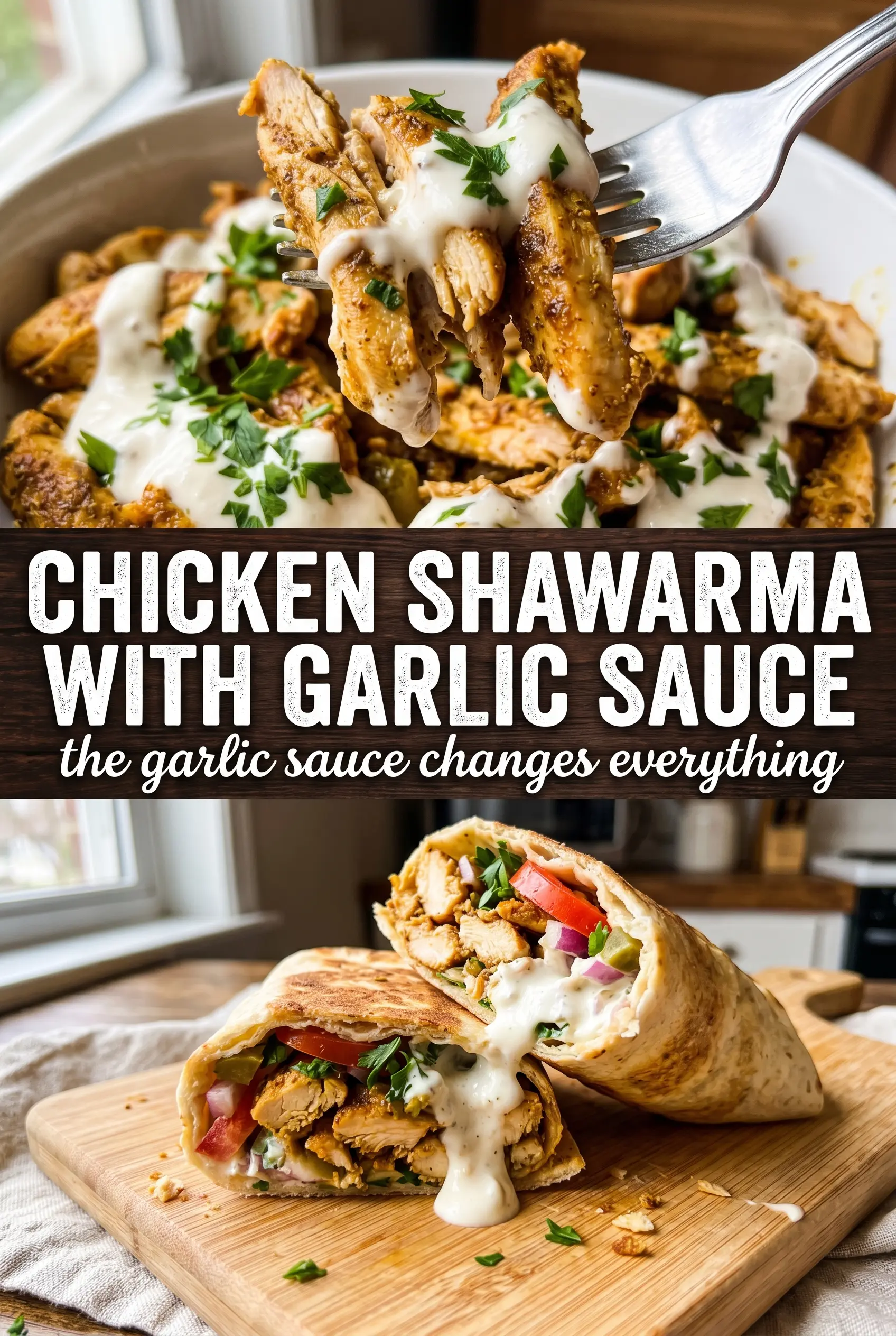
Chicken Shawarma with Garlic Sauce
Ingredients
Equipment
Method
- Mix cumin, coriander, smoked paprika, turmeric, cinnamon, cayenne, minced garlic, lemon juice, salt, and black pepper with olive oil until a paste forms. Coat the chicken thighs thoroughly and place them in the marinade.
- Marinate the chicken for 2 hours (or overnight) in the refrigerator for best flavor. Keep the chicken covered so the spices stay on the surface.
- Heat a cast iron skillet until hot over medium-high heat, then add the marinated chicken thighs in a single layer. Cook for 6–7 minutes until deeply golden.
- Flip the chicken and cook for another 6–7 minutes until deeply golden and cooked through. Avoid crowding so the surface can brown.
- Rest the chicken for 5 minutes off the heat, then slice thinly for easy piling into pita. This helps the juices stay inside the meat.
- Mix mayonnaise or Greek yogurt, minced garlic, and lemon juice until smooth, then add salt to taste. Taste and adjust the lemon and salt so the sauce is bright.
- Serve the sliced shawarma chicken in warm pita with garlic sauce, tomato, cucumber, and pickled onions. Load generously so the chicken and sauce look piled and overflowing.