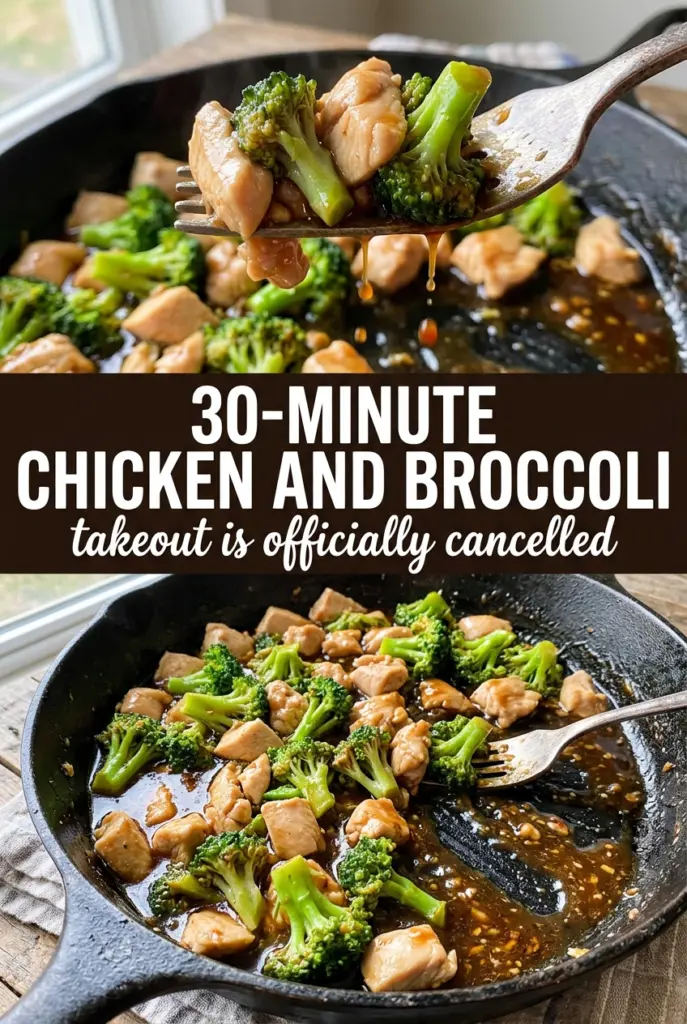
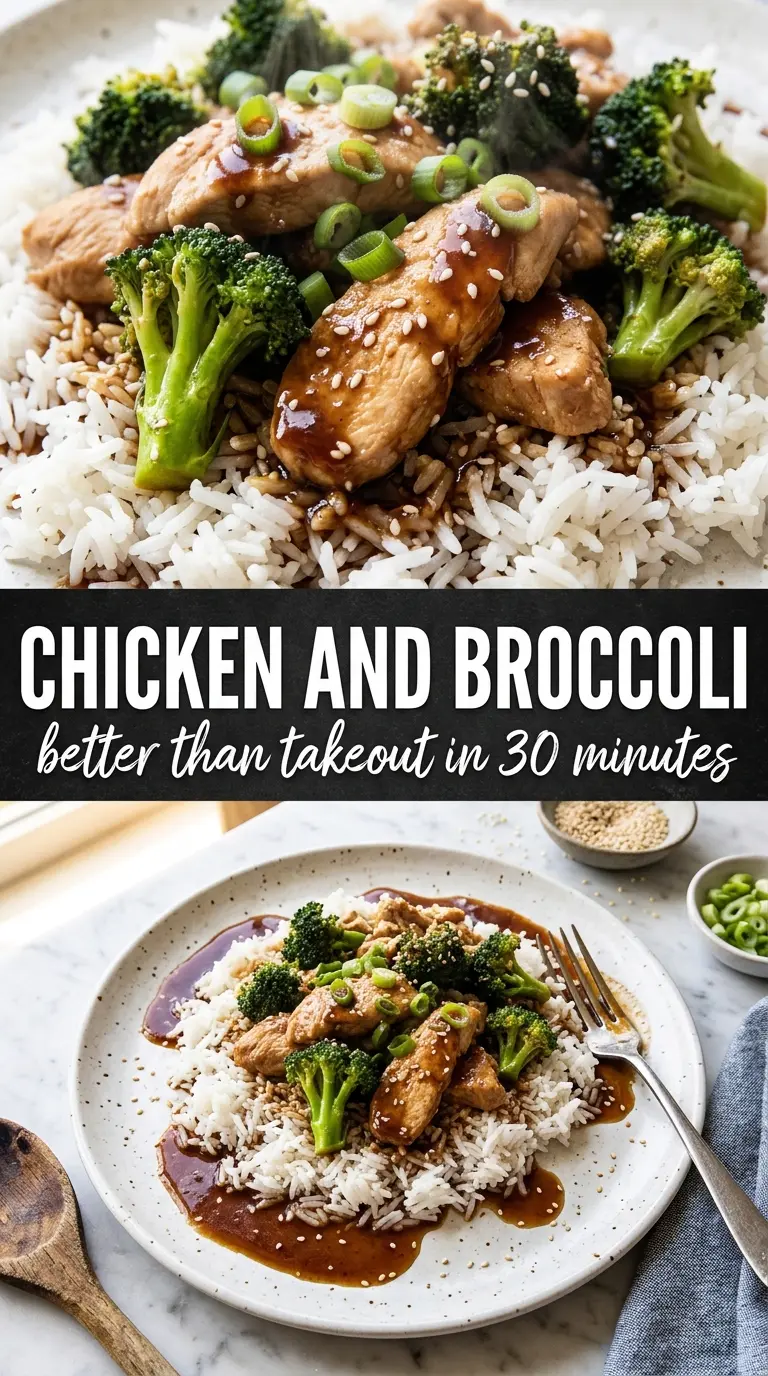
Glossy chicken, crisp-tender broccoli, and a savory garlic soy sauce make this the kind of dinner that disappears fast and still feels like you cooked with intention. The chicken stays juicy because it’s seared first and finished only at the end, and the broccoli keeps its bite instead of turning soft and dull in the sauce. Piled over rice, it lands right in that sweet spot between takeout comfort and weeknight practicality.
The trick here is simple: high heat, thin-sliced chicken, and a sauce that gets thickened at the very end instead of simmering away for too long. That gives you a shiny coating instead of a watery pan sauce. The garlic and ginger go in after the vegetables have already picked up some color, which keeps them fragrant instead of bitter.
Below, I’m walking through the part that matters most — how to keep the chicken browned, the broccoli bright, and the sauce clinging to every bite. There’s also a practical swap note if you need to work around what’s in the fridge.
The sauce thickened up in less than a minute and coated every piece of chicken instead of pooling at the bottom. I kept the broccoli a little crisp, and even my picky eater went back for seconds.
Save this 30-minute chicken and broccoli for the nights when you want glossy takeout-style sauce and crisp broccoli without waiting on delivery.
The Reason Stir-Fry Sauce Turns Thin, Not Glossy
A lot of chicken and broccoli ends up tasting fine but looking tired because the sauce is added too early and boiled too long. Cornstarch needs a hot pan and a short finish to do its job. If it simmers for several minutes, it can thin back out or turn pasty instead of silky.
This version keeps the chicken and broccoli moving, then thickens the sauce at the very end so it clings to the food instead of sitting underneath it. The other thing that matters is spacing the chicken out in the pan. Crowding makes it steam, and steamed chicken never picks up the same savory edges that give this dish its takeout-style depth.
What Each Ingredient Is Actually Doing in This Pan
- Chicken breast — Thin slices cook fast and stay tender. If the pieces are thick, they’ll sear on the outside before the center is done. Slice against the grain and keep the pieces close in size so they finish at the same time.
- Broccoli florets — Fresh broccoli gives you the best bite here. Frozen can work, but it releases more water and softens faster, so use it only if you can cook off that moisture in a very hot pan. Smaller florets brown a little at the edges and fit better with the chicken.
- Oyster sauce — This is the ingredient that adds body and that deep, savory note you notice in good takeout-style stir-fry. There isn’t a perfect swap for the same depth, but hoisin sauce is the closest backup if that’s what you have, though it will lean sweeter.
- Cornstarch slurry — This is what turns the sauce from thin and salty into glossy and clingy. Stir it again before adding it, since the starch settles fast. If you dump dry cornstarch straight into the pan, you’ll get lumps.
- Ginger and garlic — These go in late because they burn fast. Fresh is worth it here; dried versions won’t give the same bright finish. Thirty seconds in the center of the pan is enough to wake them up without turning them bitter.
- Sesame oil — Use it for aroma, not for frying. The flavor disappears if it’s cooked hard for too long, so it belongs in the sauce where it can stay fragrant.
How to Keep the Chicken Browned and the Broccoli Crisp
Whisk the Sauce Before the Heat Goes On
Mix the soy sauce, oyster sauce, brown sugar, and sesame oil first so the pan can stay focused on cooking instead of measuring. That also gives the sugar time to dissolve, which helps the sauce turn smooth instead of grainy when it hits the pan. Keep the cornstarch slurry separate until the end. It thickens fast, and if it sits too long, it settles into the bottom of the cup.
Give the Chicken Space in the Pan
Heat the oil until it shimmers, then add the chicken in a single layer. You want an immediate sizzle; if the pan is too cool, the chicken will leak juices and stew. Let the first side get some color before stirring. If you keep moving it too soon, you lose the browned bits that give the sauce more depth.
Cook the Broccoli Until It Turns Bright, Not Soft
When the chicken comes out, add the broccoli to the hot pan and let it cook for a few minutes until it turns vivid green and the edges start to blister. Tender-crisp is the goal. If the florets look dull olive, they’ve gone too far and will keep softening once the sauce goes in. The pan should stay hot enough that the broccoli never turns watery.
Finish with Garlic, Ginger, and the Sauce
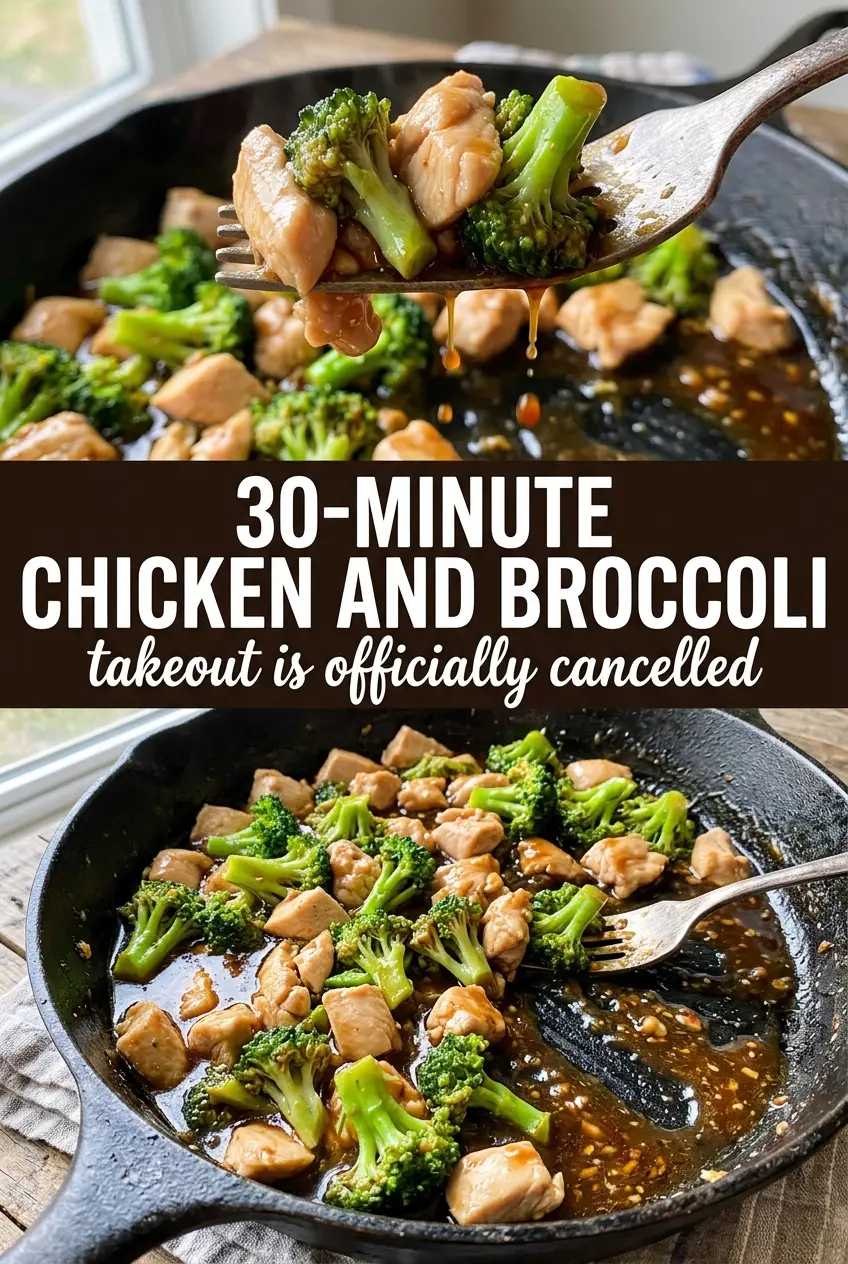
Push the broccoli aside, drop the garlic and ginger into the center, and stir them just until fragrant. That short burst keeps them sharp and aromatic. Add the chicken back in, pour the sauce over everything, then stir in the slurry and toss continuously. The sauce should thicken in about a minute and coat the chicken in a shiny layer instead of pooling at the bottom.
How to Adapt This for What You’ve Got in the Fridge
Make It Gluten-Free Without Losing the Gloss
Use a gluten-free soy sauce or tamari and check that your oyster sauce is labeled gluten-free. The texture stays the same because the cornstarch is still doing the thickening, and the flavor stays close to the original. This is the easiest swap in the recipe.
Use Chicken Thighs for a Richer Result
Boneless thighs work well and stay juicy even if you let them go a little longer in the pan. They’ll give you a slightly richer bite than breast meat, though the final dish will look a bit darker. Cut them into thin strips so they sear instead of braise.
Swap the Broccoli for Snow Peas or Bell Peppers
Snow peas keep the dish light and crisp, while bell peppers add sweetness and a softer bite. Cook them less than broccoli because they need less time in the pan. If you use peppers, slice them thin so they can pick up the sauce without turning floppy.
Vegetarian Version With Tofu
Use firm tofu, press it well, and brown it before the vegetables so it picks up some texture. You’ll miss the chicken’s savory meatiness, so lean on the oyster sauce substitute if needed, or use a vegetarian stir-fry sauce. The rest of the method stays the same.
Storage and Reheating
- Refrigerator: Store leftovers for up to 4 days. The broccoli softens a little, but the sauce keeps the chicken from drying out.
- Freezer: It freezes, but the broccoli loses its crisp texture. Freeze only if you’re fine with a softer stir-fry after thawing.
- Reheating: Warm it in a skillet over medium heat with a splash of water until the sauce loosens and the chicken is hot. The mistake to avoid is microwaving it too long, which can make the chicken rubbery and the sauce sticky instead of glossy.
Answers to the Questions Worth Asking
30-Minute Chicken and Broccoli
Ingredients
Equipment
Method
- Whisk soy sauce, oyster sauce, brown sugar, and sesame oil together until smooth.
- Heat 2 tablespoons vegetable oil in a wok or large skillet over high heat, add chicken in a single layer, and cook 3–4 minutes until golden, then remove and set aside.
- Add remaining oil to the wok and cook broccoli for 3–4 minutes until bright green and tender-crisp, then push the broccoli to the sides.
- Add garlic and ginger to the center and cook 30 seconds, then stir them into the chicken and broccoli.
- Pour the sauce over everything and stir to coat, then add the cornstarch slurry and toss until the sauce thickens and coats everything, about 1 minute.
- Serve immediately over cooked rice with sesame seeds on top.