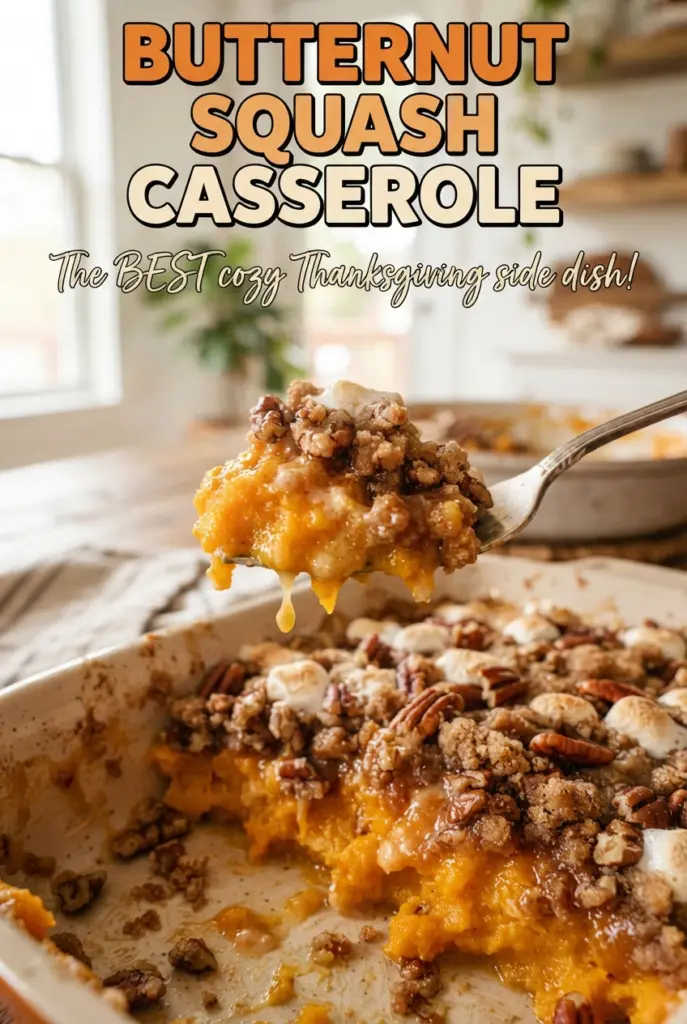
Butternut squash casserole lands in that sweet spot between cozy side dish and dessert-adjacent comfort food. The squash bakes up velvety and smooth, then gets capped with a buttery pecan streusel that turns crisp and golden in the oven. What keeps people coming back to it is the contrast: soft, lightly sweet squash underneath, crunchy brown sugar topping on top.
The trick is to drain the squash well after boiling and mash it while it’s still hot enough to absorb the butter, sugar, and eggs evenly. That keeps the base creamy instead of watery or grainy. A little vanilla and cinnamon round out the squash without pushing it into pie territory, and the pecans bring the texture that makes each bite feel finished.
Below, I’ll walk through the part that matters most: how to keep the casserole rich without making the topping soggy. I’ve also included a few swaps that work if you need to adjust the sweetness, skip the nuts, or make it ahead for a holiday table.
The squash turned out creamy instead of watery, and that pecan topping stayed crunchy even after it sat on the table for a bit. My husband went back for seconds and asked if I could make it again for Sunday dinner.
Save this butternut squash casserole for the kind of side dish that bakes up creamy, buttery, and topped with a crisp pecan streusel.
The Reason This Casserole Stays Creamy Instead of Watery
Butternut squash holds a lot of water, and that’s the difference between a casserole that slices cleanly and one that turns loose in the dish. Boiling gets the squash tender fast, but it also means you have to drain it well and give the steam a minute to escape before mashing. If you skip that part, the filling thins out in the oven and the topping sinks instead of staying perched and crisp.
The eggs matter here too. They set the filling just enough to give the casserole body without making it dense. If the squash is mashed while still warm, the butter melts in smoothly and the mixture turns silky instead of lumpy, which is exactly what you want under a streusel topping.
- Drainage is everything — after boiling, let the squash sit in the colander long enough for the surface moisture to drip off. A few extra minutes here keep the casserole from turning soupy.
- Warm squash blends better — the butter, sugar, and milk incorporate more evenly when the squash is still hot. Cold squash fights you and leaves pockets of unmixed egg or sugar.
- Don’t overmix the topping — the streusel should stay crumbly, not paste-like. If you press it into a dough, it bakes up heavy instead of crisp.
What the Squash, Butter, and Pecans Each Bring to the Pan

- Butternut squash — choose a firm, heavy squash with deep orange flesh. Fresh squash gives the best flavor and the most body, but pre-cut squash works if that’s what you can manage; just cook it until truly soft so it mashes smooth.
- Butter — this is what gives both the filling and the topping their richness. Melted butter blends cleanly into the squash and helps the flour-and-pecan topping clump into those good crumbly bits instead of drying out.
- Brown sugar — it adds a deeper sweetness than white sugar and helps the casserole taste more rounded. If you want a little less sweetness, cut it back slightly in the filling, but keep enough in the topping to help it brown.
- Pecans — they’re not just garnish here. They bring the crunch that balances the soft filling, and walnuts can stand in if needed, though they taste sharper and a little less buttery.
- Cinnamon and vanilla — these don’t make the dish taste like dessert; they warm the squash and keep the flavor from falling flat. Fresh spices matter here because the casserole is gentle and every note shows up.
Building the Filling and Streusel in the Right Order
Cooking the squash until it collapses
Boil the cubed squash until it’s completely tender and a fork slips through with no resistance, usually around 15 minutes. If the center still feels firm, the mash will stay chunky no matter how much you work it. Drain it thoroughly, then let the pieces sit for a minute or two so excess water can steam off before you mash.
Turning the base silky
Mash the hot squash with the butter, brown sugar, eggs, milk, vanilla, cinnamon, and salt until the mixture looks smooth and uniform. A few tiny soft bits are fine, but you don’t want a chunky texture here. If the eggs seem to curdle or streak, the squash was too cool or the mixture sat too long before baking, so stir faster and get it into the dish while everything is still warm.
Keeping the topping crumbly
Mix the flour, chopped pecans, remaining butter, and remaining brown sugar just until the mixture forms uneven crumbs. Those rough crumbs are what bake into a crisp top. If the topping turns into a smooth paste, the butter was too warm or the mixture was overworked; chill it for a few minutes and break it up with your fingers before sprinkling it over the casserole.
Baking until the edges bubble
Bake until the topping is golden and the edges are actively bubbling, which tells you the filling has set and the sugar in the topping has caramelized. Pulling it too early leaves the center loose; baking it too long can dry out the squash. Let it rest a few minutes before serving so the filling settles and scoops cleanly.
How to Adapt This for Different Tables and Different Pantries
Dairy-Free Version with the Same Creamy Center
Swap the butter for a good plant-based butter and use an unsweetened non-dairy milk, preferably one with some body like oat milk. The filling will still bake up creamy, though the flavor will be a little less rich and a little more neutral. Keep the pecan topping as is, or use a dairy-free butter substitute that firms up when cold so the crumbs bake crisp.
Less Sweet, More Savory Side Dish
Cut the brown sugar in the filling by a couple of tablespoons and keep the cinnamon light. The casserole will taste more like a classic vegetable side and less like a holiday sweet casserole, while the topping still gives you enough caramelized crunch to keep it interesting.
Nut-Free Topping
Leave out the pecans and replace them with the same amount of flour plus a tablespoon or two of oats if you want more texture. You won’t get the same buttery crunch, but you’ll still have a browned, crumbly top that contrasts with the soft filling.
Storage and Reheating
- Refrigerator: Store covered for up to 4 days. The topping softens a little in the fridge, but the filling stays rich.
- Freezer: It freezes well for up to 2 months, though the streusel will lose some of its crunch. Freeze in portions or as a whole casserole wrapped tightly, then thaw in the refrigerator before reheating.
- Reheating: Warm in a 325F oven until heated through. Cover loosely with foil for the first part of reheating if the top is browning too fast, then uncover near the end so the pecans crisp back up. The biggest mistake is microwaving it too long, which makes the filling loose and the topping soggy.
Answers to the Questions Worth Asking
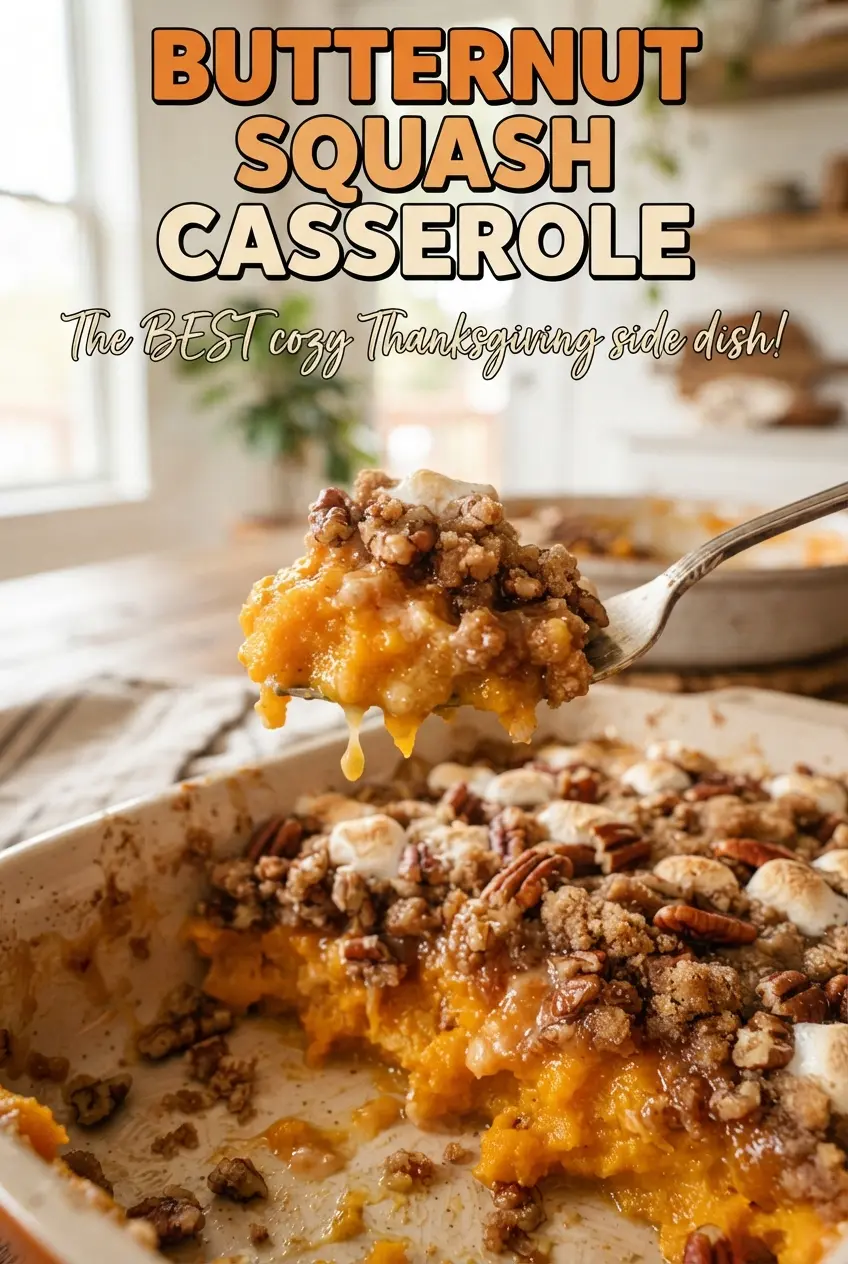
Butternut Squash Casserole
Ingredients
Equipment
Method
- Boil cubed butternut squash for 15 minutes until very tender, then drain well so the filling won’t turn watery.
- Preheat the oven to 350F and grease a 9x13-inch baking dish.
- Mash the hot squash with 1/4 cup melted butter, 1/4 cup brown sugar, eggs, milk, vanilla extract, ground cinnamon, and salt until smooth.
- Spread the smooth squash mixture evenly into the greased 9x13-inch baking dish.
- Mix all-purpose flour, chopped pecans, remaining butter, and remaining brown sugar until you get a crumbly topping.
- Sprinkle the crumb topping over the squash in an even layer.
- Bake at 350F for 35-40 minutes, until the topping is golden and the edges bubble.