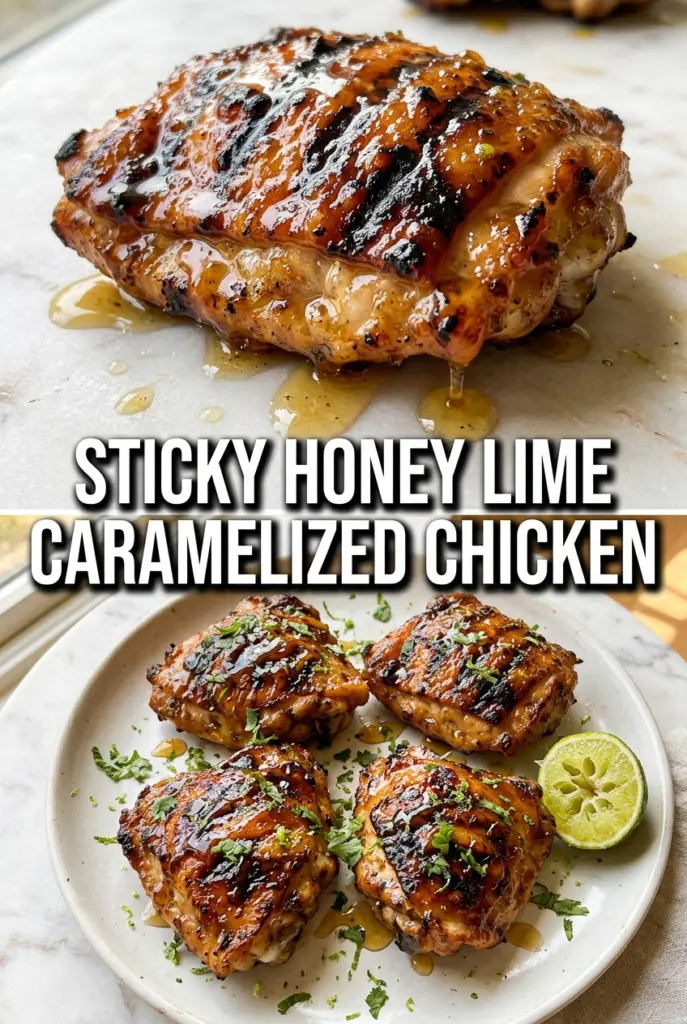
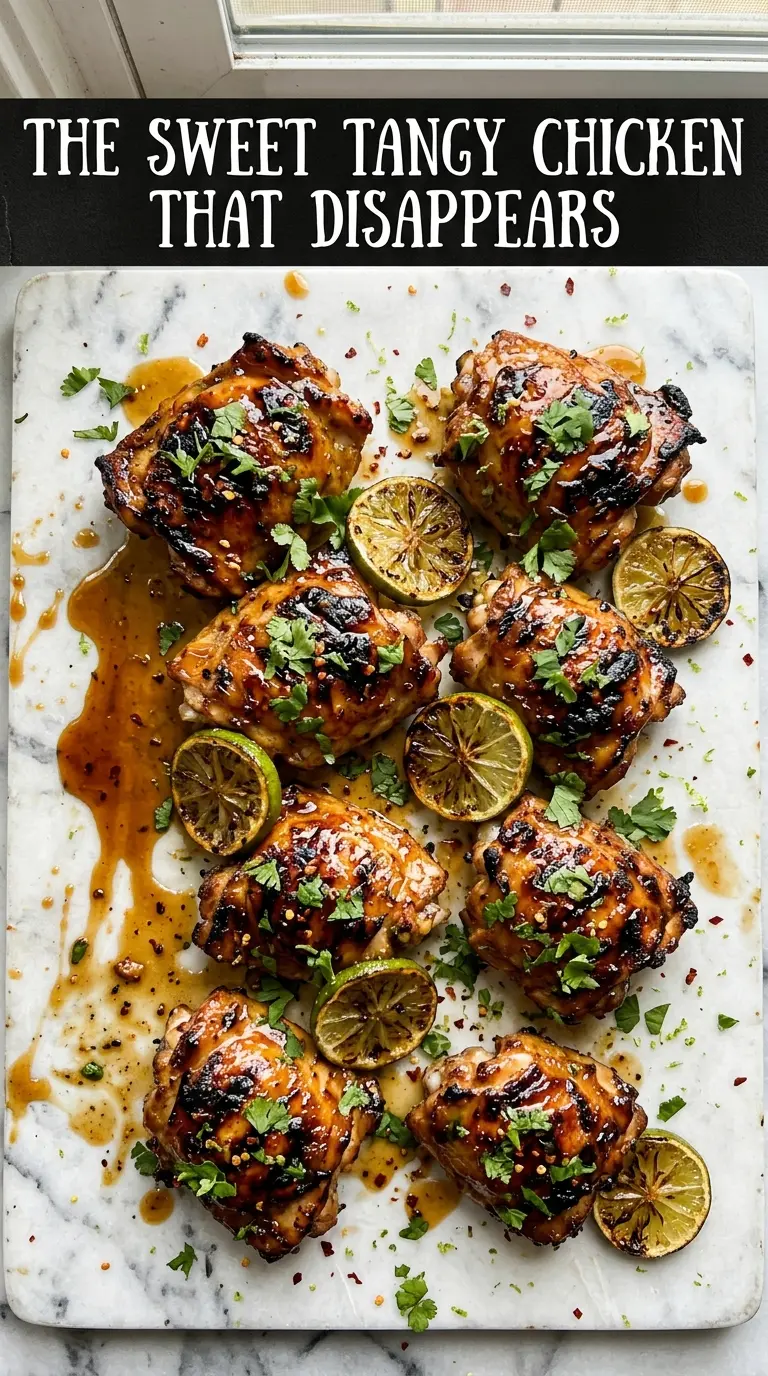
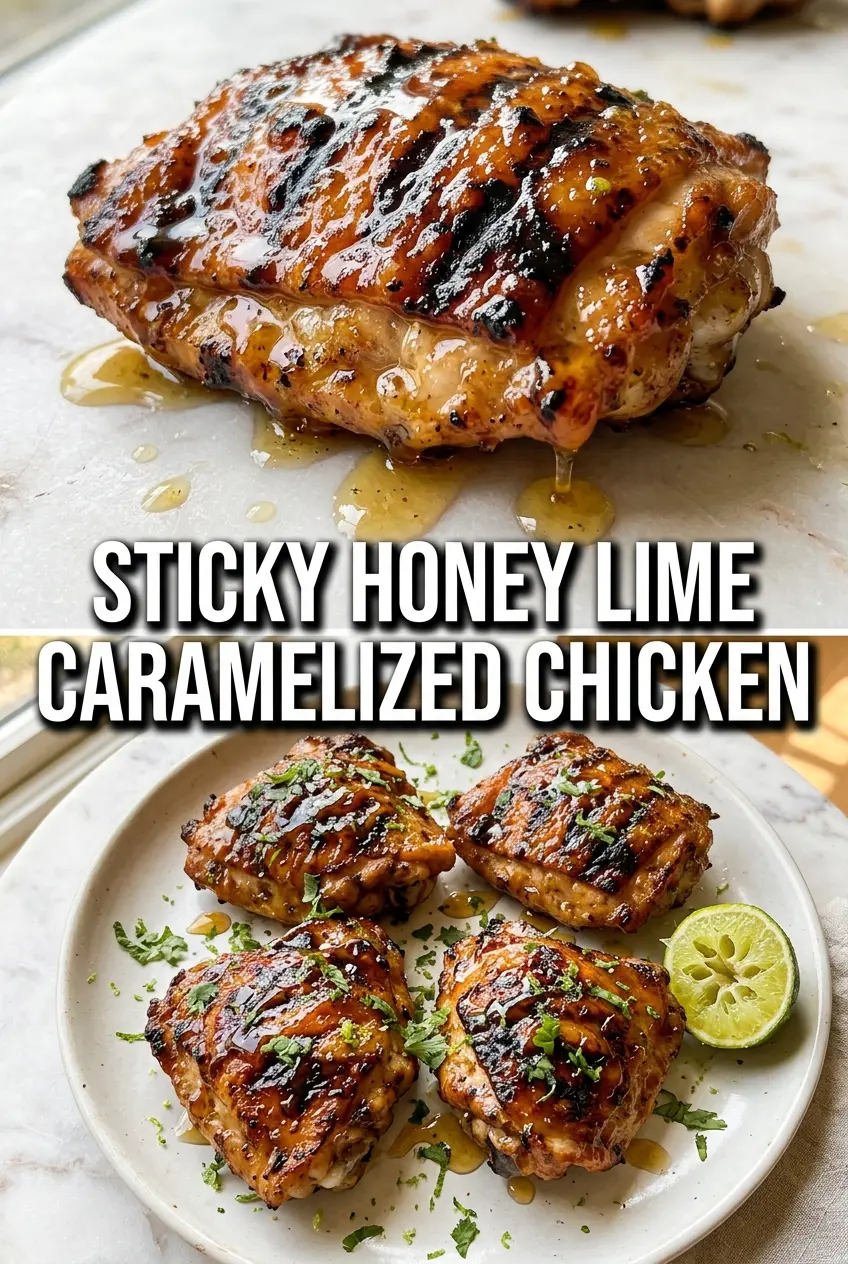
Sticky honey lime grilled chicken lands with that sweet-savory bite that keeps people hovering near the grill for “just one more piece.” The glaze cooks down into a glossy coating that clings to the chicken instead of sliding off, and the lime keeps every bite bright enough to cut through the honey. Thighs stay juicy, drumsticks pick up a good char, and the whole thing finishes with that caramelized edge that makes grilled chicken worth firing up the coals for.
The part that makes this version work is restraint. The marinade has enough honey to brown and thicken, but not so much that it burns before the chicken cooks through. Reserving part of the marinade for basting builds layers of flavor, and using lime zest along with juice gives you a cleaner citrus punch than juice alone. A little cumin and chili powder keep the glaze from tasting flat.
Below, I’ll show you how to keep the glaze sticky instead of bitter, which cuts of chicken handle this best, and how to adjust the marinade when you want more heat or less sweetness.
The glaze thickened up beautifully on the grill, and the lime kept it from tasting too sweet. I used thighs and they stayed juicy even with the basting.
Sticky honey lime grilled chicken with a glossy glaze and bright citrus finish
The Trick to Sticky Glaze Without Burning the Honey
Honey is the ingredient that makes this chicken look and taste special, but it’s also the reason grilled chicken goes wrong fast. If the grill is too hot, the sugar in the honey scorches before the chicken finishes cooking, and you end up with bitter spots instead of a lacquered finish. Medium heat gives the glaze time to tighten and darken gradually while the chicken cooks through.
That reserved marinade matters too. Once it’s set aside for basting, it becomes the layer that builds the shiny finish on the outside of the chicken. Don’t baste with the raw marinade that touched the uncooked chicken. If your grill runs hot, shift the pieces to a cooler spot after the first sear so the glaze can cook gently instead of catching fire.
What the Marinade Is Doing, Ingredient by Ingredient
- Honey — This is the backbone of the sticky coating. It caramelizes on the grill and gives the chicken that burnished finish, but it needs the lime juice and moderate heat around it so it doesn’t turn bitter.
- Lime juice and zest — Juice adds brightness and helps season the chicken, while zest gives the glaze a stronger citrus aroma that holds up after grilling. If you only use juice, the flavor tastes thinner and more one-note.
- Chicken thighs or drumsticks — These cuts handle basting and direct heat better than lean breast meat. Thighs stay juicier, and drumsticks take well to a little char without drying out.
- Olive oil — It helps the marinade coat the chicken evenly and keeps the glaze from looking oily or separating. A neutral oil works too, but olive oil adds a little roundness that fits the honey and lime.
- Garlic, cumin, and chili powder — Garlic brings sharpness, cumin adds warmth, and chili powder keeps the glaze from tasting flat-sweet. Don’t skip all three; together they turn the marinade into an actual sauce flavor instead of just a sweet coating.
Getting the Chicken Charred, Juicy, and Fully Glazed
Building the Marinade
Whisk the honey, lime juice, zest, oil, garlic, cumin, chili powder, salt, and pepper until the honey loosens and the mixture looks smooth. It won’t look thick like a sauce yet, and that’s fine. The lime and salt start working as soon as the chicken hits the bowl, so give it at least an hour if you can. If the honey is cold and stiff, warm it for a few seconds first so it blends without leaving little sticky ribbons in the bowl.
Marinating for Flavor, Not Mushy Chicken
Coat the chicken well, then let it sit in the fridge for 1 to 4 hours. That window is long enough to season the meat and short enough that the lime doesn’t start changing the texture in a chalky way. More time is not better here. If you go much past 4 hours, the citrus can make the outside of the chicken a little soft instead of giving you that clean grilled bite.
Grilling and Basting at the Right Moment
Preheat the grill to medium heat and oil the grates if they tend to stick. Start the chicken over direct heat and give it time to sear before moving it around; if you flip too early, the glaze won’t set and the skinless surface can tear. Baste with the reserved marinade after the first side has some color, then keep turning and basting until the glaze looks glossy and the chicken reaches 165°F at the thickest part. If the outside is getting too dark before the inside is done, move it to indirect heat and finish there.
Letting the Glaze Set Before Serving
Once the chicken is done, pull it off the grill and rest it for a few minutes. That pause helps the juices settle and gives the glaze a chance to cling instead of sliding off the second it’s cut. Finish with cilantro and lime wedges. If you slice too soon, the juices run out and the sticky coating looks thinner than it really is.
How to Adapt This When You Want More Heat, Less Sugar, or No Gluten
Make it spicier
Add a pinch of cayenne or a spoonful of chipotle powder to the marinade. That deepens the glaze and gives the sweetness more contrast, but keep the amount modest so the honey still caramelizes instead of getting buried under heat.
Lower-sugar version
Cut the honey back a few tablespoons and add a little extra lime zest and a touch more garlic. The chicken will still glaze, but the finish will be lighter and less candy-like. You’ll lose some of the thick, sticky shine, so watch the grill closely and baste a little less often.
Gluten-free and dairy-free as written
This recipe already works for both, which is part of why I like it for gatherings. Just check your chili powder blend if you use a packaged one, since a few brands add fillers or anti-caking agents you may want to avoid.
Use chicken breasts instead of thighs
Breasts work, but they need more attention because they dry out faster and don’t have the same margin for error. Pound them to an even thickness and pull them as soon as they hit temperature. You’ll get a cleaner grilled result, but not the same richness you get from thighs.
Storage and Reheating
- Refrigerator: Store leftovers in an airtight container for up to 4 days. The glaze will loosen a little as it sits, but the flavor holds up well.
- Freezer: Freeze cooked chicken for up to 2 months. Wrap it well and thaw overnight in the refrigerator so the sticky coating doesn’t get watery from a rushed thaw.
- Reheating: Reheat gently in a covered skillet over low heat or in a 325°F oven until warmed through. High heat dries out the chicken and can make the honey on the surface taste burnt before the center is hot.
Answers to the Questions Worth Asking
Sticky Honey Lime Grilled Chicken
Ingredients
Equipment
Method
- Whisk together honey, lime juice, lime zest, olive oil, garlic, cumin, chili powder, salt, and pepper until smooth and combined, about 1 minute.
- Reserve 1/3 cup of the marinade in a separate container for basting.
- Add chicken to the remaining marinade and turn to coat evenly.
- Cover and refrigerate to marinate for 1-4 hours, until the chicken looks evenly slicked with glaze.
- Preheat the grill to medium heat (around 350–400°F) so you get steady sizzle without burning the honey.
- Grill chicken for 7-8 minutes per side, basting frequently with the reserved marinade as it turns glossy.
- Continue grilling and basting until the internal temperature reaches 165°F and the glaze looks sticky and lacquered, 3-8 minutes more depending on thickness.
- Transfer chicken to a platter and garnish with fresh cilantro and lime wedges for bright citrus pops.