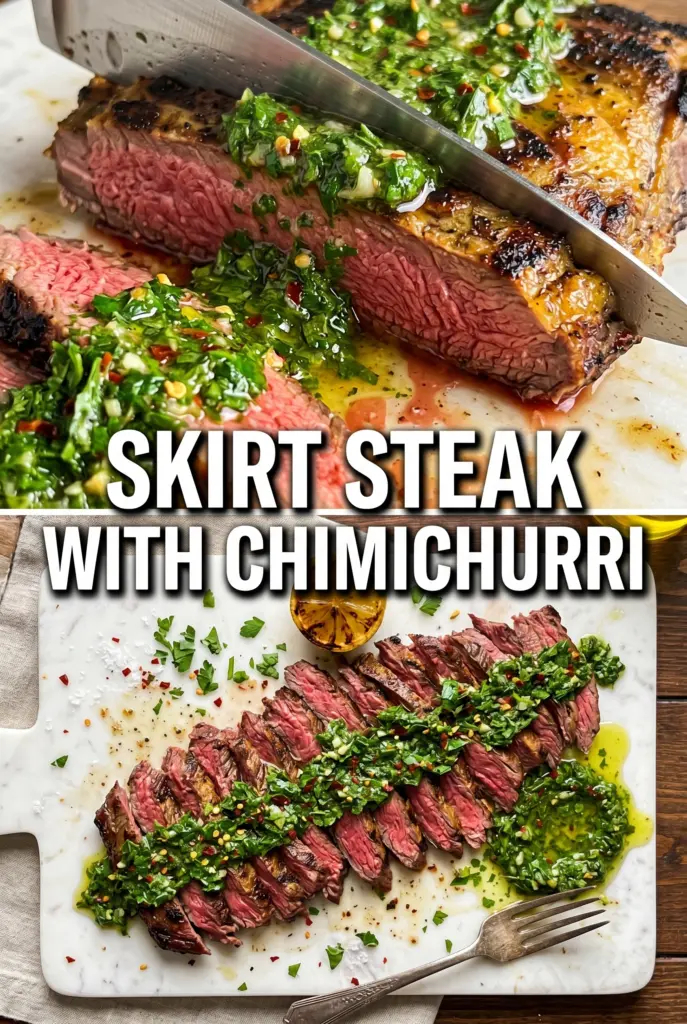
Sliced skirt steak with chimichurri is one of those meals that lands hard at the table: charred edges, juicy center, and a sharp, herb-packed sauce that cuts through every bite. The marinade doesn’t try to turn skirt steak into something it isn’t. It just seasons it well, gives the surface a little gloss, and sets up that fast, high-heat sear that this cut handles best.
The chimichurri matters just as much as the steak. Fresh parsley gives it the backbone, cilantro softens the edges, garlic brings bite, and vinegar keeps the whole thing lively instead of oily. I like to let the sauce sit while the steak marinates so the herbs have time to bloom in the acid and oil. That short rest makes the flavor taste more unified, not raw and scattered.
Below you’ll find the little details that make this work: how long to marinate skirt steak without making it mushy, how to keep the chimichurri bright, and what to do if you’re cooking on a grill or a heavy skillet instead.
The marinade gave the skirt steak a deep savory flavor, and the chimichurri stayed bright even after sitting for a few hours. I sliced it too thick the first time, and the second batch was perfect once I cut it against the grain.
Save this skirt steak marinade with chimichurri for the nights when you want a fast sear, bold garlic-herb sauce, and a steak that slices tender every time.
The Part Most People Get Wrong With Skirt Steak
Skirt steak rewards speed and punishes overthinking. The mistake I see most often is letting it sit in a wet marinade for too long, then cooking it like a thicker steak. Skirt steak is thin and naturally fibrous, so it only needs enough time to pick up flavor and soften the surface a bit. Push the marinade too far and the texture can turn dull instead of beefy.
The other failure point is slicing. Even a perfectly cooked skirt steak will eat chewy if you cut it with the grain. The grain runs long and obvious on this cut, so once the steak rests, rotate it and slice thinly across those lines. That’s the difference between a steak that feels stringy and one that feels tender enough to tear with a fork.
- Marinating time — Two to four hours is the sweet spot here. Enough for the garlic, lime, and cumin to season the meat without flattening the texture.
- High heat — Skirt steak needs a fast sear. A grill or cast-iron skillet should be hot enough that the steak sizzles the second it hits the surface.
- Resting — Even five minutes matters. Resting keeps the juices in the steak instead of running out the moment you slice it.
What the Marinade and Chimichurri Are Each Doing
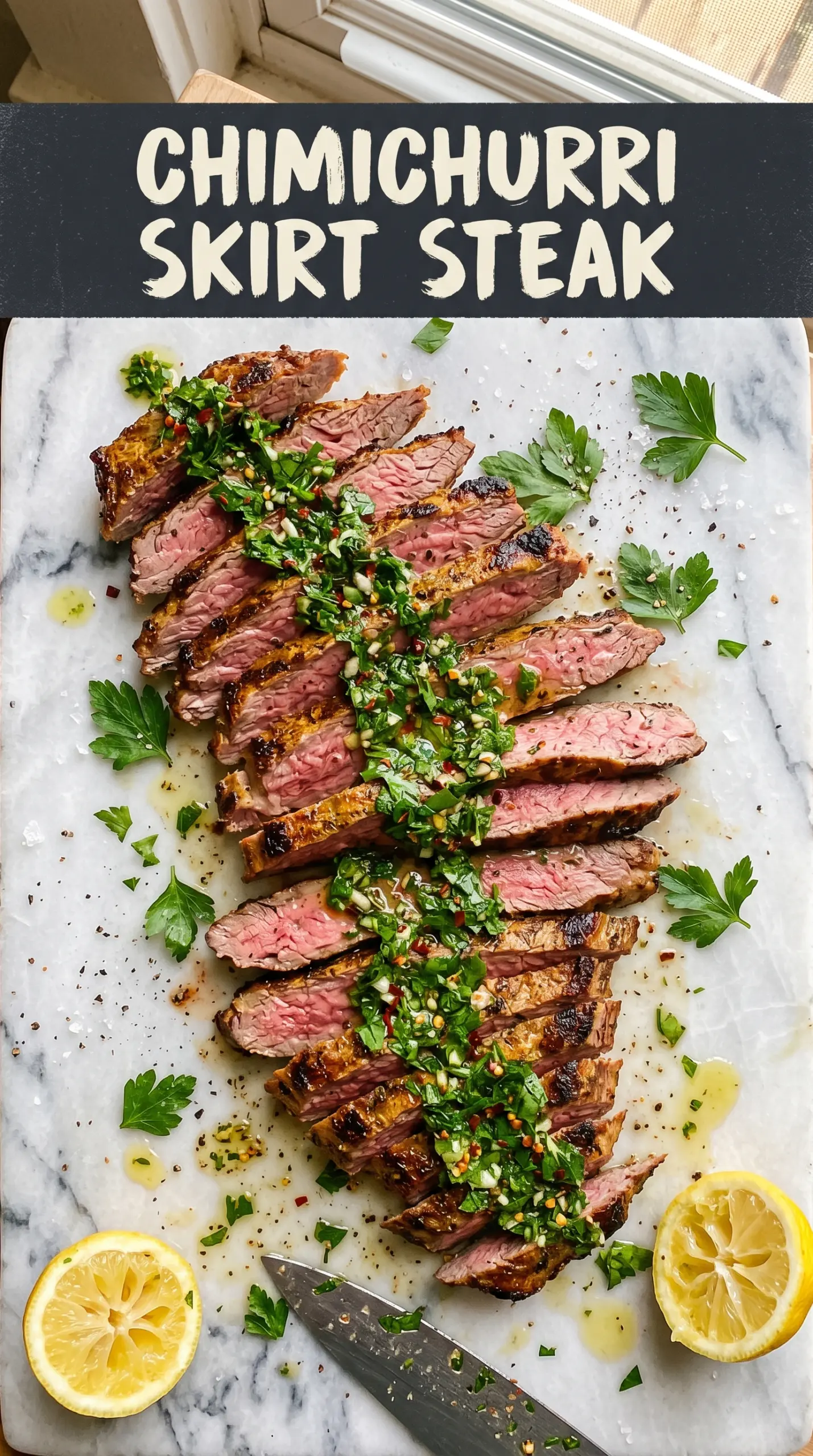
- Skirt steak — This cut has big beef flavor and a loose grain that takes to fast, high-heat cooking. Flank steak can stand in if that’s what you have, but it’s a little leaner and needs the same thin slicing against the grain.
- Olive oil — In both the marinade and chimichurri, oil carries the garlic, herbs, and spices across the meat. Use a decent olive oil for the sauce; the flavor comes through.
- Lime juice — The acid gives the marinade lift and helps season the outside of the steak. Don’t swap in too much more acid or marinate much past four hours, or the texture can start to tighten.
- Parsley and cilantro — Parsley gives chimichurri its clean green flavor, while cilantro adds a softer, brighter note. If you’re not a cilantro person, replace it with more parsley rather than leaving it out entirely.
- Red wine vinegar — This is what makes the sauce taste sharp and alive. Lemon juice can work in a pinch, but it changes the character and reads a little less classic.
Getting the Sear, Slice, and Sauce in the Right Order
Mix the Marinade First
Stir the olive oil, lime juice, garlic, cumin, salt, and pepper together before adding the steak. That helps the garlic and spice distribute evenly instead of clumping in one spot. Coat the steak well, then let it sit in the fridge for 2 to 4 hours. If you go much longer, the acid starts working against the texture instead of helping it.
Let the Chimichurri Rest While the Steak Cooks
Combine the parsley, cilantro, garlic, vinegar, olive oil, red pepper flakes, and salt, then leave it alone while the steak marinates. The sauce gets better after a short rest because the garlic softens and the vinegar tames the raw edge of the herbs. If it looks a little loose at first, that’s fine; it will emulsify a bit as it sits.
Cook Hot and Fast
Preheat the grill until it’s properly hot, then cook the steak for 3 to 4 minutes per side for medium-rare. You’re looking for dark grill marks and a springy center, not a slow, gray cook-through. If the steak sticks, it isn’t ready to turn yet. Let it release on its own.
Rest Before Slicing
Move the steak to a cutting board and let it rest for 5 minutes. Slice it thinly against the grain, on a sharp angle if you want wider pieces. Spoon the chimichurri over the top instead of drowning the steak in it so the sear still comes through on each bite.
How to Change This Without Losing What Makes It Good
Swap the Grill for Cast Iron
If you’re cooking indoors, use a cast-iron skillet over high heat and give it time to preheat fully. You won’t get grill flavor, but you will get a deeper crust than you’d get in a thin pan. Open a window and expect a little smoke; that’s part of the process.
Make It Dairy-Free and Naturally Gluten-Free
This recipe already fits both of those needs without any special swaps. That’s one reason it’s such a dependable main dish for a mixed crowd: the steak and chimichurri bring all the richness and flavor on their own.
Tone Down the Heat
Use half the red pepper flakes if you want a gentler chimichurri, or leave them out and add a pinch at the table. The sauce will still taste bright and garlicky; it just won’t have that back-of-the-throat warmth.
Stretch It Into a Bigger Dinner
Slice the steak thinner and serve it over rice, potatoes, or grilled vegetables if you’re feeding more people. The chimichurri acts like a built-in sauce, so you can build the rest of the meal around it without adding much extra work.
Storage and Reheating
- Refrigerator: Store leftover steak and chimichurri separately for up to 3 days. The steak stays best sliced only when you’re ready to eat it.
- Freezer: The cooked steak freezes well for about 2 months, but the chimichurri doesn’t hold up as nicely because the herbs darken and soften. Freeze the steak flat, then make a fresh sauce when you serve it again.
- Reheating: Warm the steak gently in a skillet over low heat just until it takes the chill off. High heat will push it from tender to dry fast, especially once it’s already sliced.
Questions I Get Asked About This Recipe
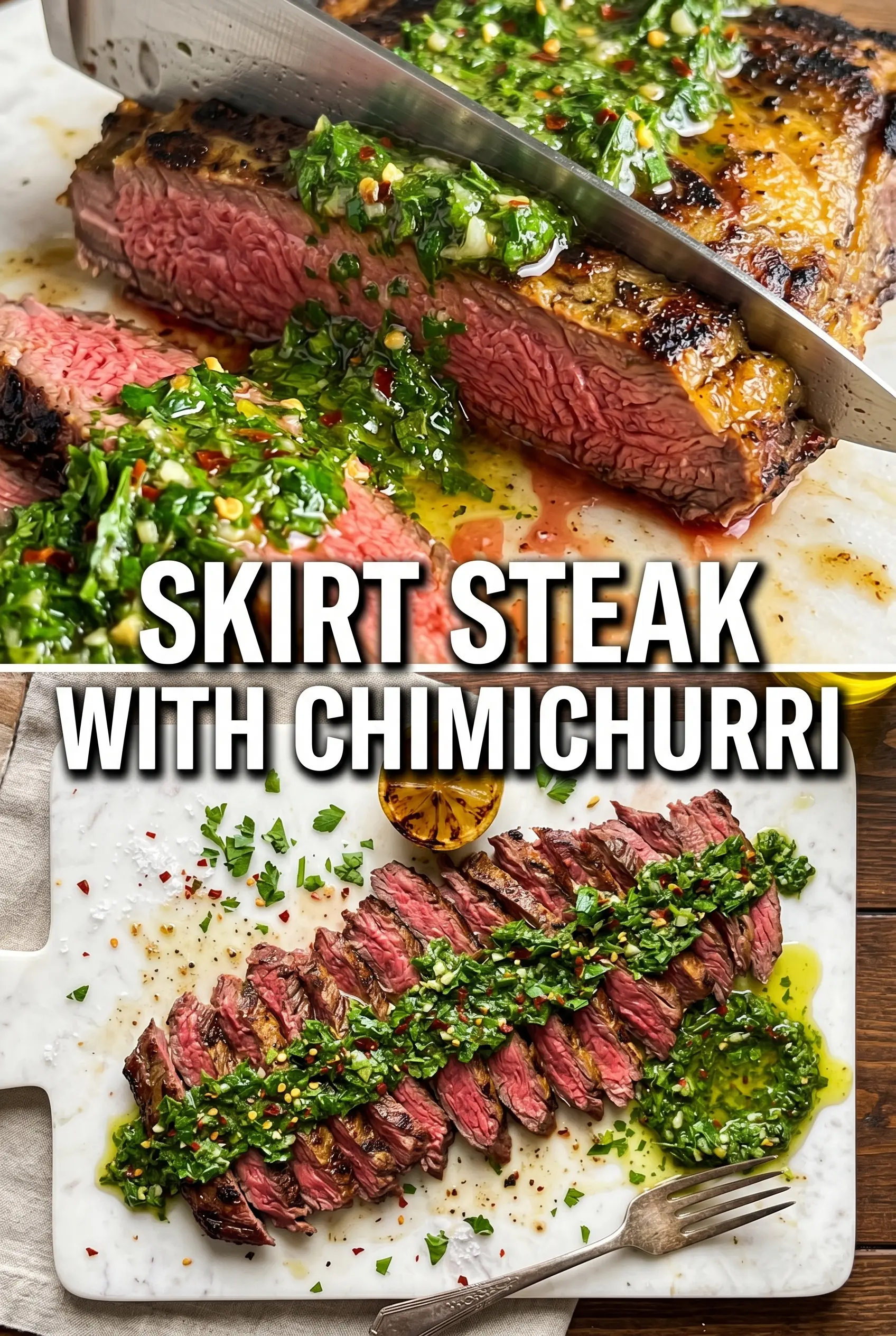
Skirt Steak Marinade with Chimichurri
Ingredients
Equipment
Method
- In a bowl, whisk olive oil, lime juice, garlic, cumin, salt, and pepper until combined, forming an even marinade.
- Coat the skirt steak with the marinade and refrigerate to marinate for 2 to 4 hours.
- Mix fresh parsley, fresh cilantro, garlic, red wine vinegar, olive oil, red pepper flakes, and salt until the herbs are coated and the sauce looks vibrant.
- Set the chimichurri aside while you heat the grill.
- Preheat the grill to high heat so it’s ready to sear quickly.
- Grill the skirt steak for 3 to 4 minutes per side for medium-rare, using visual cues like browned grill marks.
- Remove the steak from the grill and let it rest for 5 minutes to keep the juices in.
- Slice the steak thinly against the grain for tender pieces.
- Serve with generous portions of chimichurri sauce drizzled over top.