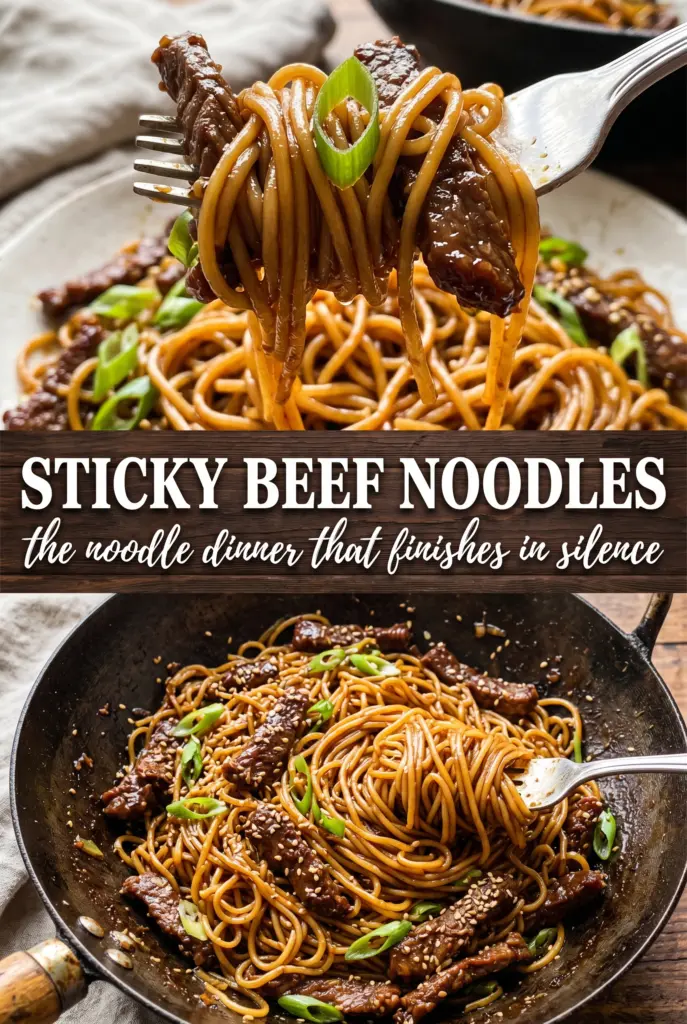
Sticky beef noodles hit that sweet spot between fast and satisfying: glossy ramen tangled with savory ground beef, a garlic-ginger punch, and a sauce that clings to every strand instead of pooling at the bottom of the bowl. The whole dish eats like something you’d order on a busy weeknight and still feel good about making from scratch.
What makes this version work is the balance in the sauce and the timing in the pan. Brown sugar gives the noodles that lacquered finish, soy sauce and oyster sauce bring depth, and a splash of rice vinegar keeps the whole thing from tasting flat. The beef gets browned first so it has a chance to pick up real color, then the garlic and ginger go in just long enough to bloom without burning. Once the noodles hit the skillet, the heat does the last bit of work and turns the sauce into a sticky coating instead of a thin glaze.
Below, I’ve added the one step that keeps the noodles from turning gummy, plus a few swaps for making this dish work with what you already have in the kitchen.
The sauce clung to the ramen instead of sliding off, and the little hit of ginger kept it from tasting too sweet. I made it exactly as written and the pan was scraped clean.
Save these sticky beef noodles for the nights when you want glossy ramen, caramelized beef, and a sauce that clings to every bite.
The Trick to Sticky Noodles Instead of a Wet Bowl
The difference between sticky beef noodles and a skillet full of saucy noodles comes down to heat and timing. The beef needs enough heat to brown, not just turn gray, because that fond at the bottom of the pan is what gives the sauce its deeper, beefier taste. Once the sauce goes in, it should bubble briskly for a moment, then the noodles go straight in while the liquid is still active.
If you add the noodles too early, they soak up the sauce before it has a chance to tighten. If you add them too late, the sauce reduces past the point of cling and turns tacky in a bad way. The goal is a glossy coating that leaves the skillet mostly clean by the time you serve it.
What Each Ingredient Is Doing in the Pan
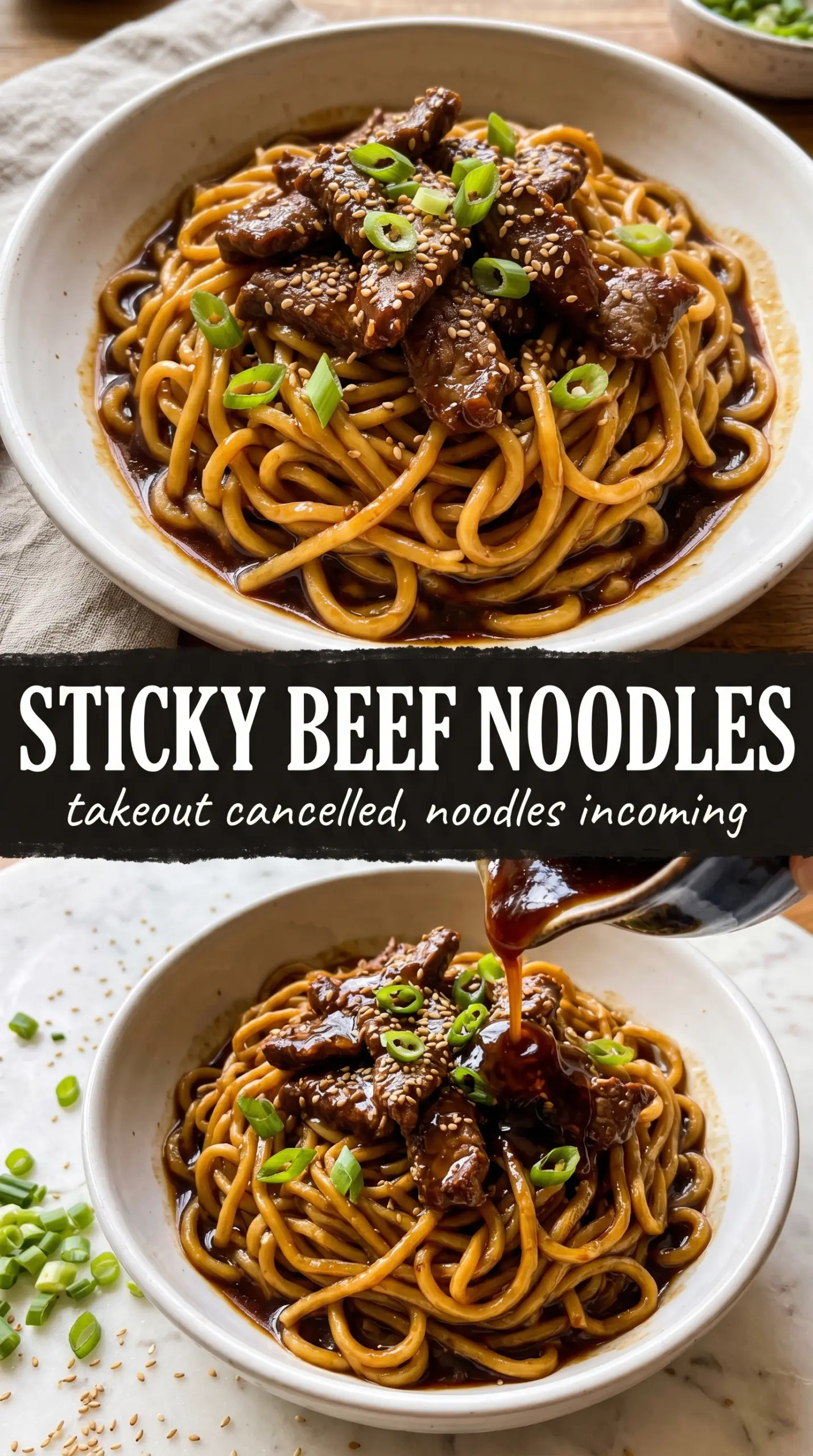
- Ground beef — This gives the dish its savory base and the little browned bits that make the sauce taste cooked, not just mixed. An 80/20 blend works well because it browns beautifully and still leaves enough fat for flavor; if yours is much leaner, keep a tablespoon of neutral oil in the pan.
- Ramen noodles — These are fast, springy, and perfect for soaking up a sticky sauce. Cook them just until tender, then drain well; if they go into the skillet dripping with water, the sauce loosens and won’t cling the same way.
- Garlic and ginger — Fresh is worth it here. Garlic brings the base note, ginger adds lift, and both need only about a minute in the hot pan so they smell fragrant instead of sharp or burnt.
- Soy sauce and oyster sauce — Soy sauce gives salt and color, while oyster sauce adds body and a deeper, rounder savory note. If you need a substitute for oyster sauce, a little hoisin will work in a pinch, though it will push the dish sweeter.
- Brown sugar, rice vinegar, and sriracha — These three set the balance. The sugar helps the sauce cling, the vinegar keeps it from tasting heavy, and the sriracha adds just enough heat to wake everything up without turning the dish spicy.
- Sesame oil — Use the real toasted kind here. It’s not for frying; it goes into the sauce for aroma and that nutty finish that makes the noodles taste finished.
Building the Sauce So It Clings
Brown the Beef First
Start with a large skillet over high heat and let the beef sit long enough to sear before you break it up completely. You want crumbles with browned edges, not a steamed, pale pile. If the pan looks crowded or watery, keep cooking until the moisture cooks off and the meat starts to sizzle again. Drain excess fat if there’s a lot of it, but leave a thin coating in the pan for flavor.
Bloom the Garlic and Ginger
Once the beef is browned, add the garlic and ginger and stir for about a minute. They should smell bright and sharp, not dark or bitter. If the heat is too low, they’ll taste raw; if it’s too high, they’ll scorch and make the whole pan taste harsh. That short window is enough to wake them up without losing their freshness.
Reduce the Sauce Just Enough
Whisk the sauce ingredients together before they hit the pan so the sugar dissolves and everything goes in evenly. Pour it over the beef and let it bubble for a moment before adding the noodles. You’re looking for the sauce to thicken slightly and turn shiny, not to cook down into a syrup before the noodles arrive. That small margin is what gives you a coating instead of a sticky mess.
Toss the Noodles Over High Heat
Add the cooked noodles and toss constantly for about 2 minutes. The sauce should disappear into the noodles and leave them glossy, with a few caramelized spots clinging to the beef. If the skillet goes dry before the noodles are coated, splash in a tablespoon of water to loosen the pan, then keep tossing until everything looks lacquered. Serve it right away while the noodles still have bounce.
How to Adapt Sticky Beef Noodles Without Losing the Texture
Make it gluten-free
Use gluten-free noodles and swap the soy sauce for tamari or coconut aminos. Tamari keeps the sauce closest to the original in color and saltiness, while coconut aminos taste a little sweeter and lighter, so you may want to reduce the brown sugar by a teaspoon.
Make it leaner with ground turkey
Ground turkey works, but it needs help. Add a tablespoon of oil when browning and season a little more aggressively, since turkey doesn’t bring the same built-in richness as beef. The finished dish will still be sticky and savory, just a little cleaner-tasting.
Add vegetables without watering it down
Thinly sliced bell peppers, shredded cabbage, or snap peas work best because they cook quickly and hold their texture. Stir them in after the beef has browned and cook just until crisp-tender, then add the garlic and ginger. Wet vegetables like mushrooms can work too, but they need enough time to release their liquid before the sauce goes in.
Storage and Reheating
- Refrigerator: Store leftovers in an airtight container for up to 4 days. The noodles will absorb more sauce as they sit, so they’ll be a little less glossy the next day.
- Freezer: It freezes, but the noodles soften after thawing, so I don’t recommend it unless you’re fine with a softer texture.
- Reheating: Reheat in a skillet over medium heat with a splash of water to loosen the sauce. The common mistake is blasting it in the microwave until the noodles dry out and the beef turns tough.
Answers to the Questions Worth Asking
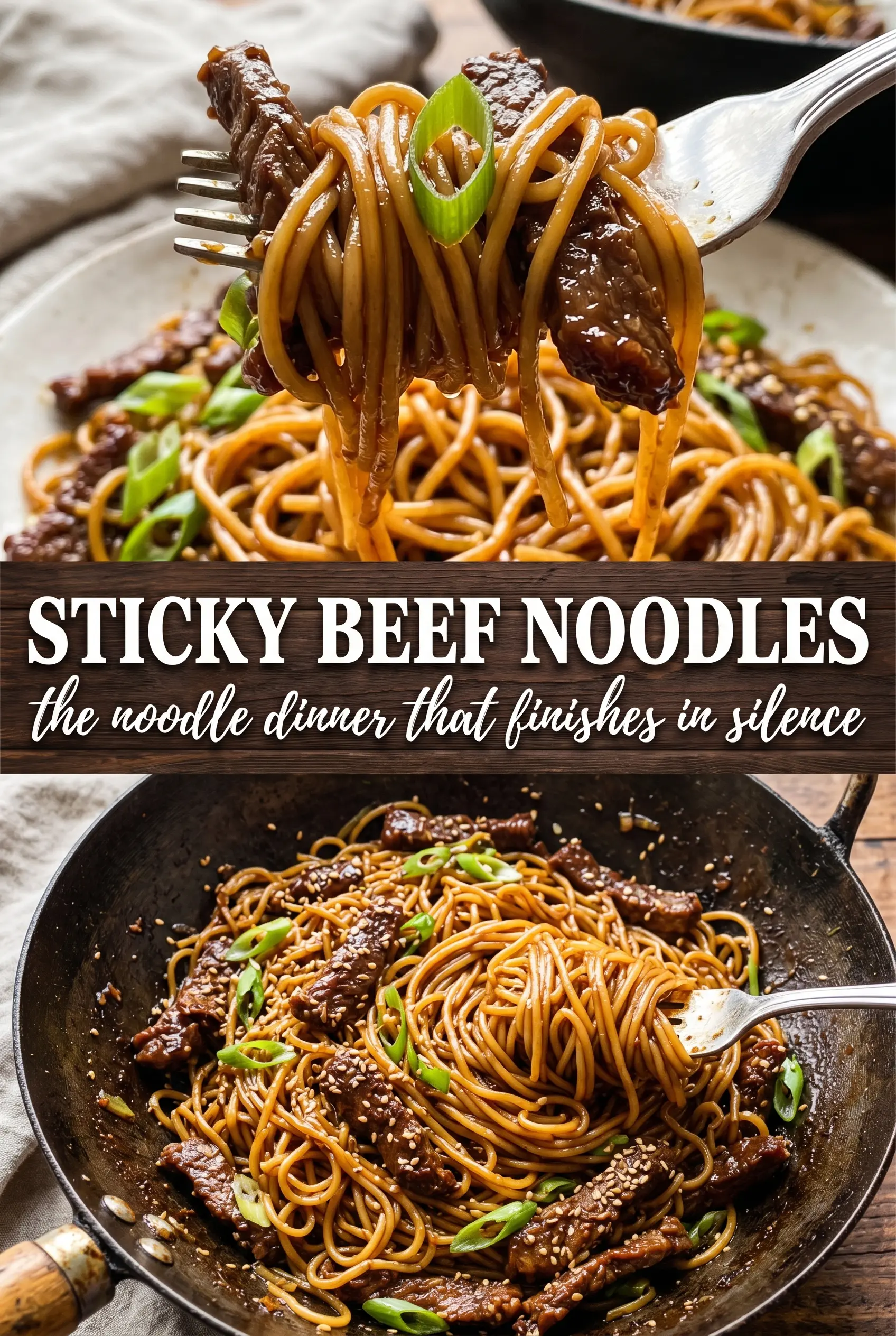
Sticky Beef Noodles
Ingredients
Equipment
Method
- Cook the ramen noodles according to package directions, discarding the flavor packets, then drain and set aside.
- Keep the drained noodles warm while you cook the beef so they stay pliable for tossing.
- Whisk the soy sauce, oyster sauce, brown sugar, sesame oil, rice vinegar, and sriracha together until the sugar dissolves and the sauce looks smooth.
- Brown the ground beef in a large skillet over high heat, breaking it into crumbles, and drain excess fat.
- Add the minced garlic and grated ginger and cook for 1 minute over high heat, stirring until fragrant.
- Pour the sticky sauce over the beef and stir to coat the crumbles evenly.
- Add the cooked noodles to the skillet and toss over high heat for 2 minutes until the noodles are coated and the sauce looks glossy.
- Serve immediately topped with sesame seeds and sliced green onions.