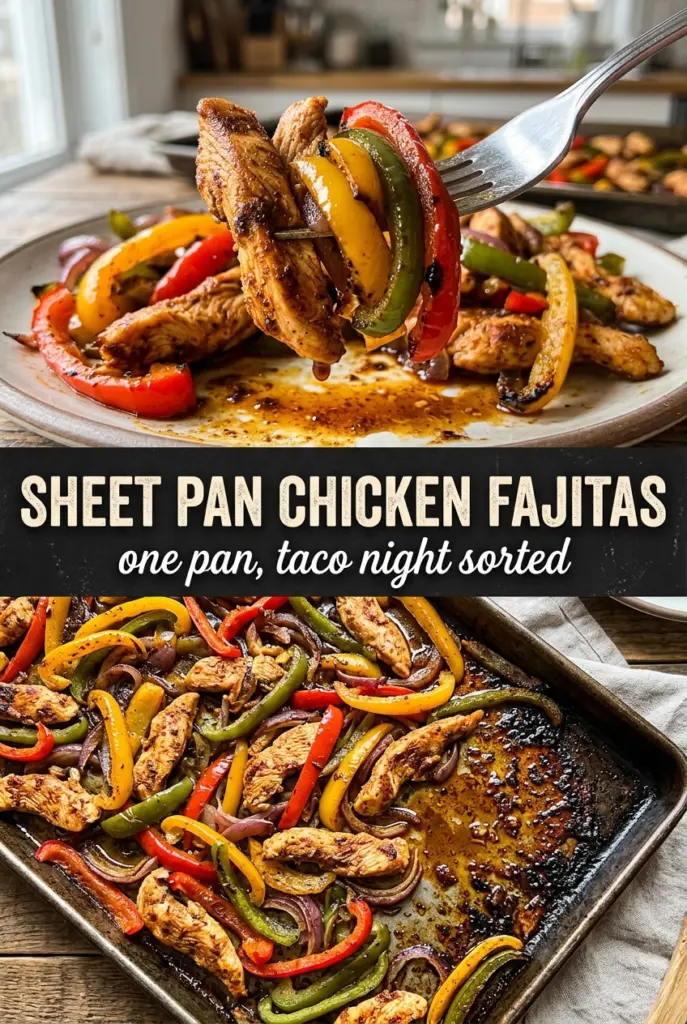
Charred edges, juicy chicken, and tender peppers all come off the same pan at the same time, which is exactly why sheet pan chicken fajitas earn a permanent spot in the weeknight rotation. You get the smoky, sizzling fajita flavor people expect, but without standing over a skillet in batches or ending up with limp vegetables that steamed in their own juice.
The trick is simple: slice everything into similar-width strips, coat it well, and give it room on the pan. When the chicken and vegetables overlap too much, they trap steam and the seasoning turns muddy instead of toasty. A hot oven and a single layer are what create those browned edges that make the whole tray taste like it came off a griddle.
Below, I’ll walk through the part that matters most, how to keep the chicken from drying out while the peppers soften just enough, and a few swaps that make this work with what you already have in the fridge.
The peppers stayed crisp-tender and the chicken picked up that little char on the edges without drying out. I used the leftovers in quesadillas the next day and they were just as good.
Like these sheet pan chicken fajitas? Save them for busy nights when you want smoky, oven-charred fajita flavor without the stovetop mess.
The Part Where Fajitas Go From Steamy to Actually Charred
The biggest mistake with oven fajitas is crowding the pan. When the chicken and vegetables are piled up, they release moisture faster than the oven can evaporate it, and the whole tray turns soft before it ever browns. The fix is to spread everything out in a true single layer so the hot air can hit the edges and caramelize the seasoning.
High heat matters here. At 425°F, the peppers soften fast enough to stay sweet and a little crisp, while the chicken cooks through before it dries out. Stirring once halfway through gives the bottom a chance to catch some color without letting one side sit too long against the pan.
- Chicken breast — Slice it into even strips so it finishes at the same rate as the peppers. Thin strips cook quickly, but if some pieces are much thicker than others, the thinner ones dry out before the thick ones are done.
- Bell peppers — Use a mix of red, yellow, and green for color and sweetness. The red and yellow peppers soften and caramelize a little faster, while the green pepper keeps the mix from tasting flat.
- Onion — A large onion adds sweetness and gives the pan those browned edges that taste like restaurant fajitas. Slice it into medium strips, not paper-thin pieces, or it will disappear before the chicken is ready.
- Olive oil and seasoning — The oil helps the spices cling and encourages browning. If you use a salt-heavy taco seasoning, taste lightly with extra salt at the end instead of loading the pan upfront.
What Each Ingredient Is Actually Doing in This Sheet Pan Meal
- Protein (chicken, beef, shrimp, or fish) — Pat dry so it browns instead of steaming. Slice evenly or cut in uniform pieces so everything finishes at once.
- Peppers and onions (the fajita base) — Slice into thin, even strips so they caramelize instead of stay crunchy. Toss with oil.
- Olive oil (the cook and flavor) — Don’t skimp. Oil helps everything brown and carry the spice flavors throughout the pan.
- Spices (cumin, chili powder, lime juice) — Toast them with oil before adding other ingredients so they bloom. Mix some into the pan and some on the final plate.
- Salt and pepper (proper seasoning) — Season the protein and vegetables separately so everything tastes balanced. Taste and adjust before serving.
- High heat (425-450°F) — Hot heat creates a nice sear and caramelize on the vegetables. Don’t crowd the pan or everything steams.
- Timing (the coordination) — Everything needs to finish at the same time. Start with longer-cooking proteins and vegetables; add delicate items near the end.
- Fresh finish (lime, cilantro, avocado) — These add brightness and fresh flavor. Add right before serving so they stay fresh and vibrant.
How to Roast Everything So the Chicken Stays Juicy
Coating the Pan Evenly
Combine everything in a large bowl before it goes onto the sheet pan so every piece gets seasoned instead of leaving a puddle of spices at the bottom. Toss until the chicken and vegetables are glossy and evenly coated. If the bowl feels tight, use a second bowl rather than forcing it; cramped tossing leaves some strips bare and others overloaded with seasoning.
Spreading It Out for Browning
Line the pan with foil for easier cleanup, then spread the mixture out without overlapping. You want visible space between the strips and pepper pieces. If the pan is packed, the vegetables steam and the chicken turns pale instead of picking up those browned, slightly crisp edges.
Roasting to the Right Finish
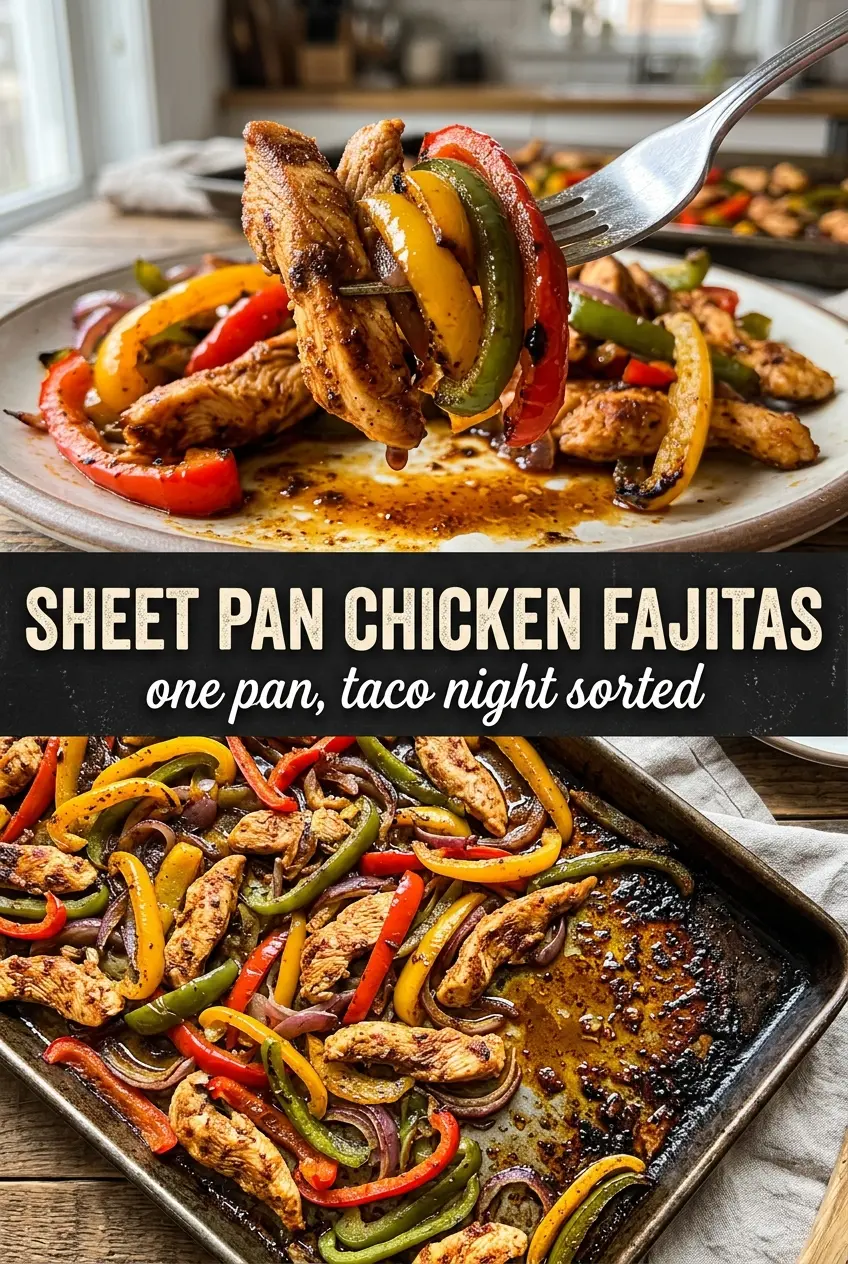
Roast for 22 to 25 minutes, stirring once halfway through so the ingredients brown on a fresh side. The chicken should be cooked through, the onions should look soft and just starting to caramelize, and the pepper edges should have little blistered spots. If the pan needs a touch more color, give it 1 to 2 extra minutes under the broiler, but watch closely because the seasoning can go from charred to burnt fast.
Serving at the Table
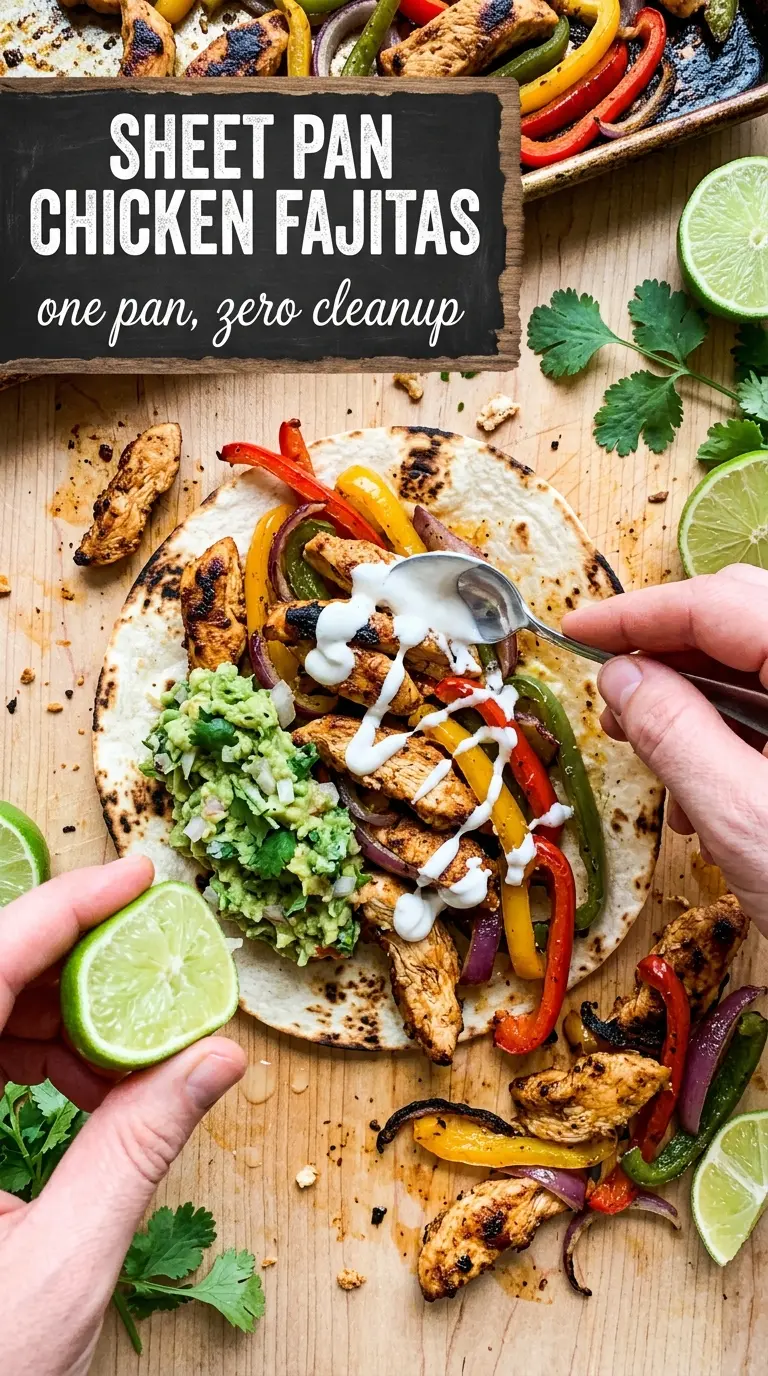
Serve right away in warm tortillas with sour cream, guacamole, salsa, lime, and cilantro. The fajitas are at their best while the chicken is still juicy and the peppers still have a little bite. If you let the pan sit too long, the vegetables soften as they cool and the whole dish loses that fresh-from-the-oven energy.
What to Change When You Need a Different Kind of Fajita Night
Swap in chicken thighs for a richer result
Boneless skinless chicken thighs stay a little more forgiving in the oven and taste juicier if you tend to overcook breast meat. Keep the pieces similar in size to the vegetables, and expect a slightly deeper, richer finish with less risk of dryness.
Make it dairy-free without changing the pan
The fajitas themselves are naturally dairy-free, so the main move is serving them with guacamole and salsa instead of sour cream. You get the same bright, smoky base with no texture compromise.
Use a homemade seasoning blend if you’re out of fajita mix
If you don’t have a packet, use chili powder, cumin, onion powder, and a little extra smoked paprika to build the same smoky backbone. The result tastes fresher and less salty than store-bought seasoning, but you’ll need to adjust salt at the end.
Turn the leftovers into something new
Cold leftovers make excellent quesadillas, rice bowls, or taco salad the next day. Reheat just until warm so the chicken stays tender and the peppers don’t collapse into mush.
Storage and Reheating
- Refrigerator: Store leftovers in an airtight container for up to 4 days. The peppers soften a bit, but the flavor holds up well.
- Freezer: Freezes decently for up to 2 months, though the peppers will be softer after thawing. Freeze in a flat layer for faster reheating and less clumping.
- Reheating: Rewarm in a skillet over medium-low heat or in a 350°F oven until just hot. The common mistake is blasting it on high heat, which dries out the chicken before the center warms through.
Questions I Get Asked About This Recipe
Sheet Pan Chicken Fajitas
Ingredients
Equipment
Method
- Preheat the oven to 425°F and line a large sheet pan with foil.
- Add the chicken strips, sliced bell peppers, and sliced onion to a large bowl.
- Drizzle with olive oil and sprinkle with fajita or taco seasoning, garlic powder, smoked paprika, salt, and black pepper; toss until everything is evenly coated.
- Spread the mixture in a single layer on the sheet pan without overlapping.
- Roast for 22–25 minutes at 425°F, stirring once halfway through, until the chicken is cooked through and the edges are slightly charred.
- Serve the fajitas immediately in warm tortillas, topped with sour cream, guacamole, salsa, lime wedges, and cilantro.