
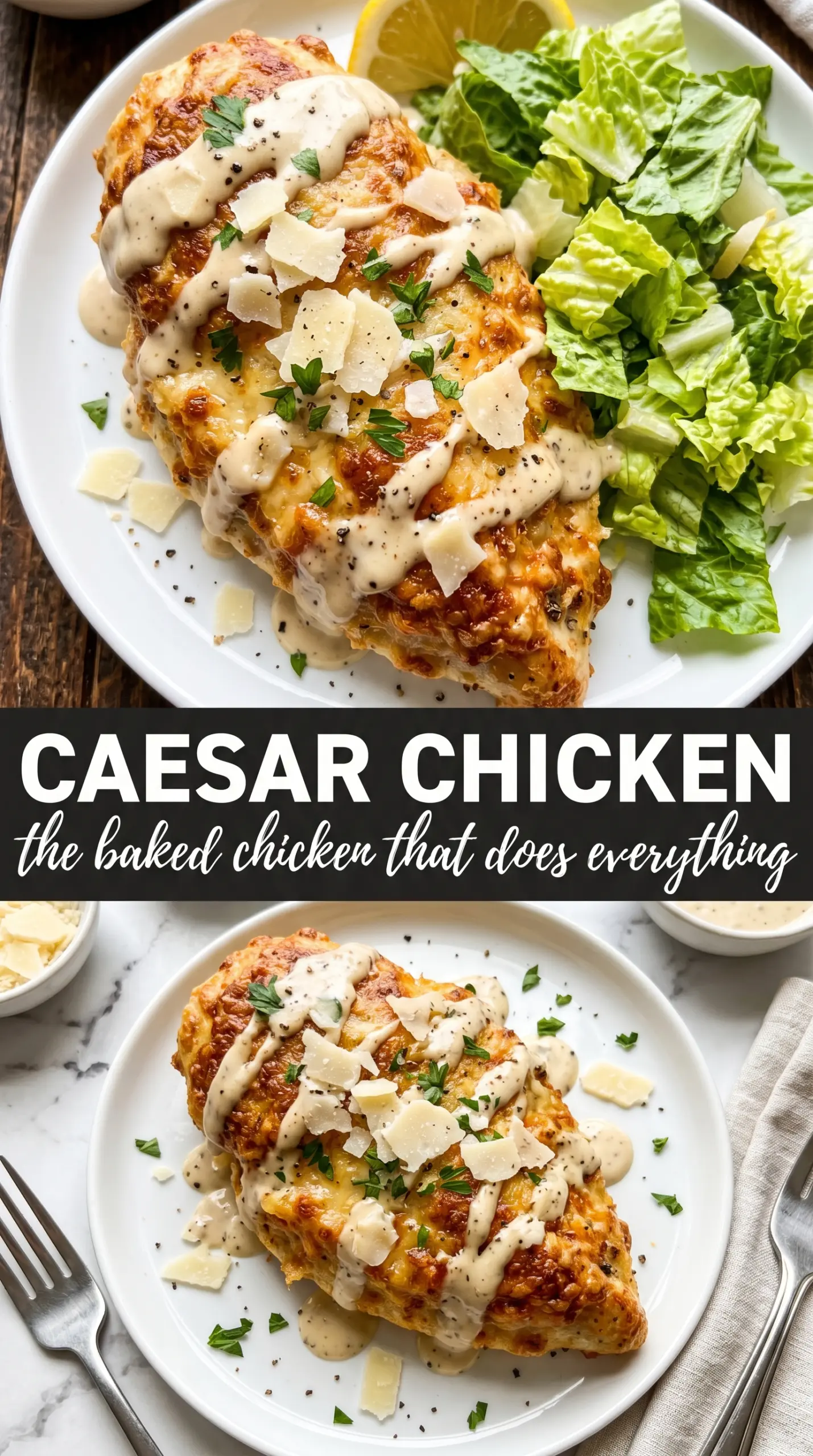
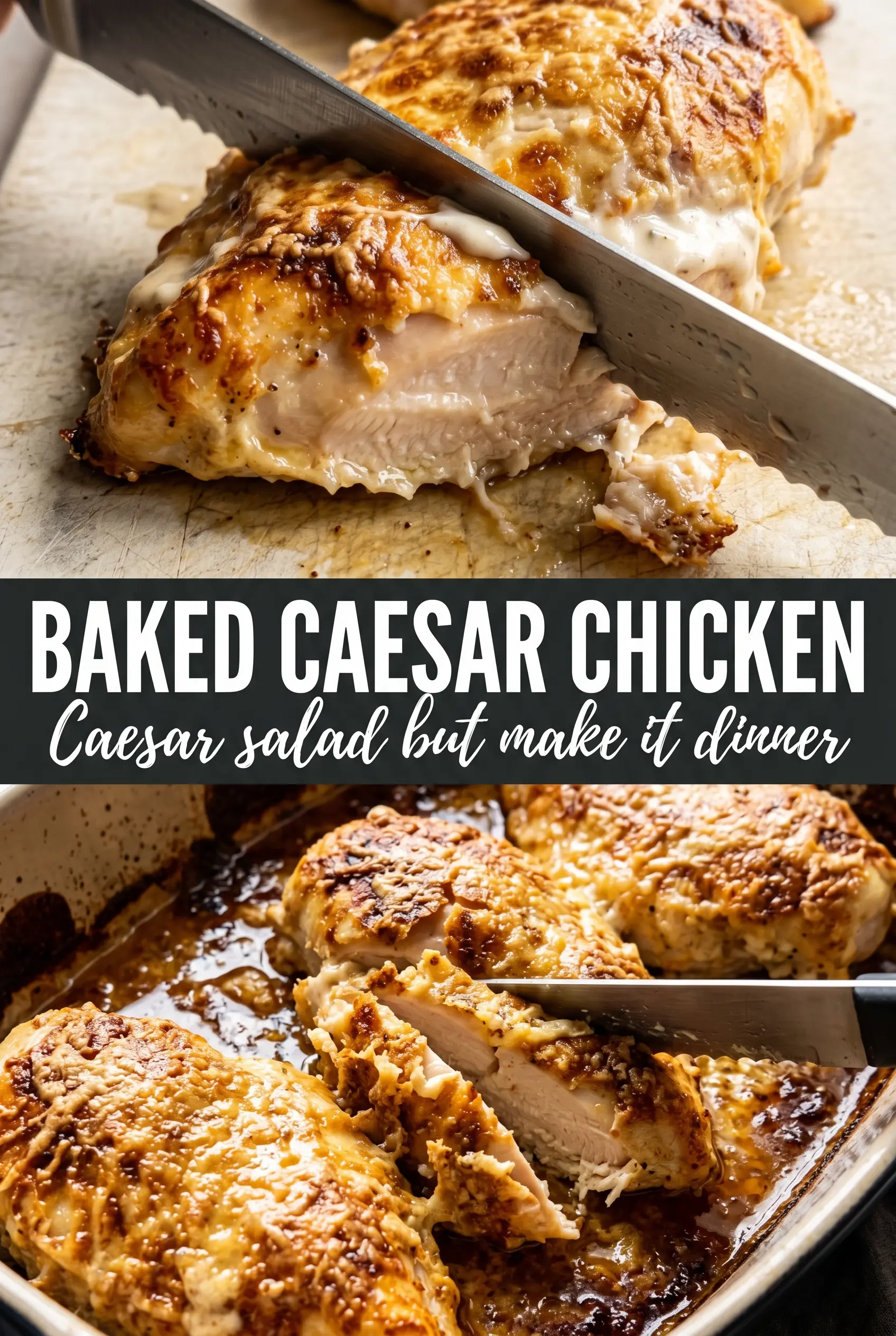
Baked Caesar chicken lands on the plate with a crust that’s salty, nutty, and just a little crackly at the edges, while the chicken underneath stays juicy from the short marinade. The Caesar dressing does more than add flavor here. It seasons the meat, helps it brown, and gives the Parmesan something creamy to cling to so the topping bakes into a proper crust instead of falling off in the pan.
The trick is keeping the topping dry enough to brown but not so heavy that it turns pasty. Freshly grated Parmesan matters because pre-shredded cheese won’t melt and crisp the same way, and a little panko gives the crust lift without stealing the Caesar flavor. A short marinating time is enough; go much longer and the dressing can start to soften the chicken surface too much.
Below, I’ve included the small details that keep the crust golden, plus the easiest swaps if you need to adjust the recipe for what’s in the fridge.
The chicken stayed juicy and the Parmesan topping turned golden instead of soggy. I used store-bought Caesar and the crust still had that restaurant-style savory flavor my husband kept picking at before dinner.
Save this baked Caesar chicken for the night you want a crisp Parmesan crust, juicy chicken, and almost no cleanup.
The Trick to Keeping the Caesar Crust Golden Instead of Soggy
The biggest mistake with Caesar chicken is piling on a wet coating and expecting it to brown like breadcrumbs. Caesar dressing already brings oil, egg, and seasoning to the party, so if the topping is too thick or too wet, it steams before it crisps. Mixing in panko and a portion of the Parmesan gives the top enough structure to toast in the oven.
Marinating for 20 minutes is the sweet spot. That’s long enough for the dressing to season the chicken and help it stay moist, but short enough that the surface doesn’t get slippery. Pressing the topping onto the chicken instead of spooning it loosely over the top helps it stay put as it bakes.
What the Caesar Dressing, Parmesan, and Panko Are Each Doing
- Caesar dressing — This is the marinade and the flavor base. Store-bought works fine here if it tastes good on its own, but use a thicker dressing so it clings to the chicken instead of pooling in the dish.
- Freshly grated Parmesan — This is what gives the crust its salty, nutty edge. Freshly grated cheese melts into the topping and browns much better than the shelf-stable kind, which can go sandy and dull.
- Panko breadcrumbs — These add the light crunch that keeps the topping from baking up dense. Regular breadcrumbs work in a pinch, but panko gives a cleaner, crispier finish.
- Lemon zest — A small amount keeps the dish from tasting heavy. It lifts the dressing and Parmesan without making the chicken taste lemony.
- Chicken breasts — Aim for even thickness so they cook at the same rate. If one side is much thicker, pound it lightly before marinating so the center finishes when the crust is done.
Getting the Chicken to Cook Through Without Burning the Topping
Building the Marinade
Mix the Caesar dressing, half the Parmesan, garlic powder, and lemon zest until smooth, then coat the chicken well. The mixture should look thick and spoonable, not runny. If your dressing is especially thin, the marinade can slide off in the pan, so use a thicker brand or stir in the cheese before adding the chicken. Let it sit for 20 minutes while the oven heats.
Pressing on the Crust
After the chicken goes into the baking dish, combine the remaining Parmesan with the panko and press it over the top of each breast. Pressing matters here. If you just sprinkle it on, the topping falls off once the chicken releases moisture in the oven. A light, even layer gives you a crust that browns before the chicken dries out.
Baking Until the Center Is Done
Bake at 400°F until the crust is golden and the thickest part of the chicken reaches 165°F, usually 22 to 25 minutes. If the topping is browning fast but the chicken still needs time, tent the dish loosely with foil for the last few minutes. Pulling it too early leaves the center undercooked, but leaving it in past temperature turns the breasts stringy.
Serving It the Right Way
Top the finished chicken with chopped romaine, croutons, a drizzle of extra Caesar dressing, and shaved Parmesan. The cool crunch of the romaine keeps the dish from feeling heavy, and the croutons echo the crisp topping. Serve it right away so the crust stays crisp underneath the salad.
How to Adapt This Baked Caesar Chicken When You Need a Swap
Make it gluten-free
Swap the panko for certified gluten-free breadcrumbs or crushed gluten-free crackers. You’ll still get a crisp top, though crackers usually bake a little richer and more delicate than panko.
Make it dairy-free
Use a dairy-free Caesar dressing and a Parmesan-style vegan cheese that melts and browns reasonably well. The flavor shifts a little, but the dressing still carries the garlicky, salty backbone of the dish.
Use chicken thighs instead
Boneless skinless thighs work well and stay extra juicy. They usually need a few more minutes in the oven, so cook to temperature rather than timing the bake by the clock.
Turn it into a salad plate dinner
Slice the chicken and serve it over extra romaine with more croutons and dressing. That turns the same baked chicken into a lighter meal without changing the core method.
Storage and Reheating
- Refrigerator: Store leftovers in an airtight container for up to 3 days. The crust softens a bit, but the chicken stays flavorful.
- Freezer: Freeze the baked chicken without the romaine or croutons for up to 2 months. Wrap each piece well so the topping doesn’t pick up freezer burn.
- Reheating: Reheat in a 350°F oven until warmed through, loosely covered at first if the crust is getting too dark. The microwave works in a pinch, but it softens the topping fast.
Answers to the Questions Worth Asking
Baked Caesar Chicken
Ingredients
Equipment
Method
- Mix Caesar dressing, 1/2 cup Parmesan, garlic powder, and lemon zest in a bowl, until evenly combined and fragrant.
- Place chicken breasts in the marinade and let them marinate for 20 minutes so the flavor penetrates.
- Preheat the oven to 400°F and grease a baking dish so the chicken releases easily.
- Put the marinated chicken in the dish in a single layer.
- Mix the remaining 1/4 cup Parmesan with panko, then press the mixture over the top of each breast so a crust forms.
- Bake for 22-25 minutes until the crust is golden and the internal temperature reaches 165°F, using a visual cue of crackled, caramelized edges.
- Top the baked Caesar chicken with chopped romaine and croutons for crunch and freshness.
- Drizzle with extra Caesar dressing and finish with shaved Parmesan for a bright, salty finish.