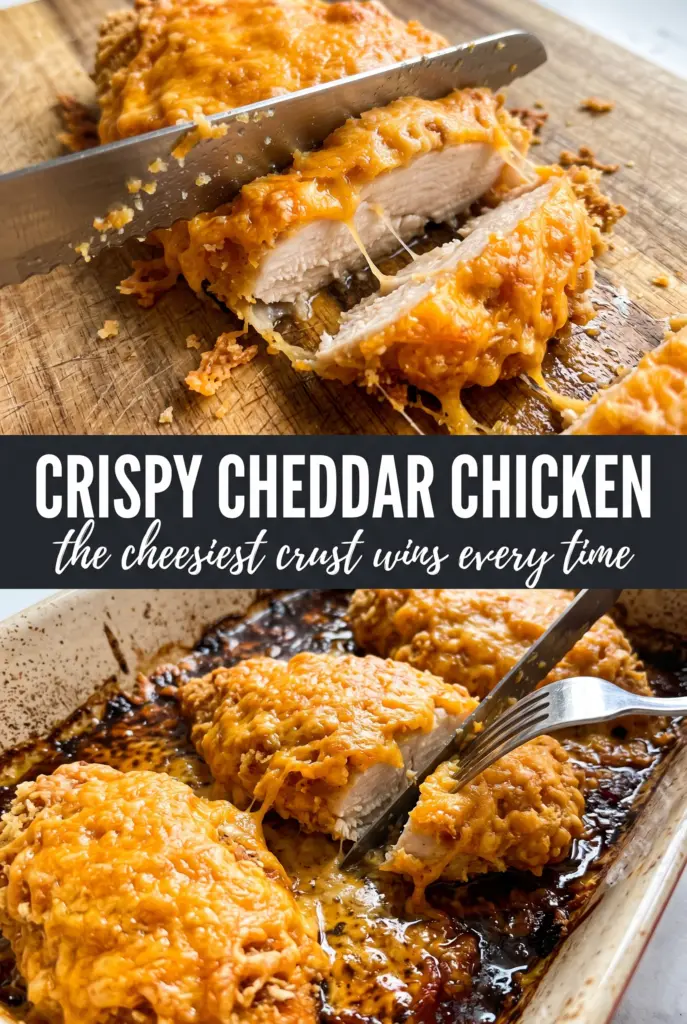
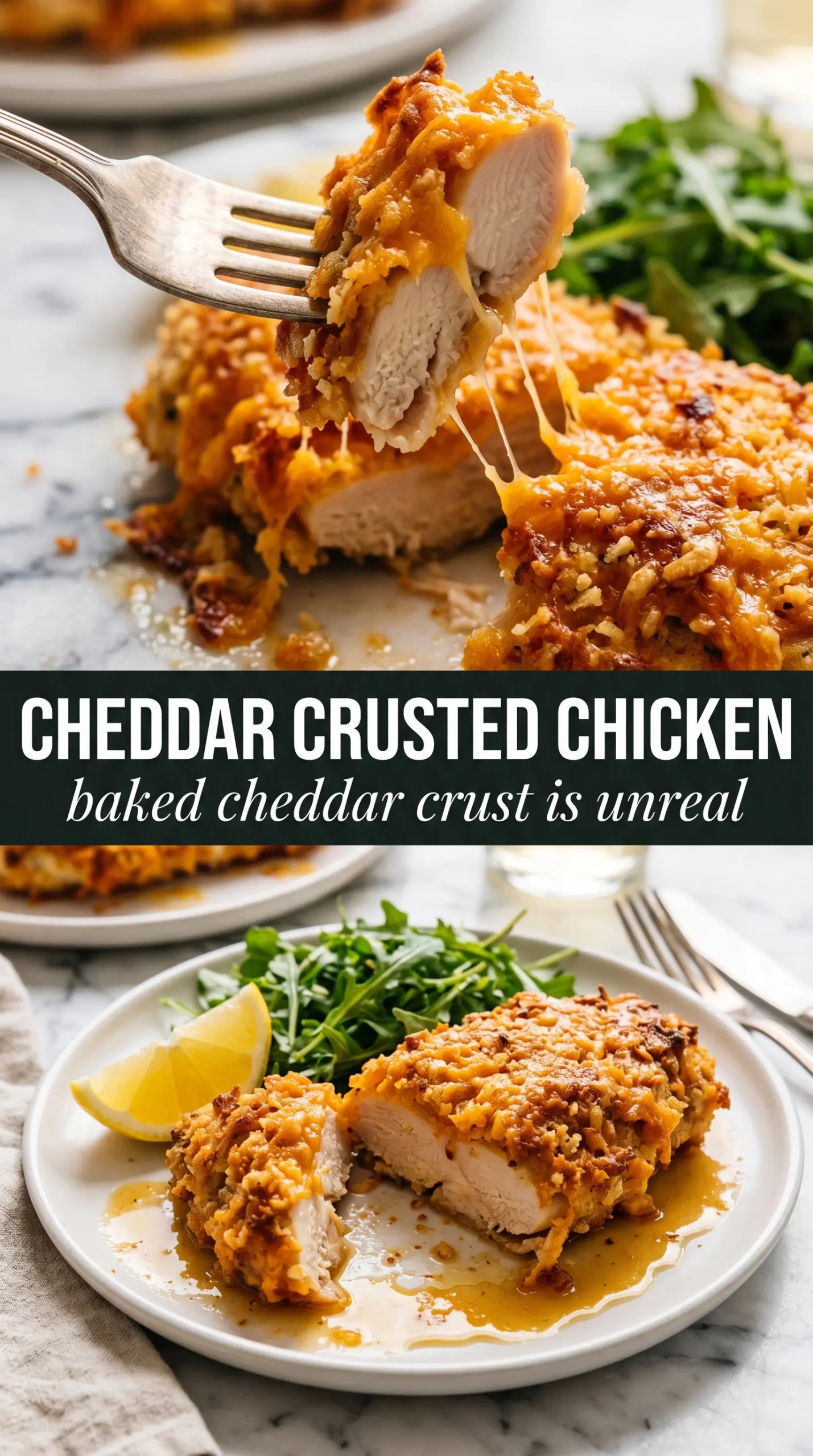
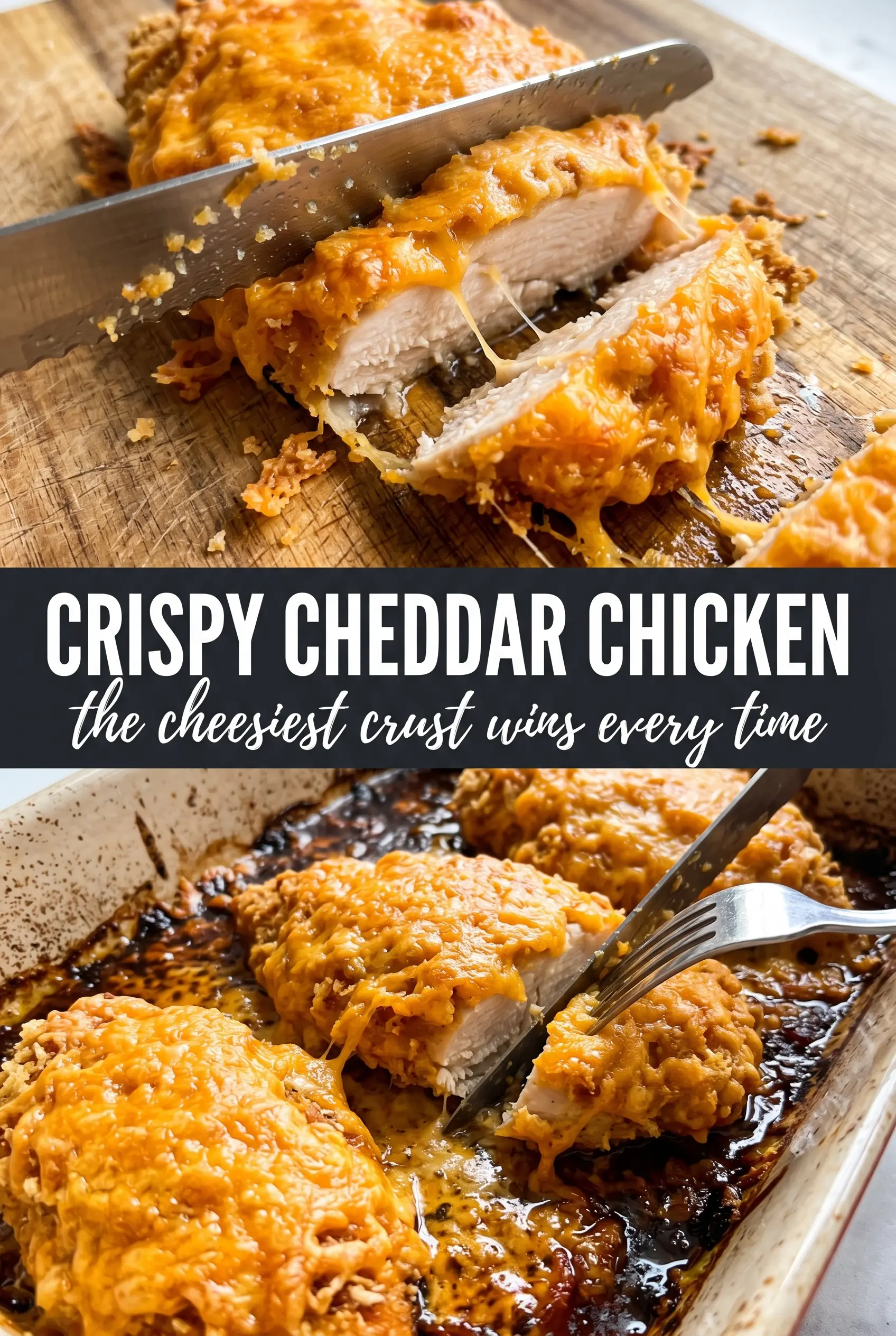
Crusty, cheesy chicken with a browned cheddar shell and juicy center earns its place on the dinner rotation fast. The best bites have that crackly, shattering top where the cheese has caramelized into golden shards, not a soft blanket that slides off the chicken. Underneath, the sour cream coating keeps the meat tender while giving the crust something sturdy to cling to.
The trick is in the layering. The sour cream mixture acts like both seasoning and glue, and the cracker-cheddar blend needs to be pressed on firmly so it actually bakes into the chicken instead of falling off in the pan. Finely shredded cheddar matters here because it melts and browns more evenly than thick shreds, and a little smoked paprika keeps the crust tasting deep and savory instead of flat.
Below you’ll find the small details that make this chicken turn out crisp instead of soggy, plus a few swaps that still keep the texture and flavor on track.
The crust stayed crispy even with the sauce around it, and the chicken stayed juicy all the way through. I used a thermometer and pulled it right at 165, which kept it from drying out.
Save this Crispy Cheddar Chicken for the nights when you want a shattering cheddar crust and a creamy pan sauce with almost no extra work.
The Reason the Crust Stays Crispy Instead of Sliding Off
The crust on this chicken only works when the sour cream layer is treated like a binder, not a sauce. It needs to coat the chicken in a thin, even layer so the cracker-cheddar mixture has something to grip. If the coating is too thick, it turns gummy under the crust before the cheese has a chance to brown.
Pressing the topping on firmly matters more than people think. Crumbs that are just scattered over the top will toast, but they won’t form that dramatic, cohesive shell that cracks when you cut into it. The other thing that changes the outcome is the oven temperature: hot enough to brown the cheddar, but not so hot that the outside burns before the chicken finishes cooking.
- Sour cream — This is doing two jobs: tenderizing the chicken and helping the crust stick. Full-fat sour cream gives the best texture, but regular sour cream works well too. Don’t swap in thin yogurt unless you’re prepared for a looser coating.
- Sharp cheddar — Sharp cheddar brings flavor and browning. Fine shreds melt into the cracker crumbs and create those crispy cheese shards on top. Pre-shredded cheese works in a pinch, but it won’t brown as evenly because of the anti-caking agents.
- Ritz crackers — These give the crust its buttery crunch and help the topping bake into a cohesive layer. Salted butter crackers are the closest stand-in if you don’t have Ritz, but plain breadcrumbs won’t give the same rich, crisp result.
- Smoked paprika — This is a small ingredient with a big payoff. It deepens the crust and keeps the cheddar from tasting one-note. Regular paprika works, but you’ll lose a little of that savory edge.
What Each Ingredient Is Actually Doing in This Chicken Dish
- Chicken (bone-in or boneless, skin-on or skinless) — Each cut has different cooking times and flavor profiles. Let thighs reach 165°F; breasts dry out if overcooked past that.
- Sauce or braising liquid (the moisture keeper) — This prevents the chicken from drying out and adds flavor. Don’t skip it even if the recipe seems moist.
- Aromatics (garlic, onion, herbs) — These add depth and complexity. Cook them with fat so they soften and sweeten instead of staying sharp.
- Cream or butter (optional richness) — These make the dish luxurious. Add to the sauce off the boil so it stays smooth instead of breaking.
- Cheese (if using) — This adds umami and richness. Mix into the sauce or sprinkle on top; either works depending on the dish.
- Acid (lemon, vinegar, wine, or tomato) — This prevents heavy sauces from tasting flat. Add at the end so the brightness doesn’t cook off.
- Proper temperature (165°F is perfect) — Use a thermometer to avoid guessing. Pull slightly early if the chicken will rest or finish in residual heat.
- Resting time (at least 5 minutes) — This lets juices redistribute so the meat stays moist when you cut into it instead of running dry.
Building the Coating So It Bakes Into the Chicken
Mix the Sour Cream Base First
Stir the sour cream with the garlic powder, onion powder, salt, and pepper until it looks smooth and evenly seasoned. That base should cling to the chicken without running off the sides. If it seems too loose, the chicken was wet; pat the breasts dry before coating them so the mixture stays where you put it.
Press the Crust, Don’t Sprinkle It
Combine the cheddar, cracker crumbs, and smoked paprika, then press the mixture onto every side of the coated chicken. Use your hands and push it on firmly so the crumbs embed in the sour cream layer. If you just dust it over the top, the cheese melts before the crumbs set and you lose that shatteringly crisp shell.
Bake Until the Center Reaches 165°F
Set the chicken in a greased 9×13 dish and bake until the crust is deeply golden and the thickest part of the chicken hits 165°F. The topping should smell nutty and toasted, not just melted. If the crust is browning too fast, lay a loose piece of foil over the pan for the last few minutes and keep cooking until the chicken is done through.
Warm the Sauce Separately
Whisk the cream of chicken soup with sour cream in a small saucepan and warm it gently until smooth. Keep the heat low, because boiling can make it dull and grainy. Drizzle it around the chicken instead of over the crust so the top stays crisp when it hits the plate.
Three Ways to Keep the Texture You Want
Gluten-Free Version With Crunch
Use gluten-free butter crackers or a gluten-free crumb blend in place of the Ritz crackers. You’ll still get a crisp top, but it may brown a little faster, so start checking a few minutes early. Keep the cheese layer the same so the crust still forms those golden, lacy edges.
Dairy-Free Swap That Still Bakes Well
Use a thick dairy-free sour cream-style product and a melting vegan cheddar shreds blend. The crust won’t taste exactly the same, but the method still works if the substitute is thick enough to act as glue. Avoid watery plant-based yogurts, which tend to make the coating slide off.
Make It a Little Lighter Without Losing the Crunch
Use 2% sour cream and reduce the topping slightly, but keep the cheddar in the mix because it’s what gives the crust its signature texture. The chicken will still bake up tender, though the crust won’t be quite as rich. Don’t cut the cracker layer too much or the top turns patchy instead of crisp.
Storage and Reheating
- Refrigerator: Store leftovers in an airtight container for up to 3 days. The crust softens a little as it sits, but the flavor holds up well.
- Freezer: Freeze baked chicken tightly wrapped for up to 2 months. The crust won’t stay as crisp after thawing, but it still works for a make-ahead dinner.
- Reheating: Reheat in a 350°F oven on a rack or lined sheet pan until hot. The microwave makes the crust soggy, which is the fastest way to lose the best part of this dish.
Questions I Get Asked About This Recipe
Crispy Cheddar Chicken
Ingredients
Equipment
Method
- Preheat the oven to 375°F and grease a 9x13 baking dish for easy release and clean browning.
- Whisk together sour cream, garlic powder, onion powder, salt, and pepper, then coat each chicken breast completely so the crust sticks all over.
- Combine shredded cheddar, crushed Ritz crackers, and smoked paprika, then press firmly over the sour cream-coated chicken on all sides.
- Place the crusted chicken in the prepared dish so each breast bakes evenly in the same hot environment.
- Bake for 28-32 minutes at 375°F until the crust is golden and the internal temperature reaches 165°F for safe, juicy chicken.
- Whisk cream of chicken soup with sour cream, then warm in a small saucepan until smooth and pourable.
- Drizzle the warm cream sauce around the chicken and garnish with fresh parsley right before serving.