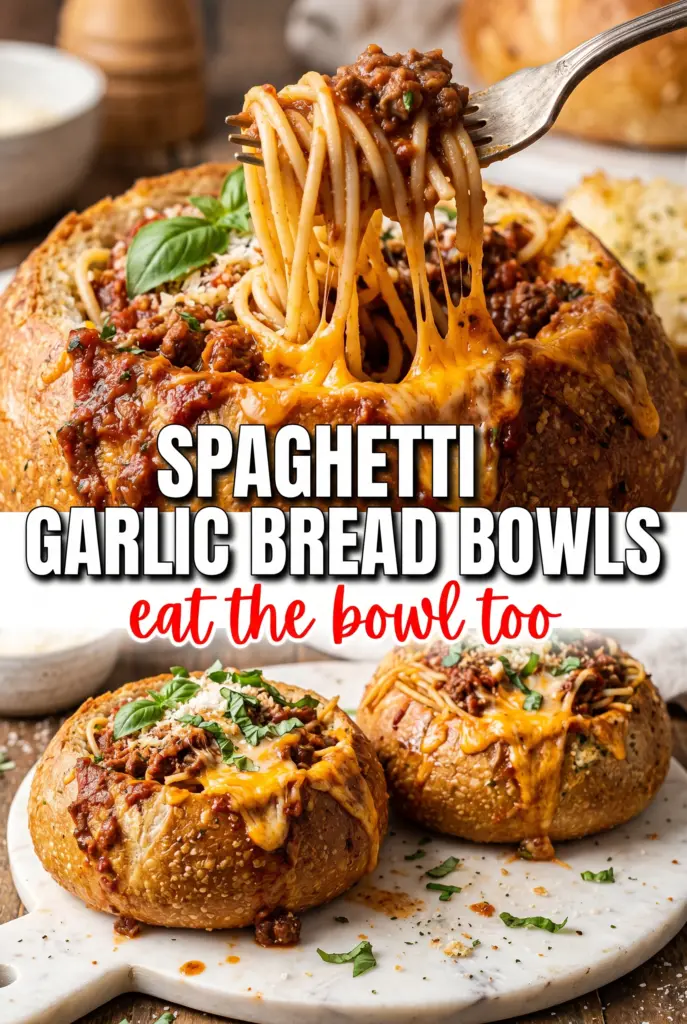
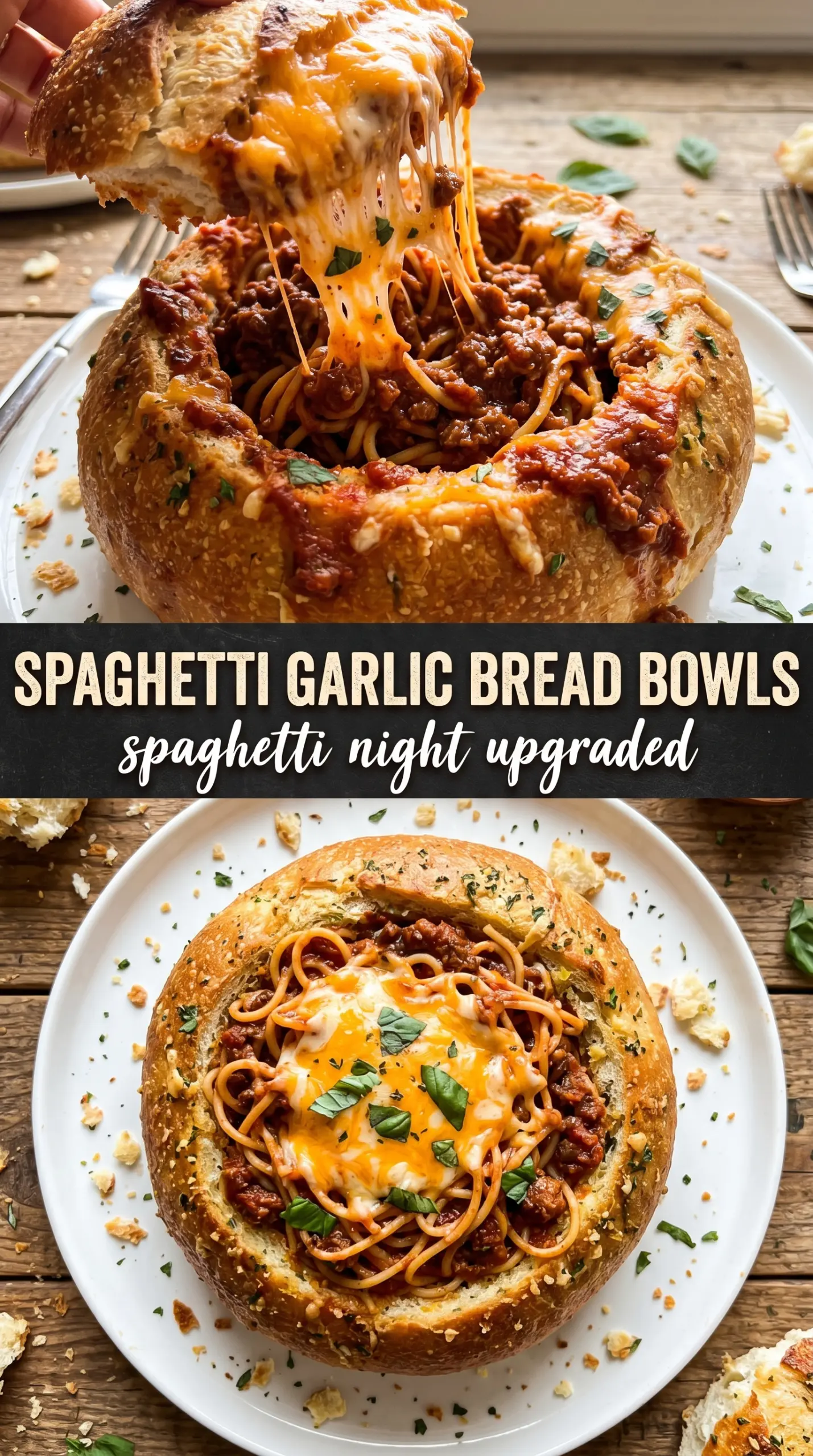
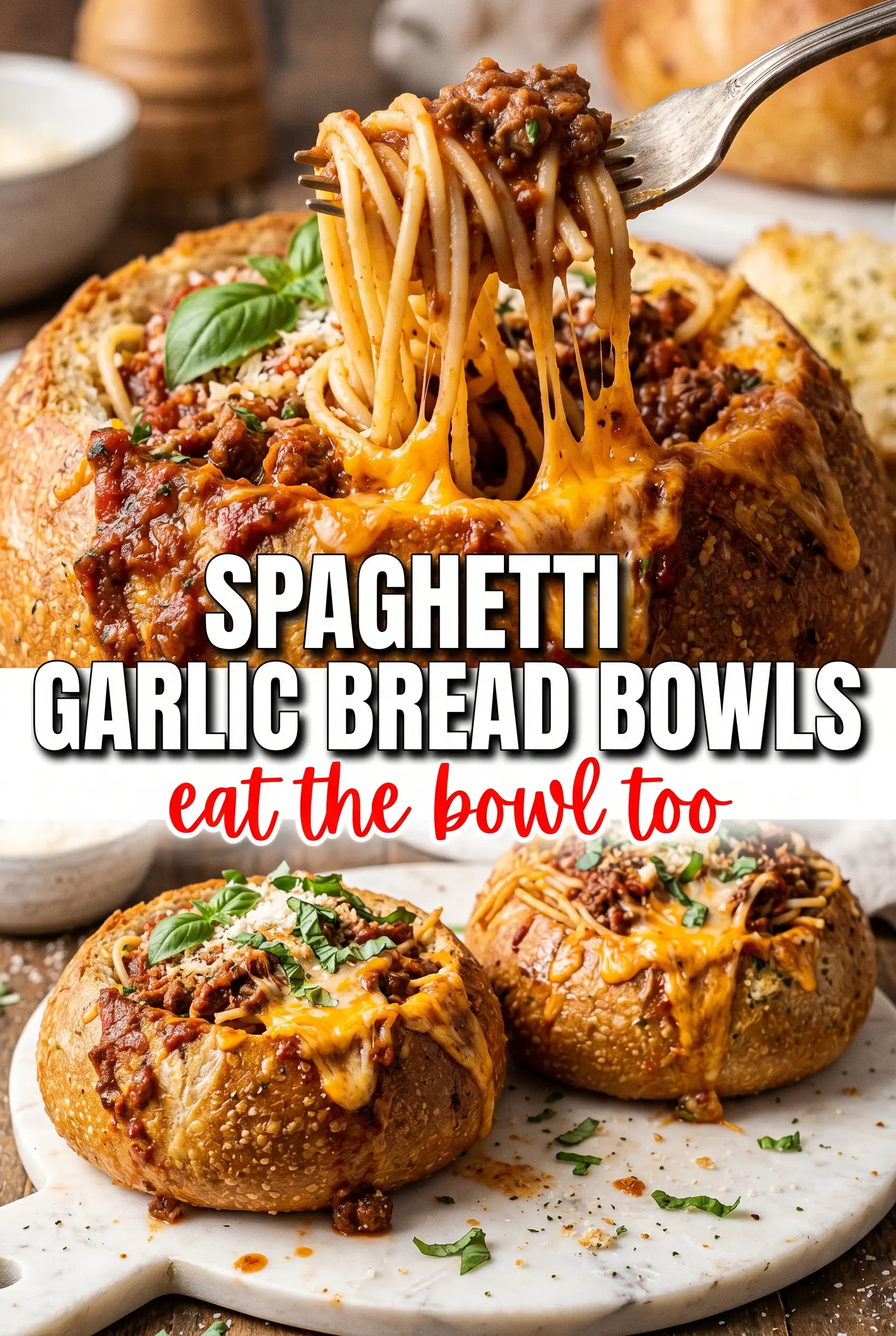
Golden, crisp garlic bread bowls filled with saucy spaghetti and melted mozzarella hit that sweet spot between dinner and a little bit of theater. The bread stays sturdy enough to hold the pasta, but the inside turns soft from the sauce in the best way, so every bite gives you crunch, chew, and a spoonful of meat sauce all at once.
What makes this version work is the two-stage bake. The bread bowls get brushed with garlic butter and toasted before the spaghetti goes in, which keeps the bottoms from collapsing under the sauce. The meat sauce is also simmered before it meets the pasta, so it clings instead of pooling into the bowl.
Below, I’ll walk you through the part that matters most: how to hollow the bread without tearing through the sides, and how to keep the bowls crisp long enough to serve them without panic. Once you’ve made these once, the method makes sense fast.
The bread bowls stayed crisp on the outside and the garlic butter soaked in just enough. I was worried they’d get soggy, but the pre-bake kept everything sturdy and the spaghetti held together perfectly.
Love the crispy garlic bread bowls and saucy spaghetti filling? Save this one for a fun pasta night that eats like comfort food and looks like a centerpiece.
The Trick That Keeps the Bread Bowl From Turning Soggy
The most common mistake with bread bowls is stuffing them before the bread has had a chance to dry and toast a little. Once sauce hits soft bread, the structure goes fast. That’s why the garlic butter bake comes first here. It gives you a crisp shell, and the interior surface gets sealed just enough to handle the spaghetti without collapsing into a wet mess.
The other thing that helps is using a thick, cooked-down meat sauce instead of a thin one. You want the pasta coated, not swimming. If your sauce looks loose in the skillet, give it a few more minutes uncovered. That extra reduction is what keeps the bottom of the bowl from soaking through before dinner hits the table.
- Sourdough bread bowls — The sturdy crust is doing real work here. Soft rolls won’t hold up as well once the filling goes in, and the bread will cave before the cheese finishes melting.
- Garlic butter — Brushing it on the inside and outside gives you flavor and protection. The butter helps the crust brown, while the garlic and parsley make the bread taste intentional, not just like a container.
- Ground beef and marinara — This is the base that gives the dish body. A jarred marinara is fine, but simmer it with the browned beef so it thickens and picks up the savory bits from the pan.
- Mozzarella — Shred it yourself if you can. Pre-shredded cheese works, but freshly shredded mozzarella melts smoother and gives you that stretchy, bubbling top without the slightly dusty coating packaged cheese can have.
What Each Ingredient Is Actually Doing in This Recipe
- Primary ingredient (the star) — Quality matters most. Choose the best you can find.
- Base ingredient or binder (if applicable) — This provides structure or holds everything together.
- Seasonings (salt, pepper, spices, herbs) — Layer flavors so nothing overpowers. Build depth gradually.
- Cooking medium (oil, butter, or other) — This carries flavors and prevents dryness. Don’t skimp.
- Aromatics (garlic, onion, herbs) — These add depth and complexity. They become part of the dish foundation.
- Supporting ingredients — These complement the main ingredient without overpowering it.
- Acid (lemon, vinegar, wine, or other) — This brightens and prevents flat-tasting results.
- Final finish (garnish, glaze, or sauce) — These prevent one-dimensional taste and add visual appeal.
Building the Fill and Finishing the Bowls Without Losing the Crunch
Toasting the Bread Shells First
Cut the tops off the bread bowls and hollow them out, leaving a solid border so the sides stay upright. Brush the inside and outside generously with garlic butter, then bake until the surface looks crisp and lightly browned. If the bread still feels pale and soft, it’s not ready for filling yet. That first bake is what gives you a bowl that can actually carry dinner.
Cooking the Sauce Until It Clings
Brown the beef in a skillet until there’s no pink left and the edges start to caramelize. Drain the fat, then add the marinara, Italian seasoning, and red pepper flakes, and simmer until the sauce looks thick and glossy. Thin sauce leaks into the bread faster, so don’t rush this part. When you drag a spoon through the pan, the sauce should part for a second before settling back in.
Filling, Topping, and Baking Again
Toss the cooked spaghetti with the meat sauce before it goes into the bowls. That helps every strand get coated instead of leaving dry pasta at the bottom. Pack the bowls generously, mound a little mozzarella on top, and bake just until the cheese melts and bubbles. If you leave them in too long, the bread keeps crisping and the bottom edge can get tough before the cheese is done.
Make it meatless with a hearty pasta sauce
Swap the ground beef for browned mushrooms, lentils, or a plant-based crumble. Mushrooms give you the deepest savory flavor, while lentils make the filling thicker and a little more rustic. The bread bowls still hold up, but the finished dish will lean a little lighter and less rich.
Make it gluten-free
Use gluten-free bread bowls if you can find them and swap in your favorite gluten-free spaghetti. The texture will be a little more delicate, so the pre-bake matters even more. Keep the filling thick and don’t overstuff the bowls, or the sides can soften faster than you want.
Use sausage instead of beef
Italian sausage gives the sauce a little more spice and a deeper seasoning without any extra work. Remove the casings if needed and brown it the same way you would the beef. The finished filling tastes a touch richer and pairs well with extra Parmesan on top.
Storage and Reheating
- Refrigerator: Store the bread bowls and filling separately for up to 3 days. If they sit assembled, the bread softens fast.
- Freezer: The sauce freezes well for up to 2 months, but the assembled bread bowls don’t hold up well in the freezer. Freeze the filling on its own and build fresh bowls later.
- Reheating: Reheat the sauce on the stove over low heat, then warm the bread bowls in the oven until crisp. Don’t microwave the assembled bowls if you want to keep the bread from turning rubbery and damp.
Answers to the Questions Worth Asking
Spaghetti Garlic Bread Bowls
Ingredients
Equipment
Method
- Preheat the oven to 375°F. Keep the bread bowls ready for hollowing and buttering.
- Cut the tops off each bread bowl and hollow out the center, leaving a 1-inch border. Save the tops if you want them for extra crunch at the edges.
- Mix the melted butter with the minced garlic and chopped parsley. Brush generously inside and outside each bread bowl so the crust will crisp during baking.
- Bake the buttered bread bowls for 10 minutes at 375°F until crispy. Leave them on a sheet pan so they keep their shape.
- Brown the ground beef in a skillet until cooked through. Drain excess fat so the marinara stays rich instead of greasy.
- Add the marinara sauce, Italian seasoning, and red pepper flakes to the beef. Simmer for 10 minutes until the sauce thickens slightly and tastes well combined.
- Toss the cooked spaghetti with the meat sauce until the noodles are evenly coated. Fill each bread bowl generously with the spaghetti mixture.
- Top each filled bowl with shredded mozzarella. Bake for 8–10 minutes at 375°F until the cheese is melted and bubbly, then serve with Parmesan.