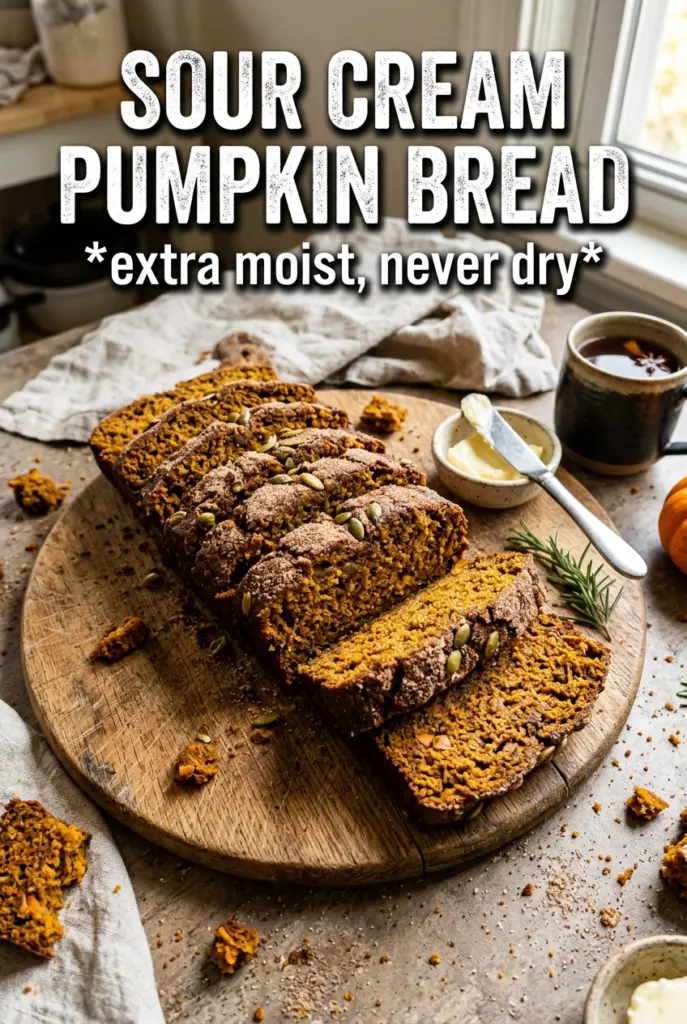
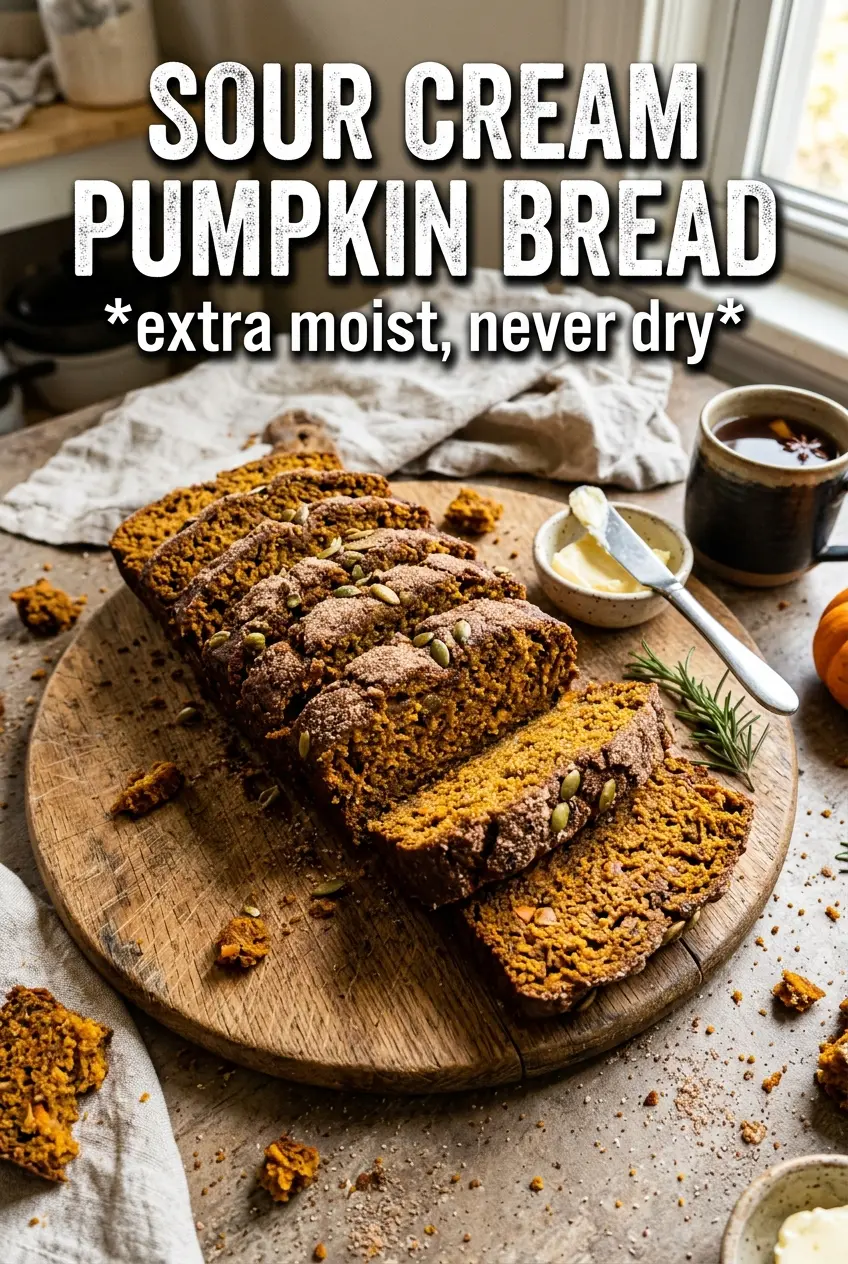
Sour cream pumpkin bread bakes up with a tender, velvety crumb and a cinnamon sugar top that cracks just enough to give each slice a little texture. The pumpkin stays front and center, but the sour cream is what keeps the loaf from turning dense or dry, so every piece cuts cleanly and eats like a proper bakery-style quick bread.
What makes this version work is the balance: pumpkin puree for body and flavor, brown sugar for moisture and depth, and a full cup of sour cream to keep the crumb soft for days. The batter comes together fast, but the order matters. Once the dry ingredients go in, you want to stop mixing as soon as the flour disappears so the loaf stays tender instead of tough.
Below, I’ve added the small things that matter here — how to keep the center from sinking, why full-fat sour cream makes a noticeable difference, and a few smart swaps if you need to work with what’s already in your kitchen.
The loaf came out incredibly moist and the cinnamon sugar top had that thin, crackly crust I was hoping for. I sliced it while still a little warm and the crumb held together beautifully without feeling heavy.
Love that soft, rich sour cream pumpkin bread? Save it to Pinterest for the mornings when you want a moist loaf with a cinnamon sugar crown.
The Reason This Loaf Stays Moist Instead of Gummy
The biggest mistake with pumpkin bread is assuming more pumpkin means a better loaf. It doesn’t. Too much puree can make the center heavy and pasty, especially if the batter is overmixed or the loaf is pulled too early. Here, the sour cream does the work you want from extra pumpkin — it adds moisture and tenderness without flooding the batter with more starch.
The other detail that matters is the baking soda and baking powder pairing. Pumpkin puree and sour cream bring enough acidity to help the baking soda lift the loaf, while the baking powder gives a little extra insurance so the bread rises evenly instead of doming hard and collapsing in the middle. That balance is what gives you a slice that feels soft but still holds its shape.
- Full-fat sour cream — This is the ingredient you don’t want to cut down on. Low-fat versions work in a pinch, but full-fat sour cream gives the richest crumb and the best texture after cooling.
- Pumpkin puree — Use pure pumpkin, not pumpkin pie filling. Pie filling is already sweetened and seasoned, which throws off both the texture and the spice balance.
- Brown sugar — It adds moisture and a deeper caramel note that plain white sugar can’t match. The loaf tastes flatter without it.
- Vegetable oil — Oil keeps quick bread softer than butter does here. Butter can taste great, but it firms up more once the loaf cools.
What Each Ingredient Is Actually Doing in This Recipe
- Primary ingredient (the star) — Quality matters most. Choose the best you can find.
- Cooking medium (oil, butter, or broth) — This carries flavors and prevents dryness.
- Seasonings (salt, pepper, spices, herbs) — Layer flavors so nothing overpowers. Build depth gradually.
- Aromatics (garlic, onion, herbs) — Cook with fat to bloom flavors. Become the foundation.
- Supporting ingredients — Complement the main ingredient without overpowering it.
- Sauce or liquid (if applicable) — Brings flavors together. Balance richness with acid.
- Acid (lemon, vinegar, wine, or other) — Brightens and prevents flat-tasting results.
- Final finish (garnish, glaze, or sauce) — Prevents one-dimensional taste and adds visual appeal.
Building the Batter Without Beating the Air Out
Whisk the Wet Ingredients Until Smooth
Start by whisking the pumpkin, sugars, oil, eggs, sour cream, and vanilla until the mixture looks glossy and even. You’re not trying to whip in a lot of air; you just want the sour cream fully blended so there aren’t streaks of dairy hiding in the batter. If the mixture looks slightly grainy at first, keep whisking until the brown sugar breaks down a bit and everything loosens up.
Fold the Dry Ingredients in at the Last Minute
Once the flour mixture goes in, switch to a spatula and fold only until the dry spots disappear. A few streaks are fine right before it hits the pan; the loaf will finish mixing in the oven. If you beat it hard at this stage, the bread turns tight and chewy instead of soft and tender.
Watch the Top, Not Just the Timer
The loaf is done when a toothpick comes out clean from the center and the top springs back lightly when touched. The cinnamon sugar crust will darken first, so don’t pull it just because the top looks finished. If the center is still wet, keep baking and tent loosely with foil only if the top starts getting too dark.
How to Change the Loaf Without Losing the Texture
Make It Dairy-Free With a Thick Plant-Based Yogurt
Use an unsweetened, thick dairy-free yogurt in place of the sour cream. The loaf will still stay moist, but it won’t have quite the same rich tang, so choose a plain yogurt with a fairly dense texture rather than a thin pourable one.
Swap in Buttermilk if That’s What You Have
Buttermilk can work, but the batter will be looser and the crumb a little lighter. If you use it, keep an eye on the bake time, since the loaf may set a bit faster around the edges.
Turn It Into Muffins for Faster Baking
Portion the batter into a lined muffin tin and bake until a tester comes out clean, usually much sooner than the loaf. You’ll lose the neat sliceable shape, but you gain crisp edges and an easy grab-and-go breakfast.
Storage and Reheating
- Refrigerator: Store tightly wrapped for up to 5 days. The crumb stays moist, though the cinnamon sugar top softens a little after the first day.
- Freezer: This loaf freezes well. Wrap slices or the whole cooled loaf in plastic, then foil, and freeze for up to 3 months.
- Reheating: Warm slices in the microwave for 10 to 15 seconds or in a low oven until just heated through. Don’t blast it on high heat or the loaf can dry out at the edges before the center warms.
Answers to the Questions Worth Asking
Sour Cream Pumpkin Bread
Ingredients
Equipment
Method
- Preheat the oven to 350°F and grease a 9x5 loaf pan so the loaf releases cleanly.
- Whisk all-purpose flour, baking soda, baking powder, pumpkin pie spice, cinnamon, and salt until evenly combined.
- In a separate bowl, whisk pumpkin puree, granulated sugar, brown sugar, vegetable oil, eggs, full-fat sour cream, and vanilla extract until smooth.
- Continue whisking just until the mixture looks glossy and uniform, since the sour cream helps create the tender crumb.
- Fold the dry ingredients into the wet mixture until just combined, then pour the batter into the prepared loaf pan.
- Sprinkle the cinnamon sugar topping evenly over the surface to form a lightly crisp top.
- Bake for 60–65 minutes at 350°F, until a toothpick inserted in the center comes out clean.
- Cool in the pan for 15 minutes before removing so the loaf sets and slices neatly.