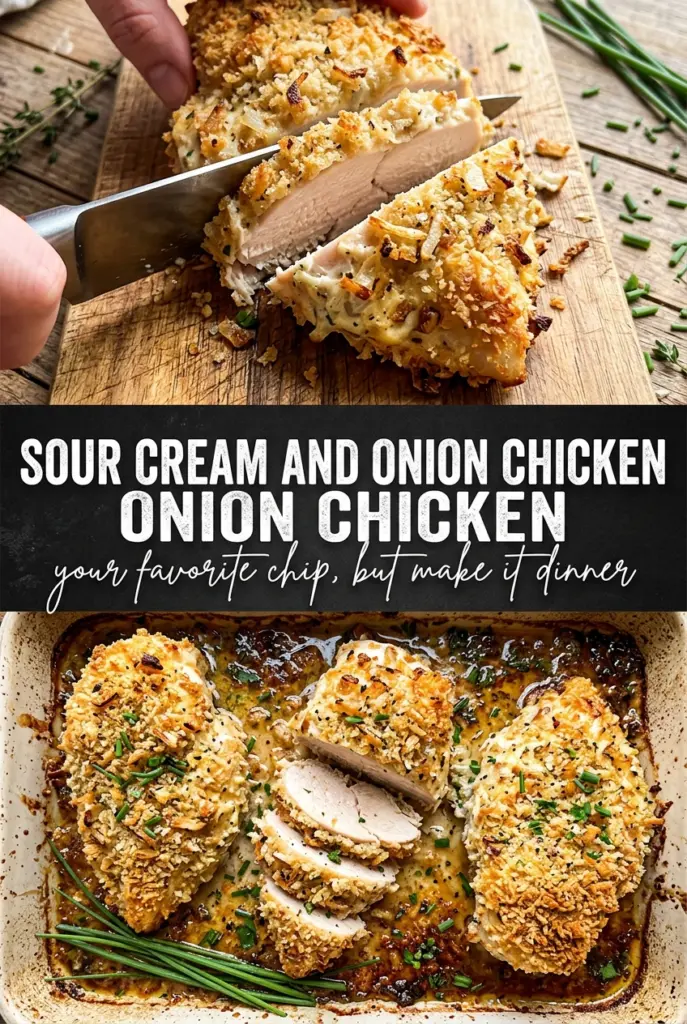
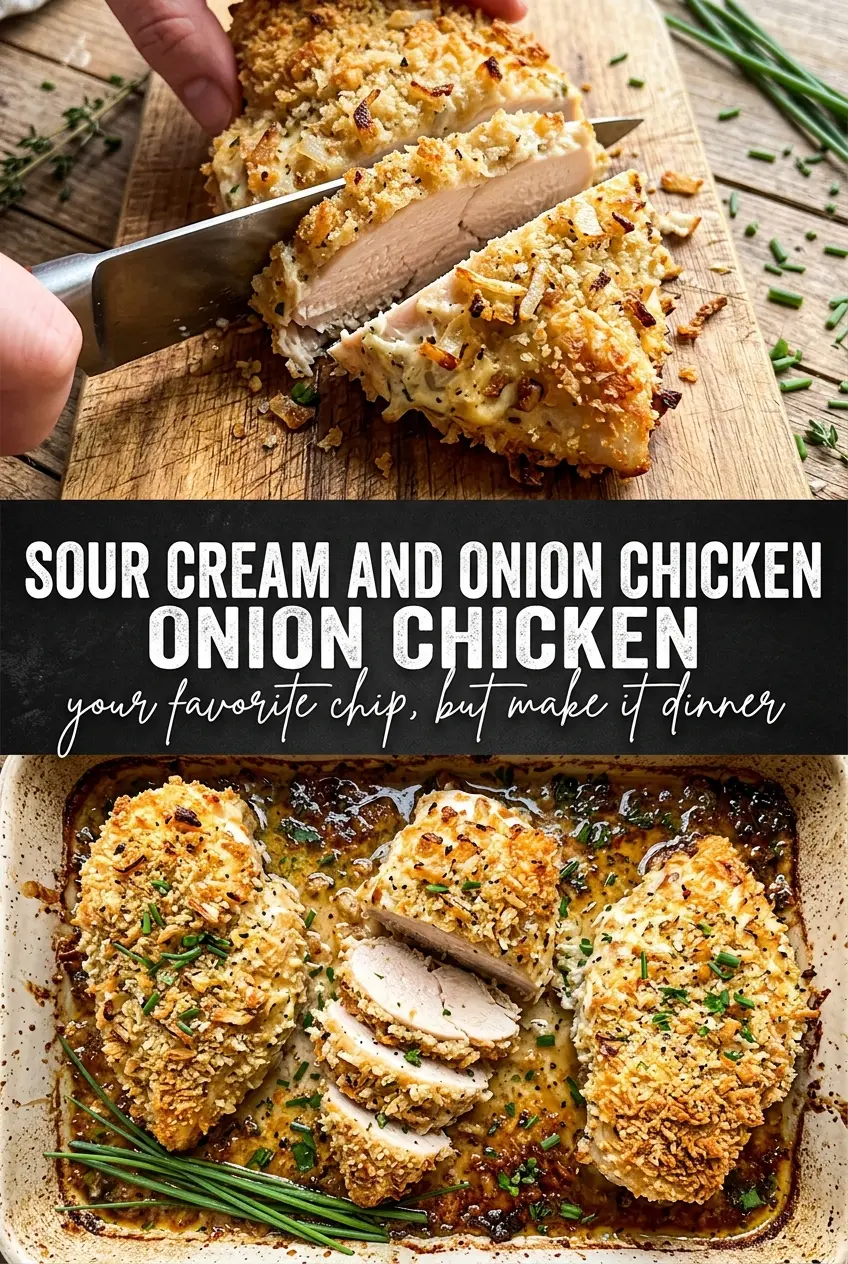
Golden, crackled sour cream and onion chicken lands on the table with a crust that stays crisp long enough to matter and a creamy layer underneath that keeps the chicken from drying out. The topping bakes into a savory shell with a little tang from the sour cream and a familiar onion flavor that tastes bigger than the short ingredient list suggests.
What makes this version work is the two-layer coating. The sour cream mixture sticks to the chicken and adds moisture, while the crushed crispy onions and Parmesan form the browned top that gives every bite some crunch. Pressing the topping on firmly matters here; if it sits loosely on the chicken, it falls off before it has time to toast.
Below, I’ve included the small details that keep the coating from sliding, plus a few swaps that still give you that creamy-and-crisp finish on a busy night.
The onion coating browned up beautifully and stayed on the chicken instead of sliding off. I used thin breasts and it was done right on time, with the sour cream layer keeping everything juicy.
Save this sour cream and onion chicken for nights when you want a crispy topping and a creamy chicken bake without a long ingredient list.
The Part That Keeps the Crust on the Chicken
The biggest mistake with this kind of baked chicken is treating the topping like a loose sprinkle. The sour cream layer is the glue, and it needs to be thick enough to hold the onion mixture in place before the oven heat sets it. If the chicken is wet from rinsing or thawing, pat it dry first or the coating will slide and steam instead of turning crisp.
Another thing that matters here is thickness. Chicken breasts that are uneven at one end cook unevenly, which gives you a browned topping before the thickest part is done. If yours are large, slice them in half horizontally or pound the thickest end just enough to even them out. That gives you a better shot at juicy meat and a crust that doesn’t overcook.
- Sour cream — This does two jobs at once: it adds tang and it protects the chicken from drying out. Full-fat sour cream gives the best body, but reduced-fat will still work if that’s what you have.
- Onion soup mix — This is where most of the onion flavor comes from, so don’t swap it for plain onion powder unless you also add extra salt and a little dried herbs. The mix brings seasoning, dehydrated onion, and enough savory depth to make the coating taste complete.
- Crispy fried onions — Crushing them gives you better coverage and a tighter crust. Whole onions are too bulky and tend to burn before they adhere.
- Parmesan — This helps the top brown and adds a salty, nutty edge. Use the finely grated kind so it blends with the onions and forms a more even crust.
What Each Ingredient Is Actually Doing in This Chicken Dish

- Chicken (bone-in or boneless, skin-on or skinless) — Each cut has different cooking times and flavor profiles. Let thighs reach 165°F; breasts dry out if overcooked past that.
- Sauce or braising liquid (the moisture keeper) — This prevents the chicken from drying out and adds flavor. Don’t skip it even if the recipe seems moist.
- Aromatics (garlic, onion, herbs) — These add depth and complexity. Cook them with fat so they soften and sweeten instead of staying sharp.
- Cream or butter (optional richness) — These make the dish luxurious. Add to the sauce off the boil so it stays smooth instead of breaking.
- Cheese (if using) — This adds umami and richness. Mix into the sauce or sprinkle on top; either works depending on the dish.
- Acid (lemon, vinegar, wine, or tomato) — This prevents heavy sauces from tasting flat. Add at the end so the brightness doesn’t cook off.
- Proper temperature (165°F is perfect) — Use a thermometer to avoid guessing. Pull slightly early if the chicken will rest or finish in residual heat.
- Resting time (at least 5 minutes) — This lets juices redistribute so the meat stays moist when you cut into it instead of running dry.
How to Build the Coating So It Bakes, Browns, and Stays Put
Mixing the Tangy Base
Stir the sour cream and onion soup mix until the mixture looks even and thick, with no dry pockets of seasoning left behind. It should cling to a spoon instead of running off like dressing. If the mixture looks thin, the chicken will end up wet on top and the crust won’t brown as well.
Pressing on the Crunch
Combine the crushed fried onions, Parmesan, and garlic powder in a separate bowl, then press that mixture firmly over the sour cream layer. Don’t just scatter it on top; use the flat side of a spoon or your fingertips to seat it into the sour cream. The pressure helps the crust stick through the whole bake instead of falling off when you slice into it.
Baking to the Right Temperature
Bake at 375°F until the topping is deeply golden and the chicken reaches 165°F in the thickest part. If the top browns too quickly, cover the dish loosely with foil near the end instead of cranking the heat down. Pulling the chicken early is the mistake here; breasts can look done on top while still being undercooked in the center.
Finishing with Freshness
Let the chicken rest for a few minutes before serving, then add extra crispy onions and fresh chives. That short rest keeps the juices from spilling onto the plate the second you cut in. The chives are not decoration here — they cut through the richness and keep the whole dish from tasting heavy.
How to Adapt This for Different Nights and Different Pantries
Make it gluten-free
Use a gluten-free onion soup mix and certified gluten-free crispy onions. The method stays the same, and the topping still bakes up crunchy as long as the coating is pressed on firmly.
Use chicken thighs instead
Boneless, skinless thighs bring a little more richness and stay juicy even if they go a minute long. They may need a few extra minutes in the oven, so rely on temperature instead of the clock.
Swap in Greek yogurt for part of the sour cream
You can replace half the sour cream with plain Greek yogurt for a sharper finish and a little extra protein. The coating will be slightly less plush, but it still bakes well and keeps the chicken tender.
Storage and Reheating
- Refrigerator: Store leftovers in an airtight container for up to 3 days. The crust softens a bit, but the flavor holds up well.
- Freezer: It freezes, though the topping won’t stay as crisp. Wrap portions tightly and freeze for up to 2 months for best quality.
- Reheating: Reheat in a 350°F oven until hot through, uncovered, so the coating can re-crisp. The microwave makes the topping soggy, which is the one mistake that flattens this dish fast.
Answers to the Questions Worth Asking
Sour Cream and Onion Chicken
Ingredients
Equipment
Method
- Preheat the oven to 375°F and grease a baking dish.
- Mix the sour cream and onion soup mix until well combined.
- In a separate bowl, combine the crushed crispy fried onions, Parmesan, and garlic powder.
- Season the chicken breasts with salt and pepper, then coat each breast thickly with the sour cream mixture.
- Press the onion-Parmesan mixture firmly onto the top of each sour cream-coated breast so it adheres.
- Bake at 375°F for 25-28 minutes, until the topping is golden and the internal temperature reaches 165°F.
- Garnish with extra crispy fried onions and fresh chives right before serving.