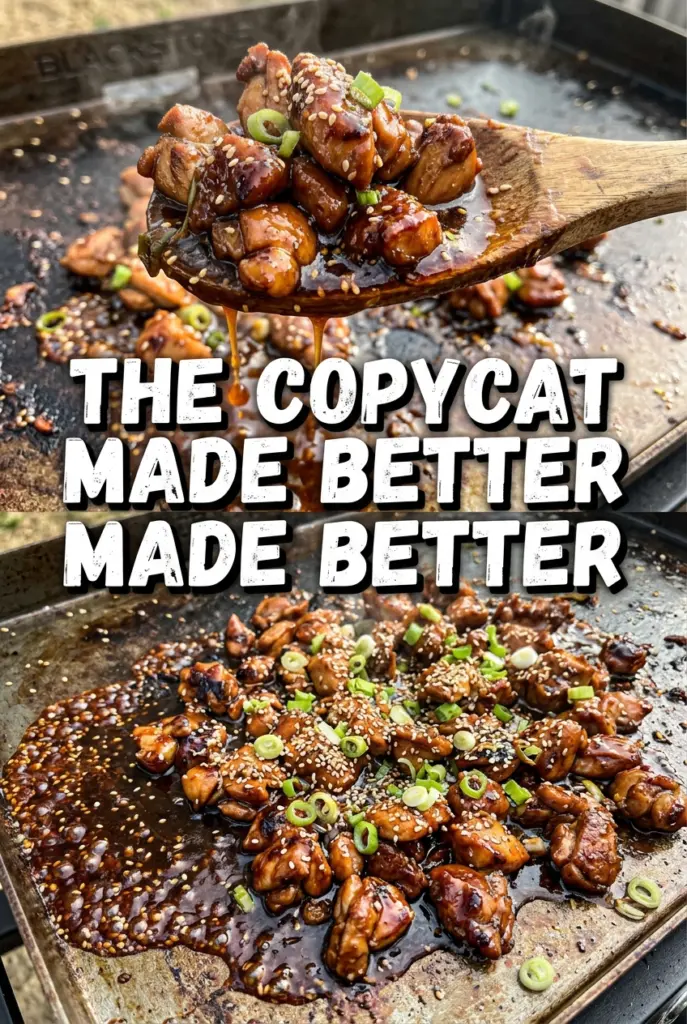
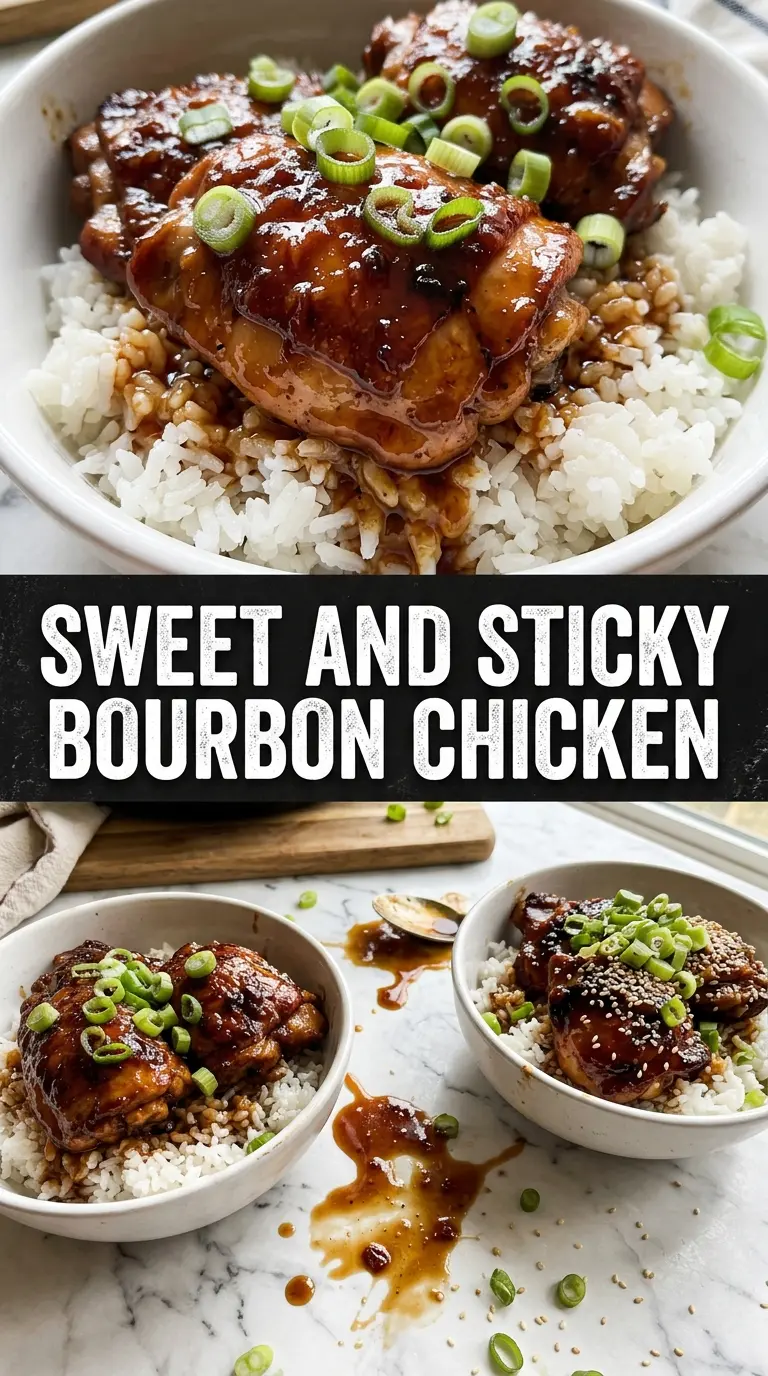
Blackstone Bourbon Chicken hits that sweet spot between sticky, savory, and fast enough to keep a weeknight moving. The chicken picks up a deep caramelized glaze on the griddle, and the bourbon adds a warm edge that keeps the sauce from tasting flat or one-note. When it’s done right, you get glossy pieces with browned edges, not watery sauce pooling on the pan.
The trick is splitting the marinade before the chicken goes in. One portion seasons the meat, and the reserved portion gets thickened at the end so you’re not risking raw marinade or a thin sauce that slides off the chicken. Using thighs helps here too, because they stay tender while the sugars in the glaze cook down on the hot flat-top.
Below, I’m walking through the part that matters most on a griddle: how to get the sauce to cling instead of burn, plus a few easy swaps if you want to adjust the heat, skip the bourbon, or make this work with what’s already in your kitchen.
The glaze tightened up on the griddle exactly when it should have, and the chicken stayed juicy even after the sauce went on. My husband kept picking at the caramelized bits before I could get it to the table.
Save this Blackstone Bourbon Chicken for the nights when you want sticky griddle chicken with a glossy caramelized glaze.
The Marinade Split That Keeps the Sauce Safe and Sticky
Most bourbon chicken goes wrong in one of two ways: the chicken is cooked in a sauce that never thickens, or the same raw marinade gets boiled until it tastes dull and thin. This version avoids both problems by reserving part of the marinade before the chicken ever touches it. That reserved portion gets cooked separately at the end, so you get a clean, glossy sauce with enough body to cling to the chicken.
Another thing that matters on a Blackstone is heat control. The griddle is great at building color fast, but sugars from the brown sugar can scorch if the pan is screaming hot the whole time. Medium-high heat gives you browning without turning the glaze bitter, and the chicken thighs stay juicy long enough to pick up real caramelization.
- Chicken thighs — Thighs hold up best on the griddle because they stay tender while the glaze reduces. Breast meat works, but it dries out faster and gives you less margin if the heat runs hot.
- Bourbon — You don’t need an expensive bottle, but you do want something you’d actually cook with. The alcohol cooks off; what stays behind is warmth and depth.
- Brown sugar — This is what gives the sauce its sticky edge. White sugar won’t bring the same molasses note, and honey changes the sauce texture enough that it won’t cling the same way.
- Cornstarch slurry — Mixing cornstarch with water before it hits the pan keeps the sauce smooth. Dry cornstarch dumped straight into hot liquid tends to clump before it can thicken evenly.
What Each Ingredient Is Doing on the Griddle
- Soy sauce — This carries the savory side of the dish and gives the glaze its darker color. Use regular soy sauce for the best balance; low-sodium works if that’s what you keep around, but the sauce will taste a little lighter.
- Apple cider vinegar — The acid keeps the sweetness from taking over. If you skip it, the sauce tastes heavier and flatter.
- Garlic and ginger — Fresh is worth it here. Powder can work in a pinch, but fresh ginger gives the sauce its sharp lift and keeps the glaze from tasting like simple brown sugar syrup.
- Oil — A neutral oil with a high smoke point helps the chicken sear instead of sticking. Olive oil can work, but it can smoke sooner on a hot Blackstone.
The Two Minutes That Turn Sauce Into a Glaze
Building the Marinade
Whisk the bourbon, soy sauce, brown sugar, vinegar, garlic, and ginger until the sugar starts dissolving. Then pull out one-third of that mixture before adding the chicken. That reserved portion is the difference between a safe finished sauce and a bowl of marinade you’re tempted to boil too long. The chicken only needs 30 minutes in the marinade; much longer and the salt starts to pull out too much moisture.
Getting the Chicken Browned, Not Steamed
Spread the chicken on the oiled griddle in a single layer and let it sit long enough to pick up color before you start stirring constantly. If you move it too soon, it sheds liquid and steams in its own juices. Once the pieces are mostly opaque and browned at the edges, stir more often so the sugar in the marinade doesn’t scorch in one spot.
Thickening the Reserved Sauce
Mix the cornstarch with water until it looks milky and smooth, then stir it into the reserved marinade before pouring it over the cooked chicken. The sauce should bubble and turn glossy within a couple of minutes. If it still looks thin, give it another minute or two; if it gets too tight too fast, the griddle is too hot and the sugar is overcooking before the starch can do its job.
Finishing With the Right Shine
The chicken is done when it’s coated in a lacquered glaze that clings to each piece instead of running across the pan. Pull it off once the sauce is thick enough to leave a trail when you drag a spatula through it. Finish with sesame seeds and green onions while the glaze is still hot so they stick instead of sliding off.
How to Adapt This for the Kitchen You’ve Got
Gluten-Free Version
Swap the soy sauce for a certified gluten-free tamari or gluten-free soy sauce. The flavor stays close, but tamari can taste a little rounder and less sharp, which works nicely with the bourbon and brown sugar.
No-Bourbon Swap
Use apple juice or chicken broth in place of the bourbon if you’d rather skip the alcohol. You’ll lose the warm, oaky note, but the sauce still thickens and caramelizes well; add a tiny splash of extra vinegar to keep the flavor from leaning too sweet.
Lower-Sugar Griddle Chicken
Cut the brown sugar back a little and let the sauce reduce an extra minute so it still coats the chicken. The result is less candy-like and more savory, but the glaze will be a touch less glossy and sticky.
Storage and Reheating
- Refrigerator: Store leftovers in an airtight container for up to 4 days. The glaze will tighten in the fridge, which is normal.
- Freezer: This freezes well for up to 2 months. Cool it completely first, then freeze in a flat, sealed container so the sauce doesn’t separate as much.
- Reheating: Reheat in a skillet over medium-low heat with a splash of water to loosen the glaze. The biggest mistake is blasting it on high heat, which can dry out the chicken and make the sugar in the sauce turn sticky in the wrong way.
Answers to the Questions Worth Asking
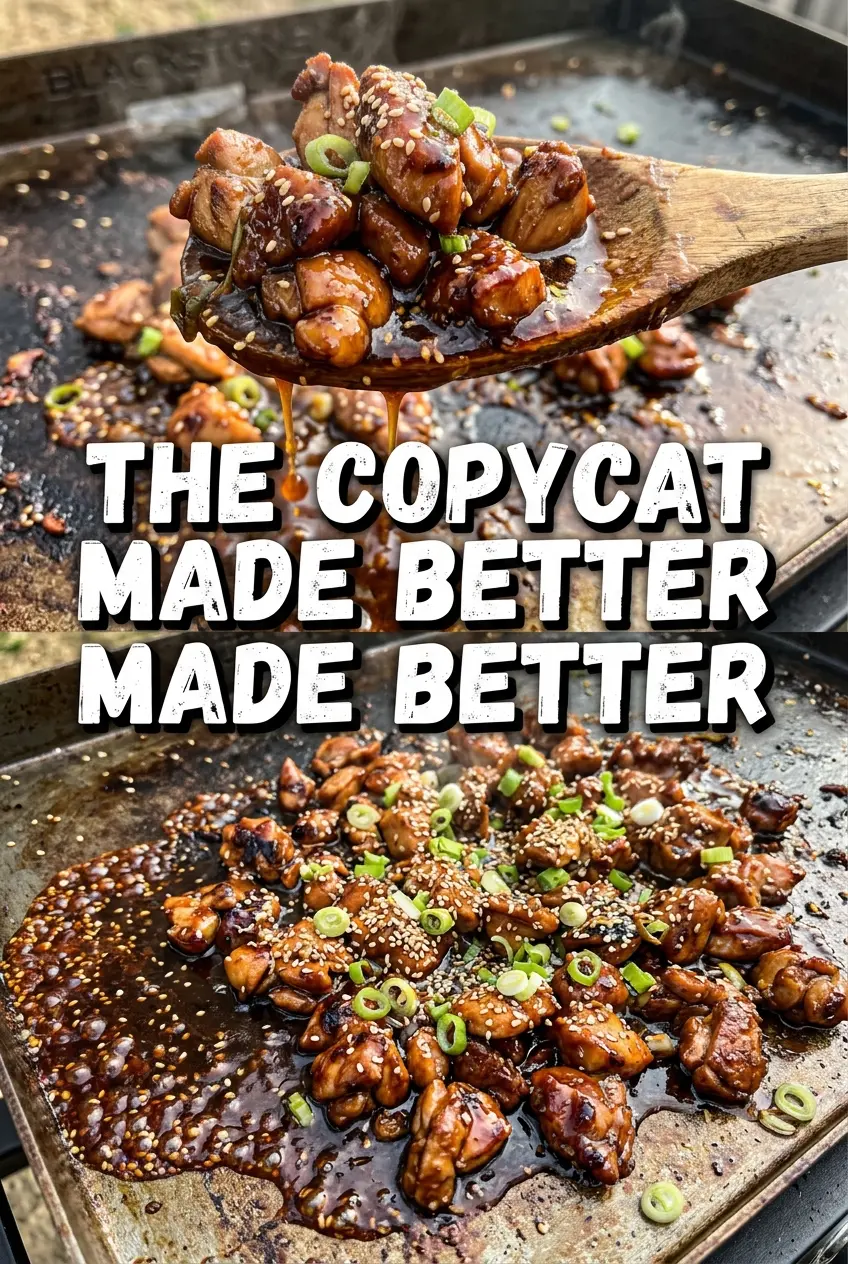
Blackstone Bourbon Chicken
Ingredients
Equipment
Method
- Combine bourbon, soy sauce, brown sugar, apple cider vinegar, minced garlic, and grated ginger in a bowl until the sugar dissolves and the mixture looks smooth.
- Reserve 1/3 of the marinade for thickening later, then add chicken thighs to the remaining marinade and toss to coat.
- Marinate for 30 minutes in the refrigerator so the chicken becomes evenly seasoned.
- Heat oil on the Blackstone griddle over medium-high heat until shimmering.
- Cook the marinated chicken for 10-12 minutes, stirring frequently, until cooked through and caramelized with browned edges.
- Mix cornstarch with water to form a slurry, then add it to the reserved marinade.
- Pour the cornstarch-marinade mixture over the chicken and cook for 2-3 minutes, stirring, until the sauce thickens and coats the chicken with glossy bubbling.
- Garnish with sesame seeds and green onions, then serve hot.