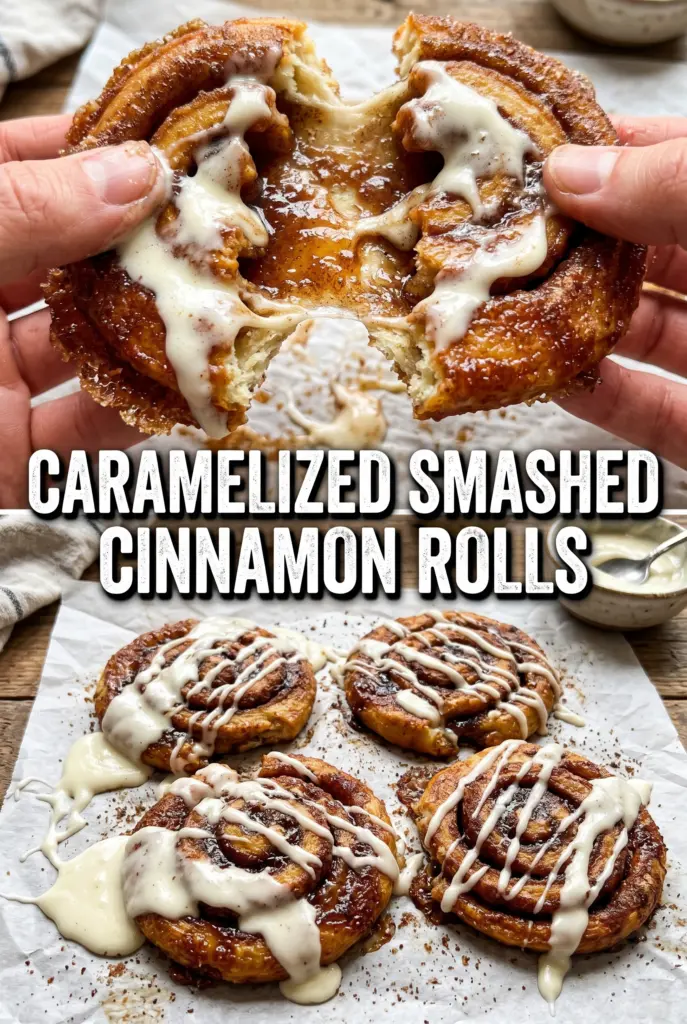
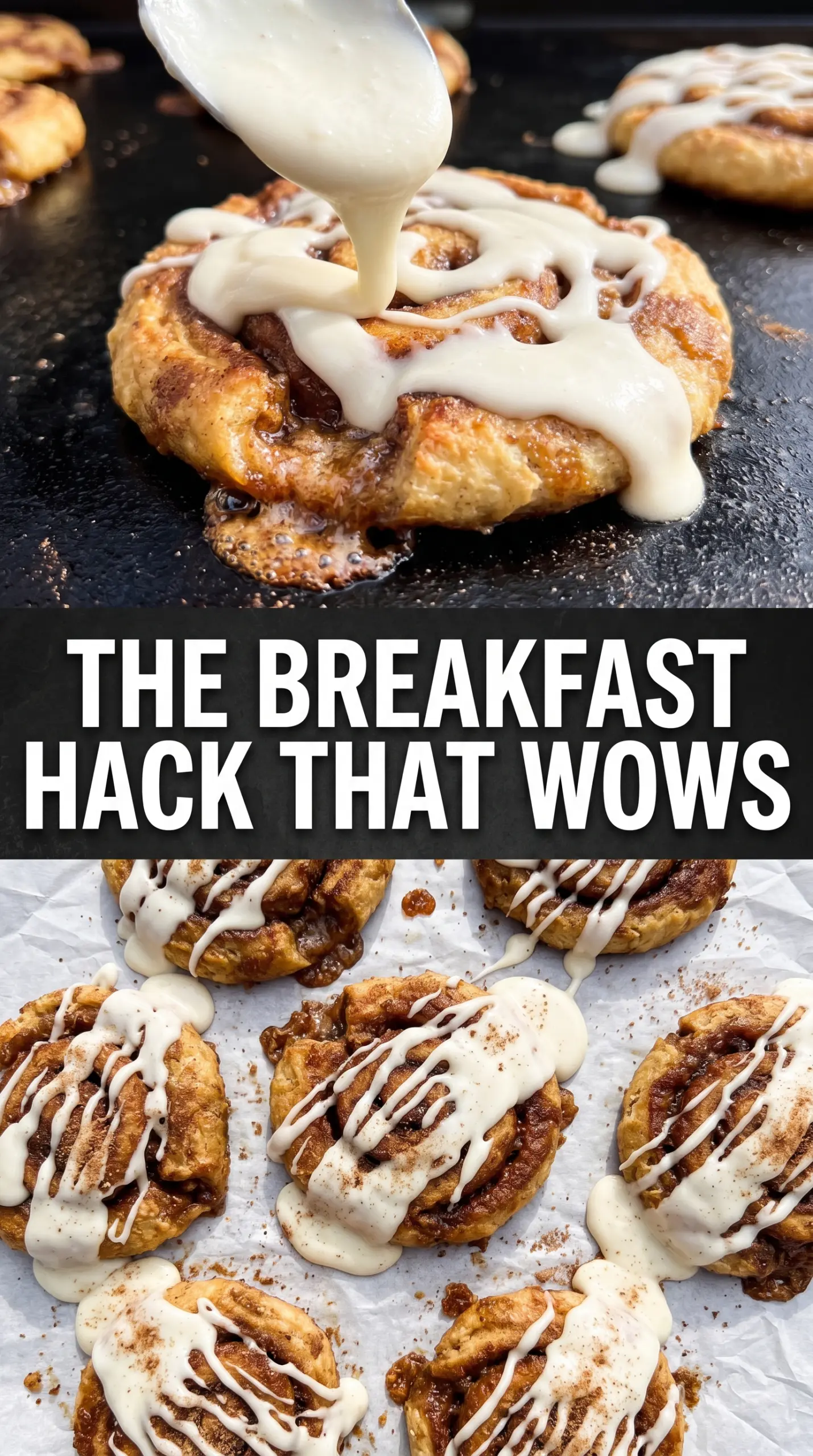
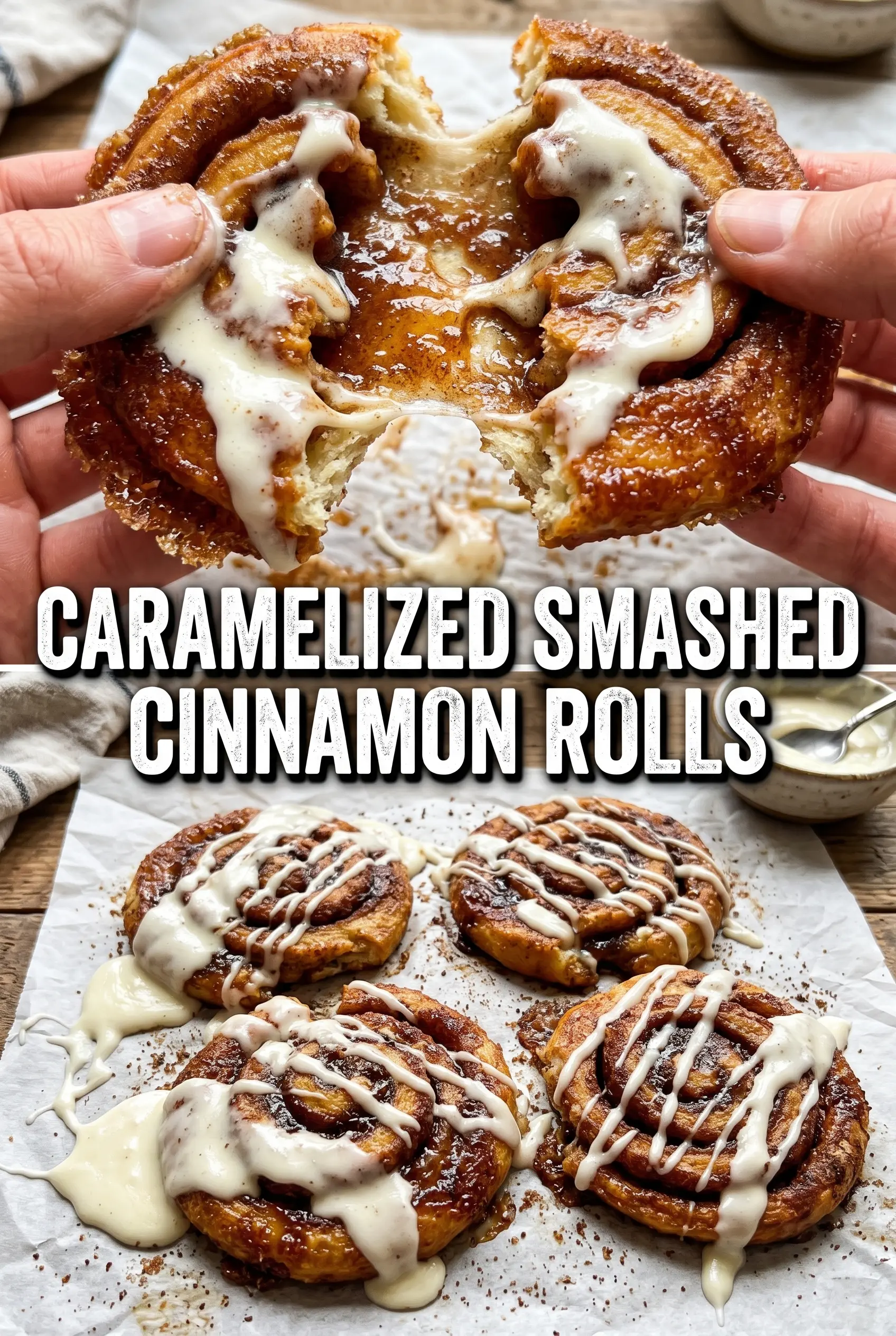
Smash-griddled cinnamon rolls come off the Blackstone with crisp, caramelized edges and a soft, gooey center that tastes far more worked over than the 5-minute prep suggests. The bottom turns deep golden in butter, the tops pick up a little chew, and the icing melts into every ridge instead of sitting on top like an afterthought.
The trick is medium-low heat and an actual heavy press. Refrigerated cinnamon rolls need time for the center to cook before the sugar scorches, and the griddle gives you that fast, even contact that a skillet often misses. Smash them early, let them hold their shape, then flip only after the first side has enough color to release cleanly.
Below, I’ve added the few details that matter most: how hard to press, when to flip, and what to do if you want them extra creamy or a little more caramelized. It’s a small recipe, but the timing is what makes it work.
The bottom got that perfect caramelized crunch on the griddle, and the cream cheese icing melted right into the cracks. My kids kept asking for “the smashed ones” the next morning.
Love the caramelized edges and drippy icing on these smashed Blackstone cinnamon rolls? Save this griddle breakfast for the next time you want something fast, warm, and sticky in the best way.
The Reason Smashed Rolls Stay Gooey Instead of Drying Out
The biggest mistake with griddle cinnamon rolls is cooking them like a pancake and treating the center as an afterthought. Refrigerated rolls are already soft and enriched, so they don’t need aggressive heat; they need enough contact to caramelize the outside while the middle stays tender. Medium-low heat gives the sugar time to brown instead of burn, and the smash creates more surface area for those crisp edges everyone wants.
If the griddle runs too hot, the outside darkens before the dough sets, which leaves you with scorched sugar and a raw center. If it’s too cool, the rolls spread before they color and turn greasy instead of crisp. The sweet spot is a steady sizzle when the butter hits the surface, not a violent one.
What the Butter and Icing Are Actually Doing Here
- Refrigerated cinnamon rolls — The canned dough is the whole shortcut here. It already has the right amount of sweetness and fat to hold up on a griddle, and the icing packet gives you a quick finish without needing a separate glaze.
- Butter — This is what keeps the rolls from sticking and helps the bottoms caramelize. If you use too little, the sugar on the dough can glue itself to the griddle. A full, glossy coating gives you cleaner flipping and better browning.
- Cream cheese icing — Optional, but worth it if you want a richer finish. The included icing is thinner and sweeter; cream cheese icing adds tang and clings better to the hot ridges. Add it right after cooking so it melts into the warm surface.
- Cinnamon sugar — This is a finishing move, not a filling. Sprinkle it after the rolls come off the griddle so it stays sandy and fragrant instead of disappearing into the butter on contact.
Getting the Smash, Flip, and Finish in the Right Order
Heating the Griddle
Set the Blackstone to medium-low and let it come up evenly before the butter goes down. You want the butter to melt and foam, not instantly brown. If it smokes, the surface is too hot and the sugar in the rolls will scorch before the dough cooks through.
Smashing the Rolls
Place the cinnamon rolls on the buttered griddle with space between them, then press each one firmly with a heavy spatula until it flattens. They should spread into thick rounds, not paper-thin discs. If the dough sticks to the spatula, lift and press again rather than dragging it across the surface, which can tear the layers.
Cooking the First Side
Let the first side cook for 4 to 5 minutes until the edges are deeply golden and the underside releases without scraping. You should hear a steady gentle sizzle. If the rolls are sliding around easily before they color, the griddle is too cool; if the bottoms are getting dark spots in under 3 minutes, pull the heat down.
Flipping and Finishing
Turn the rolls and cook the second side for 3 to 4 minutes until both sides are crisp and the centers feel set when pressed lightly. Move them off the griddle as soon as they’re done and drizzle immediately with the icing while they’re hot. That heat is what turns the icing glossy and lets the cinnamon sugar stick on top.
Three Smart Ways to Change the Rolls Without Losing the Texture
Cream Cheese Icing Finish
Use the included icing for a lighter, sweeter finish, or swap in cream cheese icing if you want more tang and a thicker drizzle. The cream cheese version holds its shape a little better on the hot rolls, which makes the center look extra glossy and rich.
Extra Caramelized Edges
Add a touch more butter to the griddle before the rolls go on and let them cook the full 5 minutes on the first side. You’ll get darker, crunchier edges and a slightly more toasted sugar note, but keep the heat at medium-low so the centers don’t stay doughy.
Dairy-Free Version
Use a plant-based butter substitute that can handle griddle heat and skip the cream cheese icing in favor of the packet that comes with the rolls if it fits your needs. The texture will still work, but dairy-free fats can brown a little faster, so watch for color instead of relying only on time.
Making Them for a Crowd
Cook the rolls in batches and hold the finished ones on a wire rack in a low oven for a few minutes so the bottoms stay crisp. Stacking them in a covered dish softens the caramelized edges, which is the one part you don’t want to lose.
Storage and Reheating
- Refrigerator: Store leftovers in an airtight container for up to 2 days. They’ll soften as they sit, especially where the icing soaks in.
- Freezer: These freeze poorly after cooking because the icing and caramelized surface change texture. If you need to freeze ahead, freeze the un-cooked cinnamon rolls only and griddle them fresh.
- Reheating: Reheat on a dry skillet or griddle over low heat for a minute or two per side. The microwave makes the edges limp, so use it only if you don’t mind losing the crisp crust.
Questions I Get Asked About This Recipe
Smashed Blackstone Cinnamon Rolls
Ingredients
Equipment
Method
- Heat the Blackstone griddle to medium-low heat and add the butter. Let it melt and start to foam slightly before you add the rolls.
- Place the refrigerated cinnamon rolls on the griddle and use a heavy spatula to smash them flat. Press just enough to flatten while keeping the centers intact.
- Cook for 4-5 minutes until the bottom is golden and caramelized. Look for dark-golden edges and a set, crispy surface.
- Flip the rolls and cook another 3-4 minutes until both sides are crispy. Continue until the second side is also deeply golden.
- Remove the smashed rolls from the griddle and immediately drizzle with the included icing or additional cream cheese icing. The icing should melt on contact and pool around the crispy edges.
- Sprinkle with cinnamon sugar and serve warm. Aim for a visible dusting over the icing for a sweet, toasted finish.