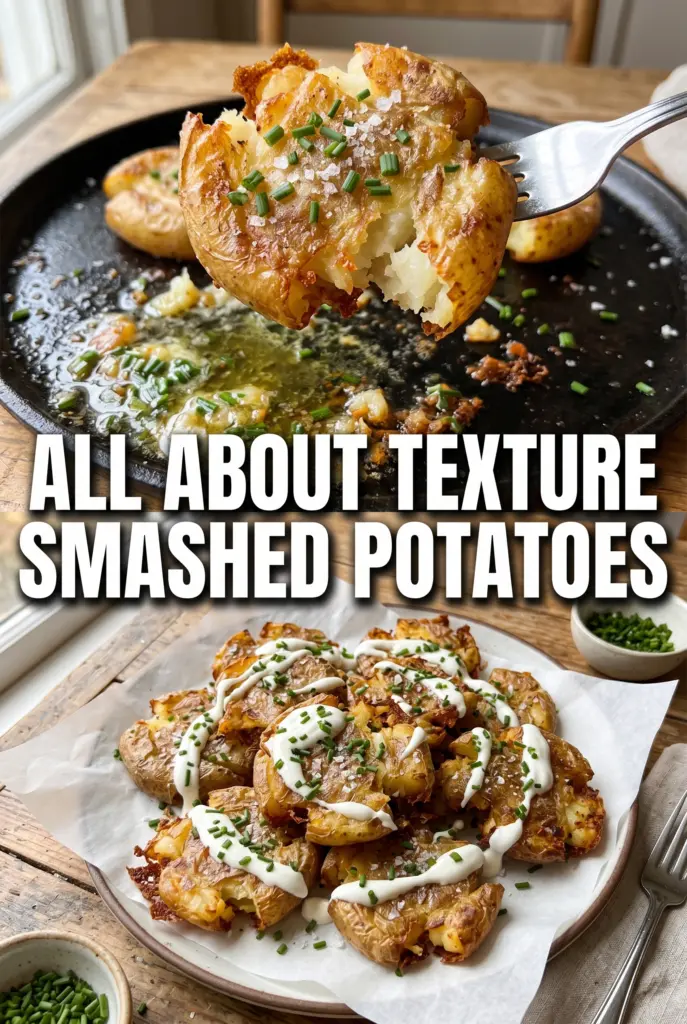
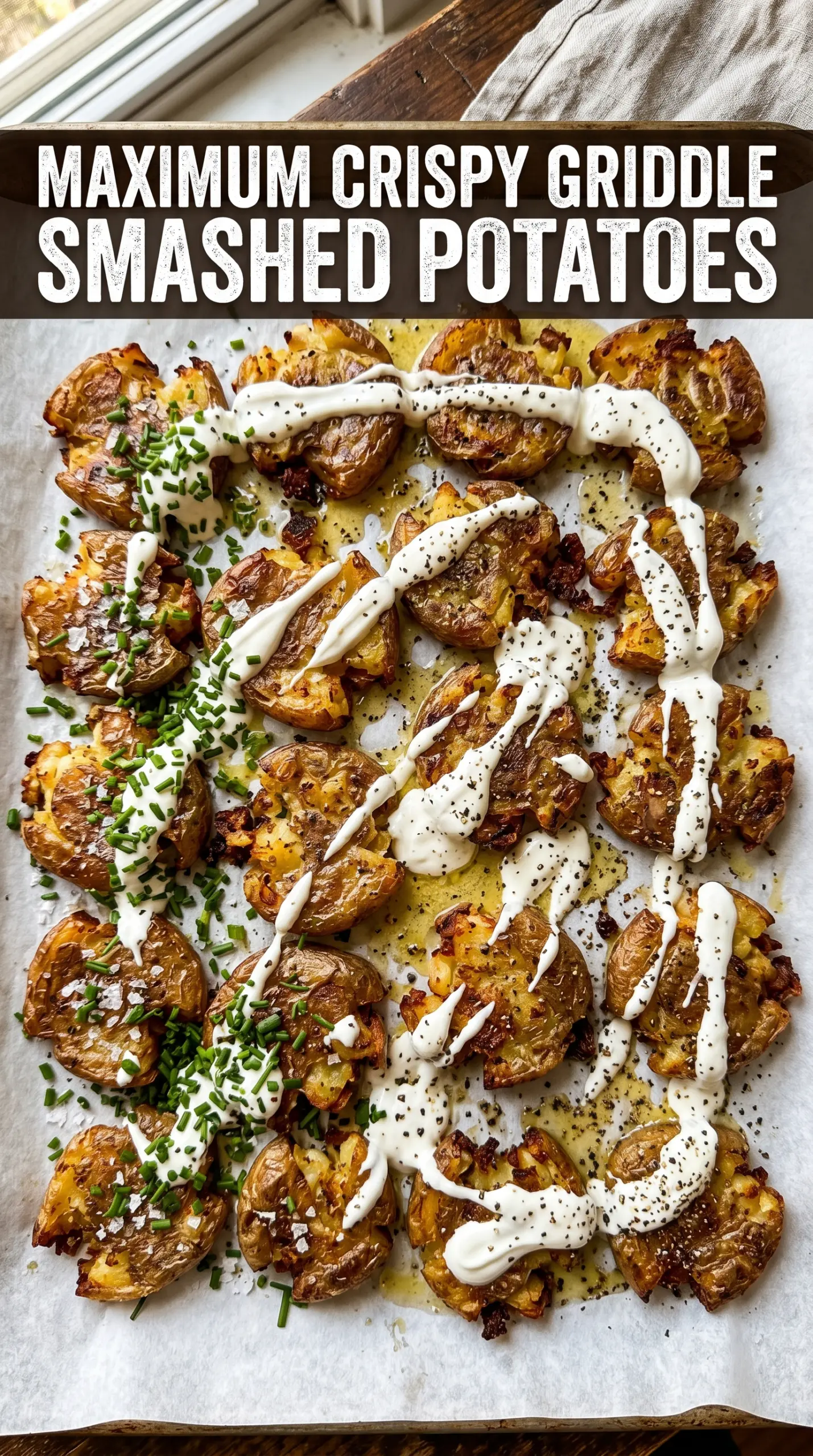
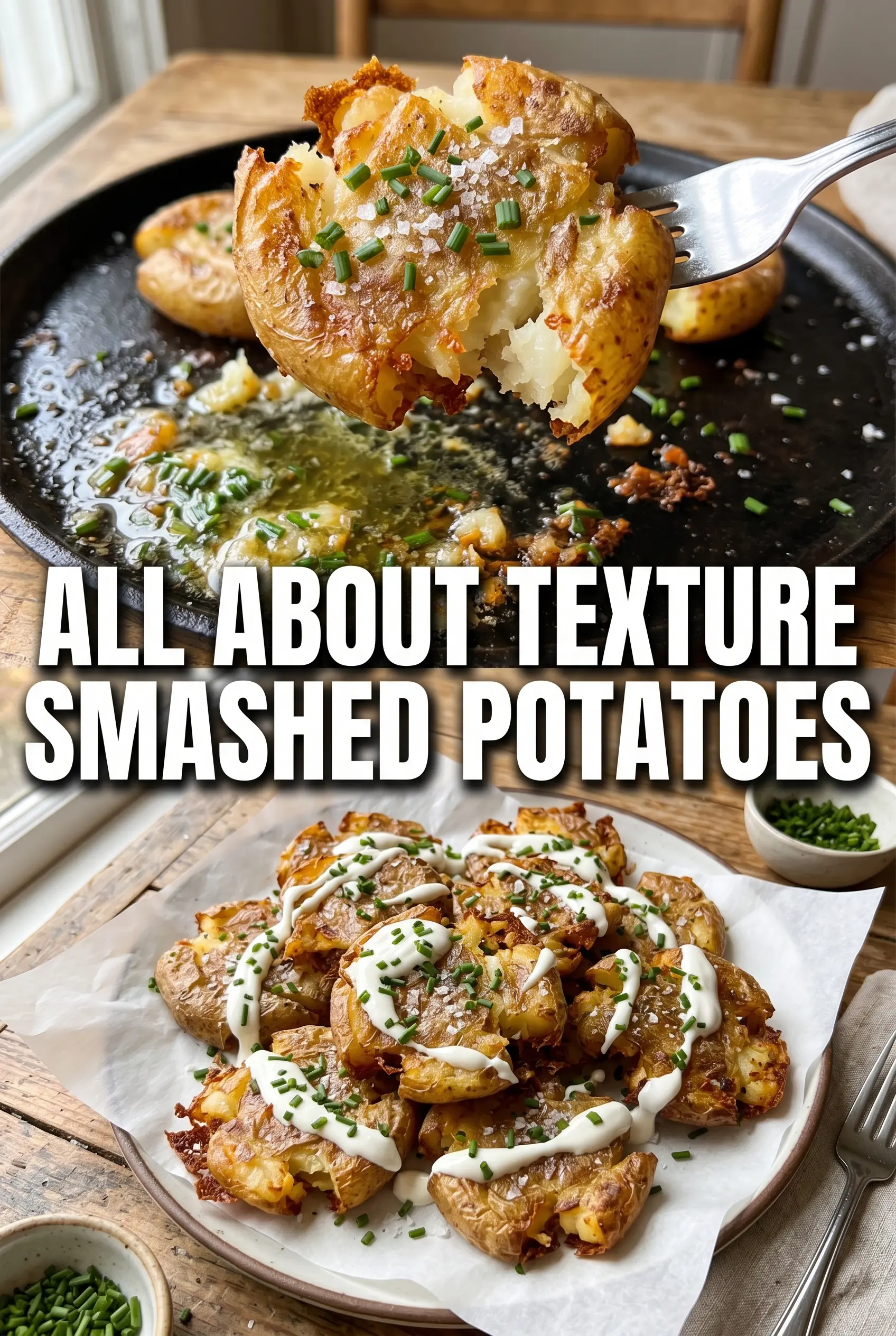
Ultra-crispy griddle smashed potatoes earn their place on the table fast: thin, crackly edges, creamy centers, and enough browned surface to hold onto every bit of garlic butter and melted cheddar. The griddle does what a sheet pan can’t quite manage here. It gives you steady, direct heat and space to press each potato flat until the skin shatters and the cut sides pick up a deep golden crust.
The trick is drying the potatoes well after boiling and letting them cool just enough to handle before smashing. If they’re too wet, they steam instead of crisp. If they’re too hot, they fall apart before you get a clean, flat round. I use both oil and butter on the griddle: the oil handles the heat, and the butter brings the flavor and browning. From there, the toppings turn them from a side dish into the first thing people reach for.
Below, I’ve added the timing cues that matter, plus a few smart swaps if you want to keep them meatless or make them work with what’s already in your kitchen.
The potatoes got those shatteringly crisp edges on the griddle, and the garlic butter pooled in the nooks instead of burning. I served them with grilled chicken and there wasn’t a single one left.
Love these griddle smashed potatoes? Save them for the nights when you want crispy edges, melty cheddar, and barely any cleanup.
The Mistake That Keeps Potatoes Soft on the Griddle
The biggest reason smashed potatoes miss the mark is surface moisture. Boiled potatoes carry a thin film of water, and if that water hits a hot griddle before the potatoes are dry, it turns into steam. Steam softens the crust and keeps the edges from getting that brittle, fried-potato snap you want.
The other issue is pressure. If you smash too gently, the potatoes stay thick in the middle and take longer to crisp than they need to. Press them firmly until they’re about 1/2 inch thick. You want them flattened enough that the edges spread out and pick up direct contact with the hot surface, because that’s where the best texture happens.
- Drying after boiling — Let the potatoes sit in the colander for a minute or two, then move them to a towel-lined tray so the surface moisture evaporates before they hit the griddle.
- Cooling slightly — Warm potatoes smash cleanly. Hot, fully steamy potatoes tear and stick to the spatula.
- Heat level — Medium-high gives you browning without burning the butter. If the griddle is smoking hard, it’s too hot and the garlic will go bitter before the potatoes finish.
- Spreading them out — Give each potato room. Crowding traps steam between the rounds and steals the crisping power of the griddle.
What the Butter, Oil, and Cheese Are Each Doing Here
Baby potatoes are worth using here because they hold their shape after boiling and give you a nice ratio of creamy interior to crisp surface. Yukon Golds work too if you cut them into thick chunks before boiling. Don’t use large russets unless you want a more fragile, fluffy mash; they tend to break apart when smashed.
Olive oil and butter work together for a reason. The oil keeps the surface from scorching while the butter browns and flavors the potatoes. If you swap in all butter, you’ll get more risk of burning before the crust sets. If you need dairy-free potatoes, use all oil and add a little extra salt at the end to make up for the missing richness.
Cheddar, bacon, sour cream, and chives are the loaded finish, but they’re not all interchangeable in the same way. Sharp cheddar melts fast and brings enough salt to wake up the potatoes. Bacon adds crunch and smoke, while sour cream cools everything down. Chives matter more than they look like they do; they cut through the richness and keep the whole dish from feeling heavy.
Getting the Crust Before the Toppings Go On
Boiling Until Just Tender
Boil the baby potatoes until a knife slides in with only a little resistance, usually 15 to 20 minutes depending on size. If they go past tender and start collapsing, they’ll fall apart when you smash them. Drain them well and let them sit briefly so the surface dries and the starches settle.
Smashing on the Hot Griddle
Heat the griddle first, then add the oil and butter so the fat shimmers before the potatoes go on. Place the potatoes down with space around each one, then press straight down with a heavy spatula or burger press until they flatten. If they stick, give them another minute; potatoes release better once the crust starts forming.
Letting the First Side Crisp
Once smashed, leave them alone for 6 to 7 minutes. The first side needs uninterrupted contact with the griddle to build that deep golden crust. If you keep nudging them around, the edges never get a chance to set and you lose the best texture.
Finishing With Cheese and Heat
Flip the potatoes and cook the second side until crispy, then add the cheddar while they’re still hot so it melts over the edges. Bacon goes on next, followed by sour cream and chives. Serve them right away, while the cheese is soft and the bottoms still have that audible crunch when you lift them from the griddle.
Three Ways to Change the Finish Without Losing the Crunch
Make them vegetarian without losing the loaded feel
Skip the bacon and add extra chives plus a pinch of smoked paprika over the melted cheese. You’ll lose the salty crunch of bacon, but the potatoes still taste full and layered, not flat. A handful of crispy fried onions on top works too if you want more texture.
Make them dairy-free
Use all olive oil or a neutral high-heat oil instead of the butter, and swap in a dairy-free shredded cheddar-style cheese if you want the loaded finish. The potatoes will still crisp well, but the flavor will be a little cleaner and less rich, so salt them in the final toss with care.
Make them a full meal
Top the finished potatoes with pulled pork, chopped grilled chicken, or leftover steak instead of bacon. The griddle crust gives you enough heft to support a heavier topping, and the sour cream keeps it from eating dry. This turns the side dish into a fast main without changing the base method.
Storage and Reheating
- Refrigerator: Store leftovers in an airtight container for up to 3 days. The crust softens, but the potatoes still hold up well.
- Freezer: They freeze, but the texture turns softer after thawing, especially once the sour cream and cheese are added. Freeze the plain cooked potatoes if you want the best chance of keeping some crispness.
- Reheating: Reheat on a hot skillet, griddle, or in a 425°F oven until the edges crisp again. The common mistake is microwaving them straight from the fridge, which softens the crust completely before the center even warms through.
Questions I Get Asked About This Recipe
Griddle Smashed Potatoes
Ingredients
Equipment
Method
- Boil baby potatoes until tender, about 15-20 minutes, until a knife slides in easily. Visual cue: the outsides should yield but not fall apart.
- Drain the potatoes and cool slightly so they can be smashed without steaming off the crust. Visual cue: they should feel warm but manageable.
- Heat a cast iron skillet to medium-high, then add olive oil and butter. Visual cue: the butter should melt and shimmer.
- Place potatoes on the hot griddle and smash completely flat with a heavy spatula. Visual cue: you want wide, even rounds with thick edges.
- Add minced garlic around the potatoes and cook 6-7 minutes, until a crispy golden crust forms. Visual cue: browned, crisp edges should be visible on the bottoms.
- Flip the potatoes and cook another 5-6 minutes until both sides are crispy. Visual cue: the second side should match the first with deep golden browning.
- Season the crispy smashed potatoes with salt and pepper to taste. Visual cue: specks should evenly dot the surface.
- Top with shredded cheddar cheese, cooked and crumbled bacon, sour cream, and chopped chives right before serving. Visual cue: the cheese should look just set and melted on the hot rounds.