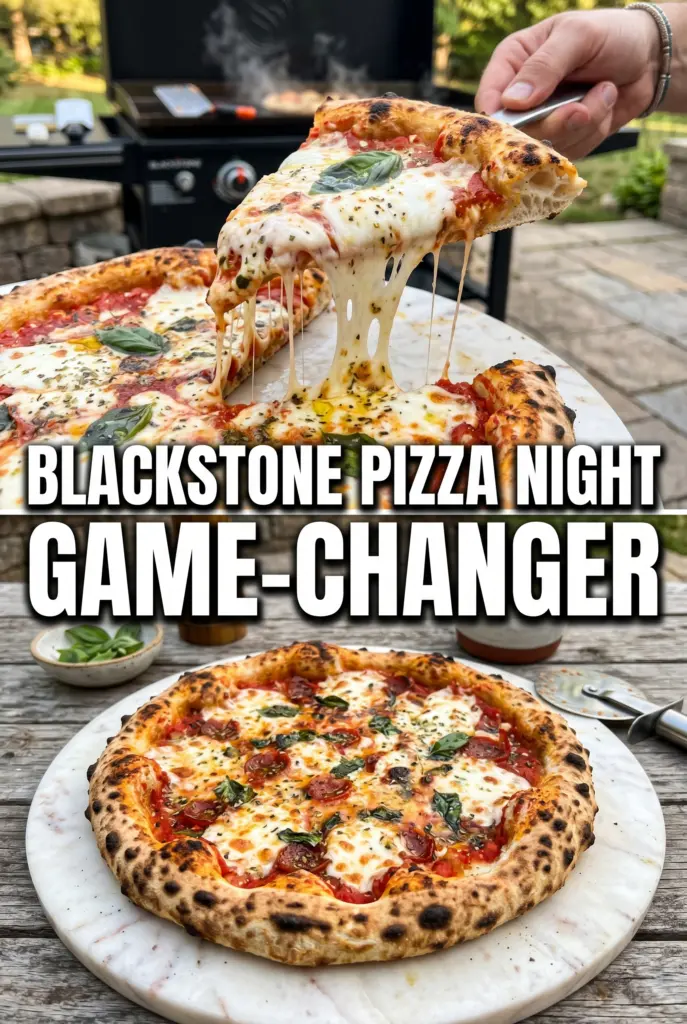
Pizza on a Blackstone griddle gives you the best parts of a pizzeria pie without turning on the oven: a crisp, charred bottom, bubbling cheese, and toppings that taste fresh instead of steamed. The first side cooks fast enough to build structure, then the flip turns the griddle into a hot pizza stone. That’s what keeps the crust from going soft under the sauce.
The trick is working with a thin stretch of dough and getting the heat right before the toppings go on. Medium heat gives the dough time to set and brown before the cheese burns, and a little flour under the dough keeps it from sticking while you move it around. Once the crust is flipped, the sauce and toppings need to go on quickly so the hot side of the dough stays crisp.
Below, I’ll walk through the parts that matter most: how to keep the crust from tearing, how to get the cheese melted before the bottom overcooks, and what to change if you want to make these into personal pizzas for a crowd.
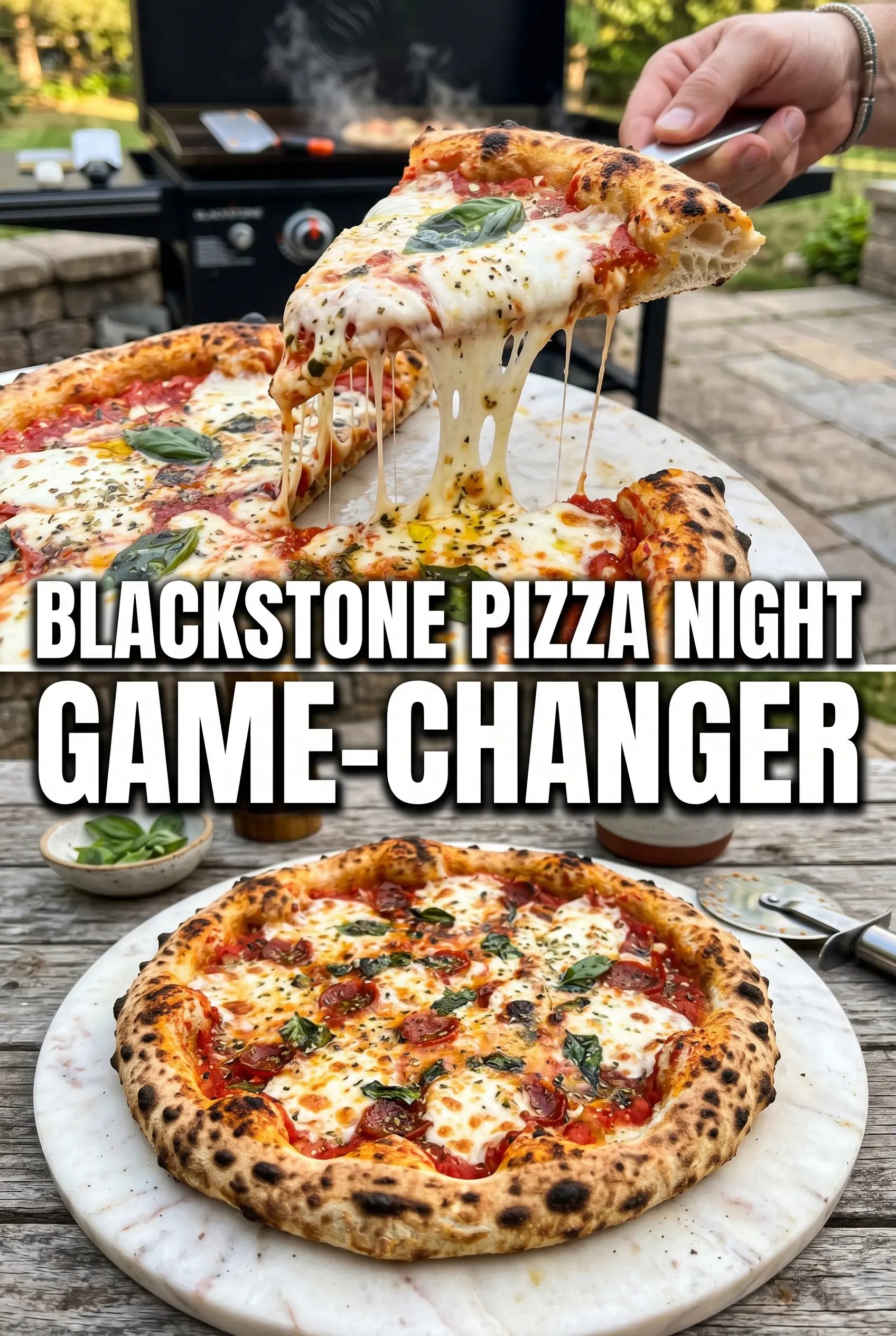
The bottom got that crisp, smoky edge I usually only get from a pizza oven, and the cheese melted perfectly under the dome without making the crust soggy.
Save this Blackstone griddle pizza for nights when you want a charred crust, melted cheese, and dinner on the table fast.
The Trick to Crisp Crust on a Flat-Top Without Burning the Cheese
The biggest mistake with griddle pizza is trying to top the dough before the first side has enough structure. If the dough is still soft when you flip it, the sauce soaks in and the crust tears when you move it. Cooking the first side until it’s golden gives you a base that can handle the weight of sauce and cheese.
Heat matters just as much. Too hot, and the underside chars before the cheese melts; too cool, and the crust dries out while waiting. Medium heat is the sweet spot here, especially when you cover the pizza with a dome or large pan so the trapped heat melts the cheese from above while the griddle finishes the bottom.
What Each Ingredient Is Actually Doing in This Pizza
- Pizza dough — This is the structure, and it needs enough elasticity to stretch thin without snapping back. Store-bought dough works fine if it’s rested to room temperature first; cold dough fights you and tears. If it keeps shrinking, let it sit another 10 minutes before stretching again.
- Olive oil — A light coating on the griddle helps the crust release and promotes browning. Use a decent oil here because it’s on the surface of the finished pizza, but you don’t need an expensive bottle reserved for drizzling. Too much oil makes the bottom fry instead of crisp.
- Mozzarella cheese — Low-moisture shredded mozzarella melts evenly and gives you that stretchy pull without flooding the crust. Fresh mozzarella is wetter and can work, but it needs to be patted dry or it will puddle. Pre-shredded cheese is convenient and honestly ideal here.
- Pizza sauce — Use a sauce that’s thick enough to stay put the moment it hits the hot crust. Thin sauce runs fast and softens the dough before the cheese has a chance to seal it. A small amount goes a long way on a griddle pizza.
- Flour for dusting — This keeps the dough manageable while you portion and stretch it. Dust lightly; too much flour can scorch on the griddle and leave a bitter taste. A clean, lightly floured surface is enough.
Building the Pizza in the Right Order on the Griddle
Heating the Griddle
Bring the Blackstone to medium heat before the dough goes anywhere near it. If the surface is cold, the dough sticks and never gets that early lift on the bottom; if it’s screaming hot, the crust browns before you can flip and top it. A thin sheen of oil across the cooking area gives you an even release and a better color on the first side.
Stretching and Setting the Dough
Divide the dough into four pieces and stretch each one into a thin round. If the dough springs back, pause and let it rest for a few minutes instead of forcing it, because overworked dough tears at the center. You’re looking for an even thickness that will cook quickly and still hold the toppings after the flip.
Flipping and Topping Fast
Once the first side is golden, flip it and work quickly. Sauce goes on first, then cheese, then toppings in a light layer so the pizza doesn’t get heavy and collapse. The cooked side now becomes the top, and the hot surface underneath is what keeps the crust crisp.
Melting Under the Dome
Cover the pizza with a dome or a large pan to trap heat and melt the cheese evenly. Without the cover, the bottom can overcook before the top turns glossy and melted. Pull it off when the cheese is fully melted and the edges of the crust are deep golden with a few charred spots.
Make It Gluten-Free with a Trusted Dough
Use a gluten-free pizza dough that’s meant to be stretched or pressed thin, not a crumbly bread-style mix. It won’t have the same chew, but the griddle still gives it a crisp edge if you handle it gently and don’t overload it with sauce.
Dairy-Free Pizza That Still Melts Well
Swap in a dairy-free mozzarella-style shred that’s made for melting, not a block-style cheese substitute. Some brands soften better than others, so use one you’ve melted before; otherwise, you may end up with a topping that never really loosens. Add a little extra seasoning to the sauce to keep the pizza from tasting flat.
Making Personal Pizzas for a Group
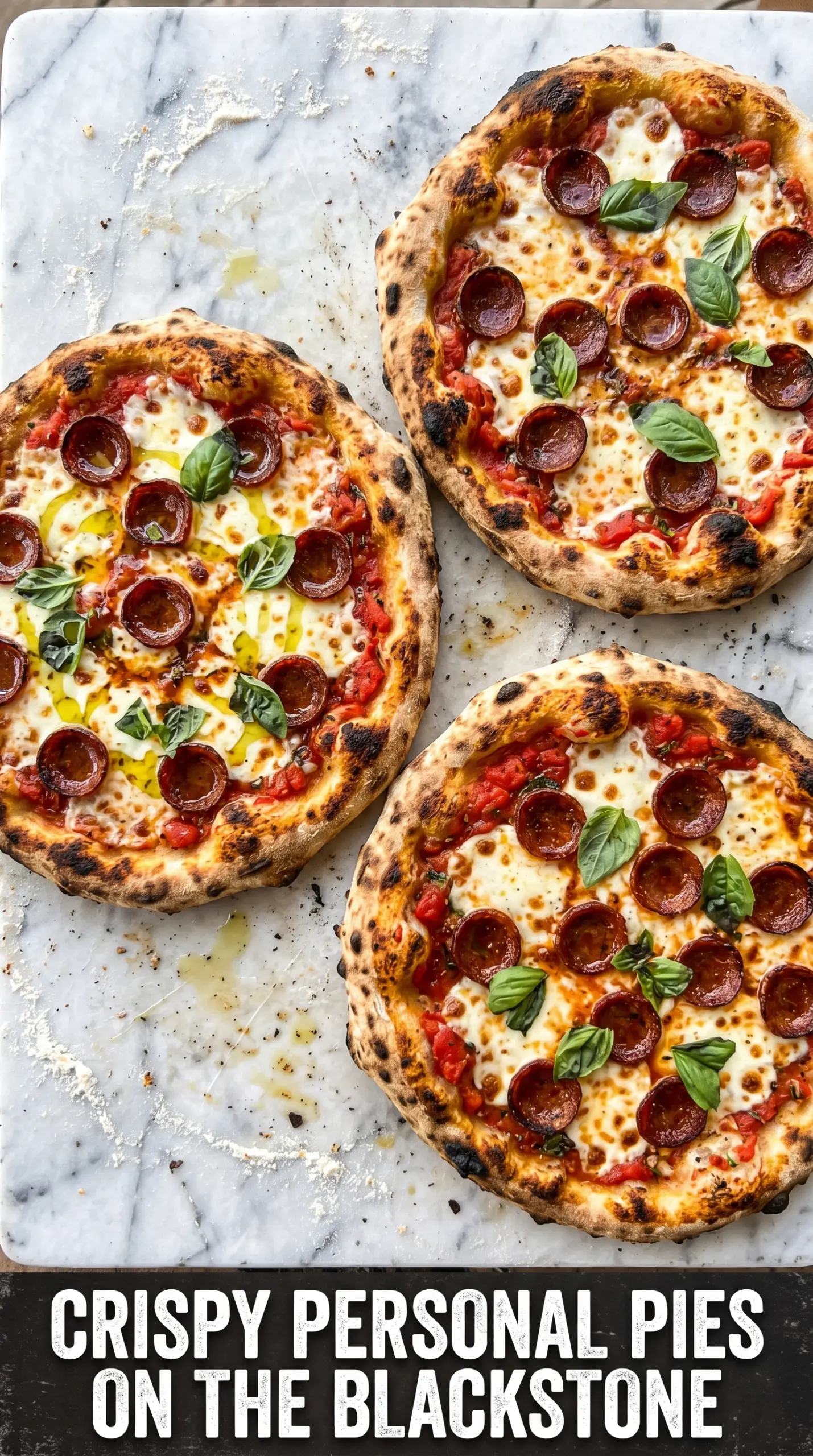
Portion the dough first and keep the toppings simple so each pizza cooks at the same pace. A crowded griddle slows the process and makes flipping awkward, so cook one or two at a time and keep finished pizzas warm loosely tented. Thin toppings work best when you’re moving fast.
Storage and Reheating
- Refrigerator: Store leftovers in an airtight container for up to 3 days. The crust softens a little, especially under the sauce.
- Freezer: Freeze slices wrapped tightly for up to 2 months. Reheat from frozen or thawed, but expect the fresh basil to be added after warming.
- Reheating: Reheat in a dry skillet, on the griddle, or in a hot oven until the cheese remelts and the crust crisps again. The microwave makes the crust limp, which is the fastest way to lose the best part of this pizza.
Questions I Get Asked About This Recipe
Pizza on a Blackstone Griddle
Ingredients
Equipment
Method
- Heat the Blackstone griddle to medium heat, then lightly oil the surface so the dough releases easily. Wait until the surface looks slick and ready.
- Divide the pizza dough into 4 portions and stretch each into thin rounds, dusting with flour as needed. Keep the rounds even and thin so they cook quickly.
- Place the dough rounds directly on the griddle and cook for 2-3 minutes, until the bottom is golden. Look for bubbling and a firm, set edge.
- Flip the crust and quickly add the pizza sauce, mozzarella cheese, and your choice of toppings to the cooked side. Work fast so the cheese starts melting right away.
- Cover with a dome or large pan and cook for 3-5 minutes until the cheese melts. You should see the cheese bubbling and the crust edges lightly charring.
- Remove the pizza from the griddle and top with fresh basil and grated Parmesan cheese. Serve immediately so the cheese stays molten.