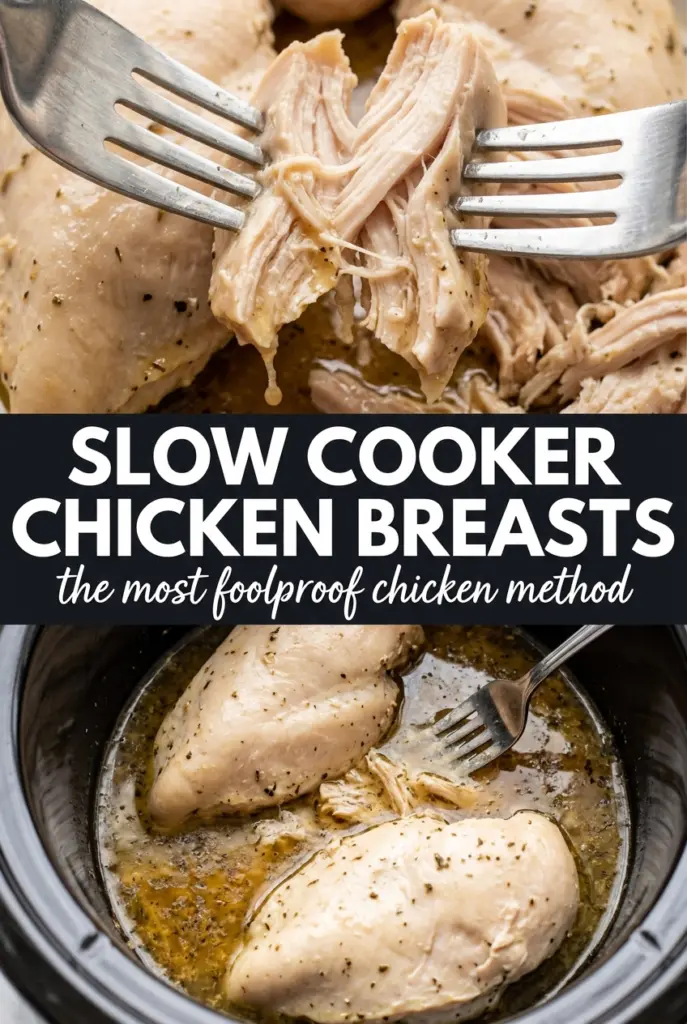
Slow cooker chicken breasts can be dry and stringy, but when they’re cooked gently in seasoned broth and finished with a little butter, they turn unbelievably juicy. The meat stays tender enough to slice cleanly or pull apart with a fork, and the cooking juices reduce into a simple pan sauce that keeps every bite moist.
The trick is restraint. Chicken breasts don’t need a long bath on high heat; they need a low, steady cook until just done. The broth adds moisture, the butter rounds out the seasoning, and the garlic and smoked paprika give the chicken enough backbone that the finished dish tastes like dinner, not diet food.
Below, I’ll show you how to avoid the two mistakes that ruin slow cooker chicken breasts: overcooking and under-seasoning. There’s also a storage note that makes this one especially handy for meal prep.
I’ve made chicken breasts in the slow cooker before and they always came out chalky, but this time the texture stayed tender enough to slice and the broth turned into a great sauce. I used the lemon at the end and that made the whole dish taste brighter.
Juicy slow cooker chicken breasts with that buttery broth are perfect for slicing, meal prep, and easy dinners.
The One Thing That Keeps Slow Cooker Chicken Breasts Juicy
Chicken breasts get into trouble in the slow cooker because they move from done to dry fast. The fix is not more liquid. It’s gentler heat and a shorter cooking window than most people expect. Low heat gives the protein time to relax before it squeezes out all its moisture, which is why these stay tender instead of chalky.
The other detail that matters is placement. Keep the chicken in a single layer as much as possible, with the broth around it rather than over the top. That lets the surface seasonings stay put and helps the chicken poach evenly without washing away the spice blend.
- Low heat — This is the better setting if you want sliceable chicken that still feels juicy. HIGH works in a pinch, but it leaves less room for error.
- Butter — It melts into the broth and gives the finished sauce a little body. You won’t get that same roundness from broth alone.
- Smoked paprika — This adds depth without needing a long sauté. Regular paprika works, but it tastes flatter.
- Rest time — Five minutes outside the slow cooker helps the juices settle so they stay in the meat when you slice it.
What Each Ingredient Is Actually Doing in This Dish

The seasoning blend does the heavy lifting here. Garlic powder, onion powder, smoked paprika, and Italian seasoning give the chicken a savory crust of flavor without needing a pan sear, which matters when you’re using a slow cooker. Fresh garlic goes in with the broth, where it softens and perfumes the sauce instead of scorching.
Chicken broth keeps the environment moist and becomes the base for the serving juices, but it doesn’t need to cover the chicken. Too much liquid can dilute the seasoning and leave you with pale, boiled-tasting meat. Butter is the ingredient that makes the broth taste finished, and a little lemon at the end wakes everything up so the sauce doesn’t taste flat.
- Chicken breasts — Use boneless, skinless breasts of similar size so they finish at the same time. If some are much thicker, pound them lightly to an even thickness.
- Chicken broth — Low-sodium broth is the safest choice because the seasonings can do the rest. If you only have water, the chicken will still cook, but the sauce loses depth.
- Butter — This softens the broth into a spoonable sauce. Olive oil works for richness, but it won’t give the same silky finish.
- Lemon and parsley — These are not garnish for show. The lemon brightens the sauce and the parsley cuts through the richness at the end.
Cooking the Chicken Until It’s Just Done
Seasoning the Surface
Rub the spice blend all over the chicken before it goes into the cooker. That first layer matters because the slow cooker doesn’t create browning the way a skillet does, so the seasoning has to carry the flavor. Salt generously, but don’t overdo the liquid seasonings or the broth will taste muddy. If the chicken looks a little unevenly coated, that’s fine; once it starts cooking, the spices hydrate and settle into the surface.
Adding the Broth and Butter
Pour the broth around the chicken instead of directly over it, then add the butter and garlic. The goal is to keep the seasoning on the meat while giving the cooker enough liquid to make steam and sauce. If you dump the broth over the top, some of the seasoning slides off and the finished chicken tastes less seasoned than it should. The butter can sit in a few pieces and melt slowly; it doesn’t need to be stirred in before cooking.
Knowing When to Stop the Cook
Cook on LOW for 3 to 4 hours or HIGH for 2 to 2.5 hours, then check the thickest part of the largest breast. The chicken should read 165°F and feel firm but still springy when pressed. If it flakes apart before you remove it, it’s already over the line and will dry out as it rests. Pull it as soon as it’s done, because the residual heat keeps working even after the slow cooker turns off.
Finishing with the Pan Sauce
Move the chicken to a board and let it rest for 5 minutes before slicing. That short rest keeps the juices from pouring out the moment the knife hits the meat. Spoon the cooking liquid over the sliced chicken so every piece gets a little sauce. If the liquid looks thin, that’s normal; it still tastes better spooned over the chicken than left in the slow cooker.
Ways to Adapt Slow Cooker Chicken Breasts Without Losing the Tender Texture
Dairy-Free Version
Skip the butter and use a tablespoon of olive oil or a dairy-free buttery spread. You’ll lose a little of the classic richness, but the broth still makes a good sauce, especially if you finish with extra lemon to keep it lively.
Lower-Sodium Version
Use unsalted butter and low-sodium broth, then salt the chicken just enough to season the surface. This keeps the sauce balanced, since the slow cooker concentrates flavor as the liquid sits.
Meal Prep for the Week
Slice the chicken after it rests and store it with a few spoonfuls of the cooking juices. That keeps the meat from drying out in the fridge and makes it easy to use for sandwiches, rice bowls, or salads.
Use Chicken Thighs Instead
Boneless skinless thighs work well if you want a richer, more forgiving cut. They can cook a little longer without drying out, but the final dish will be softer and less sliceable than chicken breasts.
Storage and Reheating
- Refrigerator: Store for up to 4 days. Keep the chicken with some of the broth so it doesn’t dry out.
- Freezer: It freezes well for up to 3 months, especially if you slice it first and freeze it with a little cooking liquid in a sealed container.
- Reheating: Reheat gently in a covered skillet with a splash of broth or in the microwave at medium power. High heat is the mistake that turns leftover chicken stringy.
Questions I Get Asked About This Recipe
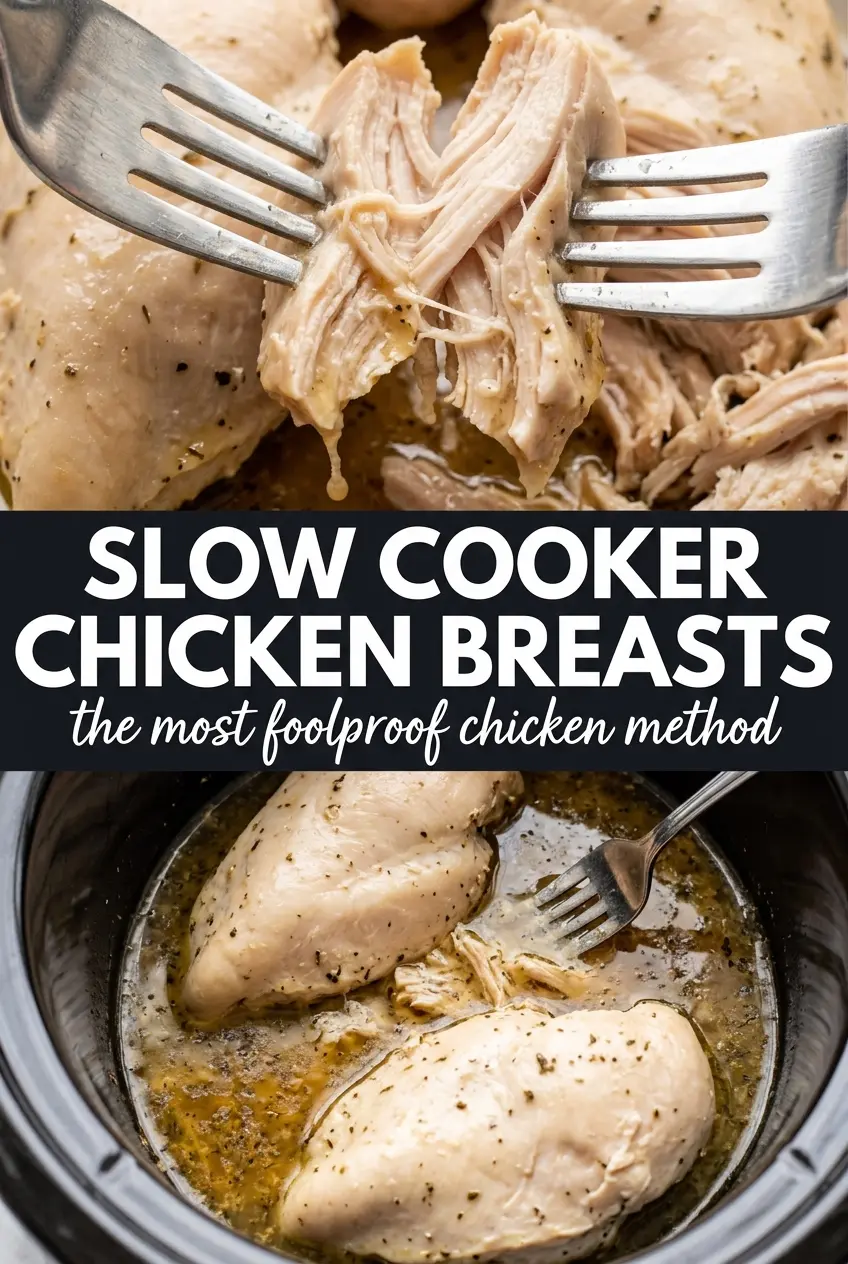
Slow Cooker Chicken Breasts
Ingredients
Equipment
Method
- Pat the boneless skinless chicken breasts dry, then season generously on both sides with garlic powder, onion powder, smoked paprika, Italian seasoning, salt, and cracked black pepper.
- Set the seasoned chicken into the slow cooker in a single layer.
- Pour the chicken broth around the chicken, then add the butter and minced garlic to the slow cooker.
- Cover and cook on LOW for 3-4 hours or HIGH for 2-2.5 hours, aiming to avoid overcooking so the chicken stays tender.
- Transfer the chicken to a plate and let it rest for 5 minutes before slicing.
- Pour the cooking juices over the sliced chicken as a pan sauce.
- Finish with fresh parsley and lemon wedges for serving.