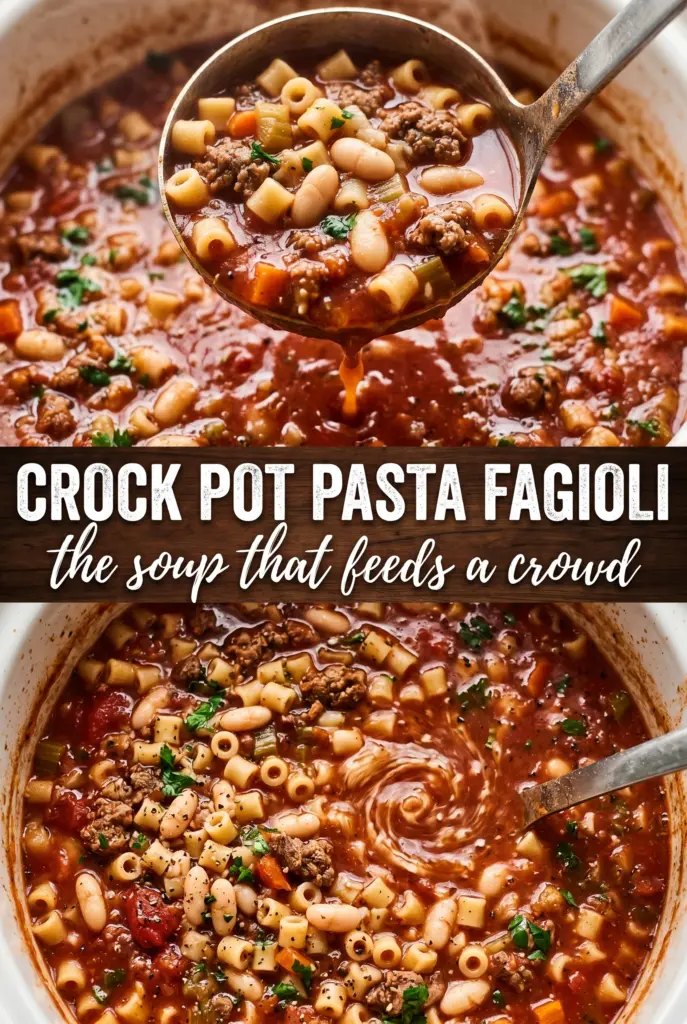
Slow-cooked pasta fagioli lands somewhere between a hearty soup and a full meal, with tender beans, soft vegetables, and a rich tomato broth that tastes like it simmered all day for a reason. The ground beef gives it backbone, the beans make it filling, and the pasta turns every bowl into something that eats like comfort food without needing much on the side.
What makes this version work is the way the slow cooker handles the base. Browning the meat first builds flavor before anything goes into the pot, and adding the pasta at the end keeps it from soaking up too much broth and turning mushy. That one small step is the difference between a pot of soup that stays lively and one that turns thick and tired by dinnertime.
Below, I’ll walk through the part that matters most: how to keep the broth balanced, when to add the pasta, and what to change if you want to lighten it up or make it stretch a little further.
The broth got rich and savory, and the ditalini stayed perfectly tender when I stirred it in at the end instead of letting it sit all day. My husband went back for a second bowl before I’d even sat down.
Pin this Crock Pot Pasta Fagioli for a hearty soup with tender beans, savory beef, and pasta that stays perfectly spoonable.
The Trick That Keeps the Pasta from Turning to Mush
The biggest mistake in slow cooker pasta fagioli is letting the pasta sit in the crock pot for hours. Ditalini keeps cooking in hot liquid long after the timer goes off, and that’s how you end up with a pot that tastes fine but eats like overcooked porridge. The fix is simple: cook the pasta separately and stir it in right before serving.
Browning the meat first matters for the same reason. The slow cooker is great at softening vegetables and marrying flavors, but it doesn’t create the deep, savory edges you get from a hot skillet. If you skip that step, the soup will still work, but it won’t have the same rich base under the tomatoes and broth.
- Ground beef or mild Italian sausage — Beef gives a clean, hearty flavor, while sausage adds more seasoning right from the start. Either one works; sausage makes the broth a little fuller, and beef keeps it more classic and straightforward.
- Cannellini beans — These break down just enough to thicken the broth a little without disappearing. Navy beans can stand in if that’s what you have, but cannellini hold their shape better and give the soup that creamy-bean texture.
- Crushed tomatoes — They create the body of the broth. Tomato sauce makes the soup heavier and smoother, while diced tomatoes leave it a little thinner and chunkier.
- Beef broth — This is where a good broth matters more than a bargain one. A weak broth makes the whole pot taste flat, even after seven hours.
What Each Ingredient Is Actually Doing in This Slow Cooker Recipe
- Protein (meat, beans, or both) — Slow cooking breaks down tough cuts beautifully. This is where inexpensive cuts become delicious.
- Liquid (broth, sauce, or water) — This is the cooking medium and becomes part of the final dish. Proper ratio is essential.
- Vegetables (variety, cut by size) — Layer them by cooking time so everything finishes together. Hard vegetables first, soft last.
- Aromatics (onion, garlic, herbs) — These mellow and sweeten during long cooking. Mince finely for even distribution.
- Seasonings (salt, spices, Worcestershire) — Build flavor as you layer ingredients. Taste midway and adjust as needed.
- Thickening agent (if needed) — Cornstarch or flour thickens liquid at the end. Add in the last hour so it cooks through.
- Acid (lemon, vinegar, wine) — This brightens flavors that slow cooking can dull. Add near the end to preserve freshness.
- Low heat for 6-8 hours (the secret) — Gentle, long cooking transforms tough ingredients into tender, delicious meals. Patience pays off.
Building the Slow Cooker Base So Every Spoonful Tastes Balanced
Brown the Meat First
Cook the beef or sausage in a skillet until there’s no pink left and the edges have taken on some color. Drain the excess fat so the broth stays clean instead of greasy. If you rush this and dump raw meat into the slow cooker, you miss the savory depth that makes pasta fagioli taste finished instead of boiled together.
Layer in the Vegetables and Seasoning
Add the onion, garlic, celery, carrots, beans, tomatoes, broth, and seasonings straight into the crock pot with the browned meat. Stir well so the tomato breaks up and the spices distribute evenly instead of floating at the top. The vegetables should be cut small enough to soften fully during the long cook; big chunks stay awkwardly firm by the time the soup is ready.
Let the Slow Cooker Do the Work
Cook on low for 7 to 8 hours or high for 3 1/2 to 4 hours, until the carrots and celery are soft and the broth tastes integrated. You’re looking for a gentle simmer, not a rolling boil. If the soup tastes sharp at the end, it usually needs a little more salt rather than more time.
Finish with Pasta and Garnish
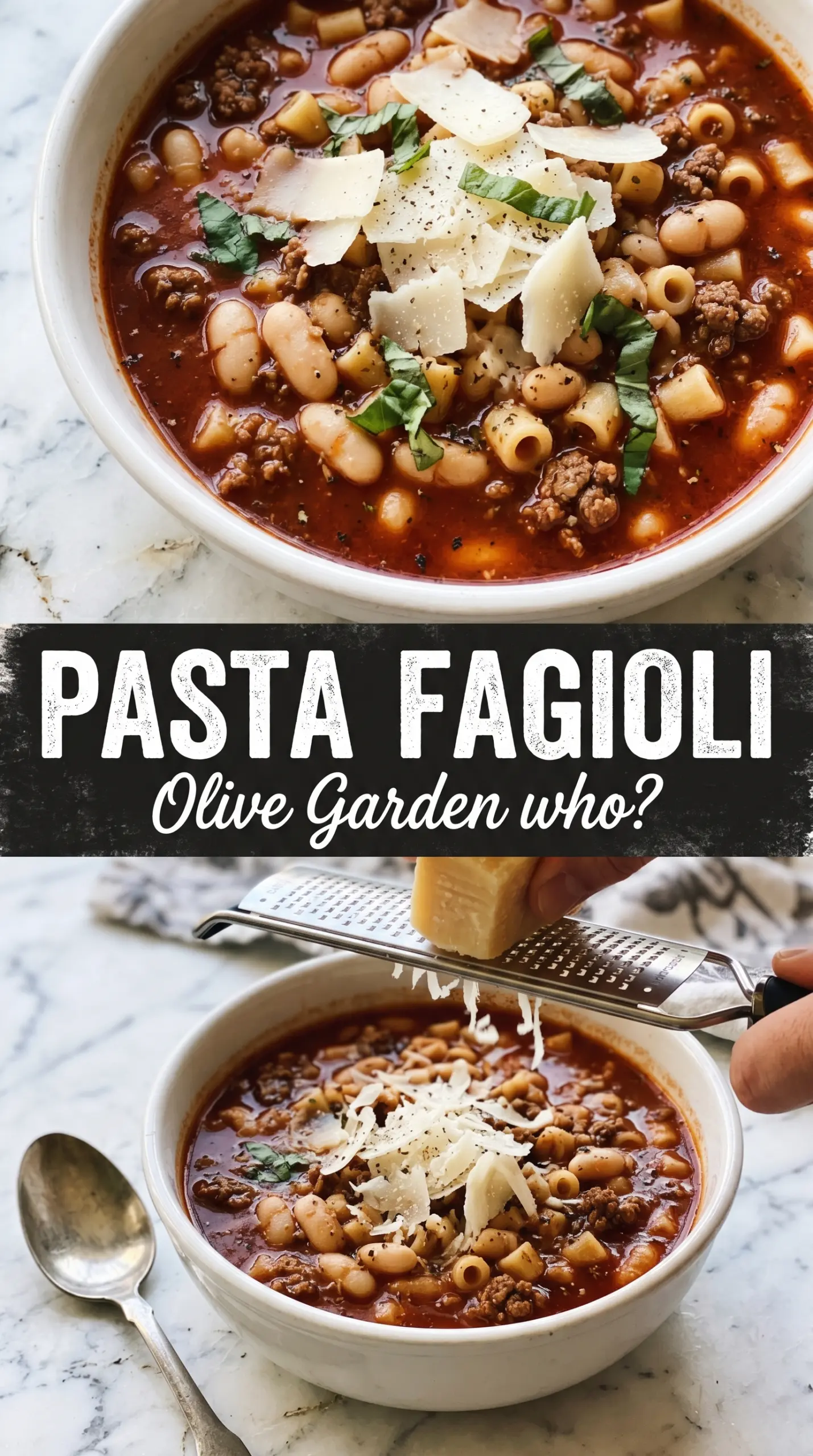
Stir in the cooked ditalini just before serving so it warms through without soaking up the whole pot. Ladle it into bowls and finish with parsley and Parmesan for freshness and a salty edge. If the soup sits too long after the pasta goes in, add a splash of broth when reheating to bring it back to a spoonable consistency.
How to Adjust This Soup Without Losing What Makes It Work
Use Italian sausage for a richer bowl
Swap the ground beef for mild Italian sausage if you want more built-in seasoning and a deeper, slightly fennel-scented broth. It makes the soup taste a little more assertive, so you may not need as much salt at the end.
Make it gluten-free without changing the base
Keep everything the same and use your favorite gluten-free small pasta. Cook it separately and add it at the end just like the regular version, since gluten-free pasta can turn soft even faster once it sits in hot broth.
Skip the meat for a vegetarian version
Leave out the beef and use vegetable broth instead of beef broth. The soup loses some of its meaty backbone, so add an extra pinch of oregano and a little more Parmesan at serving if you want the bowl to feel just as hearty.
Stretch it for a bigger crowd
Add an extra can of beans and another cup or two of broth if you need more servings. The flavor stays balanced, but the texture shifts a little lighter, which actually works well if you’re serving bread alongside it.
Storage and Reheating
- Refrigerator: Store the soup for up to 4 days. The pasta will keep soaking up broth, so it thickens as it sits.
- Freezer: Freeze the soup without the pasta for the best texture. Pasta fagioli freezes well in the broth base, then you can cook fresh pasta and add it when reheating.
- Reheating: Warm it gently on the stove over medium-low heat or in the microwave in short bursts, adding a splash of broth if needed. Reheat the pasta separately if possible, because boiling the whole pot again turns the noodles soft fast.
Questions I Get Asked About This Recipe
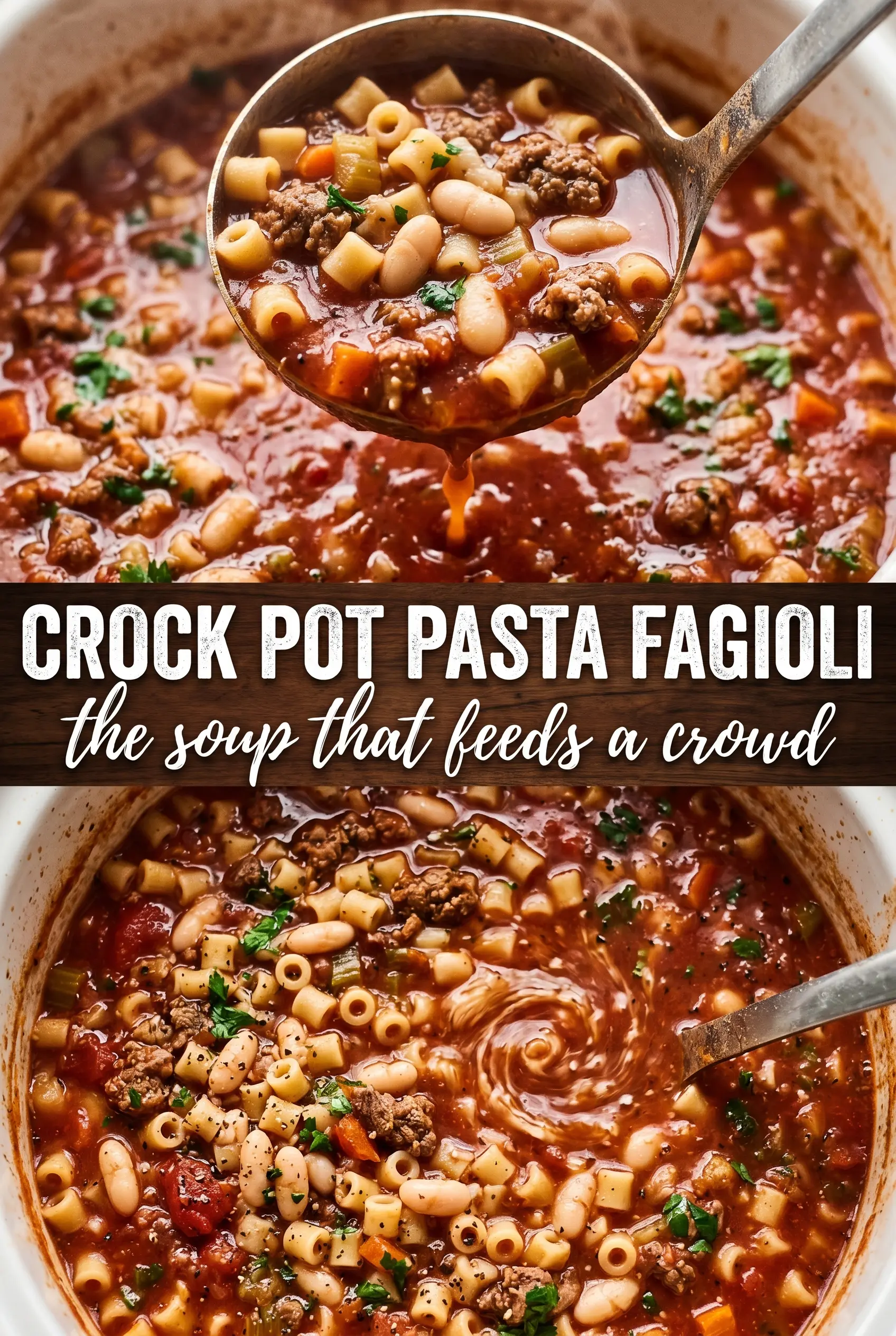
Crock Pot Pasta Fagioli
Ingredients
Equipment
Method
- Heat a cast iron skillet over medium-high heat and brown the ground beef or mild Italian sausage until cooked through; drain excess fat.
- Add the browned meat to the slow cooker.
- Add the onion, garlic, celery, and carrots to the slow cooker.
- Add the cannellini beans, crushed tomatoes, and beef broth.
- Add dried basil, dried oregano, dried thyme, red pepper flakes, salt, and black pepper.
- Stir to combine all ingredients so the seasoning and broth are evenly distributed.
- Cook on low for 7–8 hours until vegetables are very tender and flavors have melded.
- Stir in the cooked ditalini pasta just before serving.
- Ladle into bowls and top with fresh parsley and freshly grated Parmesan.