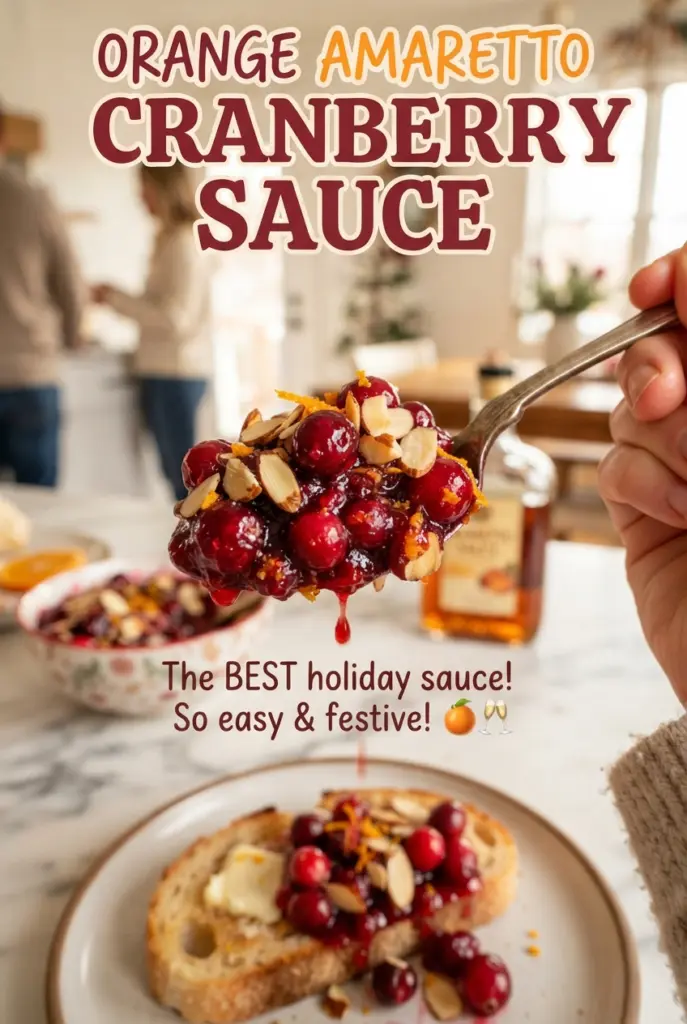
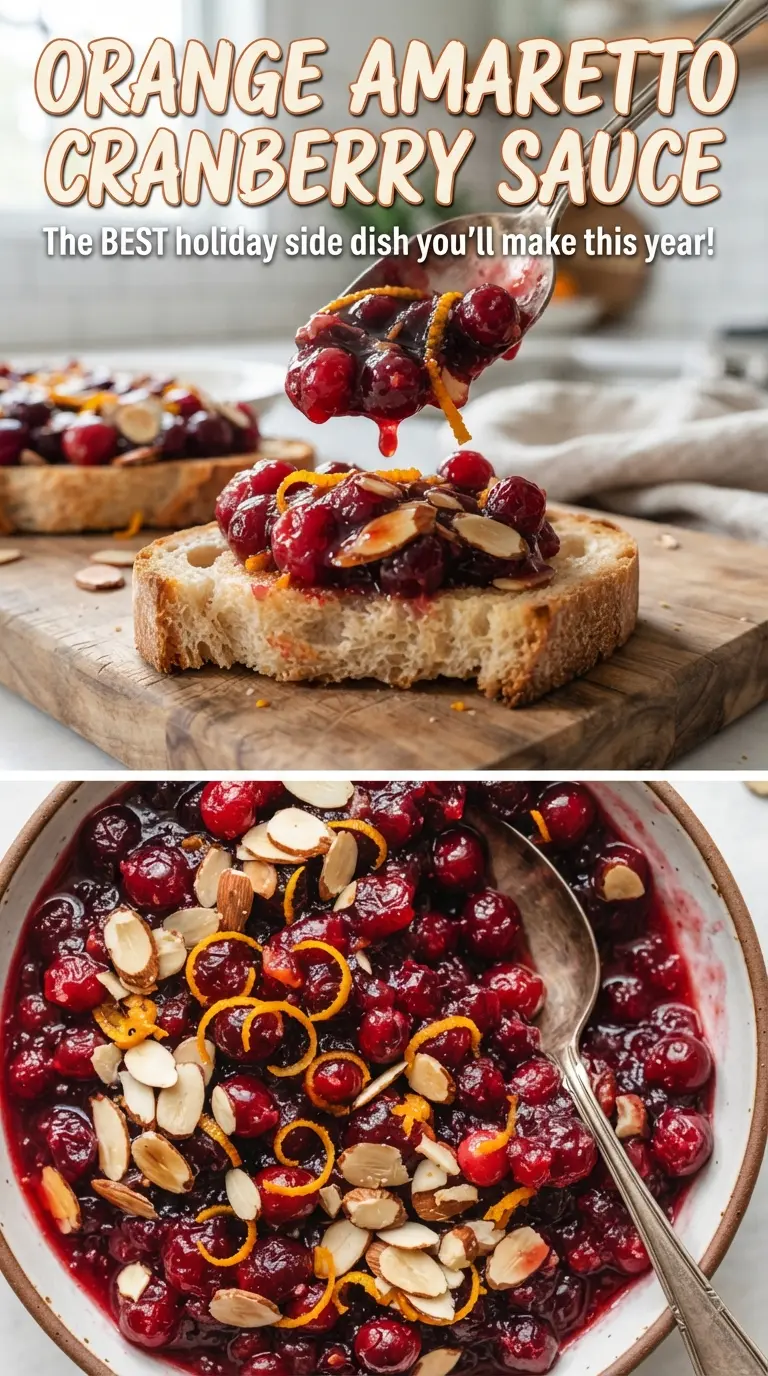
Glossy, tart cranberry sauce gets a deeper, warmer finish here from orange juice and amaretto, and the result lands somewhere between classic holiday side and a grown-up fruit compote. The berries burst into a thick, jewel-toned sauce that still holds a little texture, then the orange zest and almond liqueur round out the sharp edges without making it taste heavy. It’s the kind of side dish that disappears fast because it cuts right through rich mains and keeps the whole plate tasting brighter.
The trick is timing. Cranberries need a hard enough simmer to pop, but the amaretto goes in after the pan comes off the heat so its flavor stays present instead of cooking off. Toasted sliced almonds at the end add a little crunch, which keeps this from feeling one-note once it chills. The orange juice does more than add sweetness; it softens the cranberry bite and gives the sauce a cleaner finish than sugar alone.
The cranberries broke down into the perfect thick sauce, and adding the amaretto off the heat kept that almond flavor bright instead of boozy. I served it chilled with the toasted almonds on top, and it tasted like something from a nice restaurant.
Save this orange amaretto cranberry sauce for turkey, ham, or any plate that needs a bright tart-sweet side with toasted almonds.
The Difference Between a Bright Sauce and a Flat One
Most cranberry sauces lean on sugar and call it done, which gives you sweetness but not much depth. This version works because the orange juice brings acidity and aroma at the same time, while the amaretto adds a soft almond note that settles into the berries instead of fighting them. The sauce should taste sharp at first, then round out as it chills. That shift matters, because cranberry sauce always tastes a little more forceful when it’s still warm.
The other thing people miss is texture. Cranberries need enough simmering to burst, but not so much that they collapse into a thin jam. Once you see the berries split and the liquid thicken enough to coat a spoon, pull it off the heat. It will set up more as it cools, so a sauce that looks a touch loose in the pan usually lands perfectly on the table.
What Each Ingredient Is Actually Doing Here
- Fresh cranberries — These are the backbone of the dish. Fresh berries hold their shape long enough to burst into a sauce with a little body. Frozen cranberries also work; use them straight from the freezer and don’t thaw first, or they’ll soften too quickly.
- Orange juice — This does more than add liquid. It brings brightness and natural sweetness, which keeps the sauce from tasting harsh after it chills. Use pulp-free juice if you want a smoother finish, or fresh-squeezed if you want a livelier citrus edge.
- Amaretto — Add it off the heat. That’s what keeps the almond note fragrant instead of cooked out. If you don’t want alcohol, almond extract can step in, but use a small amount — a little goes a long way and it can turn medicinal fast.
- Orange zest — The zest gives the sauce its top note. Juice alone tastes flat compared with juice plus zest, especially once the cranberries are chilled. Zest the orange before juicing it so you’re not fighting a soft, slippery fruit later.
- Toasted sliced almonds — These add crunch right at the end, which is what keeps the sauce from feeling one-dimensional. Don’t stir them in too early or they’ll soften. Sprinkle them on just before serving so they stay crisp.
Cooking the Berries Until They Set Themselves
Building the syrup base
Start with the sugar, orange juice, water, and salt in the saucepan and bring it all the way to a boil. The sugar needs to dissolve completely before the cranberries go in, or you can end up with grainy spots and uneven sweetness. Once the liquid is clear and bubbling, add the berries and keep the heat at a steady simmer.
Watching for the burst
As the cranberries heat, you’ll hear a soft popping sound as the skins split. Stir often enough to keep the bottom from catching, but not so aggressively that you mash every berry into a puree. The sauce is ready when most of the berries have burst and the liquid looks thick and glossy instead of watery, usually right around the 10 to 12 minute mark.
Finishing off the heat
Take the pan off the burner before adding the amaretto and orange zest. High heat dulls both of those flavors, and it can make the alcohol taste harsher than it should. Stir them in while the sauce is still hot, then let it cool in the pan before transferring it to a serving dish or storage container.
Letting it chill to the right texture
Cranberry sauce always firms up as it cools, so don’t panic if it looks a little loose right after cooking. Once chilled, it should spoon cleanly without running everywhere on the plate. Top with the toasted almonds only when you’re ready to serve, because they lose their crunch if they sit in the sauce too long.
How to Adjust This Orange Cranberry Sauce Without Losing the Point
Make it nonalcoholic without losing the almond note
Skip the amaretto and add 1/4 teaspoon almond extract instead. Stir it in off the heat just like the liqueur, then taste before adding any more. Almond extract is much stronger and more direct, so too much will take over the sauce fast.
Make it ahead for a holiday table
This sauce is better after it has had time to chill, which makes it an ideal make-ahead side. Cook it a day or two in advance, then cover and refrigerate until serving. Add the almonds at the last minute so they stay crisp instead of softening in the sauce.
Use frozen cranberries when fresh aren’t available
Frozen cranberries work well here and don’t need any special treatment. Add them straight to the simmering syrup and give them an extra minute or two if needed. Thawing first makes them soft before they ever hit the pan, which can leave you with a looser sauce.
Make it gluten-free and dairy-free
This recipe is naturally both gluten-free and dairy-free as written, which makes it one of the easiest side dishes to fit onto a mixed table. Just check that your amaretto is a brand you trust if you’re cooking for someone with strict ingredient concerns. The texture and flavor don’t need any changes.
Storage and Reheating
- Refrigerator: Store covered for up to 1 week. It will firm up quite a bit when cold, then loosen again as it comes to room temperature.
- Freezer: It freezes well for up to 2 months. Use a freezer-safe container and leave a little space at the top for expansion.
- Reheating: Warm it gently on the stove over low heat if you want it soft again, or serve it cold straight from the fridge. Don’t boil it during reheating or the sauce can turn thinner than you want and the orange notes will fade.
Answers to the Questions Worth Asking
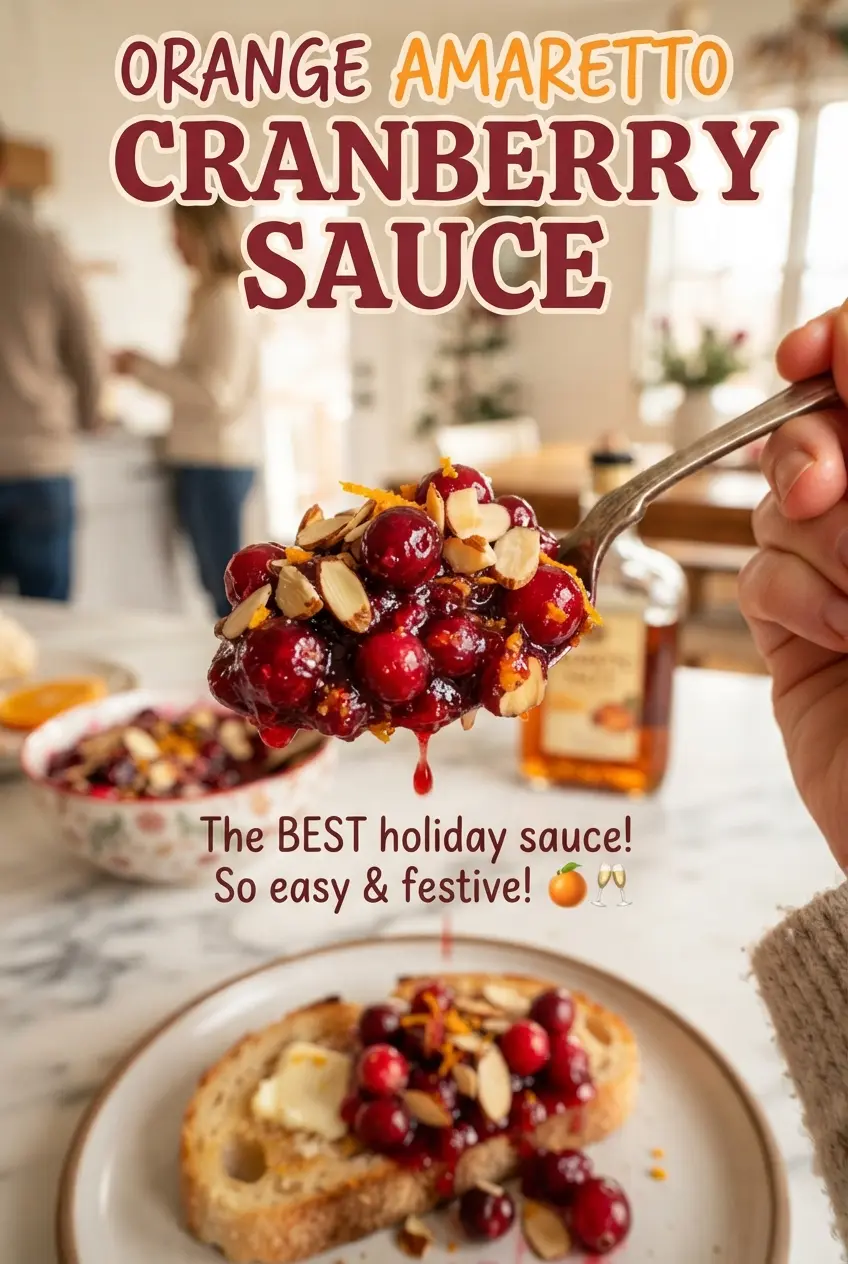
Orange Amaretto Cranberry Sauce
Ingredients
Equipment
Method
- In a saucepan, bring sugar, orange juice, water, and salt to a boil over high heat, stirring until the sugar dissolves. Look for active bubbling across the surface.
- Add fresh cranberries and reduce to a simmer, keeping bubbles gentle. Simmer for 10-12 minutes, stirring occasionally, until the berries burst and the sauce thickens to a glossy, spoon-coating consistency.
- Remove the saucepan from heat and stir in amaretto and orange zest. The mixture should look glossy and slightly darker, with no harsh alcohol smell as it warms down.
- Cool the sauce to room temperature, then chill before serving. For best texture, serve after it sets and thickens in the refrigerator.
- Just before serving, top the cranberry sauce with toasted sliced almonds. Add them at the last moment for crunch and a visible, toasted garnish.