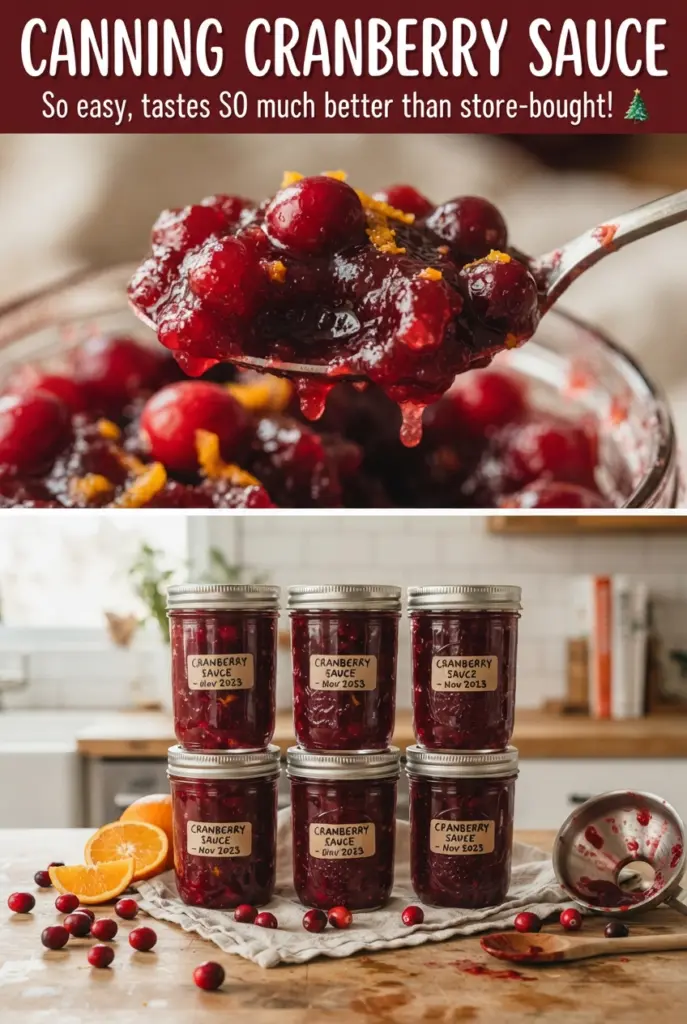
Glossy cranberry sauce in sealed jars is one of those pantry staples that earns its shelf space. The berries stay bright, the syrup turns jewel-like, and the orange lifts the whole batch without covering up that sharp cranberry tang. It’s the kind of preserve that makes a holiday table feel finished, but it also has enough balance to work with roast chicken, pork, or a plain turkey sandwich in January.
The texture comes from two things done right: boiling the cranberries just long enough for the skins to burst, then giving the sauce the full water bath process so the jars seal properly. Bottled lemon juice matters here because it gives you the consistent acidity canning requires, and the orange juice plus zest keep the flavor from going flat or one-note. The sauce thickens as it cooks, but it will still look looser than the final jarred result; that’s normal and exactly what you want.
Below, I’ve laid out the points that matter most when canning cranberry sauce: how to avoid overcooking the fruit, why headspace matters, and what to do if you want a smoother sauce or a more tart finish.
The cranberries burst at just the right point, and the sauce set up beautifully after the jars cooled. I loved that the orange came through without making it taste too sweet.
Love the glossy whole-berry texture and citrusy finish? Save this canned cranberry sauce for your holiday pantry and gift jars.
Why Cranberry Sauce Stays Safe Only When You Respect the Acid
Cranberry sauce is naturally acidic, but canning still depends on using the right balance of ingredients and the correct process time. That’s why bottled lemon juice stays in the recipe even though the cranberries and orange juice already taste tart. Fresh lemon juice can vary in acidity, and canned recipes aren’t the place to guess.
The other mistake people make is cooking the sauce until it looks fully thick in the pot. It keeps tightening as it cools and then again after the sealed jars sit. If you over-reduce it before canning, you end up with a dense, sticky preserve instead of a spoonable sauce.
- Boiling the fruit gently gives you intact berry pieces and a thick, glossy base without scorching the sugar.
- Bottled lemon juice keeps the acidity predictable, which matters for safe water bath canning.
- Orange zest goes in at the end so it stays fragrant instead of turning bitter during the full cook.
What Each Ingredient Is Actually Doing in This Jar
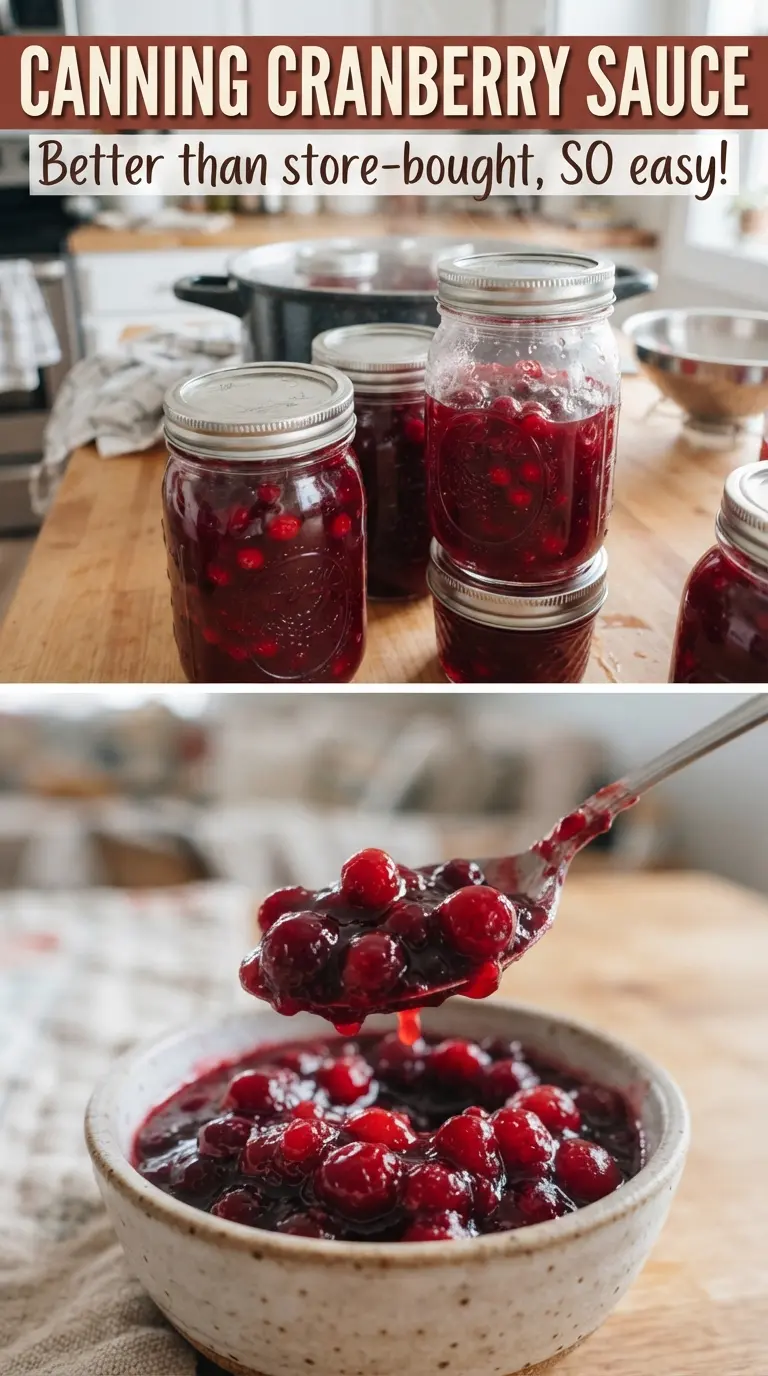
- Fresh cranberries bring the pectin and the burst-when-cooked texture that makes this sauce set up after processing. Frozen cranberries work too if they’re used straight from the freezer; thawing them first gives off extra liquid and can dilute the cook.
- Sugar balances the sharp berry acidity and helps the sauce cling to a spoon instead of tasting thin. You can reduce it a little for a tarter finish, but don’t cut it drastically or the texture and balance change enough to make the sauce taste harsh.
- Orange juice softens the cranberry edge and adds body without making the sauce taste like marmalade. Fresh-squeezed is great, but bottled juice is perfectly fine here if it’s 100% juice.
- Bottled lemon juice is the ingredient you don’t swap casually. It’s there for reliable acidity, not just flavor.
- Orange zest gives the finished jars a brighter citrus nose. Add it after the cranberries cook so it stays fresh and doesn’t go bitter.
Getting the Sauce Into Jars Without Losing the Seal
Warming the jars first
Hot jars matter because hot sauce poured into cold glass can crack a jar or cool too fast for a good seal. Keep the jars in simmering water while you cook the sauce, and leave the lids in warm water according to the manufacturer’s directions. The goal is steady temperature, not boiling everything hard.
Cooking until the berries burst
Bring the sugar, water, and orange juice to a boil first so the sugar dissolves cleanly. Once the cranberries and lemon juice go in, keep the boil gentle and stir often enough that the bottom doesn’t catch. You want most of the berries to pop and the liquid to look slightly syrupy, not jam-thick.
Filling, wiping, and sealing
Ladle the sauce into the jars while it’s still hot and leave the full 1/4-inch headspace. Too much headspace can weaken the seal; too little can force sauce onto the rim and prevent the lid from closing cleanly. Wipe the rims carefully, then tighten the bands fingertip tight — snug, not cranked down.
The water bath and the resting period
Process the jars for 15 minutes in a boiling water bath, adjusting for altitude if needed. When the time is up, turn off the heat and let the jars rest in the canner for 5 minutes before lifting them out. That short rest helps prevent siphoning, which is when liquid gets pulled out of the jar and can leave you with a weak seal.
Make it less sweet
Drop the sugar by up to 1/2 cup if you like a sharper cranberry sauce, but keep the canning process exactly the same. The sauce will taste brighter and a little firmer, but cutting too much sugar makes the finished jars taste lean instead of balanced.
Swap in all lemon for a sharper finish
If you want the citrus to read more tart than orange-forward, replace half the orange juice with water and keep the bottled lemon juice unchanged. The result is cleaner and more cranberry-driven, with less sweetness and a brighter bite.
Use frozen cranberries without thawing
Frozen berries work well and don’t need to be defrosted first. Add them straight to the pot and give them an extra minute or two to come back to a boil; thawed berries can get mushy faster and release more water than you want.
No-sugar option isn’t a safe canning swap
This batch depends on sugar for texture and balance, and a straight no-sugar substitution changes the finished product too much for this tested method. If you need a lower-sugar preserve, use a recipe designed specifically for that style rather than trying to trim this one down.
Storage and Reheating
- Refrigerator: Once opened, keep jars chilled and use within 2 to 3 weeks. The sauce may firm up a bit more after chilling.
- Freezer: Fully sealed canned jars are meant for pantry storage, not freezing. If you want to freeze extra sauce, use freezer-safe containers and leave headspace.
- Reheating: Cranberry sauce is usually served cold or room temperature. If you want it warm, heat only the portion you need over low heat or in short microwave bursts so it doesn’t scorch and separate.
Answers to the Questions Worth Asking
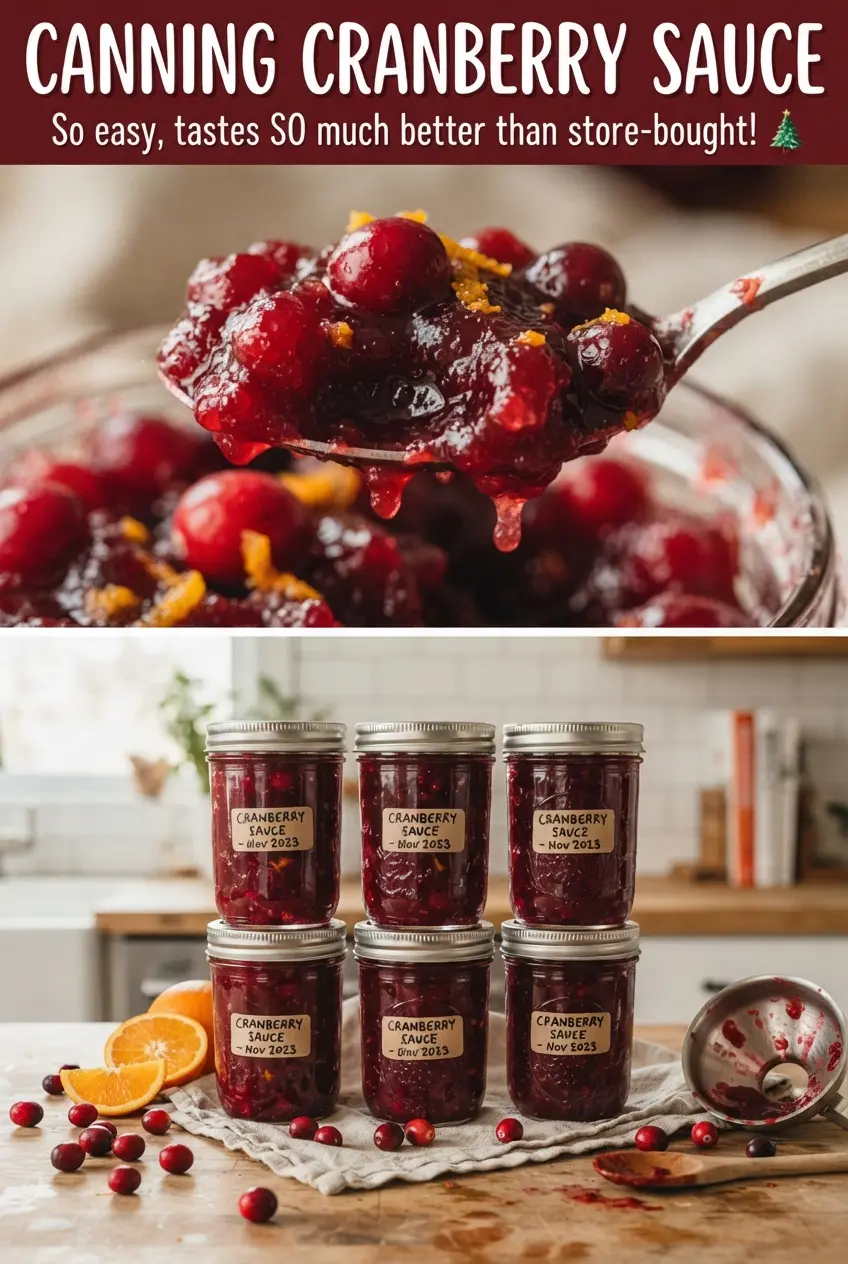
Canning Cranberry Sauce
Ingredients
Equipment
Method
- Wash 12 half-pint jars, lids, and bands thoroughly, then keep the jars hot by simmering them in water until needed (keep a steady simmer, not a boil). Keep everything hot while you make the sauce so the jars don’t crack.
- In a large pot (Dutch oven), bring sugar, water, and orange juice to a boil over medium-high heat, stirring until the sugar is fully dissolved (boil at a steady bubbling boil).
- Add fresh cranberries and bottled lemon juice, then boil gently for 10-12 minutes, stirring occasionally, until the berries burst and the sauce thickens (maintain a gentle boil).
- Stir in orange zest and cook for 30 seconds just to combine, then turn off the heat.
- Ladle the hot sauce into the hot jars, leaving 1/4-inch headspace, then wipe the rims clean with a damp cloth.
- Apply lids and bands and tighten fingertip tight (do not overtighten).
- Process in a boiling water bath canner for 15 minutes, adjusting the time for altitude (keep water at a rolling boil for the full processing time).
- Turn off the heat and rest the jars in the canner for 5 minutes, then lift them out and cool undisturbed for 24 hours.
- Check that the lids have sealed by pressing the center of each lid—it should not flex, and the lid should stay concave.
- Store sealed jars in a cool, dark place for up to 1 year; refrigerate any unsealed jar and use within a few days.


