
Rich, tomatoey broth, tender ribbons of lasagna noodles, and savory Italian sausage make this one-pot lasagna soup taste like the best part of baked lasagna without the layering, baking, or stack of dishes. The noodles soak up the broth as they cook, so every spoonful lands with a little chew, a little richness, and that familiar lasagna comfort in a bowl.
The trick is building the base in the pot before the liquid goes in. Browning the sausage first gives you those browned bits that make the broth taste deep instead of flat, and cooking the tomato paste with the onion and garlic takes away the raw edge it can leave behind. I also like using both crushed and diced tomatoes here: the crushed tomatoes give body, while the diced tomatoes keep the soup from feeling too smooth.
Below you’ll find the timing that keeps the noodles from going mushy, the cheese topping that makes each bowl taste finished, and a few smart swaps if you want to make it lighter, spicier, or dairy-free.
The noodles stayed perfectly tender and the broth had that rich lasagna taste without turning cloudy or thick. I stirred in the cheese topping at the table and it melted into the soup beautifully.
Save this one-pot lasagna soup for a cozy bowl with sausage, broken noodles, and a ricotta-mozzarella finish.
The Part That Keeps the Noodles from Turning Mushy
The mistake with lasagna soup is treating the noodles like they can sit in the pot for ages. They can’t. Broken lasagna noodles thicken the broth as they cook, and if they stay on the heat too long, they go past tender and start drinking up too much liquid. The soup should still look brothy when the noodles are done, with just enough body from the pasta and tomatoes to feel substantial.
Stir every few minutes once the noodles go in. That keeps them from clumping at the bottom of the pot and gives you a better texture throughout the whole batch. If the soup looks a little looser than you expected before serving, that is a good sign. It means the noodles haven’t seized up the pot, and the ricotta topping will finish the bowl the right way.
What Each Ingredient Is Doing in the Pot

- Italian sausage — This is the main source of seasoning and depth, so use a good one. Mild or hot both work; hot sausage gives the broth more edge without needing extra red pepper flakes. If you want to lighten it up, ground turkey sausage works, but the broth will taste a little less rich.
- Tomato paste — Two tablespoons may not look like much, but cooking it with the onion and garlic first pulls out a concentrated, almost caramelized tomato flavor. If you skip that step, the soup tastes flatter and a little raw.
- Crushed and diced tomatoes — The crushed tomatoes build the body of the broth, while the diced tomatoes leave you with small pieces that mimic the layered bite of lasagna filling. If you only have one kind, crushed tomatoes are the better choice for a smoother, more cohesive soup.
- Ricotta, mozzarella, and parmesan — The topping is what makes this taste like lasagna instead of just sausage tomato soup. Ricotta gives creaminess, mozzarella melts into the broth, and parmesan sharpens everything. For the best texture, mix the cheeses right before serving so they stay fluffy instead of watery.
Building the Bowl in the Right Order
Brown the Sausage First
Start with the sausage in a wide pot and let it get some color before you drain the fat. Those browned bits on the bottom are part of the flavor base, and wiping them away would leave the soup tasting thinner. If the sausage is steaming instead of browning, the pot is too crowded or too cool, so give it another minute before stirring again.
Cook Out the Tomato Paste
Once the onion softens, add the garlic and tomato paste and cook them for about 2 minutes. You want the paste to darken slightly and smell sweet, not sharp. This is the stage that keeps the tomato flavor from tasting tinny or raw later on. If the garlic starts to brown hard, the heat is too high and you’ll taste bitterness in the finished broth.
Simmer the Noodles Until Just Tender
After the broth and tomatoes come to a boil, add the broken noodles and lower the heat to a steady simmer. Stir every 2 to 3 minutes so the noodles don’t stick to the bottom and scorch. Stop cooking when they’re tender but still have a little bite in the center. They finish softening in the hot broth after you turn off the heat, and that’s what keeps the texture right.
Finish with the Cheese Right Before Serving
Spoon the cheese topping over each bowl instead of stirring it all into the pot. That keeps the ricotta creamy and lets the mozzarella melt in ribbons instead of disappearing into the soup. A final pinch of basil on top makes the whole bowl look and taste finished. If the soup seems too thick at the end, add a splash of broth before ladling it out.
How to Bend This Recipe Without Breaking It
Make it dairy-free
Skip the ricotta-mozzarella topping and finish the bowls with a drizzle of good olive oil and fresh basil instead. The soup itself is already creamy in texture from the tomato base and pasta starch, so you won’t lose the whole dish — just the cheesy finish.
Use ground turkey or chicken sausage
This keeps the recipe lighter while still giving you seasoned meat in every bite. The broth will be a little less rich than with pork sausage, so let the tomato paste brown for the full 2 minutes to build more depth.
Make it gluten-free
Use a sturdy gluten-free pasta shape that can hold up in broth, then check it a minute or two early. Gluten-free noodles can soften fast and break apart if they sit too long in simmering liquid, so pull the pot the moment they turn tender.
Storage and Reheating
- Refrigerator: Store for up to 4 days. The noodles will keep soaking up broth, so expect the soup to thicken.
- Freezer: Freeze the soup without the noodles if you can. If the noodles are already in it, they soften after thawing, but the flavor still holds up well.
- Reheating: Warm gently on the stove over medium-low with a splash of broth or water. High heat can overcook the noodles and make the texture mushy before the soup is hot.
Questions I Get Asked About This Recipe
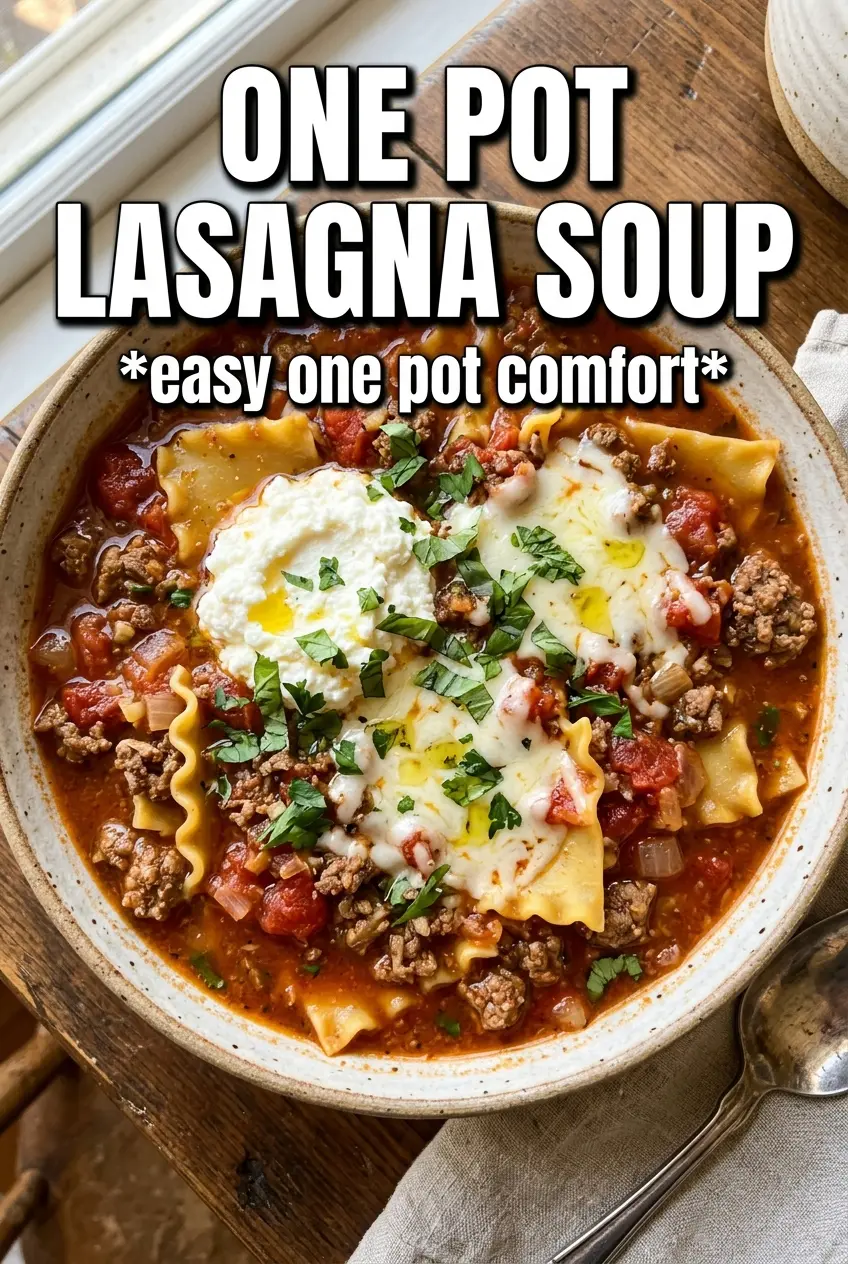
One Pot Lasagna Soup
Ingredients
Equipment
Method
- Heat a large wide pot over medium-high heat and brown the Italian sausage directly in the pot, then drain off excess fat.
- Add the diced onion and cook for 3 minutes, then stir in the minced garlic and tomato paste and cook for 2 minutes.
- Pour in the crushed tomatoes and diced tomatoes plus the chicken broth, then stir in Italian seasoning, dried basil, and red pepper flakes.
- Bring the mixture to a boil, then add the broken lasagna noodles.
- Simmer at a steady bubble for 10-12 minutes, stirring every 2-3 minutes to prevent sticking, until the noodles are tender.
- Season the soup with salt and pepper to taste, keeping everything in the same pot.
- Mix the ricotta, shredded mozzarella, parmesan, and basil for the cheese topping, then serve a generous spoonful in each bowl.