
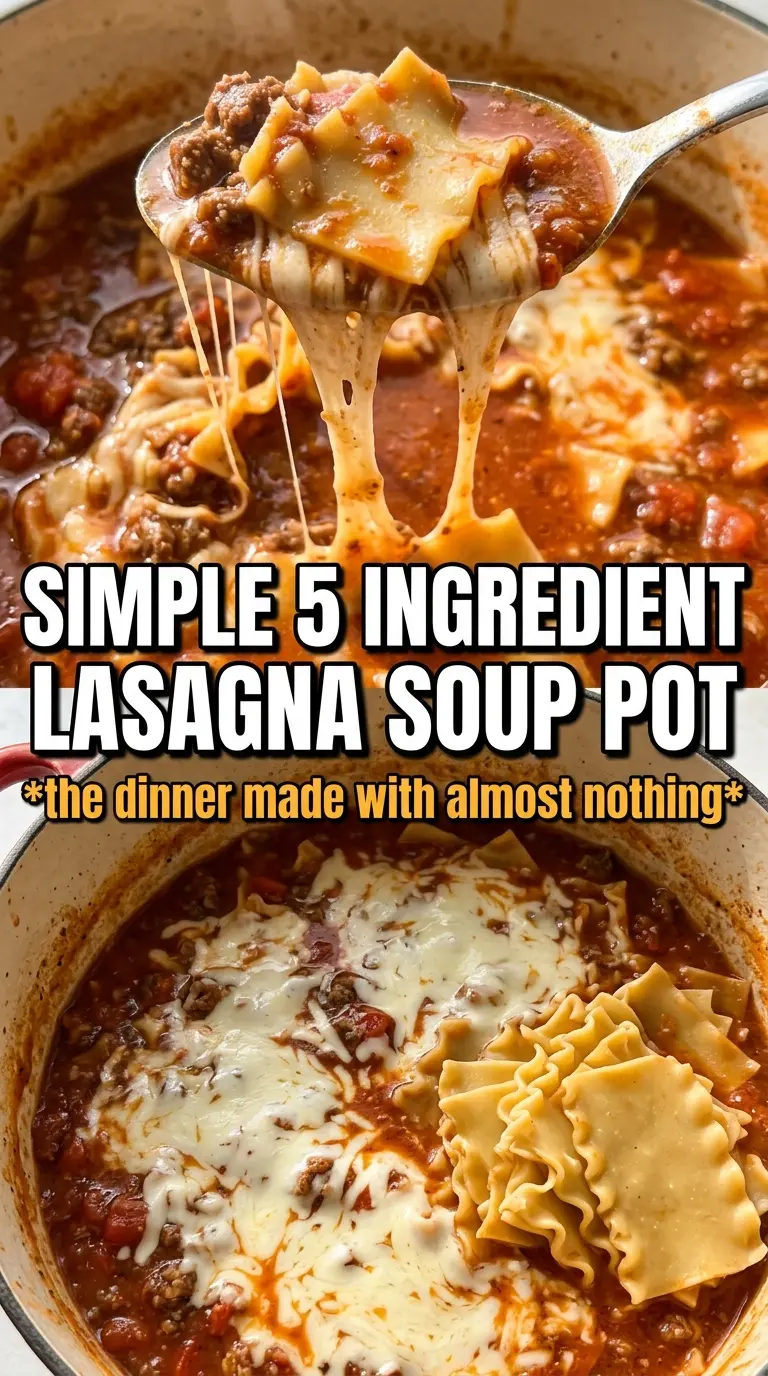
Lasagna soup brings all the comfort of a baked pan of pasta and cheese into one pot, and this five-ingredient version gets there fast without tasting stripped down. The broth turns rich and tomato-forward, the sausage seasons the whole pot, and the broken noodles give it that familiar lasagna bite without any layering or oven time. A spoonful of ricotta at the end is what makes each bowl feel finished instead of just cooked.
The trick here is keeping the ingredient list short but choosing pieces that carry real weight. Italian sausage gives you fat, seasoning, and depth in one move, while jarred marinara stands in for the long-simmered tomato base that a more complicated lasagna soup would build from scratch. The noodles cook right in the broth, so they thicken the soup a little as they soften, which is exactly what you want as long as you keep an eye on the pot and stir now and then so they don’t clump or stick.
Below you’ll find the one step that keeps the soup from turning heavy, plus a few smart ways to adjust it if you want more cheese, a lighter bowl, or a make-ahead dinner that still reheats well.
The noodles stayed tender without getting mushy, and the ricotta on top made every bowl taste like lasagna without all the work. I used mild sausage and it still had plenty of flavor.
Save this 5 Ingredient Lasagna Soup for the nights when you want all the lasagna comfort in one pot with barely any cleanup.
The Broth Has to Stay Brothy Until the Noodles Go In
This soup can turn thick fast if the noodles start simmering too early or if the heat stays too low once they’re added. You want the marinara and broth fully combined before the pasta goes in, then a real boil so the noodles begin cooking immediately instead of soaking up liquid slowly and turning gummy. Once they’re in, keep the pot at a lively simmer and stir now and then, especially along the bottom, where broken lasagna noodles like to settle and stick.
The other mistake is over-reducing the soup before the pasta is tender. Lasagna noodles need enough liquid to cook evenly, and they’ll keep absorbing some broth even after the heat is off. If the pot looks a little loose at first, that’s fine. It settles into the right spoonable texture in the bowl.
What Each Ingredient Is Actually Doing in This Bowl
- Italian sausage — This is the backbone of the soup. It seasons the broth while it browns, so you get depth without adding onion, garlic, or extra spices. Mild or hot both work; use hot if you want the pot to carry more heat on its own.
- Marinara sauce — A good jarred sauce is the shortcut that makes this recipe believable on a weeknight. Choose one you’d happily eat on pasta by itself, because its flavor becomes the base of the whole soup. If yours runs sweet, a pinch of black pepper helps balance it.
- Chicken broth — This loosens the sauce into soup and keeps the tomato from becoming too heavy. Low-sodium broth is the smartest choice because sausage and marinara already bring salt. Vegetable broth works if that’s what you have, but chicken broth gives a rounder finish.
- Lasagna noodles — Broken noodles give the dish its name and the right texture. Don’t swap in very thin pasta unless you’re okay with a softer, less lasagna-like bowl. If all you have is another sturdy pasta shape, use it, but expect a different feel.
- Ricotta cheese — This is the lasagna part that makes the soup taste finished. Dolloping it on top keeps the texture creamy instead of muddying the broth. Whole-milk ricotta gives the smoothest result, but part-skim works fine if that’s what’s in the fridge.
How to Build the Pot So the Noodles Stay Tender and the Soup Stays Rich
Brown the Sausage First
Start with a large pot over medium-high heat and break the sausage into small pieces as it cooks. You want deep browning on the meat, not just gray crumbles, because those browned bits are what give the broth its savory backbone. If there’s a lot of excess grease, drain it off before adding the liquids. Too much fat will make the soup taste heavy instead of rich.
Turn Sauce and Broth Into One Base
Pour in the marinara and chicken broth, then stir until the pot looks uniform and nothing is stuck to the bottom. Scrape up every browned bit from the sausage; that’s free flavor. Bring the mixture to a boil before the noodles go in so the pasta starts cooking right away and doesn’t sit there softening unevenly.
Cook the Noodles in the Soup, Not Separately
Add the broken lasagna noodles and keep the soup at a steady simmer for 10 to 12 minutes, stirring occasionally. The noodles should be tender but still hold their shape. If the boil is too hard, they can break apart and cloud the broth. If the simmer is too quiet, they’ll clump together and cook unevenly.
Finish With the Ricotta on Top
Ladle the soup into bowls and add a generous spoonful of ricotta right before serving. Don’t stir it all into the pot unless you want a creamier, less defined finish. The contrast between the hot soup and cool ricotta is what gives each spoonful that lasagna-like bite. Add mozzarella, basil, or parmesan if you want more of the classic casserole feel.
How to Stretch It, Lighten It, or Work Around What’s in the Fridge
Use turkey sausage for a lighter bowl
Turkey sausage works if you want a leaner soup, but it won’t build as much richness in the pot. Brown it well and add a little extra black pepper if the flavor tastes flat. You may also want a splash more broth at the end, since lean sausage releases less fat and the soup can feel thinner.
Make it dairy-free without losing the comfort factor
Skip the ricotta and finish each bowl with a spoonful of dairy-free cashew cream or a dusting of nutritional yeast if you want a cheesy note. The soup itself already has enough body from the sausage, marinara, and noodles, so you won’t miss the creaminess in the broth. The texture changes a bit, but the bowl still eats like a hearty pasta dinner.
Use gluten-free pasta if needed
Gluten-free lasagna noodles work, but they soften faster than wheat noodles and can break apart if overcooked. Start checking them early and pull the pot from the heat as soon as they’re tender. If you plan on leftovers, undercook them slightly so the second serving doesn’t go mushy.
Storage and Reheating
- Refrigerator: Store for up to 4 days in an airtight container. The noodles will absorb broth as it sits, so expect a thicker soup the next day.
- Freezer: It freezes, but the noodles soften after thawing. For the best texture, freeze the soup before adding the pasta, then cook fresh noodles into the reheated base.
- Reheating: Warm it gently on the stove over medium-low heat with a splash of broth or water. High heat can break the noodles and make the sauce taste tighter than it should.
Answers to the Questions Worth Asking

5 Ingredient Lasagna Soup
Ingredients
Equipment
Method
- Heat a large pot (Dutch oven) over medium-high heat and brown the Italian sausage, breaking it up as it cooks, until fully cooked; drain excess fat.
- Pour in the marinara sauce and chicken broth, then stir to combine and loosen any browned bits from the bottom of the pot.
- Bring the soup to a boil over high heat with active bubbling across the surface.
- Add the broken lasagna noodles and cook 10-12 minutes, stirring occasionally, until the noodles are tender.
- Season with salt and pepper if needed, then stir once more to distribute the seasoning.
- Ladle into bowls and top each bowl with a generous spoonful of ricotta.
- Optionally top with shredded mozzarella and fresh basil for extra flavor and a melty finish.