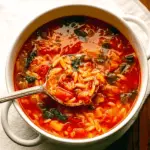

Chicken lasagna soup hits the same comfort notes as a baked pan of lasagna, but it gets to the bowl faster and with less fuss. The broth turns rich and tomatoey, the broken noodles soften into something spoonable, and the chicken stays hearty enough to make it a full dinner instead of a starter. The best part is the cheese dollop melting into the hot soup, turning each bowl creamy in the middle without weighing the whole pot down.
This version works because the tomato paste gets cooked with the onion and garlic before any liquid goes in, which gives the soup a deeper base instead of a thin tomato broth. Browning the chicken first builds flavor in the pot, and simmering the noodles right in the soup lets them pick up that lasagna-like taste as they cook. The cheese mixture is kept separate on purpose so it stays fluffy and gives you those ricotta pockets instead of disappearing into the broth.
Below you’ll find the small details that matter: when to add the noodles, how to keep them from going mushy, and a couple of easy ways to adjust the soup if you want it a little lighter, spicier, or better for leftovers.
The noodles cooked right in the broth without getting mushy, and the ricotta-mozzarella topping melted into the center just like real lasagna layers. My husband had two bowls and kept talking about the garlicky tomato broth.
Save this Chicken Lasagna Soup for a creamy ricotta-topped dinner with tomato broth, tender noodles, and easy one-pot comfort.
The Trick to Keeping the Noodles Soup-Like, Not Soggy
The biggest mistake with lasagna soup is letting the noodles sit in the pot too long. Broken lasagna noodles keep absorbing broth even after the heat is off, so if you simmer them until they’re fully soft and then leave the soup alone, they’ll keep swelling and turn heavy. Stop cooking when the noodles are just tender at the center and the chicken is done, then serve right away.
Another thing that helps is keeping the boil at a steady simmer instead of a hard bubble. A rolling boil can beat up the noodles and muddy the broth, especially once the tomato paste and cheese hit the bowl. Gentle heat gives you a broth that stays brothy and noodles that still have a little bite.
What Each Ingredient Is Actually Doing in the Pot

- Chicken breast or thighs — Thighs stay a little juicier and give the soup a richer base, but chicken breast works fine if you don’t overcook it. Dice it small so it browns quickly and finishes in the simmer without drying out.
- Tomato paste — This is the ingredient that makes the broth taste cooked, not flat. Let it toast with the onion and garlic for a minute or two until it darkens slightly; that step pulls out sweetness and cuts the canned-tomato edge.
- Crushed tomatoes plus diced tomatoes — The crushed tomatoes build body, while the diced tomatoes leave you a little texture so the soup feels closer to lasagna filling. If you only have one type, use all crushed for a smoother soup or all diced for a chunkier one.
- Lasagna noodles — Regular dried noodles hold up best here. Break them into uneven pieces so the soup eats like real lasagna instead of neat pasta squares.
- Ricotta, mozzarella, and parmesan — Ricotta gives you the classic creamy dollop, mozzarella adds stretch, and parmesan brings salt and depth. Don’t stir this into the pot; keep it as a topping so the texture stays distinct.
Building the Broth and Adding the Pasta at the Right Moment
Browning the Chicken First
Start by cooking the diced chicken in a little olive oil until the outside is lightly browned and the pieces are just cooked through on the surface. You’re not trying to fully finish it here, just build flavor on the bottom of the pot. Pull it out once it has color; if you leave it in while the onion softens, it won’t brown properly and you’ll miss that savory base layer.
Cooking the Tomato Paste Until It Darkens
After the onion softens, add the garlic and tomato paste and stir them around for about two minutes. The paste should lose its raw brick-red look and smell a little sweeter and deeper. If it sticks, lower the heat instead of adding broth too soon; that quick cooking step is where the broth gets its lasagna-like richness.
Simmering Until the Noodles Are Just Tender
Once the broth and tomatoes go in, bring the pot to a boil, then drop it down to a steady simmer before adding the noodles and chicken back in. Stir a few times so the noodles don’t cling together, then cook until they’re tender but not collapsing. The chicken should be cooked through, but the real marker here is the noodle texture: soft at the bite, not bloated or falling apart.
Finishing With the Cheese Dollop
Mix the ricotta, mozzarella, parmesan, and basil together right before serving so the mixture stays thick and scoopable. Spoon a generous amount into each bowl, then ladle the hot soup around it. If the soup isn’t hot enough, the cheese will sit on top in a clump instead of melting into that creamy middle you want.
How to Change This Chicken Lasagna Soup Without Losing the Point
Make It Dairy-Free
Skip the ricotta, mozzarella, and parmesan topping and finish each bowl with a spoonful of dairy-free cashew cream or a drizzle of good olive oil. You lose the classic lasagna-like creaminess, but the tomato broth and chicken still carry the dish.
Use Ground Chicken Instead of Diced Pieces
Ground chicken cooks faster and gives the soup a more unified, almost meat-sauce texture. Break it up well while it browns so you don’t end up with soft clumps, and expect a slightly lighter, less chunky bowl.
Make It Gluten-Free
Use your favorite gluten-free lasagna noodles, but watch them closely because they soften faster than wheat noodles. If they start breaking apart early, pull the pot off the heat and let the residual heat finish them.
Make It Ahead for Better Leftovers
Cook the soup base and chicken ahead, but hold the noodles and cheese until serving if you want the best texture. This keeps the broth from disappearing into the pasta overnight and gives you a fresher bowl the next day.
Storage and Reheating
- Refrigerator: Store in an airtight container for up to 4 days. The noodles will keep soaking up broth, so expect the soup to thicken.
- Freezer: Freeze the soup base without the noodles or cheese for up to 3 months. Pasta turns soft and grainy after freezing, so add fresh noodles when you reheat.
- Reheating: Warm gently on the stovetop over medium-low, adding a splash of broth if it has thickened. Don’t blast it on high heat or the chicken can dry out and the dairy topping can break when it hits the hot soup.