
Lasagna soup gives you all the comfort of a bubbling pan of lasagna without the layering, the waiting, or the cleanup that usually comes with it. The broth turns deep and savory from sausage, tomato paste, and herbs, while the noodles cook right in the pot and soak up just enough of that rich tomato base to taste like they belong there.
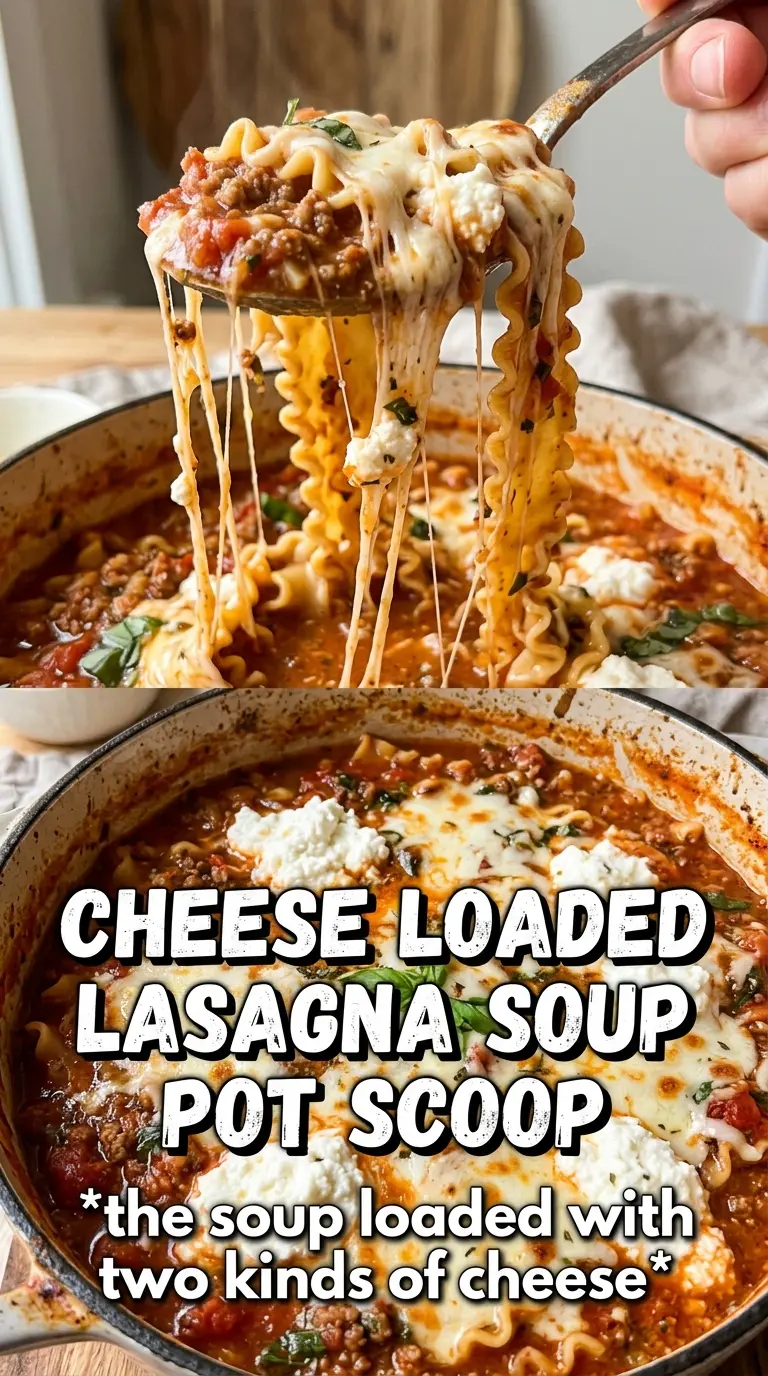
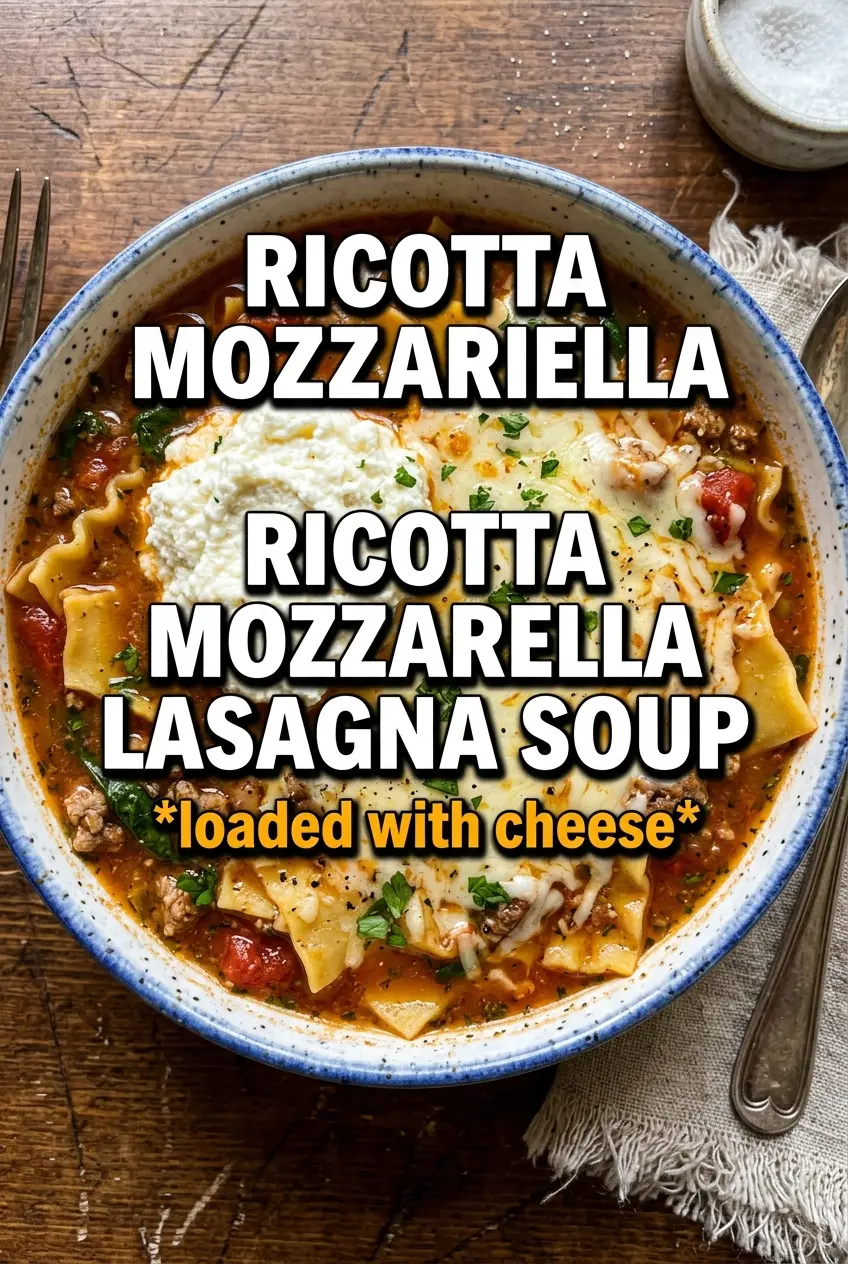
What makes this version stand out is the cheese topping. Instead of scattering a little mozzarella over the top and calling it done, the ricotta, mozzarella, parmesan, and basil get mixed into a thick spoonable mound that melts into the hot soup in ribbons and pockets. That contrast between the brothy base and the creamy cheese is what makes each bowl feel like the best part of lasagna, just lighter and faster.
The noodles stayed perfectly tender and the ricotta-mozzarella topping melted into the broth instead of disappearing. I made it on a Tuesday and my husband asked if there was enough left for lunch tomorrow.
Save this lasagna soup for the nights when you want a rich tomato broth, tender noodles, and that dramatic ricotta-mozzarella melt in one bowl.
The Step That Keeps the Broth From Tasting Flat
The biggest mistake with soup that’s meant to taste like lasagna is treating the tomato base like plain marinara thinned with broth. It needs a proper start in the pot: browned sausage, softened onion, and tomato paste cooked long enough to lose that raw, metallic edge. That quick fry on the paste matters because it deepens the color and gives the broth a cooked-down richness that water or broth alone can’t fake.
The noodles also need a little attention. Broken lasagna sheets look rustic, but they can turn mushy fast if the soup sits at a hard boil. A steady simmer keeps the pasta tender with enough bite left to hold the bowl together. If the soup tastes a little stronger than you expect before the noodles go in, that’s a good sign — the pasta will soak up salt and seasoning as it cooks.
What Each Ingredient Is Actually Doing in the Bowl
- Italian sausage — This is the backbone of the soup, bringing fat, seasoning, and enough savoriness to make the broth taste slow-cooked in just 30 minutes. Mild or hot both work; hot sausage adds a little more edge if you want heat without extra red pepper.
- Tomato paste — Don’t skip the short cook time here. It’s what gives the broth that concentrated, lasagna-like depth instead of a thin tomato note.
- Crushed tomatoes plus fire-roasted diced tomatoes — The crushed tomatoes build body, while the fire-roasted tomatoes add little pockets of charred sweetness. If you only have regular diced tomatoes, the soup still works, but it loses some of that smoky backbone.
- Lasagna noodles — Break them into rough pieces, not tiny shards. Bigger pieces hold their shape better and give you a better spoonful in the finished soup.
- Ricotta, mozzarella, and parmesan — Whole milk versions matter here because they melt and taste richer. Part-skim ricotta can work, but it won’t give you the same creamy finish and may feel a little grainy when it hits the hot soup.
- Fresh basil and nutmeg — The basil brightens the cheese mixture, and the nutmeg does the quiet work of making the ricotta taste rounder and more like a classic baked pasta filling.
Building the Soup So the Noodles Stay Right
Brown the Sausage Hard Enough for Flavor
Cook the sausage over medium-high heat until you see deep browned bits on the bottom of the pot, not just pale crumbles. That browned layer becomes part of the broth, and it’s the difference between a good soup and one that tastes like everything came from the same can. Drain off excess fat if the sausage leaves more than a thin coating in the pot, but leave enough behind to cook the onions.
Cook the Tomato Paste Before the Liquid Goes In
Once the onion is soft and the garlic smells fragrant, stir in the tomato paste and let it cook for about 2 minutes. It should darken a shade and stick to the bottom in places before you add the tomatoes and broth. If you add the liquid too soon, the paste stays sharp and the soup misses that slow-cooked, built-in richness.
Simmer the Noodles, Don’t Boil Them Hard
After the broth comes to a boil, drop the heat to a steady simmer before adding the noodles. You want them cooked through but still holding their shape, which usually takes 10 to 12 minutes depending on how large the pieces are. If the soup keeps boiling hard, the noodles will swell too much and start breaking apart before you get to the table.
Finish with a Big Cheese Dollop
Mix the ricotta topping until the cheeses are evenly combined and spoon it onto the soup right before serving. The heat from the broth should soften it into creamy streaks while leaving a few thick pockets behind. If you stir it all in, the soup loses that dramatic lasagna moment, and the topping turns muddy instead of melty.
How to Adapt This Soup When You Need to
Make it lighter without losing the comfort
Use ground turkey or chicken instead of sausage, then add an extra pinch of fennel seed or a little more Italian seasoning so the broth doesn’t taste flat. You’ll lose some richness, so keep the cheese topping generous to make up for it.
Gluten-free version that still eats like lasagna
Swap in your favorite gluten-free lasagna noodles and cook them just until tender, since they can turn soft faster than wheat pasta. If they absorb too much broth, add a splash of extra stock at the end to loosen the soup back up.
Dairy-free bowl with a different finish
Skip the ricotta topping and finish with a spoonful of dairy-free cashew cream or a sprinkle of nutritional yeast for a similar creamy contrast. It won’t taste exactly like the original, but it still gives the soup a soft, finishing layer instead of leaving it all broth and pasta.
Storage and Reheating
- Refrigerator: Store the soup and cheese topping separately for up to 4 days. The noodles will keep absorbing broth, so expect the soup to thicken a lot overnight.
- Freezer: Freeze the broth and sausage base without the noodles or cheese for up to 3 months. Pasta gets soft and a little bloated after freezing, so add fresh noodles when you reheat if you want the best texture.
- Reheating: Warm the soup gently on the stove over medium-low heat with a splash of broth or water until loosened. Don’t hard-boil it again or the noodles will go past tender and start breaking apart.
Questions I Get Asked About This Recipe
Lasagna Soup With Ricotta And Mozzarella
Ingredients
Equipment
Method
- Brown the Italian sausage in a Dutch oven over medium-high heat, breaking it into crumbles; cook until browned, then drain excess fat.
- Sauté the diced onion in the same pot for 4 minutes, then add the minced garlic and tomato paste and cook for 2 minutes.
- Add the crushed tomatoes, diced fire-roasted tomatoes, beef broth, Italian seasoning, dried basil, dried oregano, and red pepper flakes, then bring to a boil.
- Add the broken lasagna noodles (about rough 2-inch pieces) and simmer for 10-12 minutes until cooked through, stirring occasionally.
- Season the soup generously with salt and pepper, then taste and adjust if needed.
- Mix the whole milk ricotta, shredded whole milk mozzarella, freshly grated parmesan, chiffonade basil, and nutmeg with salt and pepper until well combined.
- Ladle the soup into bowls and drop a very large dollop of the cheese mixture into each bowl so it begins to melt on contact with the hot soup.