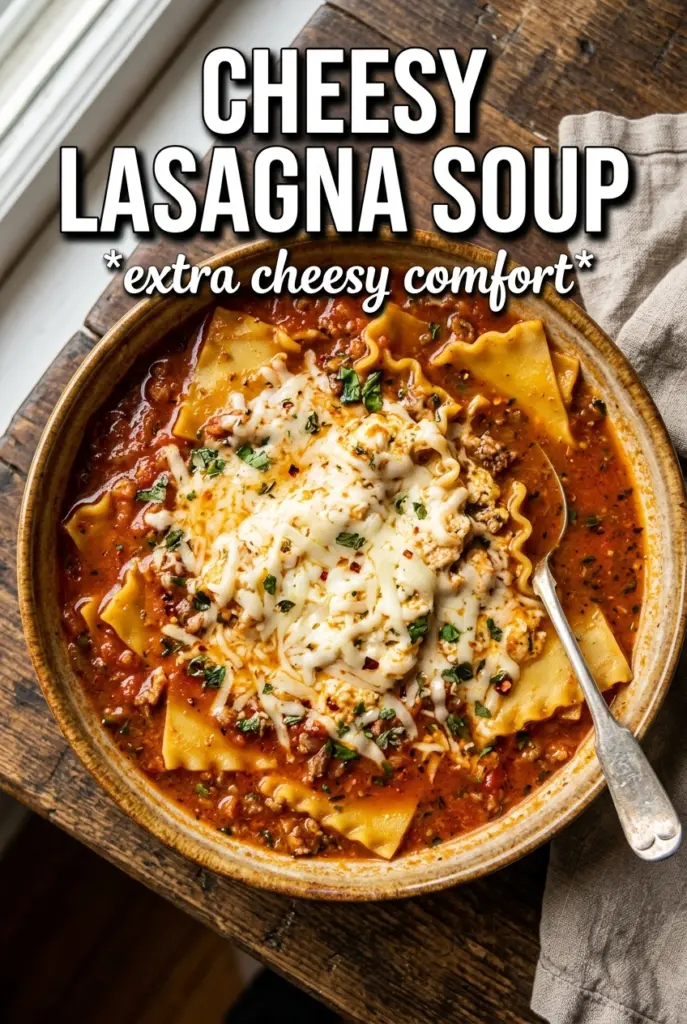
Cheesy lasagna soup gives you all the comfort of a baked pan of lasagna without the layering, waiting, or cleanup. The broth turns rich and tomato-forward, the sausage adds depth, and the noodles soften just enough to catch every bit of melted cheese. What lands in the bowl is hearty, spoonable, and tangled with the same flavors people love in classic lasagna, only much easier to pull off on a weeknight.
The trick is building the base before the noodles go in. Browning the sausage well gives you the savory foundation, and letting the tomato paste cook for a minute or two takes the sharp edge off and deepens the whole pot. The cream cheese and mozzarella go in off the heat so they melt smoothly instead of turning grainy, and the ricotta stays as a cool, creamy finish on top where it belongs.
Below, I’ve included the little details that keep the broth balanced, the noodles tender instead of mushy, and the cheese from clumping. If you’ve ever wanted lasagna flavor with half the effort, this is the version worth keeping.
The noodles stayed perfectly tender and the cheese melted into the broth instead of disappearing. I added a little extra basil on top and my husband said it tasted like lasagna in a bowl.
Save this cheesy lasagna soup for the nights when you want sausage, noodles, and three kinds of cheese in one cozy bowl.
The Broth Turns Grainy When the Cheese Goes in Too Hot
This soup can split if the dairy goes into a hard boil. Cream cheese and mozzarella need residual heat, not bubbling heat, or the soup goes from silky to streaky fast. Pulling the pot off the burner before stirring in the cheese keeps the broth smooth and gives the cheese time to melt into the tomato base instead of tightening up.
The noodles are the other place people run into trouble. They keep cooking in the hot broth even after the burner is off, so stop at tender, not soft. If you want leftovers that hold up better, cook the noodles one minute shy and let the soup finish on the table.
What Each Ingredient Is Actually Doing in This Bowl

- Italian sausage — This is the main source of savory depth. Mild or hot both work, but sausage beats ground beef here because it seasons the broth from the start. If you swap in turkey sausage, add a little extra olive oil when browning so the pot doesn’t taste lean.
- Tomato paste — A couple of tablespoons give the soup the dark, cooked tomato flavor that makes it taste like more than a quick tomato broth. Let it cook with the onions for a minute or two so it loses the raw edge. Skipping that step leaves the soup flat.
- Crushed tomatoes — These create the body of the broth without making it chunky like stew. In a pinch, use tomato sauce, but the soup will be smoother and a little less textured. If your tomatoes taste sharp, a pinch of sugar can round them out, but the sausage usually does most of that work.
- Ricotta, mozzarella, cream cheese, and parmesan — This is the lasagna effect. Cream cheese melts into the broth for body, mozzarella gives you that stretchy melt, parmesan adds salt and nuttiness, and ricotta on top keeps each bowl tasting like the real dish. Use freshly grated parmesan if you can; the pre-shredded kind doesn’t melt as cleanly.
- Broken lasagna noodles — They’re what makes the soup feel like lasagna instead of just a tomato pasta soup. Break them into rough pieces, not tiny shards, so you still get that layered texture in the bowl. Other short pasta works in a pinch, but the wide, uneven noodles are part of the charm.
Building the Pot So the Cheese Stays Creamy
Brown the sausage until the bottom of the pot is marked
Cook the sausage until it loses all pink color and picks up browned bits on the bottom of the pot. Those browned spots matter; they dissolve into the broth later and give you the deep, slow-cooked flavor this soup needs. If the sausage is steaming instead of browning, the heat is too low or the pan is crowded.
Cook the onions and tomato paste together
Add the onion and let it soften until translucent and sweet, then stir in the garlic and tomato paste. The paste should darken slightly and smell richer after a minute or two. If it sticks a little, splash in a spoonful of broth and scrape it loose rather than letting it scorch.
Simmer the noodles until just tender
Once the tomatoes, broth, seasoning, and pepper flakes are in, bring the pot to a boil, then drop it to a steady simmer before adding the noodles. The noodles should be tender with a little bite left in the center. If they overcook here, they’ll keep going in the hot broth and turn limp by the time you serve.
Finish off the heat with the cheeses
Take the pot off the burner before adding the cream cheese and half the mozzarella. Stir until the soup turns creamy and the cheese disappears into the broth. Then ladle it into bowls and top each serving with ricotta, the remaining mozzarella, parmesan, and basil so the dairy stays distinct instead of melting into one heavy layer.
How to Adapt This for a Bigger Crowd, a Lighter Bowl, or No Pork
Make it with turkey sausage
Turkey sausage works well if you want a lighter bowl, but it needs help with flavor and browning. Use the same method, then let the onion and tomato paste cook a little longer to build the savory base. The soup will taste a touch leaner, but still rich enough once the cheeses go in.
Go vegetarian with mushrooms instead of sausage
Use finely chopped cremini mushrooms and sauté them until they release their liquid and start to brown. You’ll lose the sausage seasoning, so add a little extra Italian seasoning and a pinch more salt. The result is earthier and less meaty, but still satisfying.
Make it gluten-free with gluten-free pasta
Swap in a sturdy gluten-free pasta shape and cook it just until tender, since GF noodles can break down faster in soup. Add them near the end and watch the pot closely. The broth and cheese stay the same, but the timing matters more here than with regular lasagna noodles.
Storage and Reheating
- Refrigerator: Keep for 3 to 4 days. The noodles will keep absorbing broth, so expect the soup to thicken.
- Freezer: Freeze the broth and sausage base without the noodles or dairy for the best texture. Add fresh noodles and cheese after thawing and reheating.
- Reheating: Warm it gently over low to medium-low heat, stirring often. If it boils hard, the cheese can separate and the noodles can go mushy before the center is hot.
Answers to the Questions Worth Asking
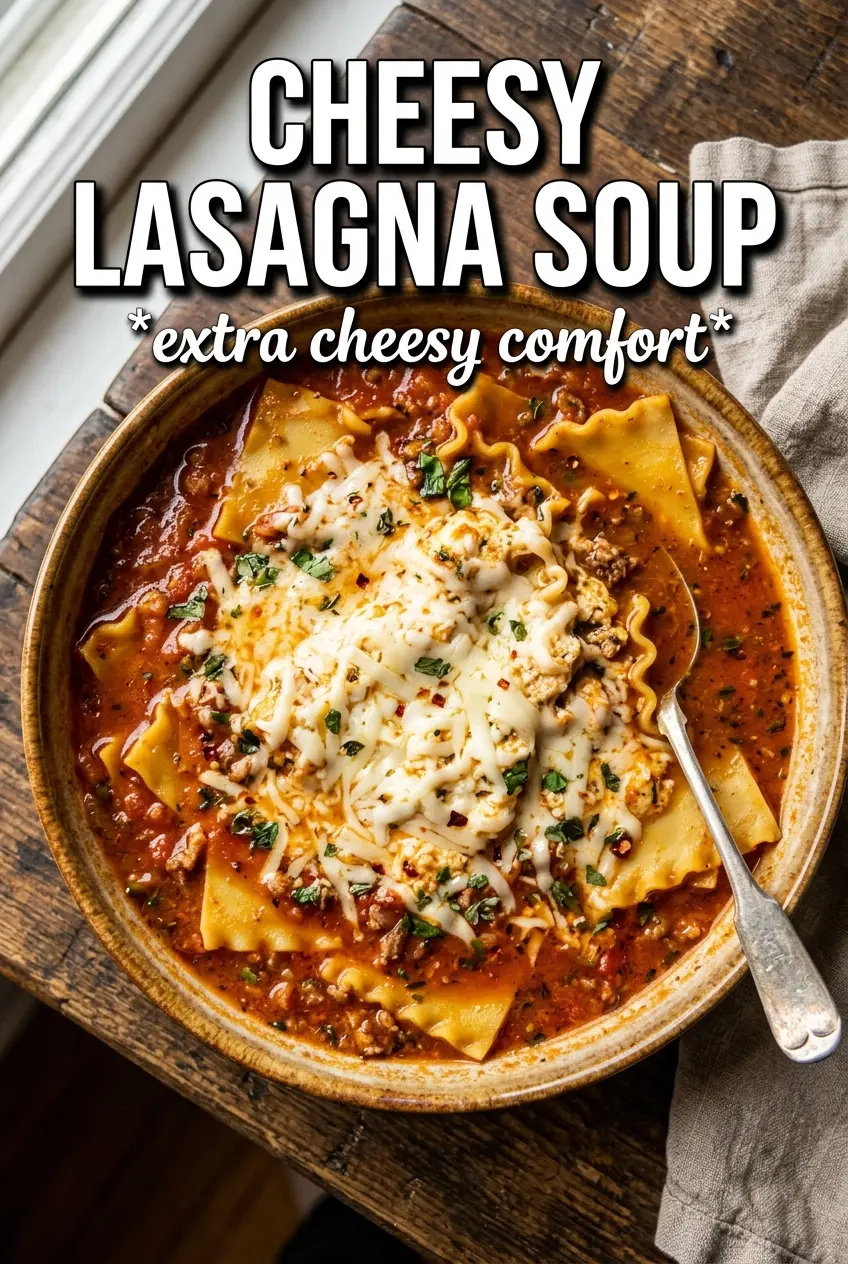
Cheesy Lasagna Soup
Ingredients
Equipment
Method
- Brown the Italian sausage in a large pot over medium-high heat, then drain excess fat.
- Sauté the diced onion for 4 minutes, then add the minced garlic and tomato paste and cook for 2 minutes.
- Add the crushed tomatoes, beef broth, Italian seasoning, and red pepper flakes and bring the mixture to a boil.
- Add the broken lasagna noodles and simmer for 10-12 minutes, stirring occasionally, until tender.
- Remove the pot from heat and stir in the cubed cream cheese and half the shredded mozzarella until melted.
- Season with salt and pepper to taste.
- Serve in bowls and top each with a spoonful of ricotta, a handful of the remaining mozzarella, and a sprinkle of parmesan.
- Garnish with fresh basil.


