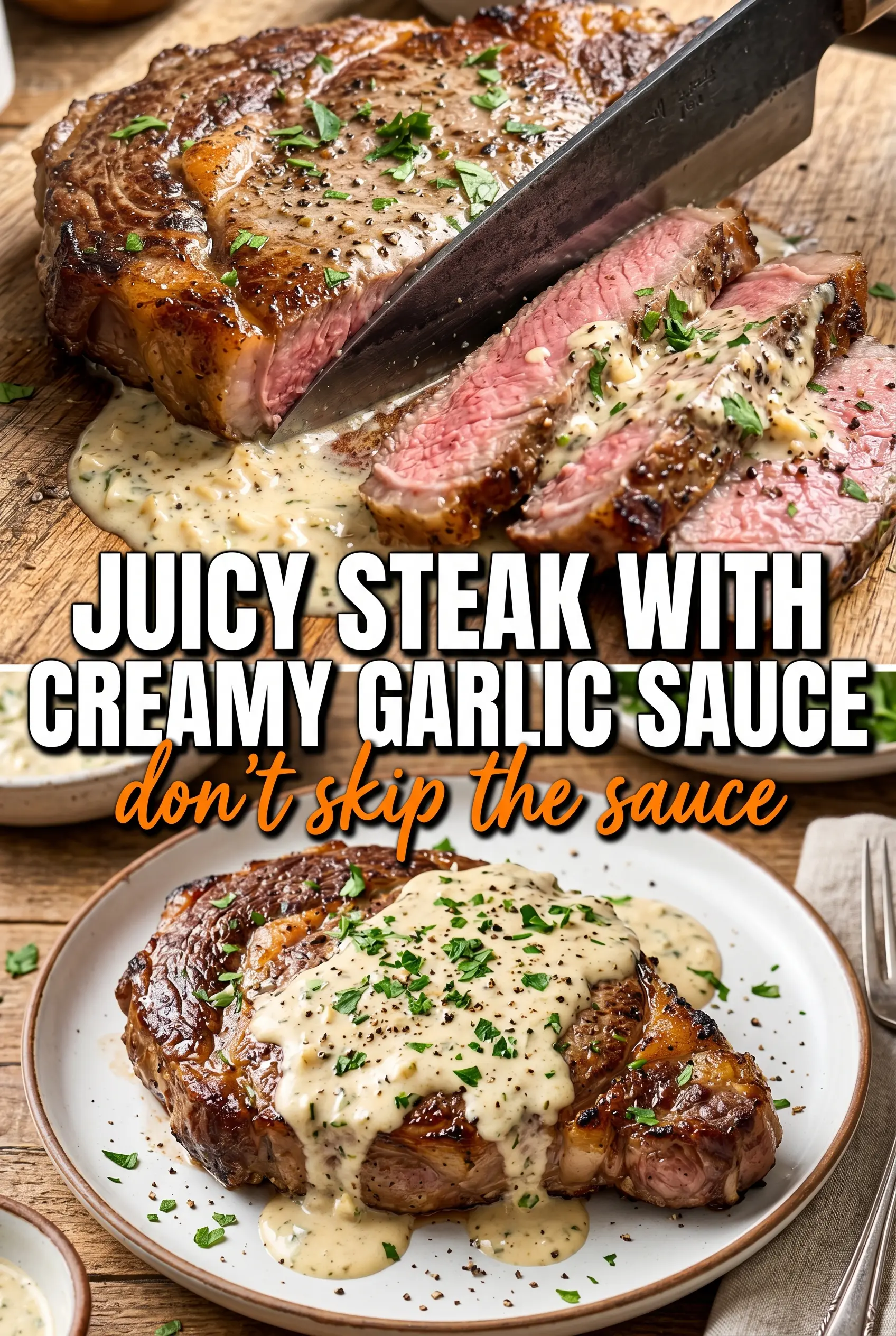

Juicy steak with creamy garlic sauce hits that sweet spot between restaurant-style and completely doable on a Tuesday night. The steak lands with a deep, salty crust and a pink, tender center, then the pan gets turned into a silky garlic cream sauce that clings to every slice instead of sliding off the plate. It feels rich without being fussy, which is exactly why it earns a repeat spot.
The trick is to treat the pan like part of the recipe, not just a place to cook the meat. A ripping-hot cast iron skillet builds the crust fast, and the final butter baste gives the steak that glossy finish you usually only get from a steakhouse. Then the same browned bits in the pan become the base for the sauce, so nothing tastes flat or one-note.
Below, I’ll walk through the part that matters most: how to keep the steak juicy, how to keep the sauce smooth, and what to change if you want to use a different cut or make the dish work with what’s already in your kitchen.
The crust came out deep and brown, and the sauce thickened up perfectly without turning greasy. I used ribeye, and the garlic cream with thyme was exactly the kind of thing that makes steak feel special.
Save this ribeye with creamy garlic sauce for the night you want a steakhouse-style dinner with a pan sauce that tastes like it came from a restaurant.
The Part Most People Rush: Getting the Sear Before the Sauce
A good steak sauce can’t rescue a weak crust. If the pan isn’t hot enough, the steak steams, the surface stays pale, and the juices leak into the skillet instead of staying in the meat. Cast iron helps because it holds heat steady, which gives you that dark, even browning in just a few minutes per side.
The other mistake is moving the steak too soon. Once it hits the pan, leave it alone long enough for the surface to form a crust that releases naturally. If it sticks hard, it needs another minute. When the steak lifts cleanly and the edges look browned and slightly crisp, you’re in the right place.
- Ribeye or NY strip — Both work well, but ribeye gives you a little more richness because of the fat marbling. NY strip is leaner and still sears beautifully.
- Vegetable oil — This is the right fat for the initial sear because it handles high heat without smoking too early. Olive oil isn’t ideal here.
- Butter — Split it between the sear and the sauce. The first bit adds flavor during basting; the second builds the garlic sauce.
- Heavy cream — This is what gives the sauce body. Half-and-half will make a thinner sauce, and it’s more likely to stay loose instead of coating the steak.
- Parmesan — Use finely grated parmesan so it melts smoothly. Coarse shreds can turn the sauce grainy or clumpy.
- Beef broth — Don’t skip this. It loosens the browned bits in the pan and keeps the sauce tasting like steak instead of just cream.
What Each Ingredient Is Doing in the Pan
The garlic is there for aroma, but it needs a short cook time or it turns bitter and harsh. One minute in butter is enough; once it smells sweet and toasted, move straight to the broth. That quick change protects the sauce from tasting burned.
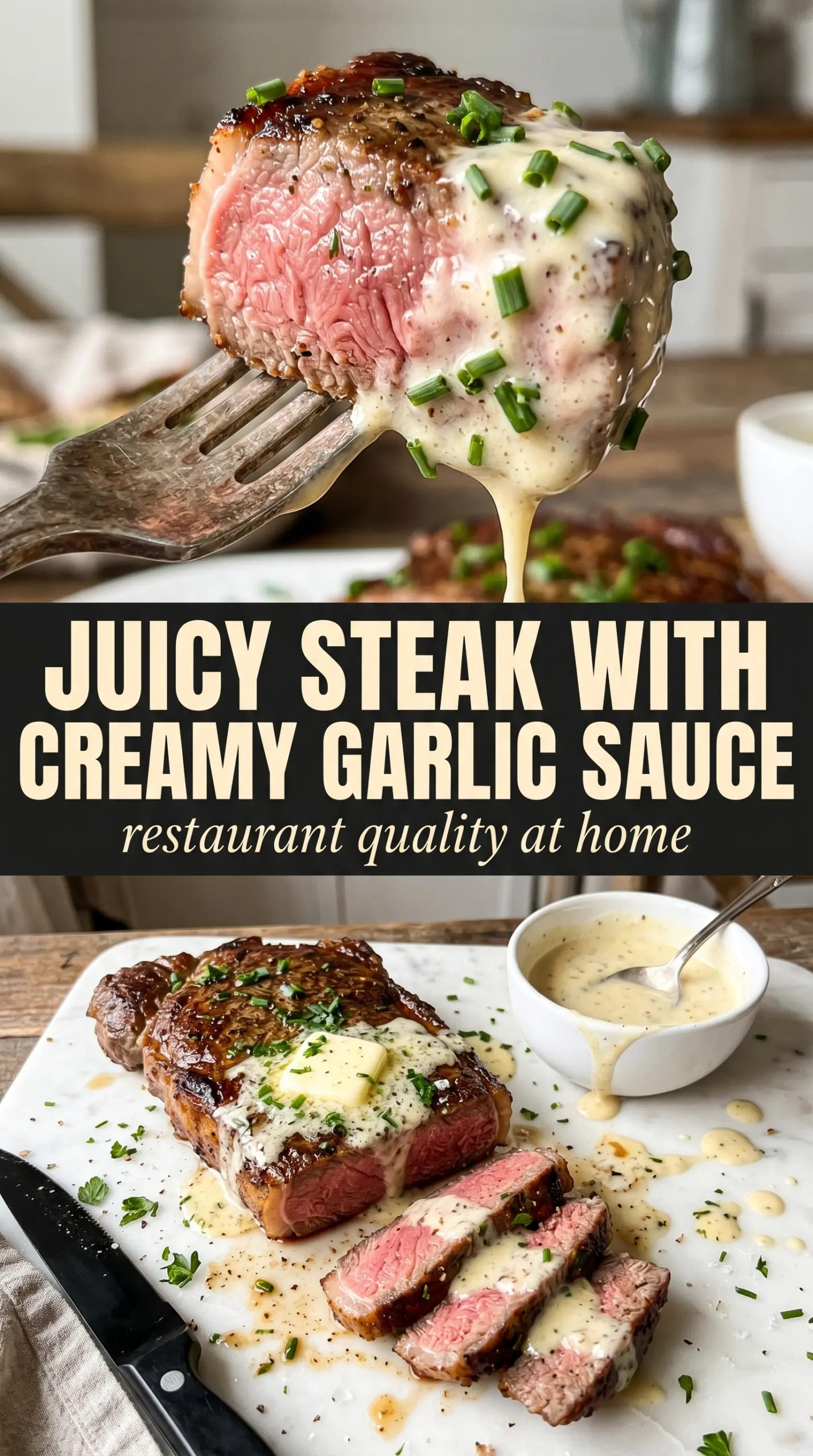
Fresh thyme adds a clean, savory note that cuts through the cream. Dried thyme will work in a pinch, but use less because it reads stronger and a little woodier. The final sauce should taste balanced: rich from the cream, savory from the broth and parmesan, and just sharp enough from the garlic to keep every bite interesting.
How to Keep the Sauce Smooth After the Steak Comes Out
Season Early and Let the Meat Relax
Salt and pepper the steaks on all sides, then let them sit at room temperature for about 30 minutes. That does two useful things: it seasons the meat deeper than the surface, and it helps the steak cook more evenly so the center doesn’t lag far behind the crust. If you season at the last second, you’ll still get a good sear, but the seasoning stays more on top than in the meat itself.
Build a Hard Sear, Then Finish with Butter
Heat the cast iron until it’s smoking before the oil goes in. Lay the steaks down and leave them alone for 3 to 4 minutes per side for medium-rare, then add 2 tablespoons of butter in the last minute and spoon it over the top as it foams. If the butter starts burning black, the pan is too hot or you waited too long to add it; the goal is browned and nutty, not acrid.
Rest the Steak Before the Sauce Starts
Move the steaks to a plate and tent them loosely with foil for 5 minutes. This isn’t dead time; it’s when the juices settle back into the meat so they don’t flood the cutting board the second you slice it. Use the same pan for the sauce and don’t wipe it out. Those browned bits are the backbone of the whole dish.
Reduce First, Then Add the Cream
Cook the garlic in the remaining butter over medium heat for just 1 minute, then add the beef broth and let it reduce by half. That reduction concentrates the flavor and keeps the sauce from tasting thin or watery. Add the cream, parmesan, and thyme after that, then simmer until the sauce lightly coats the back of a spoon. If it looks broken or oily, the heat was too high; lower it and whisk gently until it comes back together.
Three Smart Ways to Adjust This Steak Dinner
Use NY Strip Instead of Ribeye
NY strip gives you a firmer, leaner bite with a cleaner beef flavor. It won’t have quite as much built-in richness as ribeye, so the creamy garlic sauce matters even more here. Keep the same sear time if the steaks are still about 1 inch thick.
Make It Dairy-Free Without Losing the Pan Sauce
Use a dairy-free butter and a full-fat unsweetened cream alternative, then skip the parmesan or use a dairy-free parmesan substitute. The sauce will be a little less lush and a touch less savory, but the garlic and beef broth still give you a good pan sauce. Keep the heat low so the substitute cream doesn’t separate.