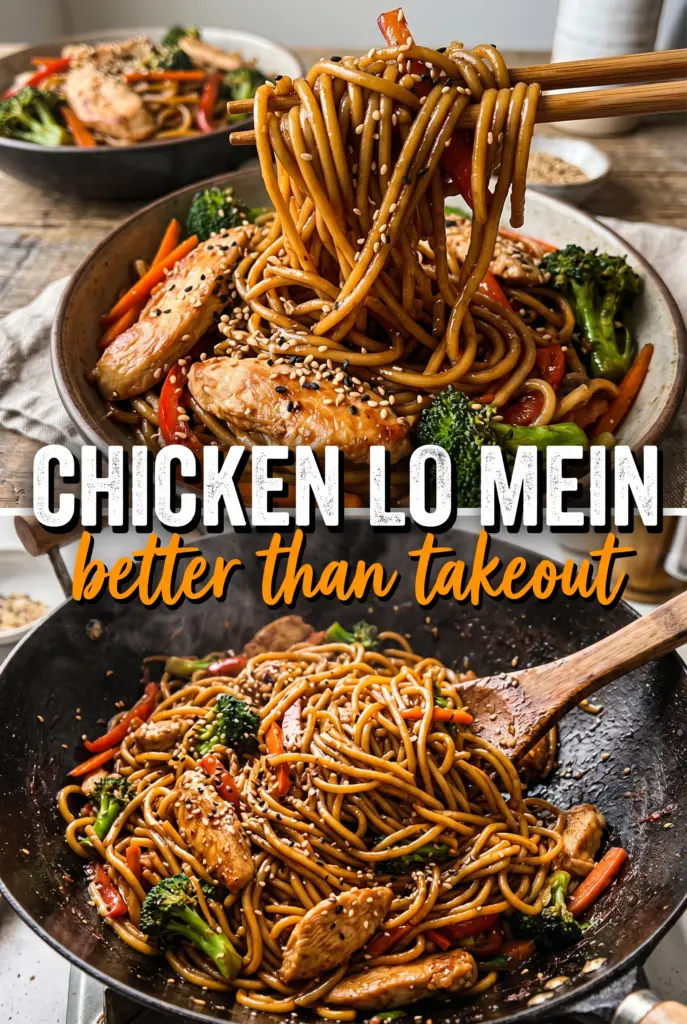
Glossy chicken lo mein has a way of disappearing fast because the noodles stay slick, the chicken stays tender, and the vegetables keep just enough bite to keep every forkful interesting. The sauce clings instead of pooling at the bottom of the bowl, which is what turns a simple stir-fry into something that tastes like you meant it.
The trick is getting everything ready before the pan heats up. Once the noodles go in, the dish moves quickly, and there isn’t time to stop and mince garlic or measure soy sauce. A hot wok or skillet gives the chicken a quick sear, then the garlic, ginger, and vegetables pick up flavor from the same pan before the sauce ties everything together.
Below you’ll find the one step that keeps the noodles from turning heavy, plus a few swaps that still give you that takeout-style finish at home.
The sauce coated every noodle without getting gummy, and the chicken stayed tender even after tossing everything together at the end. I used cabbage instead of bok choy and it still tasted like the lo mein we order from our favorite restaurant.
Keep this chicken lo mein in your back pocket for the nights when you want glossy noodles, tender chicken, and a fast soy-sesame stir-fry that tastes better than takeout.
The Move That Keeps the Noodles Slick Instead of Heavy
Lo mein goes wrong when the pan isn’t hot enough or the noodles sit around too long after the sauce goes in. You end up with soft noodles that drink in the sauce instead of wearing it, and the whole dish turns muddy. High heat changes that. It keeps the vegetables crisp-tender, drives off extra moisture fast, and helps the sauce cling in a thin glossy layer.
The other trap is overloading the wok. If your skillet is crowded, the chicken steams and the vegetables leak water before they get any color. Cook the chicken first, pull it out, then build the rest of the dish in stages. That short bit of organization is what gives you the deep savory finish people expect from good lo mein.
What Each Part of the Sauce Is Doing
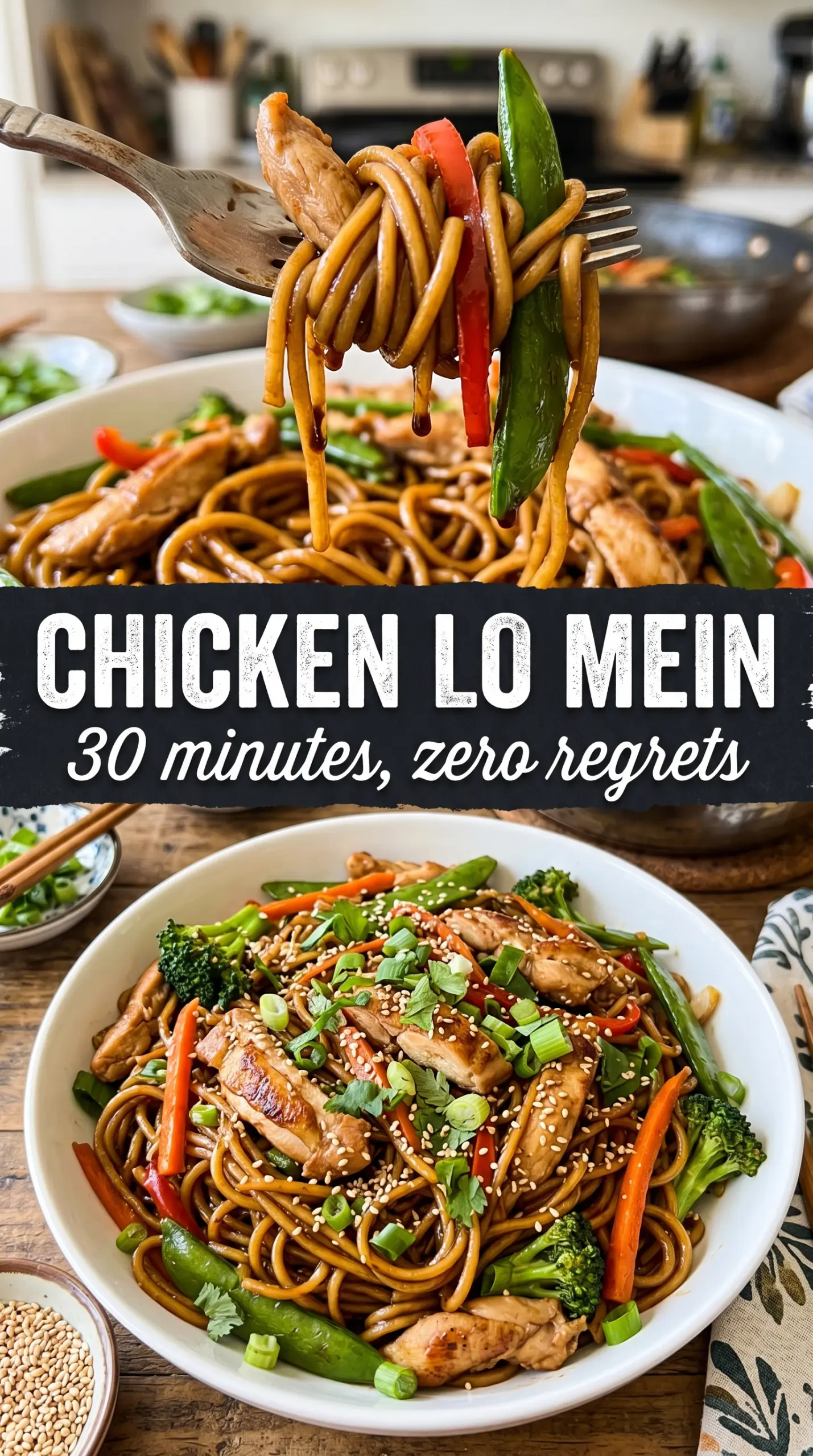
- Lo mein noodles or spaghetti — Traditional lo mein noodles have a springier bite, but spaghetti works fine if that’s what you have. Cook either one until just tender, then drain it well so the sauce can coat the noodles instead of sliding off.
- Chicken breast — Slicing it thin matters more than the cut itself. Thin strips cook fast and stay juicy as long as you pull them as soon as they turn opaque; thick chunks take longer and dry out before the vegetables are ready.
- Sesame oil — This does more than add aroma at the end. A little in the sauce and a final drizzle give the dish that toasted, nutty finish you notice immediately. Don’t swap in plain oil here.
- Oyster sauce and hoisin sauce — These two carry the depth and body. Soy sauce gives salt, but oyster sauce adds savoriness and hoisin brings a little sweet molasses-like richness. If you need a substitute for oyster sauce, use extra hoisin with a small splash of soy sauce, knowing the sauce will be a little sweeter and less round.
- Bok choy, carrots, and bean sprouts — This combination gives you crunch, sweetness, and freshness in the same bite. Cabbage can stand in for bok choy, and snow peas work well in place of bean sprouts if you want a firmer vegetable that won’t soften as much.
How to Build Chicken Lo Mein in the Right Order
Mix the Sauce Before the Pan Heats Up
Whisk the soy sauce, oyster sauce, hoisin, brown sugar, and sesame oil together before you start cooking. The sauce needs to be ready the second the noodles hit the wok, because once the garlic and ginger are in the pan, everything moves quickly. If the sauce sits unmixed, the sugar can clump and the last pour won’t coat evenly. A smooth sauce is what gives the finished noodles that even, glossy sheen.
Sear the Chicken Fast and Pull It Out
Heat the vegetable oil until it shimmers, then add the chicken in a single layer. Let it cook without fussing for a minute or two so the outside picks up a little color before you stir. When the chicken is cooked through and no longer pink, get it out of the pan. If you leave it in while the vegetables cook, it keeps cooking and turns chalky by the time the lo mein is done.
Stir-Fry the Vegetables in the Pan Drippings
Add the garlic and ginger for just 30 seconds, enough for the aroma to bloom without browning. Then toss in the bok choy, carrots, and bean sprouts and keep them moving. You want the bok choy to soften at the stems while the bean sprouts stay crisp. If the garlic starts to darken before the vegetables go in, the heat is too high or the pan is too dry.
Toss Everything Until the Sauce Clings
Return the chicken and noodles to the wok, pour the sauce over the top, and toss constantly over high heat for about 2 minutes. The noodles should go from pale and loose to glossy and evenly coated, and the sauce should disappear into the dish instead of puddling at the bottom. Finish with the remaining sesame oil, green onions, and sesame seeds. Serve it right away, because lo mein loses its best texture the longer it sits.
How to Adjust This Lo Mein for What You Have on Hand
Make It Gluten-Free
Use gluten-free spaghetti or rice noodles and swap in gluten-free soy sauce or tamari. Check your oyster sauce too, since many brands contain wheat. The noodles will be a little softer than wheat-based lo mein, so toss them gently and serve as soon as they’re coated.
Make It Chicken-Free
Swap in thinly sliced tofu, shrimp, or sliced mushrooms. Tofu needs to be pressed and browned first so it doesn’t fall apart in the sauce. Shrimp cooks even faster than chicken, so add it near the end and pull the pan off the heat as soon as it turns pink and opaque.
Use Different Vegetables Without Losing the Balance
Cabbage, snap peas, broccoli slaw, bell peppers, and mushrooms all work well here. Keep one crisp vegetable and one softer vegetable in the mix so the bowl doesn’t feel flat. If you use watery vegetables like mushrooms, cook them first so the excess liquid evaporates before the sauce goes in.
Storage and Reheating
- Refrigerator: Store leftovers in an airtight container for up to 3 days. The noodles will absorb more sauce as they sit, so they won’t look quite as glossy the next day.
- Freezer: This freezes, but the vegetables lose their crispness. If you want to freeze it, do it in individual portions and expect a softer texture after thawing.
- Reheating: Reheat in a skillet over medium heat with a splash of water to loosen the sauce. The biggest mistake is blasting it in the microwave until the noodles dry out on the edges before the center is hot.
Questions I Get Asked About This Recipe
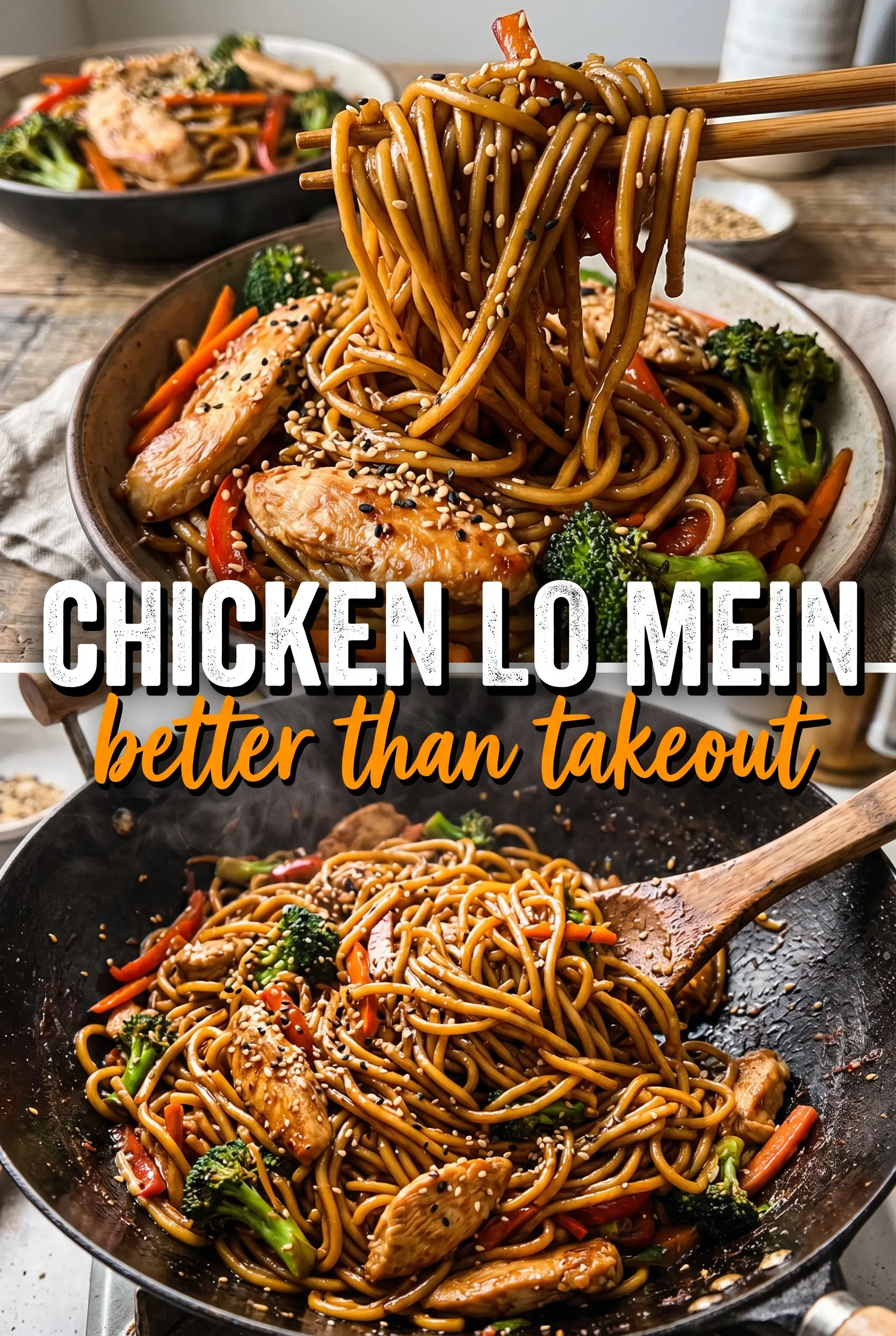
Chicken Lo Mein
Ingredients
Equipment
Method
- Whisk the soy sauce, oyster sauce, hoisin sauce, brown sugar, and 1 teaspoon sesame oil together, then set aside while you cook the stir-fry.
- Keep the sauce at room temperature so it pours smoothly when it’s time to toss the noodles.
- Heat the vegetable oil in a wok or large skillet over high heat, then add the sliced chicken and stir-fry for 3–4 minutes until cooked through.
- Remove the chicken to a plate or bowl so it doesn’t overcook while you stir-fry the vegetables.
- In the same wok, add any remaining oil and stir-fry the garlic and ginger for 30 seconds over high heat until fragrant.
- Add bok choy (or cabbage), shredded carrots, and bean sprouts, then cook for 3 minutes, stirring so vegetables stay crisp-tender.
- Return the chicken to the wok, add the cooked lo mein noodles (or spaghetti), and pour the sauce over everything.
- Toss over high heat for 2 minutes until the noodles are evenly coated and heated through, with a glossy sheen.
- Drizzle with the remaining 1 tablespoon sesame oil, then top with green onions and sesame seeds and serve immediately.