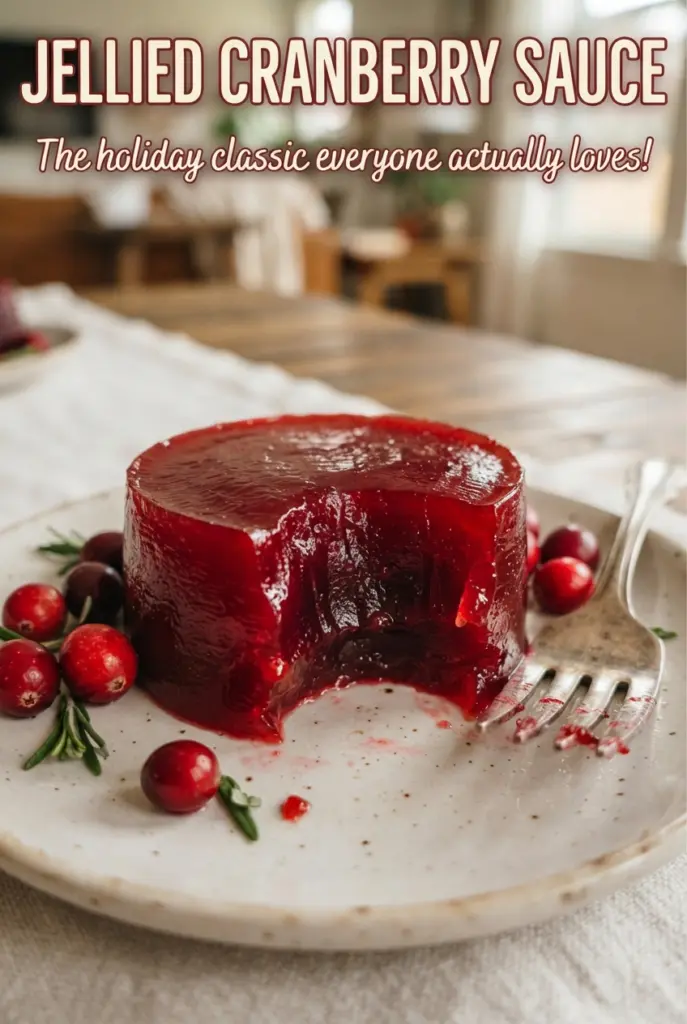
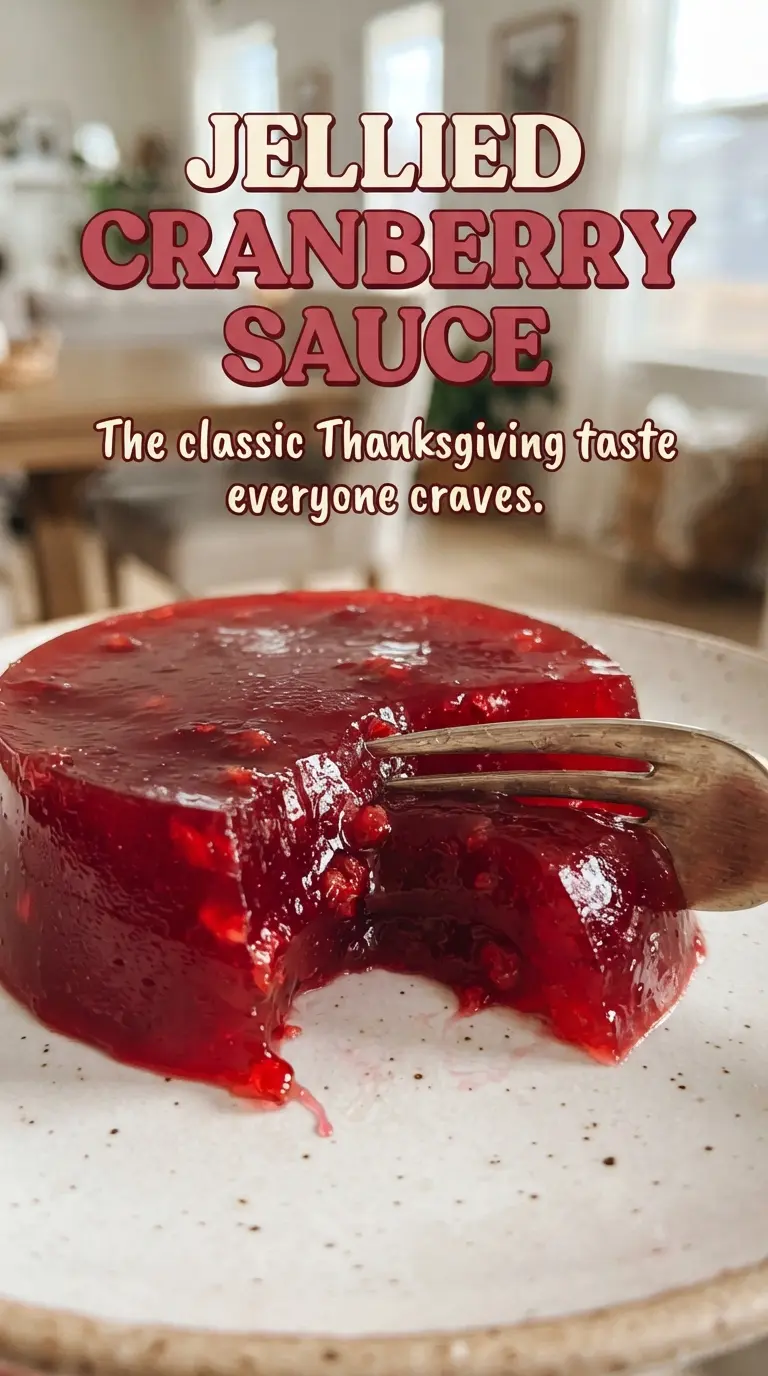
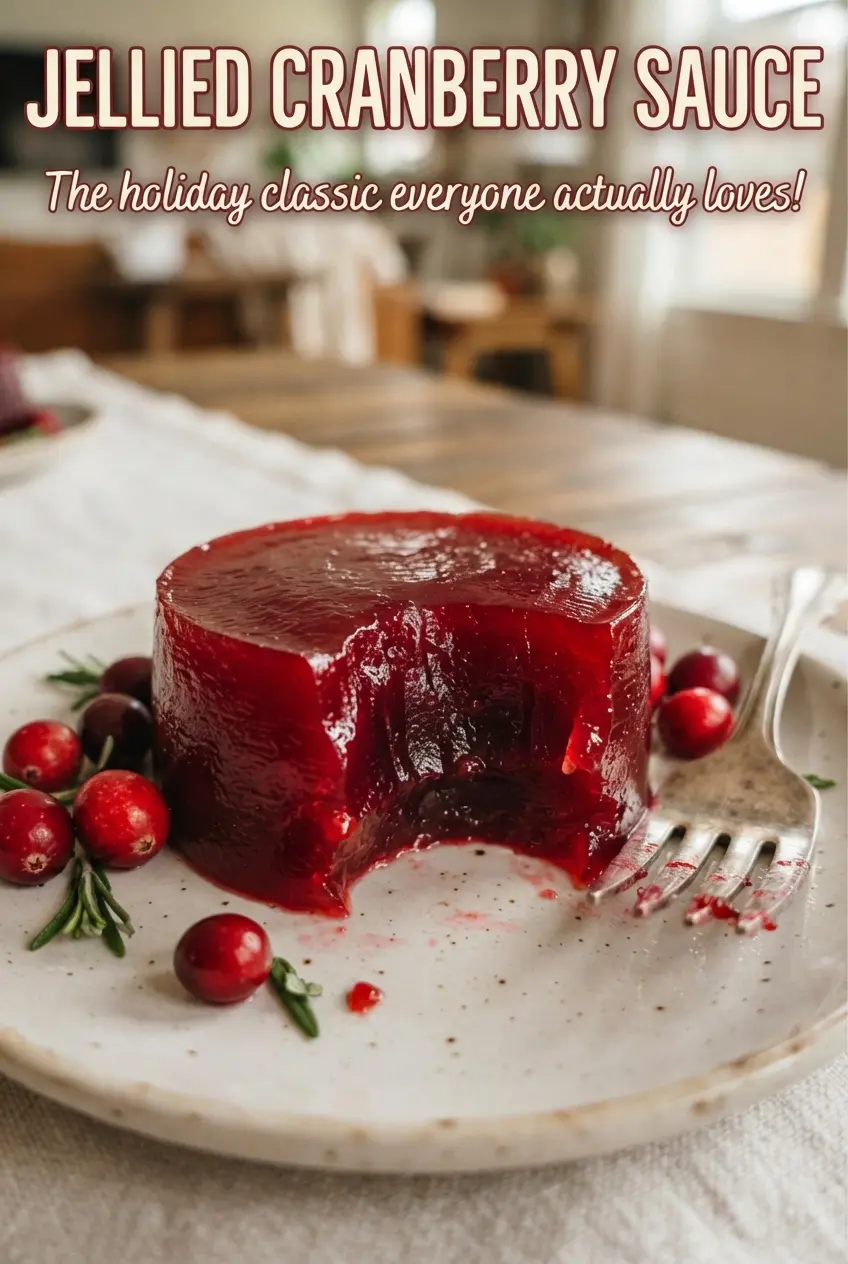
Jellied cranberry sauce sets up into a glossy, clean-sliced mold with a bright cranberry bite that lands right between tart and sweet. The texture is what makes it worth making from scratch: smooth, jewel-like, and firm enough to unmold in neat rounds without losing that deep ruby shine.
The key is cooking the berries until every skin bursts, then pushing the puree through a fine-mesh strainer until the mixture turns silky. That extra bit of simmering after straining matters too; it concentrates the pectin enough for the sauce to slice instead of slump. Lemon juice sharpens the flavor, and the pinch of salt keeps the sweetness from tasting flat.
Below, you’ll find the small details that matter most for getting a clean release from the mold, the best way to strain without wasting pulp, and a few ways to adjust the sweetness or make it ahead without losing that perfect set.
I’d always had cranberry sauce that slid all over the plate, but this set up beautifully after chilling overnight. The texture was smooth enough to slice and the lemon kept it from tasting too sweet.
Save this jellied cranberry sauce for the holiday table when you want clean slices, a glossy finish, and that old-school molded look.
The Trick to a Sliceable Cranberry Mold Is Not Overcooking It
With jellied cranberry sauce, the common mistake is treating it like jam and cooking it down until it seems thick in the pot. That leads to a sauce that can turn stiff or sticky after chilling, with a dull texture instead of a clean, tender slice. The set comes from the cranberry pectin, and you need enough heat to release it without boiling away all the moisture.
The other thing that matters is the strain. If you rush that step and leave skins behind, the final texture turns rough and loose around the edges instead of smooth through the center. Pressing the puree through the sieve with a spoon or spatula is worth the effort because it gives you that classic molded texture without any graininess.
What the Cranberries, Sugar, and Lemon Are Really Doing Here
- Fresh cranberries — These bring the natural pectin that makes the sauce set. Frozen cranberries work too, straight from frozen, and you don’t need to thaw them first.
- Sugar — It balances the sharp cranberry bite and helps the finished sauce hold a smooth, even slice. Cutting it much lower changes the set and gives you a tarter, softer result.
- Lemon juice — This wakes up the flavor and keeps the sauce from tasting heavy. Bottled lemon juice works in a pinch, but fresh is cleaner and brighter.
- Fine-mesh strainer — Not an ingredient, but it matters more than almost anything else here. A coarse sieve leaves too much skin behind and you lose the polished texture this recipe is known for.
Cooking the Berries Until the Pectin Does Its Job
Boiling Until Every Berry Bursts
Combine the cranberries, sugar, and water in a saucepan and bring it all to a full boil, then keep it simmering until the berries split open and soften completely. You want the mixture to look loose and saucy before straining, not jammy. If a handful of berries stay intact, cook a minute or two longer; unburst berries leave behind too much liquid and a weaker set.
Pressing the Puree Through the Strainer
Set a fine-mesh strainer over a bowl and work the mixture through with a spoon or silicone spatula, scraping often. Keep going until most of the pulp is pushed through and only the skins remain. If you don’t press hard enough, you lose body and flavor, because the thickest part of the cranberry puree is sitting right under the skins.
Thickening the Strained Base
Return the smooth puree to the pot with the lemon juice and salt, then boil it for another 3 to 4 minutes while stirring. This is the stage that tightens the sauce enough to set firmly after chilling. Pull it off the heat when it looks glossy and slightly thickened; if it reduces too far, the molded sauce can turn dense instead of cleanly sliceable.
Chilling Into a Clean-Release Mold
Pour the hot mixture into a lightly oiled mold, loaf pan, or even a clean can, then let it chill undisturbed for at least 6 hours. Don’t try to unmold it early, even if the top looks set, because the center needs time to firm all the way through. A brief dip of the mold in warm water and a thin knife around the edge help it release without tearing.
Ways to Adjust the Sweetness, Shape, or Make-Ahead Timing
Less-Sweet Jellied Cranberry Sauce
You can reduce the sugar a little if you like a sharper cranberry finish, but don’t cut it dramatically. Sugar isn’t just sweetening here; it helps the sauce set with a smooth, sliceable texture. Too little sugar gives you a softer mold that can slump when sliced.
Using Frozen Cranberries
Frozen cranberries work just as well as fresh and can go straight into the pot. Expect them to take a minute or two longer to burst, but the final texture is the same. This is the easiest swap when cranberries are out of season or the fresh bag looks tired.
Shaping It in a Loaf Pan Instead of a Mold
A lightly oiled loaf pan gives you the easiest unmolding if you don’t have a decorative mold. The shape will be more rustic, but the slices hold just as well. Line the pan with a thin slick of oil, not parchment, because the smooth sides help the cranberry loaf release cleanly.
Storage and Reheating
- Refrigerator: Store covered for up to 1 week. The texture firms a little more after the first day, which is exactly what you want for clean slicing.
- Freezer: Freezing isn’t ideal. The set can turn watery after thawing, so this is best made fresh and kept chilled instead.
- Reheating: No reheating needed. Serve it cold or at cool room temperature; warming it breaks the clean molded texture and softens the edges.
Answers to the Questions Worth Asking
Jellied Cranberry Sauce
Ingredients
Equipment
Method
- In a pot, bring fresh cranberries, sugar, and water to a boil, stirring until the sugar dissolves and the mixture starts rolling. Simmer for 10 minutes until all the berries burst, with steady bubbles visible across the surface.
- Pour the hot mixture through a fine-mesh strainer and press the pulp through, scraping the underside of the strainer to push all the puree through. Discard the skins and keep the strained puree.
- Return the strained puree to the pot and stir in lemon juice and salt. Bring to a boil and cook for 3-4 minutes, stirring, until glossy and slightly thickened.
- Pour the hot cranberry mixture into a lightly oiled mold, loaf pan, or clean can, and smooth the top. Chill at least 6 hours or overnight until firm, with the surface set and able to hold its shape.
- Run a knife around the edge of the mold, invert onto a plate, and release the jellied cranberry sauce. Slice into rounds with clean, defined edges.