
Make-ahead cider and sage gravy gives you a glossy, deeply savory sauce with enough brightness to keep the whole thing from tasting heavy. The roasted turkey wings build a stock that tastes fuller than a quick pan gravy, and the apple cider adds a gentle sweetness that rounds out the sage without turning the gravy into something fruity. When it’s done right, it pours in a smooth ribbon and settles into a velvety coat over turkey, mashed potatoes, or biscuits.
The key is taking the time to brown the turkey and vegetables hard enough to get color before the simmer starts. That roast-and-reduce combination gives you body and depth, while the butter-and-flour roux keeps the finished gravy stable enough to make ahead and reheat without turning thin or greasy. A small splash of cider vinegar at the end sharpens the flavor just enough to wake everything up.
You’ll find the exact roasting cues, the easiest way to keep the gravy smooth, and a few smart swaps below if you need to work around what’s in your kitchen. This is the kind of gravy that pays you back for planning ahead.
The gravy thickened up beautifully and stayed smooth after reheating, and the cider gave it a deeper flavor that went perfectly with the sage.
Save this make-ahead cider and sage gravy for turkey dinners, holiday spreads, and any meal that needs a smooth, glossy pan-worthy sauce.
The Roast That Gives This Gravy Its Backbone
The biggest mistake people make with make-ahead gravy is starting with pale drippings and expecting the stovetop to fix it. It won’t. This recipe gets its depth from roasting the turkey wings, onion, carrots, and celery until the edges are deeply browned, because that’s where the savory flavor lives. If the pan looks a little dark at the bottom, that’s a good sign; those browned bits dissolve into the stock and give the gravy its darker color and fuller taste.
The simmer matters just as much. Letting the roasted turkey and vegetables simmer in broth and cider pulls the flavor out of the pan and into the liquid you’ll actually use. Strain it well, then build the roux separately so you control the texture instead of ending up with a thin, muddy gravy. If your gravy ever tastes flat, it usually means the stock wasn’t reduced enough or the acid was added too early.
What the Butter, Flour, and Cider Are Each Doing Here

- Turkey wings or drumsticks — These give you the roasted turkey flavor that boxed broth can’t match. Wings are especially good because they have enough connective tissue to enrich the stock. If you only have drumsticks, use them; the flavor is still deep, just a little meatier.
- Apple cider — Use regular cider, not cider vinegar and not sweetened sparkling cider. The natural sweetness softens the roasted edges and plays well with sage. If you need a substitute, unsweetened apple juice works, but the flavor is cleaner and less rounded.
- Butter and flour — This roux is what keeps the gravy stable after chilling and reheating. Cook it until it smells nutty and turns golden brown, not blond; that extra color prevents a raw flour taste and gives the gravy a slightly toasted backbone.
- Fresh sage and thyme — Fresh herbs matter here because they perfume the butter before the stock goes in. Dried sage can work in a pinch, but use less and let it bloom in the butter so it doesn’t taste dusty.
- Apple cider vinegar — This is the finishing touch that keeps the gravy from tasting heavy. Stir it in at the end, after the heat is lowered, so the flavor stays bright instead of sharp.
Building the Gravy So It Stays Smooth After Chilling
Roasting for Color and Depth
Spread the turkey pieces and vegetables out in a single layer and roast until they’re deeply browned, not just warmed through. You want dark edges and a sticky, caramelized look on the onions and celery. If the pan is crowded, the vegetables will steam and the stock will taste thin, so use a larger pan if needed. A deeper roast here means less work later on the stove.
Simmering the Stock
Move the roasted mixture to a pot, add the broth and cider, and simmer long enough for the liquid to take on a tawny color and a savory smell. Keep the heat low enough that it barely bubbles; a hard boil can make the broth cloudy and aggressive. Strain carefully so you’re left with a clean, concentrated stock. Pressing too hard on the solids can push bitter bits into the liquid, so let gravity do most of the work.
Cooking the Roux and Thickening
Melt the butter, add the sage and thyme, then whisk in the flour and cook until the mixture looks like wet sand and turns golden. That cooked roux is what gives the gravy its body. Whisk in the stock gradually so the sauce stays smooth; dumping it in all at once can leave you with lumps that are harder to fix later. If the gravy looks too thick before it simmers, don’t panic — it loosens slightly as it heats and sets up again as it cools.
Finishing and Seasoning
Let the gravy simmer until it coats a spoon and leaves a clean line when you drag a finger through it. Stir in the vinegar at the end, then season with salt and pepper after you’ve tasted it, because reduced stock can change the salt level fast. If it tastes flat, it usually needs either a little more salt or a touch more acid, not more herbs. This final adjustment is what makes it taste finished instead of merely cooked.
How to Adapt This Gravy for Different Tables
Use chicken instead of turkey
Chicken wings or drumsticks work well if turkey isn’t available. The gravy will be a little lighter and less intense, but the cider and sage still give it enough depth to feel special. Roast the chicken pieces just as dark as you would the turkey so the flavor doesn’t come up flat.
Make it gluten-free
Swap the flour for a gluten-free all-purpose blend that contains a starch base, then cook it into the butter the same way. The texture will still thicken, though it may set a little softer after chilling. Whisk well while reheating, since gluten-free thickeners can tighten unevenly if they’re rushed.
Go dairy-free
Use a neutral plant-based butter and keep the roux moving so it doesn’t scorch. The flavor won’t be quite as rich as classic butter, but the cider, roasted turkey, and herbs still carry the gravy. Choose an unsalted dairy-free butter if possible so you can control the seasoning at the end.
Storage and Reheating
- Refrigerator: Store covered for up to 3 days. It will thicken as it chills, which is exactly what you want.
- Freezer: It freezes well for up to 2 months. Cool it completely first, then freeze in a sealed container with a little space at the top for expansion.
- Reheating: Warm it over medium-low heat and whisk often until smooth again. If it seems too thick, loosen it with a splash of broth or water; boiling it hard can make it split or turn gluey.
Answers to the Questions Worth Asking
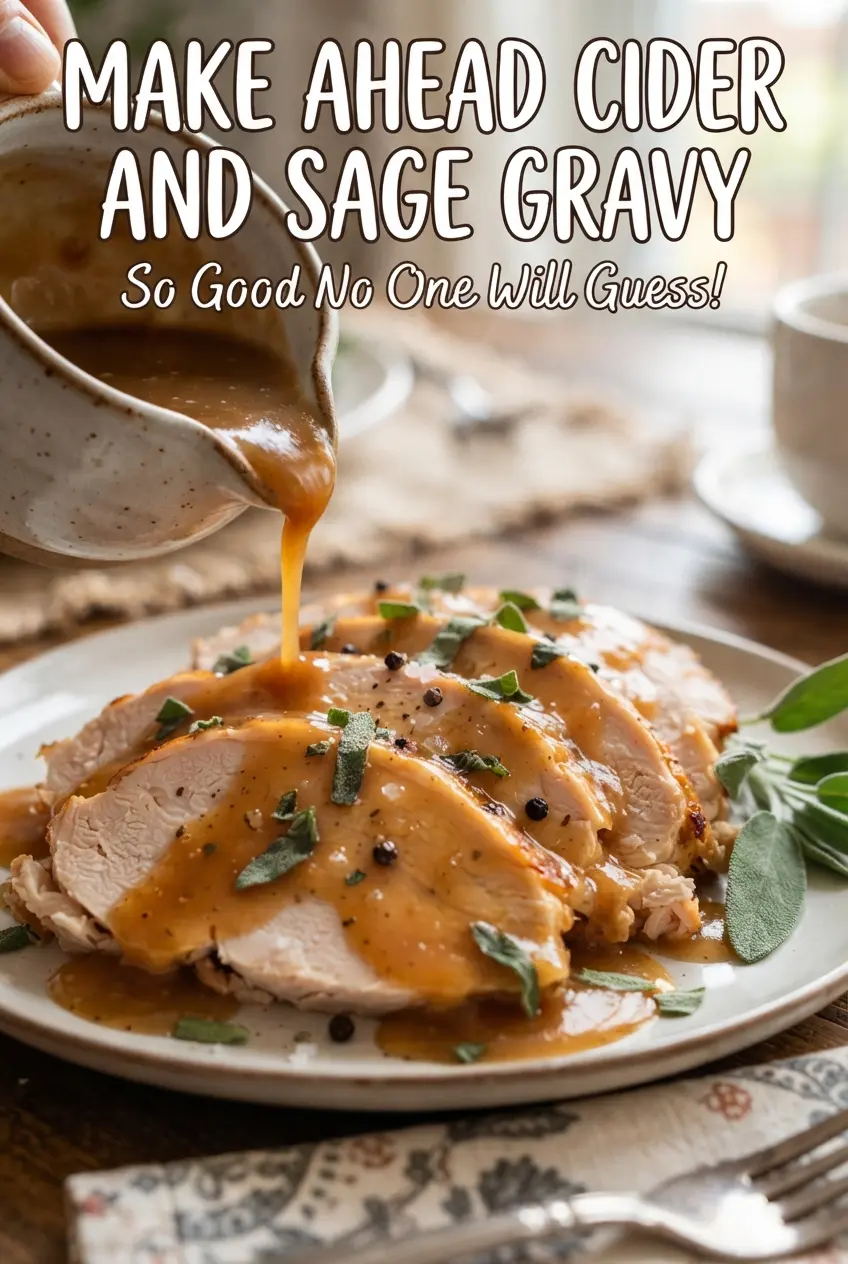
Make Ahead Cider and Sage Gravy
Ingredients
Equipment
Method
- Preheat oven to 425F, then toss turkey wings, onion, carrots, and celery with olive oil. Spread on a sheet pan and roast 45 minutes until deeply browned.
- Transfer the roasted turkey and vegetables to a pot and add the chicken broth and apple cider. Simmer 30 minutes, then strain and keep the stock.
- Melt butter in a saucepan over medium heat, then add sage and thyme and cook for 1 minute. Stir until fragrant, without browning the herbs.
- Whisk in all-purpose flour and cook 3-4 minutes until the roux turns golden brown. Whisk constantly to prevent scorching.
- Gradually whisk the strained stock into the roux, then simmer 8-10 minutes until thick and smooth. Keep whisking as it bubbles to remove lumps.
- Stir in apple cider vinegar and season with salt and pepper. Taste and adjust before cooling.
- Cool the gravy to room temperature, then refrigerate up to 3 days. Reheat over medium heat, whisking in pan drippings if you have them.