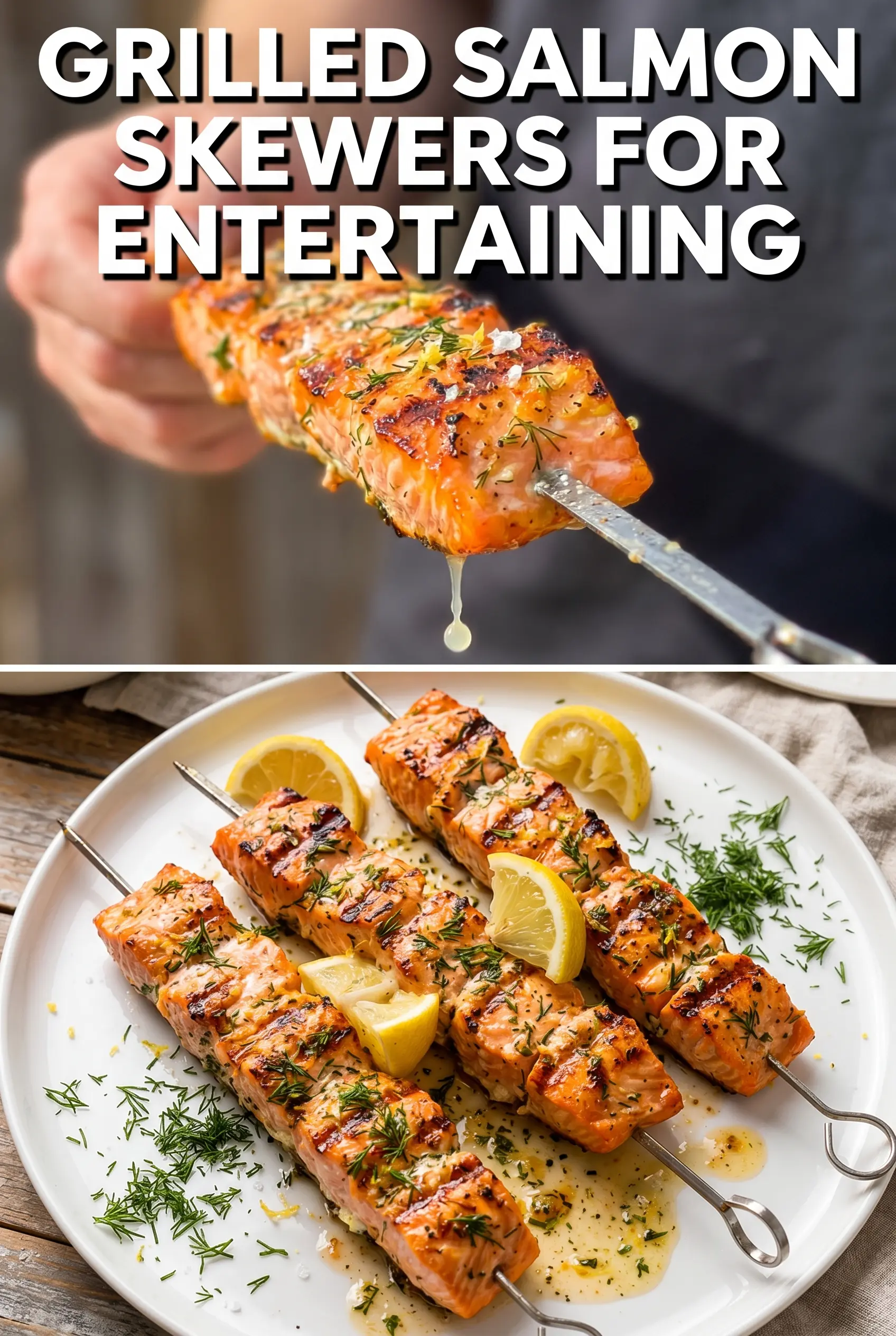
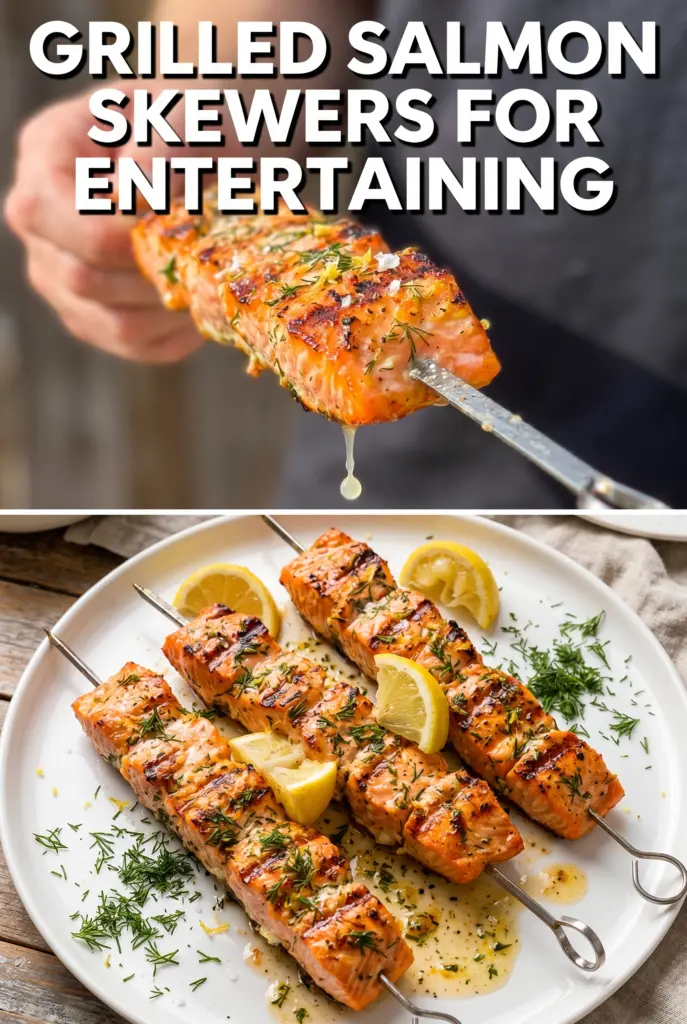
Grilled salmon kebabs land on the table with crisp edges, juicy centers, and just enough char to make the lemon and dill smell bright the second they hit the heat. The salmon stays tender because the pieces are cut large enough to hold together on the skewer, and the vegetables cook fast enough to match without turning limp or soggy. It’s the kind of meal that looks like you spent more effort than you did, which is exactly why it ends up in the regular rotation.
The real trick is the marinade. Lemon juice gives the fish a clean, fresh lift, but it’s short work on purpose. Leave salmon in acid too long and the surface starts to cure before it ever reaches the grill. A 30-minute soak is enough to season the fish without changing the texture. The vegetables matter too: zucchini, bell pepper, and red onion all hold up well over direct heat and give the skewers a mix of sweetness, color, and bite.
Below, I’ve included the small details that keep the salmon from sticking and the timing that keeps everything cooking evenly. If you’ve had grilled fish fall apart on the grate before, this version gives you a much cleaner, easier result.
The salmon stayed flaky and moist, and the zucchini and peppers were still crisp-tender instead of mushy. I marinated it for exactly 30 minutes like you said, and the lemon-dill flavor came through without overpowering the fish.
Save these lemon-dill grilled salmon kebabs for the nights when you want a fast grill recipe that still feels fresh and special.
The Marinade Window That Keeps Salmon Tender Instead of Cured
With fish, time matters more than most people think. Lemon juice is useful here because it sharpens the flavor and helps the surface of the salmon taste brighter, but it can turn the outer layer chalky if it sits too long. Thirty minutes is the sweet spot for these kebabs: enough time for the garlic, dill, and lemon to season the fish without starting to denature it the way a longer soak would.
The other piece that keeps these from falling apart is the size of the salmon cubes. One-inch pieces are big enough to stay juicy on the grill and small enough to cook through at the same pace as the vegetables. If the pieces are much smaller, they dry out before the vegetables soften. If they’re much larger, the outside can overcook before the center is ready.
What Each Ingredient Is Doing on the Skewer
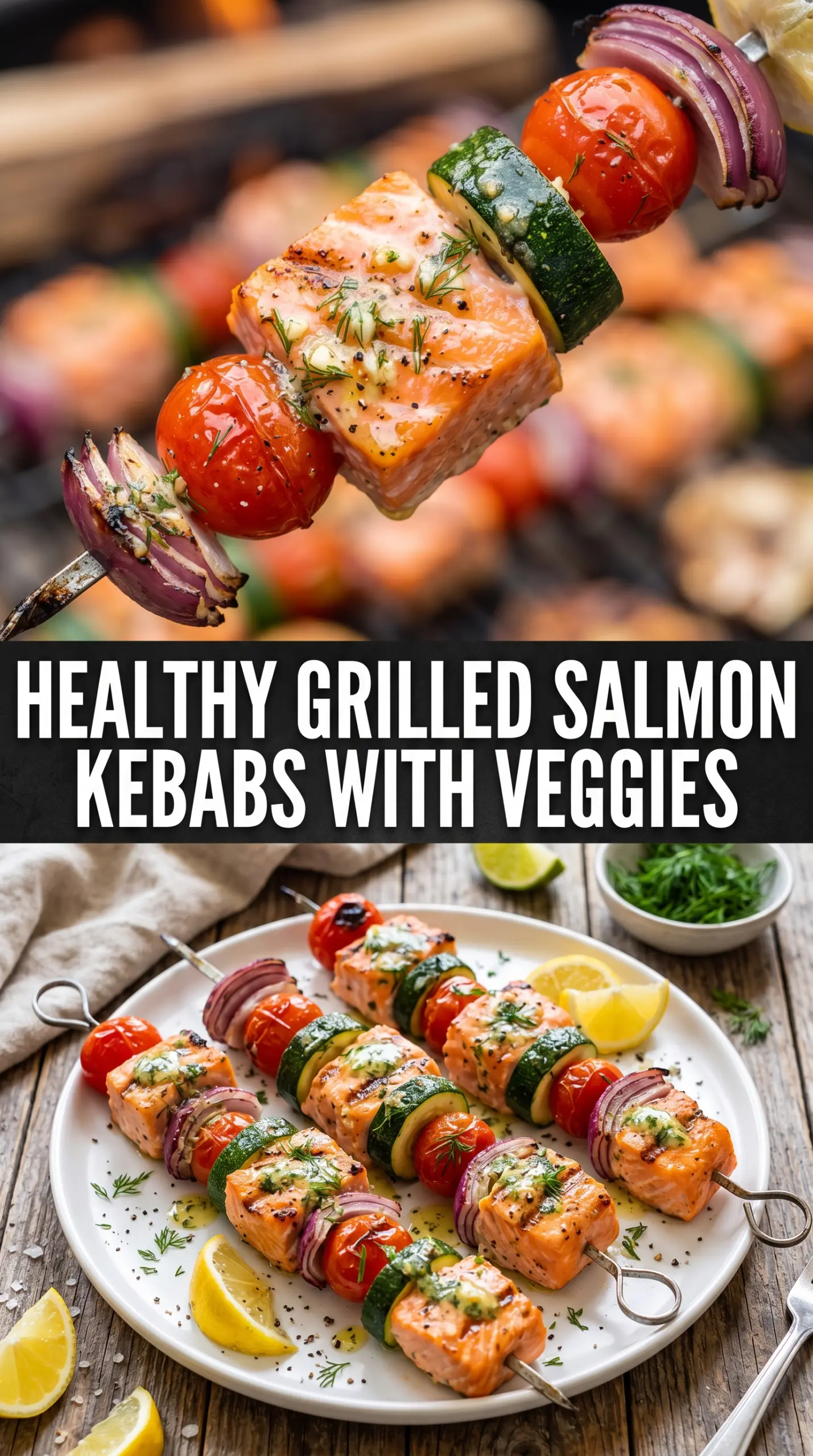
- Salmon fillets — Use a firm, fresh fillet that cuts cleanly into cubes. This isn’t the place for overly thin tail pieces, which cook too fast and fall apart more easily. Skinless salmon works best here because it threads neatly and releases more cleanly from the grill.
- Olive oil — This carries the lemon, garlic, and dill across the fish and helps the surface brown instead of sticking. A good olive oil adds flavor, but you don’t need anything fancy; save the extra-virgin bottle for drizzling at the end if you want a stronger finish.
- Lemon juice — Fresh lemon juice gives the kebabs their cleanest flavor. Bottled juice can work in a pinch, but it tends to taste flatter. The important part is not overdoing the marinade time so the acid doesn’t change the salmon’s texture.
- Fresh dill — Dill is the herb that makes this taste like grilled salmon and not just grilled fish. Dried dill will work if that’s what you have, but use a much smaller amount because the flavor is more concentrated and less delicate.
- Zucchini, bell pepper, and red onion — These vegetables handle direct heat without turning watery. Cut them into chunks that are close in size so they cook at the same rate as the salmon. Red onion adds sweetness as it chars, while the pepper and zucchini keep the skewers balanced.
- Wooden skewers — Soak them long enough that they don’t scorch on the grill. If you skip that step, the exposed ends can burn before the salmon is done. Metal skewers work too and remove that concern entirely.
Building the Skewers So Everything Finishes Together
Mixing the Marinade First
Whisk the olive oil, lemon juice, garlic, dill, salt, and pepper until it looks slightly emulsified rather than separated into two layers. That helps the herbs and garlic cling to the salmon instead of sliding to the bottom of the bowl. Add the fish and turn it gently so every side gets coated, then let it sit for 30 minutes and no longer.
Threading for Even Cooking
Alternate salmon and vegetables on the skewers so the heat can move around each piece instead of blasting all the fish together in one dense section. Leave a little space between pieces if your skewers allow it. Packed-together ingredients steam more than they grill, and that’s how you lose the edge and color you want here.
Grilling Without Sticking
Preheat the grill before the skewers go on so the grates are hot enough to sear quickly. Grill over medium-high heat for 3 to 4 minutes per side, turning once when the salmon releases easily from the grate. If it sticks, it usually needs another 20 to 30 seconds; forcing it early tears the fish. The salmon is done when it flakes at the thickest point and still looks moist in the center.
Serving at the Right Moment
Pull the kebabs off the grill as soon as the salmon is cooked through, then serve them with lemon wedges and fresh dill. A short rest helps the juices settle, but don’t leave them sitting so long that the vegetables lose their texture. These are best hot, when the edges are still a little crisp and the fish tastes clean and fresh.
How to Adjust These Kebabs for Different Kitchens and Diets
Make It Dairy-Free Without Changing a Thing
This recipe already works naturally as dairy-free, which is one of the reasons it’s such an easy weeknight grill meal. Keep the lemon, olive oil, and dill exactly as written and finish with extra lemon wedges if you want a brighter result.
Swap the Vegetables Based on What’s in the Fridge
Cherry tomatoes, mushrooms, or chunks of summer squash can replace one of the vegetables here, but pick vegetables that cook in roughly the same amount of time as salmon. Hard vegetables like potatoes need to be par-cooked first, or they’ll still be firm when the fish is done.
Use the Same Method with Shrimp
Shrimp can stand in for the salmon if you want an even faster skewer. Skip the marinade down to 10 to 15 minutes, because shrimp pick up acid faster and can turn rubbery if they sit too long. They’ll also cook in less time, so watch for opacity and a firm curl instead of timing only by the clock.
Storage and Reheating
- Refrigerator: Store leftovers in an airtight container for up to 2 days. The salmon is still good after that, but the texture starts to dry out.
- Freezer: I don’t recommend freezing the cooked kebabs. The vegetables go soft and the salmon loses the clean, tender texture that makes this recipe work.
- Reheating: Reheat gently in a 300°F oven just until warmed through, or use short bursts in the microwave at low power. High heat pulls the moisture out fast, and salmon dries out before the center is hot.