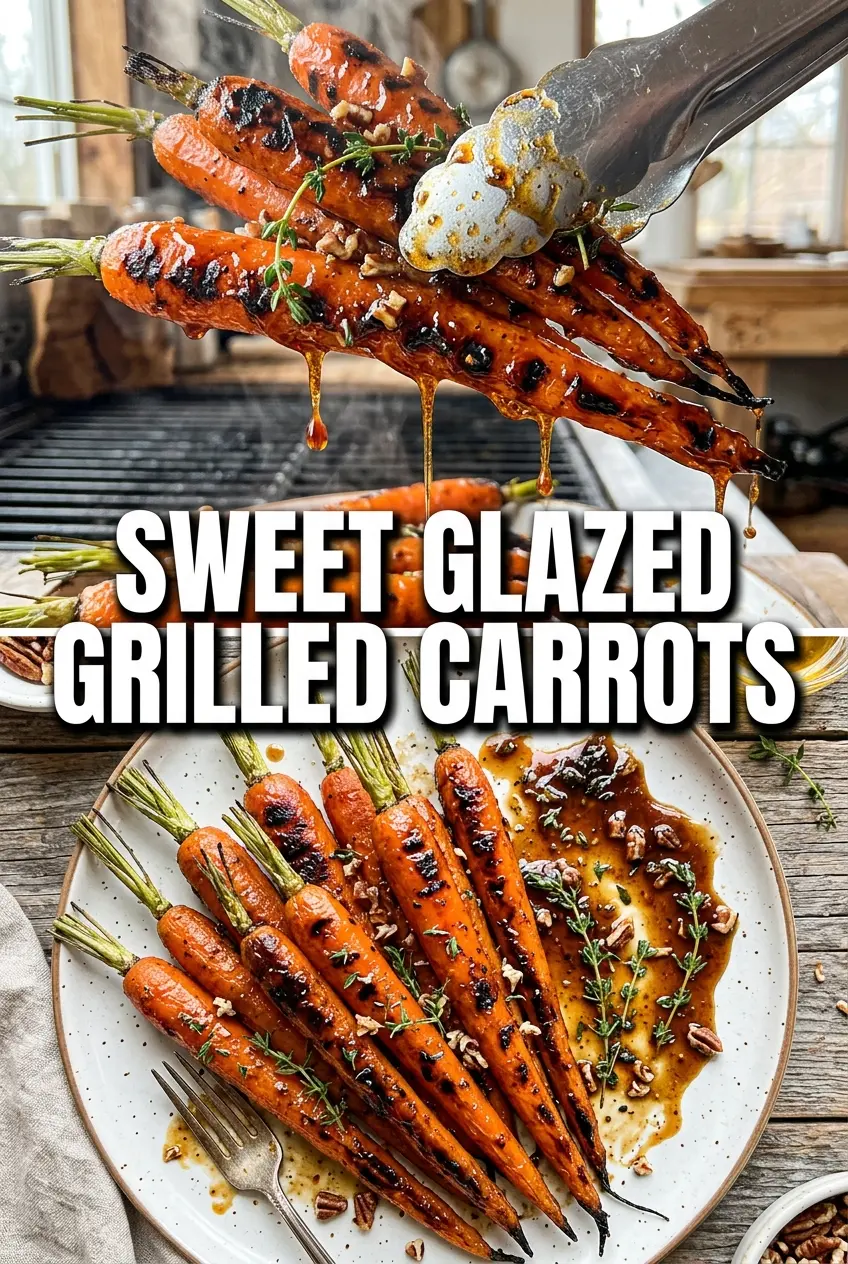
Grilled carrots pick up a deep, smoky sweetness that you just can’t get from roasting alone. The edges char a little, the centers stay tender, and the honey-brown sugar glaze clings to every ridge so each bite tastes glossy, caramelized, and just a little sticky in the best way.
The trick here is using whole carrots and keeping the heat at medium. That gives the outside time to color before the inside turns soft enough to slump on the grates. The glaze also gets warmed separately instead of cooked hard on the grill, which keeps the honey from burning and the butter from separating.
Below, I’ve included the one timing detail that keeps the glaze smooth and a few easy ways to adapt these carrots for different meals. If you’ve ever had grilled vegetables that tasted more charred than balanced, this version fixes that.
The glaze thickened just enough to coat the carrots without sliding off, and the little char marks gave them a smoky edge that balanced the honey perfectly.
Save these grilled carrots with honey brown sugar glaze for the side dish that comes off the grill glossy, tender, and caramelized every time.
The Grate Marks Matter More Than the Glaze
People often rush grilled carrots because they look done long before they’re actually tender. The outside can pick up color fast, but the center needs enough time on the grill to soften all the way through without turning mushy. If you pull them too early, the glaze can only cover an undercooked carrot. If you leave them too long, the sugars on the surface go from caramelized to bitter.
The other thing that matters is keeping the glaze off the heat until the carrots are off the grill. Honey and brown sugar burn fast, and the butter helps the coating shine instead of drying into a grainy film. The goal is char marks with a sticky finish, not blackened sugar.
- Whole carrots — They grill more evenly than thin slices and hold their shape after glazing. Choose carrots that are similar in thickness so they finish at the same time.
- Medium heat — This gives you time for the inside to soften before the outside scorches. High heat is the fastest way to get raw centers and burnt edges.
- Honey and brown sugar — Together they give the glaze body and that deep caramel note. Honey brings shine, while brown sugar adds a rounder molasses sweetness.
- Butter — This smooths out the glaze and helps it cling. Melted butter also keeps the cinnamon from tasting dusty or sharp.
What Each Ingredient Is Doing in the Glaze
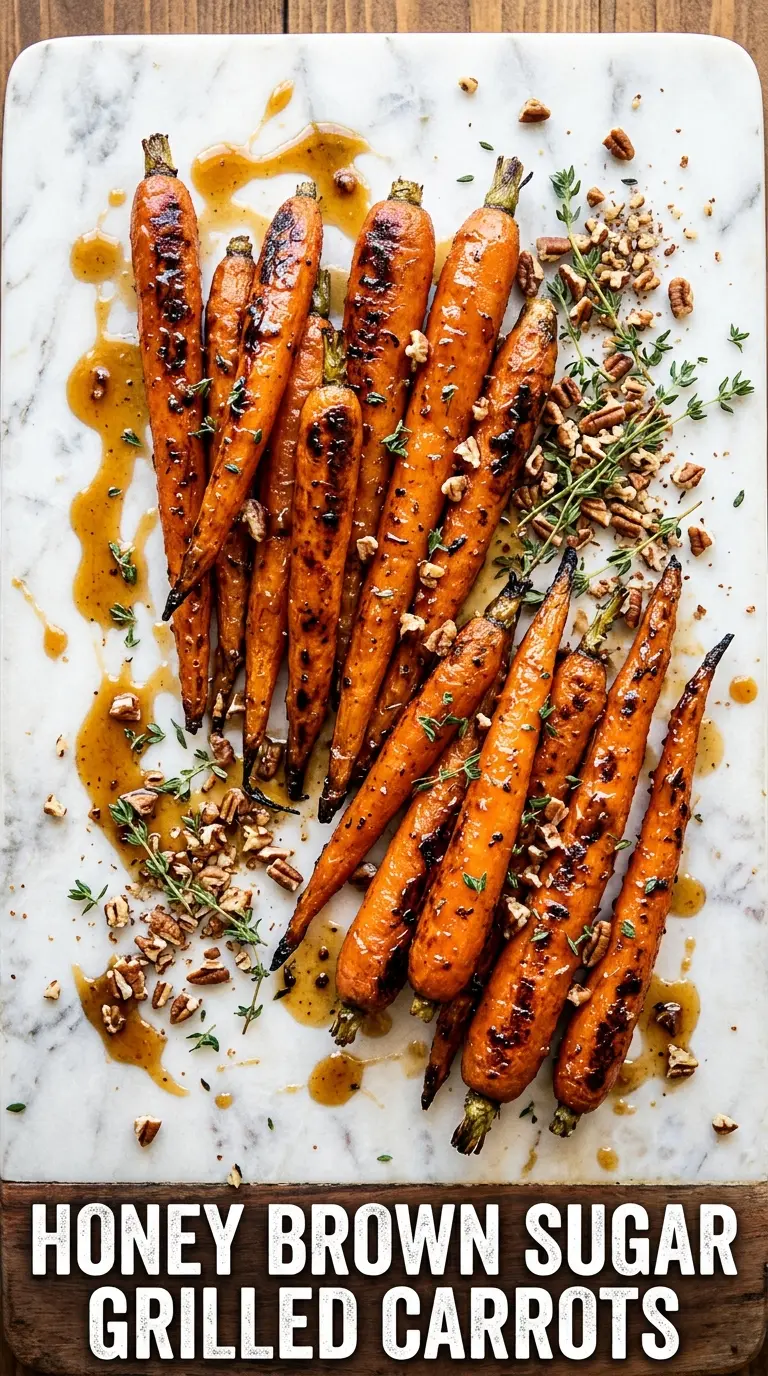
- Carrots — Whole carrots are sturdy enough for grilling and stay pleasantly firm even after glazing. Peeled carrots take on the glaze more evenly, but if yours are thin and fresh, a light scrub is fine.
- Olive oil — This keeps the carrots from sticking and helps the grill marks develop. A neutral oil works too, but olive oil adds a little depth that fits the glaze.
- Honey — This is what gives the finish that glossy, lacquered look. You need real honey here; a thinner syrup won’t coat the carrots the same way.
- Brown sugar — It deepens the sweetness and gives the glaze that caramel edge. Light brown sugar is fine, though dark brown sugar will taste a little more molasses-heavy.
- Butter — Melted butter loosens the glaze just enough to toss easily. If you use vegan butter, keep the heat low so it doesn’t split.
- Cinnamon — It adds warmth without turning the dish into dessert. Keep it measured; too much and it starts to overpower the smoke from the grill.
- Fresh thyme — It’s not just garnish. The herbal note cuts through the sweetness and makes the dish taste finished instead of one-note.
The 20 Minutes That Turn Carrots Into a Side Dish Worth Repeating
Coating the Carrots First
Toss the peeled carrots with olive oil, salt, and pepper until every side has a thin sheen. That coating keeps them from drying out on the grill and helps the seasoning stick before the glaze goes on. If they look patchy or matte, they need another toss in the bowl. Don’t add the sweet glaze yet; it will just scorch before the carrots have time to soften.
Grilling Until Tender and Marked
Lay the carrots over medium heat and turn them occasionally as the surfaces char. You’re looking for a little blistering and dark grill marks, not an all-over black crust. The carrots should give easily when pierced with a fork but still hold their shape. If the outside is browning too fast, move them to a cooler part of the grill and let the center catch up.
Warming the Glaze Separately
Stir the honey, brown sugar, melted butter, and cinnamon together in a small saucepan just until the sugar dissolves and the mixture looks smooth. You do not need a hard boil. Gentle heat is enough to combine everything and keep the butter from separating. If the glaze starts to bubble aggressively, pull it off the burner and let it settle before tossing.
Finishing the Toss
Move the hot carrots straight from the grill into a bowl and pour the warm glaze over them immediately. Toss while they’re still hot so the coating clings instead of pooling at the bottom. The glaze will tighten a little as it hits the cooler carrots, which is exactly what you want. Finish with fresh thyme and serve them warm so the char and shine are both still there.
How to Adapt These Carrots for Different Tables
Make Them Dairy-Free Without Losing the Shine
Swap the butter for a dairy-free butter with a similar fat content. The glaze will still coat well and stay glossy, though it may taste a little cleaner and less rich. Keep the heat low so the substitute emulsifies instead of turning greasy.
Use Maple Instead of Honey
Maple syrup works if you want a deeper, woodsy sweetness, but the glaze will be a little thinner and less sticky. Reduce it over low heat for a minute or two longer before tossing the carrots so it clings better.
Make It Ahead for a Crowd
You can grill the carrots earlier in the day and rewarm them just before serving, then toss them with freshly warmed glaze at the end. That keeps the coating glossy and the carrots from turning soft while they sit. If they’ve chilled, warm them gently before glazing so the sauce still grabs on contact.
Storage and Reheating
- Refrigerator: Store leftovers in an airtight container for up to 4 days. The glaze will thicken and the carrots will soften a little, but they’ll still taste great.
- Freezer: I don’t recommend freezing these. The carrots lose their grilled texture and the glaze turns watery after thawing.
- Reheating: Warm them in a skillet over low heat or in a 300°F oven until just heated through. Microwaving works in a pinch, but it softens the glaze and can make the carrots go limp.