
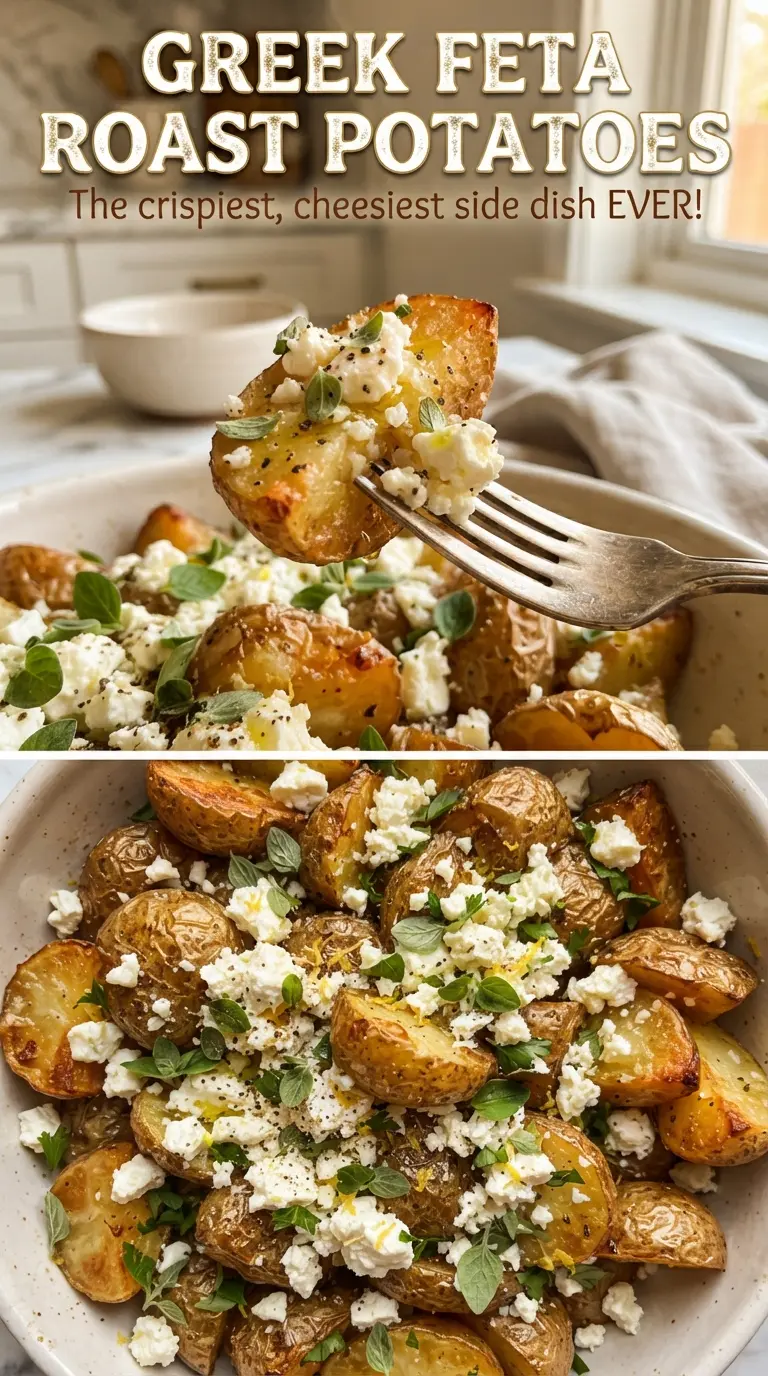
Greek feta roast potatoes come out with the kind of contrast that keeps people reaching back into the pan: crisp, bronzed edges, soft centers, and a punchy lemon-oregano coating that clings to every wedge. The feta goes on at the end, so it stays creamy and salty instead of melting away into the pan juices. Fresh dill on top wakes everything up and keeps the whole dish tasting bright instead of heavy.
What makes this version work is the roasting pan itself. The potatoes start in a shallow layer with olive oil, lemon juice, broth, garlic, and oregano, then roast until the liquid disappears and the edges can brown properly. Yukon golds are the right potato here because they hold their shape but still turn tender inside; russets can get too fluffy and fall apart, while waxy potatoes can stay a little too firm. The broth helps the wedges steam for the first stretch of cooking, which gives you tender centers before the pan dries out and the crisping begins.
Below, you’ll find the timing cue that matters most, the ingredient swap that keeps the flavor balanced if you need to adjust, and a few variations that make this side dish fit different menus without losing what makes it special.
The potatoes got those crispy edges I was hoping for, and the lemon-garlic pan sauce soaked in just enough that the centers stayed fluffy. The feta on top at the end was the perfect salty finish.
Save these lemon-oregano Greek feta roast potatoes for an easy side with crispy edges and a salty feta finish.
The Pan Liquid Has to Disappear Before the Potatoes Can Crisp
The most common mistake with roast potatoes like these is pulling them from the oven while there’s still a slick of liquid in the pan. As long as the broth and lemon juice are pooling, the potatoes are steaming. That’s great for tenderness, but it won’t give you the browned edges you’re after. Wait until the wedges look almost dry, then let the last stretch of roasting do the work.
Flipping halfway matters here, but only once the bottoms have had time to set. If you turn them too early, the potatoes stick and tear instead of releasing cleanly. The lemon and garlic will smell mellow and savory by the end, not sharp, and that’s the sign the roast has finished its job.
What the Feta, Lemon, and Broth Are Really Doing
- Yukon gold potatoes — These hold their shape through the roast and give you creamy centers without collapsing. If you swap in russets, the inside turns fluffier and more fragile; if you use a waxier potato, the texture stays firmer and less velvety.
- Olive oil — This is what helps the edges brown once the liquid cooks off. A good olive oil gives the potatoes a deeper, rounder finish, but an everyday bottle works fine here because the garlic, oregano, and lemon do most of the flavoring.
- Fresh lemon juice — Bottled lemon juice tastes flatter and harsher, and you notice it immediately in a simple dish like this. Fresh lemon gives brightness without turning bitter in the oven.
- Chicken broth — The broth keeps the potatoes from drying out too quickly and builds a light pan sauce that coats the wedges as it reduces. Vegetable broth works if you want to keep the dish vegetarian.
- Feta — Add it after roasting so it stays crumbly and salty instead of melting into the pan. If your feta is very dry and salty, use a little less; if it’s creamy, it will soften beautifully over the hot potatoes.
- Fresh dill or parsley — This is the finish that keeps the dish tasting clean. Dill leans more classic and herbal; parsley gives a greener, milder finish if that’s what you have.
Getting the Wedges Tender Before the Edges Turn Bronze
Coating the Potatoes Evenly
Toss the wedges with the oil, lemon juice, broth, garlic, oregano, salt, and pepper right in the roasting pan so every piece gets a full coating. A single layer matters because crowded potatoes trap steam and soften each other instead of browning. If some wedges sit in a puddle while others are exposed, you’ll get uneven texture.
Roasting Until the Pan Dries Out
Roast at 425°F until the liquid is absorbed and the bottoms start to color. You’ll see the edges go from pale and glossy to matte and golden, and the potatoes will release more easily from the pan when they’re ready to flip. If the pan still looks wet near the end, give it a few more minutes instead of moving on early.
Finishing With Feta and Herbs
Scatter the feta over the hot potatoes as soon as they come out of the oven. The residual heat softens the cheese just enough without melting it away. Add the dill or parsley last so it stays fresh and fragrant, then serve right away while the edges are still crisp.
How to Adapt These Potatoes Without Losing the Crisp Edges
Vegetarian Version
Swap the chicken broth for vegetable broth. You’ll keep the same roasting liquid and tenderizing effect, and the flavor stays balanced because the feta and oregano still carry the dish.
Dairy-Free Finish
Leave off the feta and finish with extra dill plus a small squeeze of fresh lemon. You lose the salty creaminess, so add a pinch more salt at the table if the potatoes taste a little flat.
No Fresh Dill on Hand
Parsley is the easiest swap, and it keeps the dish bright without changing the texture. Dried dill isn’t a good stand-in at the end because it reads dusty instead of fresh, so use parsley if that’s what’s available.
Storage and Reheating
- Refrigerator: Store leftovers in an airtight container for up to 4 days. The potatoes will lose some crispness, but the flavor holds up well.
- Freezer: These freeze, but the texture softens after thawing, so I don’t recommend freezing if you want the wedges to stay crisp.
- Reheating: Reheat on a sheet pan in a hot oven or air fryer until the edges wake back up. The biggest mistake is using the microwave, which turns the potatoes soft and damp before the outside can recover.
Answers to the Questions Worth Asking

Greek Feta Roast Potatoes
Ingredients
Equipment
Method
- Preheat the oven to 425F, then set a roasting pan or sheet pan inside to warm slightly. Visual cue: oven temperature light is on and ready to roast.
- In a roasting pan, toss the Yukon gold potatoes with olive oil, fresh lemon juice, chicken broth, minced garlic, dried oregano, salt, and black pepper. Visual cue: all wedges look evenly glossy and coated.
- Spread the potatoes in a single layer so the cut sides have space. Visual cue: no piles or overlapping wedges.
- Roast at 425F for 45-50 minutes, flipping halfway for even browning. Visual cue: the liquid is absorbed and the edges turn crispy and golden.
- Top the hot potatoes with crumbled feta and fresh dill or parsley, then let the heat soften the cheese for a moment. Visual cue: feta starts to look slightly melty and speckled over the wedges.
- Serve the Greek feta roast potatoes hot. Visual cue: crisp exterior with fluffy centers and bright herb finish.