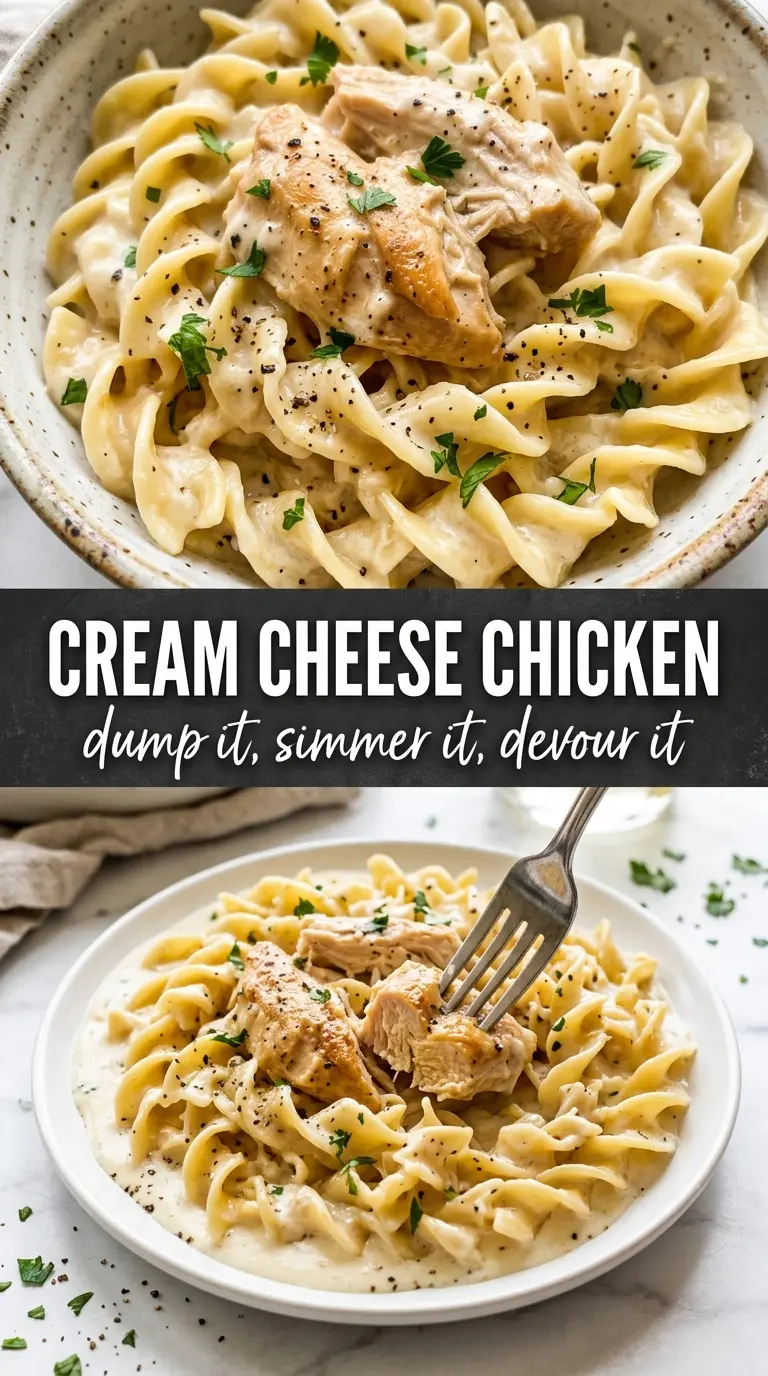
Juicy chicken breasts tucked into a tangy cream cheese sauce make the kind of skillet dinner that disappears fast. The sauce clings to every bite instead of running thin on the plate, and that balance of rich dairy, lemon, and herbs keeps the dish from tasting heavy.
This version works because the chicken gets a hard sear first, then the same pan is used to build the sauce. Those browned bits left behind bring depth, and the cream cheese is melted gently with broth before the sour cream goes in, which keeps the sauce smooth instead of grainy. A little lemon juice sharpens everything just enough to keep the richness in check.
Below you’ll find the timing that matters, the small heat adjustment that keeps the sauce silky, and a few useful swaps if you need to work with what you’ve got on hand.
The sauce turned out silky and thick, and it coated the chicken instead of pooling underneath. I loved that the lemon kept it from tasting too rich, and my husband asked if I could make it again next week.
Creamy, tangy easy cream cheese chicken for the nights when you want a skillet dinner with a sauce that actually stays velvety.
The Heat Trick That Keeps Cream Cheese Sauce Smooth
The sauce breaks if you rush it. Cream cheese needs gentle heat and a little liquid before it turns into something pourable, and sour cream should never be stirred into a bubbling pan. If the skillet is too hot when the dairy goes in, the sauce can turn grainy or separate at the edges instead of staying glossy.
The other thing that matters is the order. The chicken goes in first to build flavor in the pan, then the broth loosens the browned bits, then the cream cheese melts into that base. That sequence gives you a sauce with body and depth, not just a dairy coating that tastes flat.
What Each Ingredient Is Actually Doing in the Skillet
- Chicken breasts — Boneless, skinless breasts give you a clean canvas for the sauce and cook fast enough for a weeknight. If yours are thick on one end, pound them into even pieces so they finish at the same time and don’t dry out before the center is done.
- Cream cheese — This is the backbone of the sauce, and it has to be softened and cubed so it melts without clumping. Full-fat cream cheese gives the smoothest result; reduced-fat versions can work, but they’re more likely to thin out or turn slightly grainy.
- Chicken broth — Broth loosens the cream cheese and pulls flavor from the pan. Water won’t give the same depth, so this is not the place to swap casually unless you’re also adding extra seasoning.
- Sour cream — It adds tang and makes the sauce taste brighter, but it needs low heat. If you only have plain Greek yogurt, stir it in off the heat for a similar tang with a little more chance of curdling if the pan is hot.
- Lemon juice and zest — The juice sharpens the sauce, and the zest on top makes the richness taste fresh instead of heavy. If you skip both, the dish still works, but it loses the lift that makes the sauce taste finished.
- Garlic and Italian seasoning — Garlic lays down the savory base, and the herbs keep the sauce from tasting one-note. Fresh garlic is worth using here because it blooms in the pan and gives the sauce a stronger finish than powder alone.
Building the Sauce Before It Has a Chance to Split
Searing the Chicken First
Season the chicken well before it hits the pan, then let it sit undisturbed long enough to develop a golden crust. If you move it too soon, it sticks and you lose the browned surface that gives the sauce its flavor later. Cook it until the thickest part reaches 165°F, then pull it out so it can rest while you finish the sauce.
Pulling the Fond Into the Broth
Once the chicken is out, add the garlic and let it cook just until fragrant, about 30 seconds. Then pour in the broth and scrape the bottom of the skillet with a wooden spoon, because those browned bits dissolve into the sauce and give it a deeper, savory edge. If the pan looks dry, add the broth before the garlic burns.
Melt the Cream Cheese Slowly
Drop in the softened cream cheese cubes and stir over medium-low heat until the sauce turns smooth. This is the point where patience pays off; high heat tightens the dairy and can leave tiny lumps behind. Keep stirring until the sauce looks glossy and thick enough to coat a spoon.
Finish Off the Heat
Stir in the sour cream, lemon juice, and Italian seasoning after the cream cheese has melted. Keep the heat low and never let the sauce boil once the sour cream is in, or it can separate and lose that velvety texture. Return the chicken to the skillet and spoon the sauce over the top so every piece gets covered.
How to Adjust This Recipe Without Losing the Creamy Finish
Make It Lighter With Chicken Cutlets
Use thin-sliced chicken cutlets instead of full breasts if you want a faster cook and a little less richness per serving. They sear quickly and still work with the sauce, but they’ll be a little less juicy if they’re overcooked, so watch them closely.
Make It Gluten-Free Without Changing the Method
This recipe is naturally gluten-free as long as your broth is certified gluten-free. The texture and technique stay the same, which makes this an easy dinner to serve without changing the sauce at all.
Use Boneless Thighs for a Richer Result
Boneless chicken thighs give you a juicier, slightly richer version of the dish. They need a few extra minutes in the skillet, but they’re more forgiving if you need a little more time to finish the sauce.
Storage and Reheating
- Refrigerator: Store in an airtight container for up to 3 days. The sauce thickens as it chills, but it reheats well.
- Freezer: It can be frozen, but the sauce may loosen and separate a bit after thawing. For best texture, freeze the chicken and sauce together only if you’re okay with a slightly less silky finish.
- Reheating: Warm gently on the stovetop over low heat with a splash of broth or water. Don’t blast it in the microwave on high, or the sauce can break before the chicken is hot.
Answers to the Questions Worth Asking

Easy Cream Cheese Chicken
Ingredients
Equipment
Method
- Season the chicken breasts with salt, pepper, garlic powder, and onion powder to taste. Heat olive oil in a large skillet over medium-high heat and sear until golden, 5-6 minutes per side, until the internal temperature reaches 165°F.
- Remove the chicken from the pan and set it aside while you build the sauce.
- Cook the minced garlic in the same pan over medium-high heat for 30 seconds, stirring to prevent browning.
- Pour in the chicken broth and scrape up the browned bits from the bottom of the skillet.
- Add the cream cheese cubes and stir over medium-low heat until fully melted and smooth.
- Stir in the sour cream, lemon juice, and Italian seasoning until the sauce is creamy and well combined, and do not boil after adding sour cream.
- Return the chicken to the pan and spoon the sauce over each breast so every piece is coated.
- Garnish with fresh chives and lemon zest before serving.