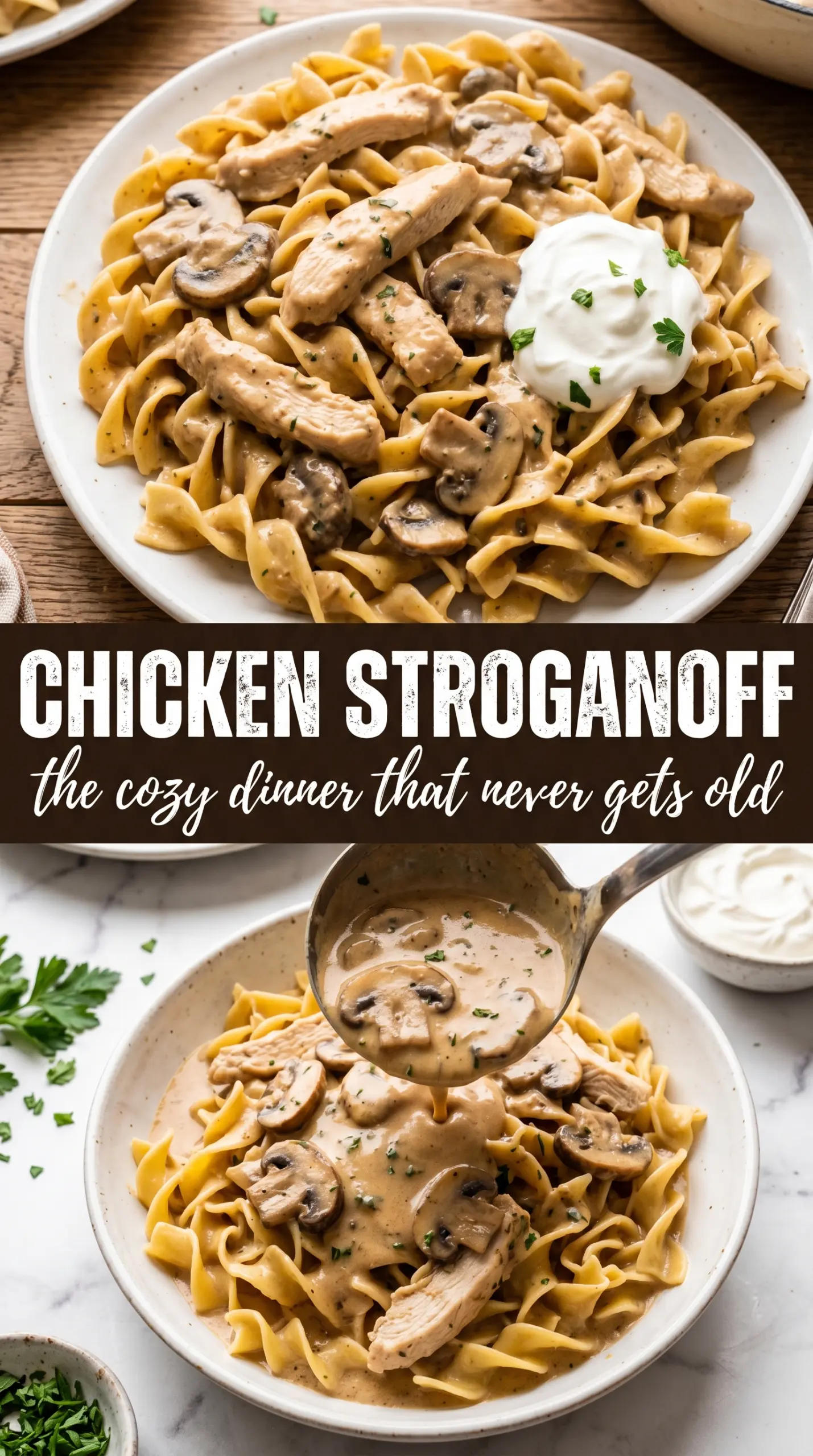
Silky noodles, tender chicken, and mushrooms in a tangy sour cream sauce make this easy chicken stroganoff the kind of dinner that disappears fast and doesn’t leave much cleanup behind. The sauce clings to the egg noodles instead of pooling at the bottom of the bowl, and the chicken stays juicy because it’s browned first and added back at the end, not simmered until it goes tough.
What makes this version work is the order. The chicken gets real color in the pan, then the onions and mushrooms pick up all that flavor before the flour and broth turn it into a sauce. Dijon and Worcestershire do the quiet heavy lifting here: one adds sharpness, the other adds depth, and sour cream finishes everything with that familiar stroganoff tang.
Below, you’ll find the small details that keep the sauce smooth instead of grainy, plus a few smart swaps if you need to work with what’s already in the kitchen.
The sauce thickened up beautifully and stayed smooth when I took it off the heat before adding the sour cream. My husband went back for seconds and kept asking why it tasted like something from a restaurant.
Save this chicken stroganoff for the nights when you want creamy noodles, browned mushrooms, and a one-pan sauce that comes together fast.
The Reason This Sauce Stays Smooth Instead of Turning Grainy
Chicken stroganoff falls apart when the dairy goes in too early or over heat that’s too high. Sour cream is the finishing move here, not part of the simmer. Once the sauce has thickened with broth and flour, pull the pan off the burner before stirring it in. That small pause keeps the sauce glossy and prevents the tangy dairy from splitting.
The other thing that matters is the browned bits in the skillet. After the chicken comes out, the onions and mushrooms go into the same pan so they can scrape up all that flavor while they cook. If the pan looks dry, the mushrooms will still release moisture and carry the fond along with them, which is where the depth comes from.
What Each Ingredient Is Actually Doing in This Chicken Dish
- Chicken (bone-in or boneless, skin-on or skinless) — Each cut has different cooking times and flavor profiles. Let thighs reach 165°F; breasts dry out if overcooked past that.
- Sauce or braising liquid (the moisture keeper) — This prevents the chicken from drying out and adds flavor. Don’t skip it even if the recipe seems moist.
- Aromatics (garlic, onion, herbs) — These add depth and complexity. Cook them with fat so they soften and sweeten instead of staying sharp.
- Cream or butter (optional richness) — These make the dish luxurious. Add to the sauce off the boil so it stays smooth instead of breaking.
- Cheese (if using) — This adds umami and richness. Mix into the sauce or sprinkle on top; either works depending on the dish.
- Acid (lemon, vinegar, wine, or tomato) — This prevents heavy sauces from tasting flat. Add at the end so the brightness doesn’t cook off.
- Proper temperature (165°F is perfect) — Use a thermometer to avoid guessing. Pull slightly early if the chicken will rest or finish in residual heat.
- Resting time (at least 5 minutes) — This lets juices redistribute so the meat stays moist when you cut into it instead of running dry.
What Each Ingredient Is Doing in the Pan
- Chicken breasts — Cutting them into strips gives you fast, even cooking and keeps them tender. Thighs work too if you want a little more richness, but breasts are lean and clean-tasting here.
- Cremini mushrooms — These bring the savory backbone of the dish. White mushrooms work in a pinch, but cremini have more flavor and hold up better against the creamy sauce.
- Dijon mustard and Worcestershire sauce — These are the quiet boosters that keep the sauce from tasting flat. Don’t skip both at once; if you need to sub, use a small splash of soy sauce in place of Worcestershire and a little extra pepper if you’re out of Dijon.
- Sour cream — This gives stroganoff its tang and creamy finish. Full-fat sour cream is safest because it’s less likely to break; if you use light sour cream, keep the pan off the heat and stir gently.
- Egg noodles — Their wide shape catches the sauce instead of letting it slide off. If you swap pasta shapes, choose something with ridges or a broad surface so the sauce has somewhere to sit.
Building the Stroganoff in the Right Order
Getting Color on the Chicken First
Season the chicken well before it hits the skillet, then cook it in butter until the outside is golden and the center is just cooked through. If you crowd the pan, the chicken will steam instead of brown, and you’ll lose the savory base that makes the sauce taste like more than cream and broth. Take it out as soon as it’s done so it doesn’t overcook while the sauce comes together.
Cooking the Vegetables in the Same Pan
Add the onion and mushrooms to the same skillet and let them cook until the onions soften and the mushrooms take on a deep brown color. They’ll release liquid before they brown; that’s normal. Keep cooking until that liquid cooks off and the pan starts to look glossy again, then add the garlic for just a minute so it doesn’t burn and turn bitter.
Thickening the Sauce Without Lumps
Sprinkle the flour over the vegetables and stir it for a full minute so it doesn’t taste raw. Then add the broth slowly while scraping the bottom of the pan, especially where the chicken browned. If you dump the liquid in all at once, the flour can clump before it has a chance to dissolve.
Finishing With Sour Cream
Let the sauce simmer until it lightly coats a spoon before you add the sour cream. Then take the pan off the heat and stir until the sauce looks smooth and pale. Put the chicken back in only after that, because boiling sour cream is the fastest way to get a broken, grainy sauce.
How to Adapt This Chicken Stroganoff Without Losing What Makes It Good
Use Greek Yogurt Instead of Sour Cream
Plain Greek yogurt gives you the same tang with a little more protein, but it’s a touch more likely to curdle if the sauce is hot. Let the pan cool for a minute or two off the heat before stirring it in, and use full-fat yogurt if you want the closest texture.
Make It Gluten-Free
Use a gluten-free all-purpose flour blend for the sauce and serve it over gluten-free pasta or rice. The texture stays close to the original as long as the flour blend contains a binder like xanthan gum, which helps the sauce thicken without turning thin or chalky.
Swap in Chicken Thighs for a Richer Finish
Boneless skinless thighs stay a little more forgiving and bring extra richness to the sauce. They take about the same amount of time to cook, but they’ll stay juicy even if they go a minute or two long.
Storage and Reheating
- Refrigerator: Store the stroganoff and noodles separately if you can, or together for up to 3 days. The sauce will thicken as it chills.
- Freezer: It freezes, but the sour cream sauce can separate a bit when thawed. If you want to freeze it, freeze the chicken and sauce without the noodles for the best texture.
- Reheating: Warm it gently over low heat with a splash of broth or milk, stirring often. High heat is what breaks the sauce and makes the chicken dry, so keep the simmer quiet.
Questions I Get Asked About This Recipe
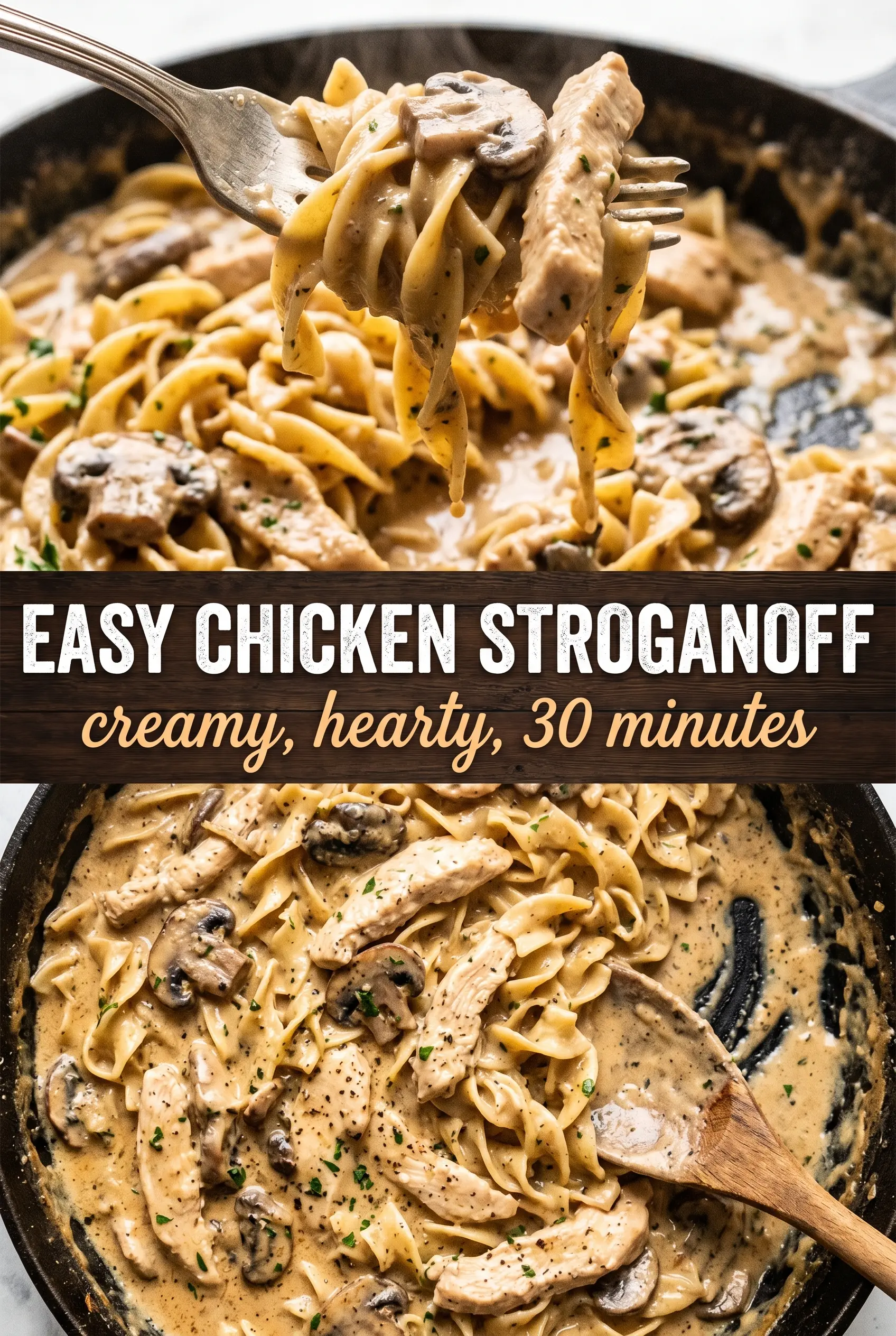
Easy Chicken Stroganoff
Ingredients
Equipment
Method
- Season the chicken strips with salt, pepper, garlic powder, and smoked paprika. Heat butter in a large skillet over medium-high heat and cook the chicken for 5-6 minutes until golden and cooked through, then remove.
- Add the diced onion and sliced mushrooms to the same skillet and cook for 5-6 minutes until golden. Stir in the minced garlic and cook for 1 minute.
- Sprinkle the all-purpose flour over the vegetables and stir for 1 minute. Gradually pour in the chicken broth, scraping up all browned bits.
- Stir in the Worcestershire sauce and Dijon mustard. Simmer for 4-5 minutes until the sauce thickens.
- Remove the skillet from the heat and stir in the sour cream until smooth. Return the cooked chicken to the pan.
- Serve the chicken stroganoff over the cooked egg noodles. Garnish with fresh dill or parsley.