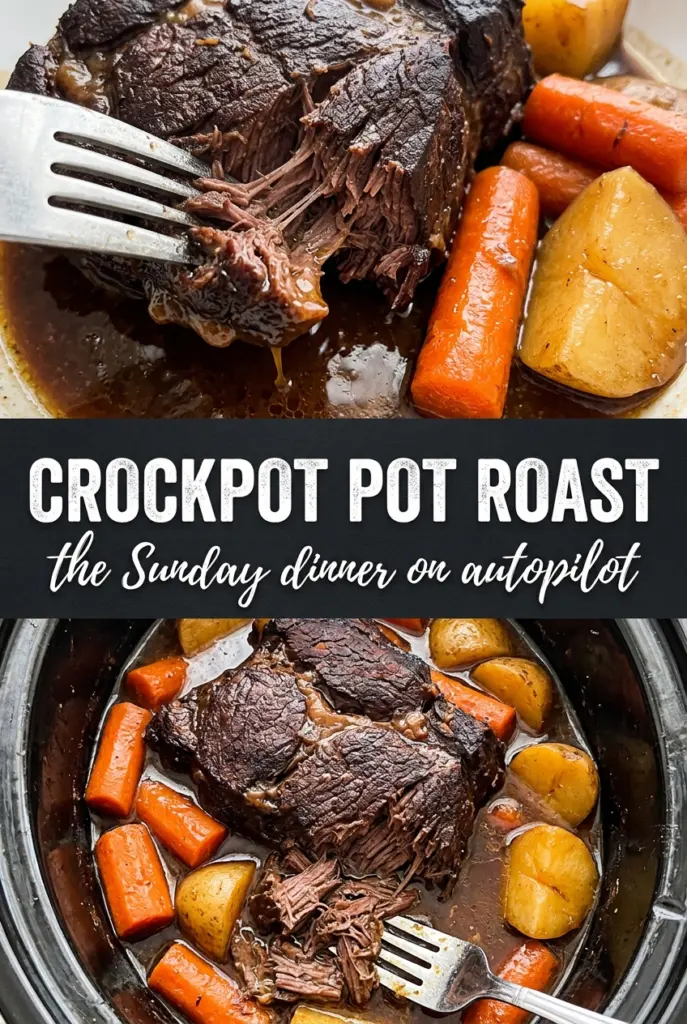
Fork-tender pot roast with potatoes, carrots, and onions is one of those slow cooker meals that earns its place because it tastes like you worked harder than you did. The beef turns silky and shreddable, the vegetables soak up the gravy, and the whole pot ends up tasting deep, savory, and old-fashioned in the best way. Nothing here needs babysitting. The slow cooker does the long, gentle work while the roast turns from firm and lean-looking to richly spoonable.
The key is stacking the pot in the right order and not rushing the braise. The vegetables go on the bottom so they can soften in the broth instead of sitting dry above it, and the roast sits on top where the heat can move around it evenly. The sauce gets a little help from tomato paste, Worcestershire, and onion soup mix, which gives it more depth than plain broth ever could. Cream of mushroom soup smooths everything out and helps the gravy cling to each bite.
Below, I’ll show you how to keep the roast from tasting flat, what to change if you want a cleaner gravy, and how to handle leftovers so the beef stays tender instead of dry.
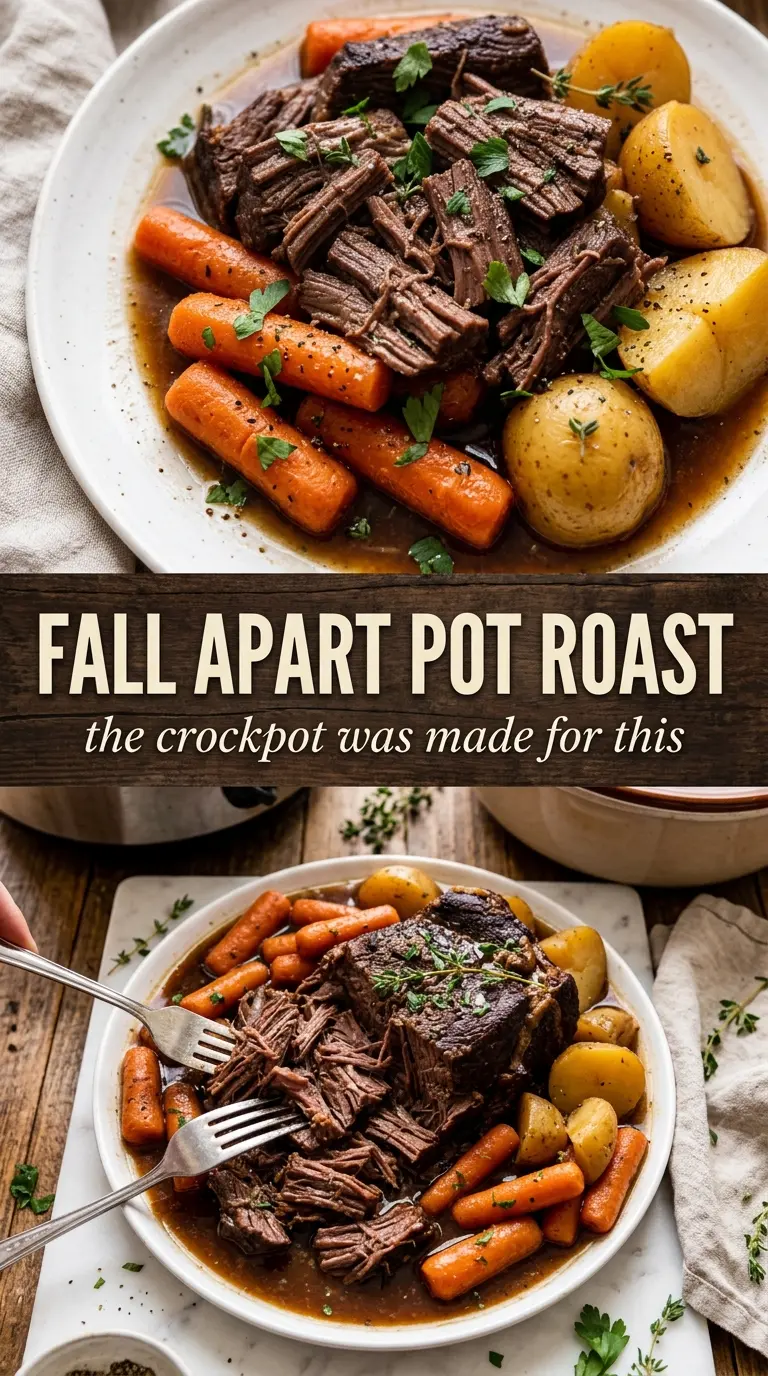
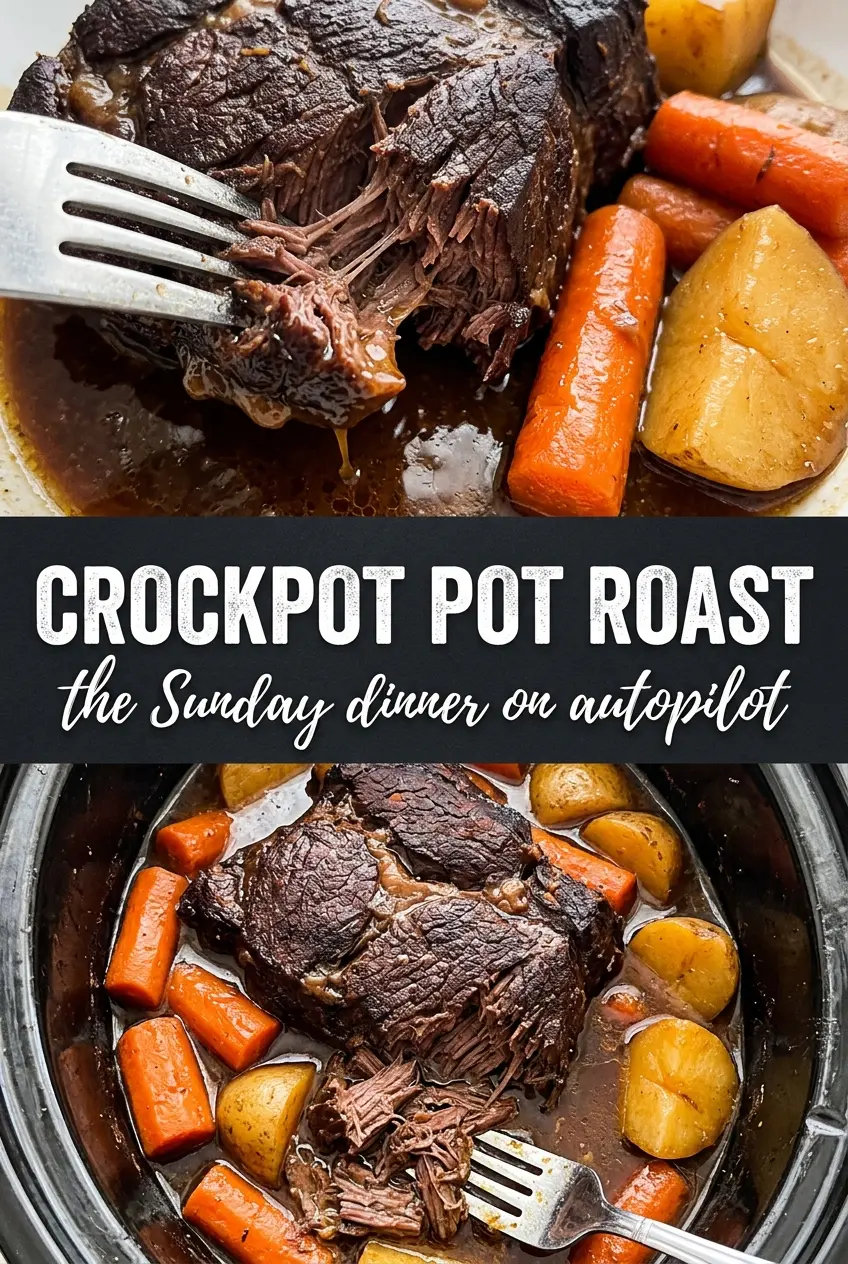
The gravy came out thick and rich, and the roast shredded with a fork after 8 hours on low. My potatoes held their shape and soaked up all that savory sauce.
Save this crockpot pot roast for the night you want fork-tender beef, rich gravy, and vegetables that cook right in the same pot.
The Reason This Roast Turns Tender Instead of Stringy
The difference between a pot roast that melts apart and one that feels dry at the edges usually comes down to two things: cut choice and time. Chuck roast has enough connective tissue and marbling to braise into softness. Leaner cuts don’t have that same cushion, so they dry out before they ever get tender. In a slow cooker, low heat wins because it gives collagen time to break down without squeezing every bit of moisture out of the meat.
The other mistake is pulling it too soon. Pot roast doesn’t become tender at a fixed minute mark; it becomes tender when the connective tissue has fully relaxed. If a fork still meets resistance, it needs more time, not more heat. That’s especially true with a roast this size, where the center can lag behind the outside by an hour or more.
- Chuck roast — This is the cut that works. It stays juicy through a long cook and turns silky when it’s done. A lean round roast won’t give you the same shredded texture.
- Low-and-slow cooking — This is what lets the roast relax instead of tightening up. High heat works in a pinch, but low heat gives you better texture and more forgiving timing.
- Cutting against the grain — If you slice instead of shred, this matters. It shortens the muscle fibers and keeps each bite tender instead of chewy.
What the Mushroom Soup and Onion Mix Are Actually Doing Here
- Cream of mushroom soup — This is the ingredient that gives the gravy body without having to make a separate roux. It also adds a mellow savory note that rounds out the broth. If you want a cleaner flavor, a low-sodium cream soup works fine.
- Onion soup mix — This brings concentrated onion flavor, seasoning, and a little thickness all at once. It does more than just salt the pot, so replacing it with plain onion powder won’t give the same result.
- Tomato paste — You don’t taste tomato here. What you get is depth and a little acidity, which keeps the gravy from feeling heavy.
- Yukon Gold potatoes — These hold their shape better than russets and stay creamy instead of falling apart. If you swap in red potatoes, use them the same way; if you use russets, expect a softer, more breakable texture.
- Beef broth — A decent broth matters because it becomes the base of the gravy. If yours is weak, the whole dish tastes flat. Low-sodium is a smart choice because the soup mix already brings plenty of salt.
Building the Slow Cooker in the Right Order
Starting With the Vegetables
The potatoes, carrots, and onions go in first because they need the longest exposure to the cooking liquid. They act like a little rack for the roast and keep it from sitting directly on the bottom of the cooker, where it can overheat on the edges. If you pile everything together randomly, the vegetables near the top stay underdone while the ones at the bottom turn mushy.
Seasoning the Roast Before It Goes In
Season the chuck roast before it meets the slow cooker. The salt and pepper need direct contact with the meat, and the garlic powder adds a simple savory backbone that carries through the long cook. If you season only the liquid, the beef itself can taste bland even when the gravy tastes fine.
Whisking the Gravy Base Until Smooth
Whisk the broth, soup, tomato paste, Worcestershire, and onion soup mix until the tomato paste disappears into the liquid. A few streaks are fine, but big clumps of soup mix can sit on top and overseason one spot. Pour it over the roast, not around it, so the seasoning runs down through the meat and vegetables as it cooks.
Knowing When It’s Done
The roast is finished when a fork slides in with almost no resistance and the meat breaks apart at the edges. If it still slices cleanly but doesn’t shred, it needs more time. Don’t judge it by the clock alone; slow cookers run hotter or cooler than you think, and the roast size changes everything.
Ways to Adjust the Roast Without Losing the Comfort of the Dish
Dairy-Free Pot Roast
Use a dairy-free cream soup or skip the soup and add an extra 1/2 cup broth plus 1 tablespoon cornstarch mixed with cold water at the end. The gravy will be a little lighter and less creamy, but the roast still gets that slow-cooked richness.
Gluten-Free Version
Swap in a certified gluten-free cream soup and make sure your onion soup mix and Worcestershire sauce are gluten-free. The texture stays the same, but this is one of those recipes where label checking matters because several packaged ingredients can hide gluten.
A Cleaner, Less Creamy Gravy
Replace the cream of mushroom soup with an extra 3/4 cup broth and thicken the juices after cooking with a cornstarch slurry. You’ll lose the velvety, canned-soup richness, but the beef flavor comes through more clearly.
Storage and Reheating
- Refrigerator: Store in an airtight container for up to 4 days. The gravy will thicken as it chills, and the vegetables will soften a bit more.
- Freezer: It freezes well for up to 3 months. Freeze the beef and gravy together for best results, and keep the potatoes in mind — they can turn a little grainy after thawing, though the flavor stays good.
- Reheating: Reheat gently on the stove or in the microwave with a splash of broth to loosen the gravy. Don’t blast it on high heat or the beef can dry out and tighten up before the sauce warms through.
Questions I Get Asked About This Recipe
Crockpot Pot Roast
Ingredients
Equipment
Method
- Season the beef chuck roast generously with garlic powder, salt, and black pepper, rubbing to coat all sides. Visual cue: spices should look evenly scattered and slightly matte on the surface.
- Place the Yukon Gold potatoes, carrots, and onion in the bottom of the slow cooker. Visual cue: vegetables should form an even bed covering the base.
- Set the seasoned chuck roast on top of the vegetables and add the minced garlic over and around it. Visual cue: garlic should be visible rather than hidden under the roast.
- Whisk together beef broth, cream of mushroom soup, tomato paste, Worcestershire sauce, and onion soup mix until smooth. Visual cue: the mixture should look brown and uniform with no large tomato paste lumps.
- Pour the sauce over the roast and sprinkle dried thyme and dried rosemary on top. Visual cue: herbs should form a visible layer across the top of the meat.
- Cook on low for 8–10 hours (or high for 4–5 hours) until the roast is completely fall-apart tender. Visual cue: the meat should shred with minimal pulling pressure and look moist throughout.
- Remove the roast and shred or slice it against the grain. Visual cue: fibers should separate cleanly into pull-apart strands.
- Serve the roast with the vegetables and spoon the pan gravy over everything, garnished with fresh parsley. Visual cue: gravy should coat vegetables and pool lightly at the bottom of the serving dish.