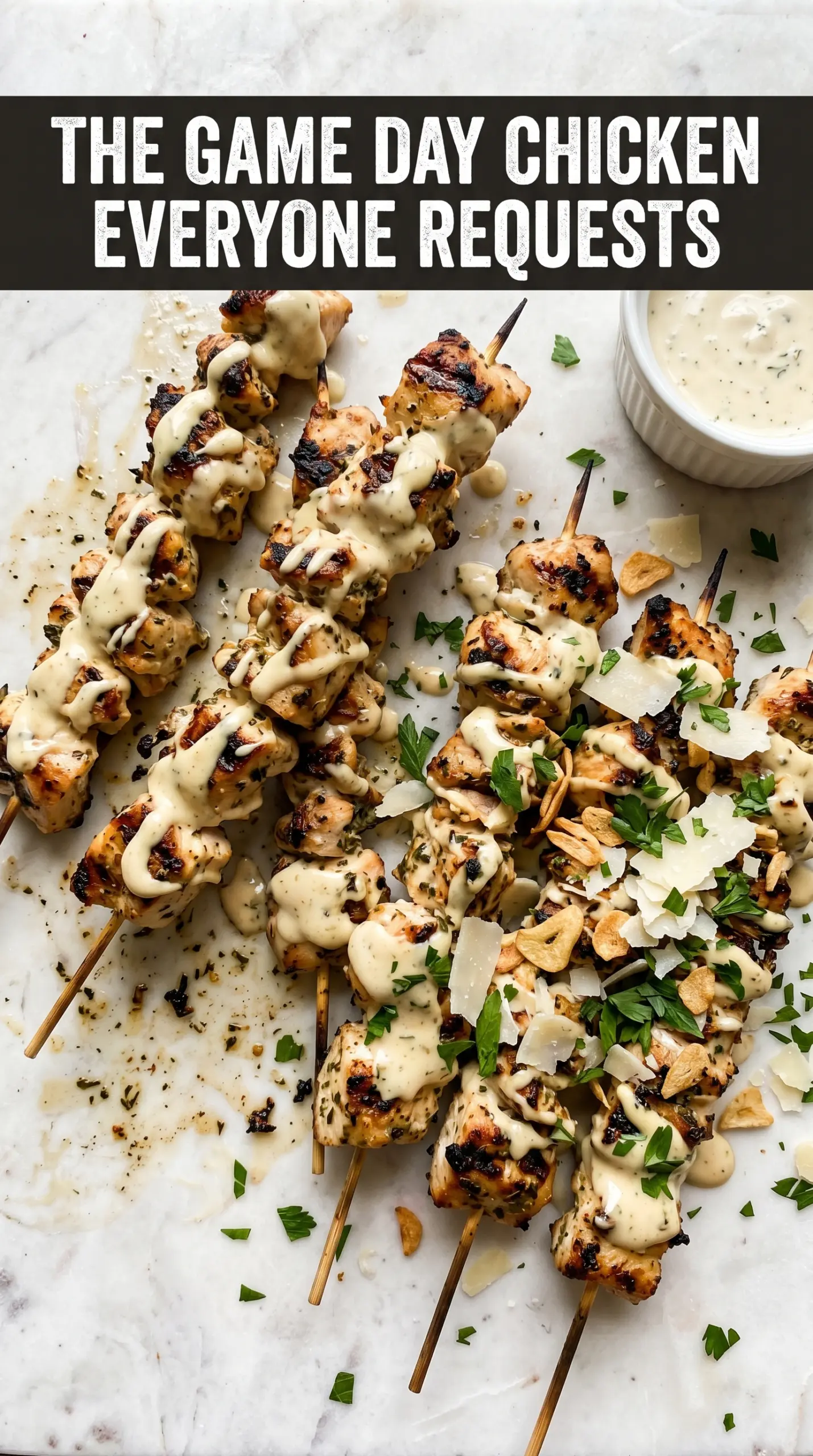
Juicy grilled chicken skewers with a salty parmesan crust and that ranch-garlic bite disappear fast because they hit the sweet spot between backyard cookout food and weeknight dinner. The outside picks up char in all the right places, while the inside stays tender from a short marinade that actually flavors the chicken instead of just coating it.
The trick is keeping the marinade thick enough to cling without burning the grill. Ranch dressing, olive oil, parmesan, and seasoning make a paste-like coating that settles into the chicken during the rest time, and that parmesan helps build those golden edges on the hot grates. I like cutting the chicken into even chunks so every skewer cooks at the same pace.
Below, I’m walking through the small details that matter here: how long to marinate, when to turn the skewers, and how to keep the cheese from turning gritty instead of crisp. There’s also a couple of easy swaps if you need to work with what’s already in the fridge.
The parmesan and ranch actually stayed on the chicken instead of dripping straight through the grates, and the skewers came off with the best little charred edges. I marinated mine for about an hour and the chicken was still super juicy.
Love these ranch garlic parmesan chicken skewers? Save them to Pinterest for the next time you want juicy grilled chicken with crispy parmesan edges and almost no cleanup.
The Parmesan Coating Needs Heat, Not Time
With chicken skewers, the biggest mistake is treating the marinade like a sauce that needs to soak deep into the meat. Chicken breast only needs enough time to pick up flavor and stay moist; if you push the marinating window too far, the acid and salt in the ranch mixture can make the surface a little soft and the texture starts to get mushy instead of juicy.
The other thing worth knowing is that the parmesan in the marinade is there for more than flavor. It helps the chicken brown and gives you those little toasty bits on the outside, but that only works if the grill is properly preheated and the grates are oiled. If the heat is too low, the coating just sits there and steams.
What the Ranch, Garlic, and Parmesan Are Each Doing Here
- Ranch dressing — This brings tang, salt, and a little fat all at once, which is why it works better here than plain yogurt or milk. Bottled ranch is fine; the seasoning is doing most of the heavy lifting anyway.
- Parmesan cheese — Grated parmesan adds the salty crust and helps the coating cling to the chicken. Use the real stuff grated from a wedge if you can, because the finer texture melts and browns better than the shelf-stable kind.
- Ranch seasoning mix — This deepens the ranch flavor without thinning the marinade. If you only have dry ranch dip mix, use it the same way; just taste before adding extra salt because these packets vary a lot.
- Chicken breasts — Chicken breast cooks fast and stays juicy when the pieces are cut evenly. If some chunks are much larger than others, the small ones dry out before the big ones are done.
- Wooden skewers — Soaking them keeps the exposed ends from burning while the chicken cooks. Don’t skip this if you’re using wood; charred ends are one thing, flaming skewers are another.
Thread, Grill, and Stop Before the Cheese Burns
Mixing the Marinade
Stir the ranch dressing, olive oil, parmesan, garlic, ranch seasoning, Italian seasoning, salt, and pepper until you have a thick, spoonable coating. It should look more like a loose paste than a vinaigrette. If it seems too runny, the chicken will shed the marinade before it hits the grill and you’ll lose the crust you’re after.
Marinating the Chicken
Coat the chicken chunks and refrigerate them for at least 30 minutes, or up to 2 hours. That window is long enough for flavor without messing with the texture of the meat. Any longer and the outside can start to break down, especially if your ranch dressing is extra tangy.
Building the Skewers
Thread the chicken onto soaked skewers with a little space between each piece so the heat can move around them. Packed-together chicken steams, and steaming is the enemy of those browned parmesan edges. If the coating is falling off your hands, leave it behind in the bowl and press a little of it back onto the skewers once they’re assembled.
Grilling to the Finish
Preheat the grill to medium-high and oil the grates well. Lay the skewers down and let them sit long enough to pick up a proper sear before turning, about 5 to 6 minutes per side depending on the size of your chicken pieces. Pull them when the thickest piece reaches 165°F; if the cheese starts to darken too fast, move the skewers to a cooler part of the grill and finish them there.
How to Adapt These Skewers Without Losing the Crust
Dairy-Free Version With the Same Savory Bite
Use a dairy-free ranch dressing and swap the parmesan for a dairy-free hard cheese alternative or nutritional yeast. You’ll lose a little of the classic cheesy crust, but the garlic-ranch seasoning still gives you a bold, savory coating that grills up nicely.
Using Chicken Thighs Instead of Breasts
Boneless skinless thighs work well here and stay a little juicier on the grill, but they take a few extra minutes and won’t give you the same lean, firm bite as breast meat. Cut them into even chunks and cook to temperature, not time, because thighs stay forgiving while breasts dry out fast.
Oven or Broiler Method When You Can’t Grill
Set the skewers on a foil-lined sheet pan and roast at high heat, or broil them close to the element for faster browning. You won’t get the same smoky char, but the parmesan still crisps up if the pieces are spaced out and flipped once halfway through.
Storage and Reheating
- Refrigerator: Store leftovers in an airtight container for up to 3 days. The coating softens a little, but the chicken stays flavorful.
- Freezer: The cooked skewers freeze well for up to 2 months if you remove the meat from the sticks first. Freeze flat, then thaw in the fridge before reheating so the parmesan coating doesn’t turn gummy.
- Reheating: Warm them in a 325°F oven until hot, or use a skillet over medium-low heat. High heat dries out the chicken and turns the cheese coating bitter before the center warms through.
Questions I Get Asked About This Recipe
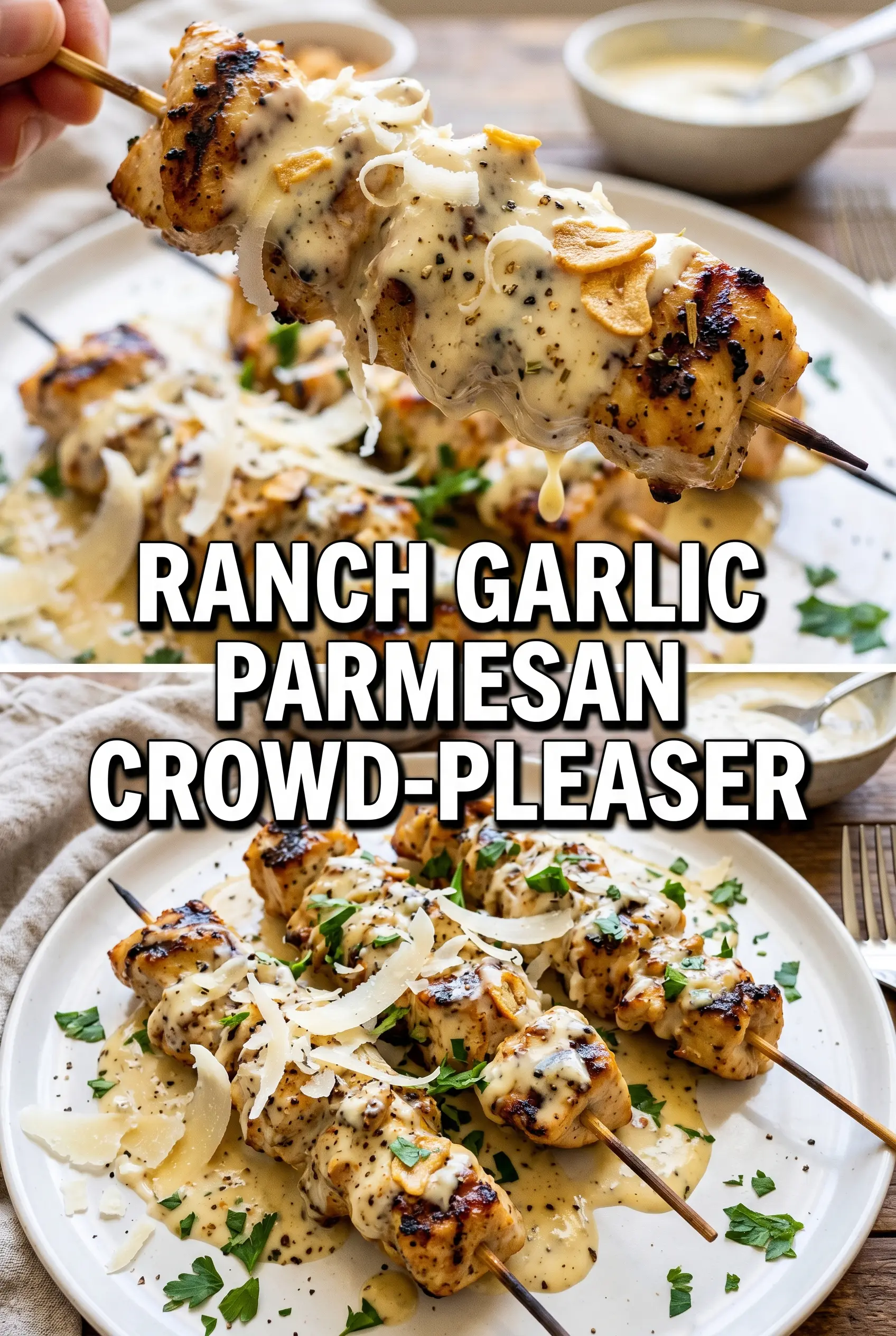
Grilled Ranch Garlic Parmesan Chicken Skewers
Ingredients
Method
- Stir ranch dressing, olive oil, grated Parmesan, minced garlic, ranch seasoning mix, Italian seasoning, salt, and pepper in a bowl until evenly combined. Stop when the mixture looks thick and speckled with seasoning and garlic.
- Add chicken chunks to the marinade and turn to coat thoroughly so every piece has an even ranch-Parmesan layer. Refrigerate for 30 minutes to 2 hours for best flavor and adhesion.
- Thread marinated chicken onto soaked wooden skewers, leaving small gaps for even cooking. Arrange the skewers so they sit flat on the grill grate.
- Preheat the grill to medium-high heat and lightly oil the grates to prevent sticking. Wait until the grill is hot before placing the skewers on.
- Grill the skewers for 5-6 minutes per side, flipping once, until the chicken reaches 165°F and you see nice char marks. Baste or turn only as needed to keep the coating golden and crusty.
- Garnish the grilled chicken skewers with fresh parsley right after cooking so it stays bright. Serve with extra ranch for dipping.