Ranch Garlic Parmesan Chicken Skewers land on the plate with charred edges, a savory crust, and chicken that stays juicy instead of drying out over the fire. The ranch and Parmesan cling to the outside in a way that tastes bold without needing a long ingredient list, and the garlic gives the whole skewer that familiar cookout smell that gets people hovering near the grill.
The trick is in the marinade. Ranch dressing brings fat and tang, the olive oil helps the coating spread evenly, and the Parmesan gives you those little golden bits that stick to the chicken as it grills. You don’t need a long soak here; 30 minutes is enough to season the meat, while a much longer marinate can start to muddy the surface and make the cheese-heavy coating less distinct.
Below you’ll find the one thing that keeps these skewers from sticking, how to get that savory crust without burning the cheese, and a few smart ways to adapt them for the oven or a gluten-free table.
The chicken stayed juicy and the Parmesan actually formed a little crust on the grill instead of falling off. I let the skewers rest for 10 minutes after marinating and the flavor went all the way through.
Save these Ranch Garlic Parmesan Chicken Skewers for the next time you want a grilled main dish with a cheesy crust and almost no cleanup.
The Marinade That Builds Flavor Without Turning the Coating Slimy
A lot of chicken skewer recipes go heavy on the marinade and light on the structure, then wonder why the coating slides off the grill grates. This one works because the ranch dressing and olive oil do different jobs: the ranch seasons and tenderizes the surface, while the oil helps the Parmesan and spices cling long enough to brown. The cheese is there for flavor and crust, not for a thick blanket, so the mixture stays loose enough to coat every piece of chicken evenly.
The other mistake is marinating too long. With a dairy-based, cheese-heavy marinade, more time doesn’t always mean better flavor; past the 2-hour mark, the outside can turn soft instead of nicely seasoned. A 30-minute rest gives you enough time for the garlic and ranch seasoning to settle in without compromising the texture you’re trying to grill.
- Chicken breasts — Cut them into even chunks so they cook at the same rate. Uneven pieces leave you with dry ends and underdone centers.
- Parmesan — Grated Parmesan melts and browns better than shredded. The fine texture helps it stick to the chicken instead of falling into the bowl.
- Ranch dressing and ranch seasoning mix — They bring different kinds of ranch flavor. The dressing adds fat and tang, while the seasoning mix keeps the flavor sharp after grilling.
- Olive oil — This keeps the marinade from feeling too thick and helps the chicken caramelize instead of steaming.
What Each Ingredient Is Doing on the Grill
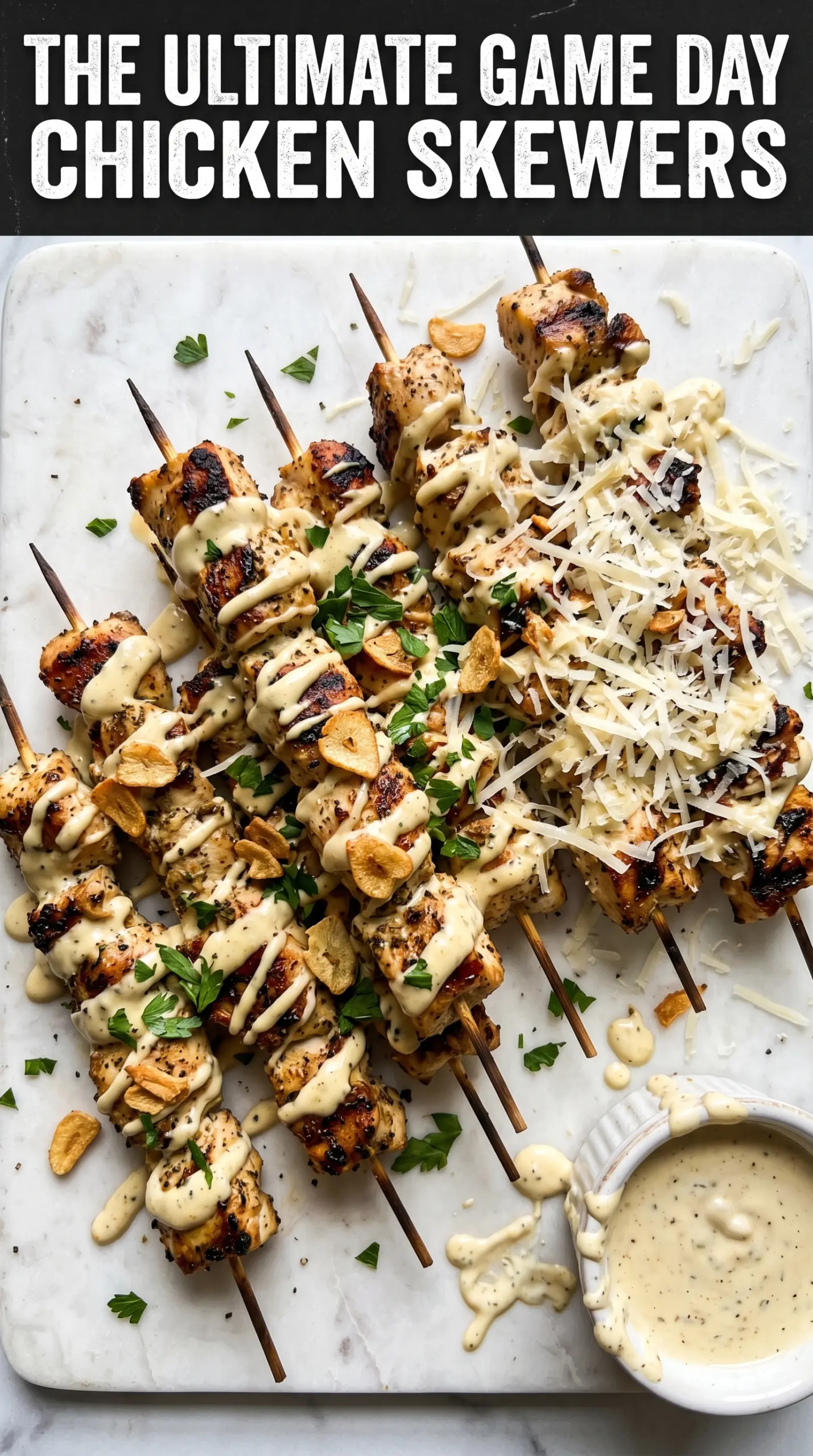
- Chicken breasts — Breasts stay lean and grill fast, which is what makes these skewers work for a quick main dish. If you want a little more forgiveness, chicken thighs also work and stay juicier, though they won’t give you quite the same clean bite.
- Ranch dressing — Use a dressing you actually like eating from the spoon, because its flavor comes through after grilling. Thin, watery ranch doesn’t coat well and tends to separate.
- Parmesan cheese — Freshly grated Parmesan gives the best crust and the cleanest savory finish. Pre-grated can work in a pinch, but it often contains anti-caking agents that keep it from melting as smoothly onto the chicken.
- Garlic — Mince it finely so it spreads through the marinade instead of burning in isolated pockets. Big chunks turn bitter fast on the grill.
- Wooden skewers — Soaking them matters. Dry skewers scorch before the chicken is done, especially over medium-high heat.
How to Grill the Skewers So the Coating Stays On
Coating the Chicken Evenly
Mix the marinade until the Parmesan is distributed throughout the ranch and oil, then add the chicken and toss until every piece is slick and coated. The mixture should cling lightly, not pile up in thick clumps. If the bowl looks dry, the chicken won’t brown evenly; if it’s overloaded with cheese, the coating can burn before the center cooks.
Threading Without Packing Too Tight
Push the chicken onto the soaked skewers with a little space between each piece. That gap lets heat move around the meat and keeps the edges from steaming. If the pieces are pressed tightly together, the outside can char while the centers lag behind.
Grilling to the Right Point
Preheat the grill to medium-high and oil the grates well. Lay the skewers down and leave them alone long enough to form grill marks before turning, usually 5 to 6 minutes per side. If the cheese looks like it’s darkening too fast, move the skewers to a slightly cooler spot; the goal is a golden crust and an internal temperature of 165°F, not blackened Parmesan.
Resting Before Serving
Pull the skewers off the grill and let them rest for a few minutes before serving. That short pause keeps the juices from running out the second you bite in. Serve them with extra ranch while the chicken is still hot enough to melt the dip slightly on contact.
How to Adapt These Skewers for the Oven, the Air Fryer, or a Different Diet
Oven-Baked Skewers for Rainy Days
Set the skewers on a lined sheet pan and bake at 425°F, turning once halfway through. You won’t get the same grill marks, but you still get browned edges and juicy chicken if you don’t crowd the pan. A quick broil at the end helps the Parmesan spot-caramelize.
Air Fryer Chicken Bites
Skip the skewers and cook the coated chicken in a single layer at 400°F, shaking once halfway through. The air fryer gives you a crispier edge than the grill, but you lose the smoky char, so serve it with extra ranch and fresh herbs to bring the dish back into balance.
Gluten-Free Version
This recipe is naturally close to gluten-free, but the ranch seasoning and dressing need a quick label check. Use certified gluten-free versions if needed, and the texture stays the same. Nothing else needs to change.
Storage and Reheating
- Refrigerator: Store leftovers in an airtight container for up to 3 days. The coating softens a bit, but the chicken stays flavorful.
- Freezer: These freeze best after cooking, but the texture changes a little once thawed. Wrap tightly and freeze for up to 2 months for the best result.
- Reheating: Warm in a 325°F oven or air fryer until just heated through. The biggest mistake is blasting them in the microwave, which makes the chicken rubbery and loosens the cheesy coating.
Questions I Get Asked About This Recipe
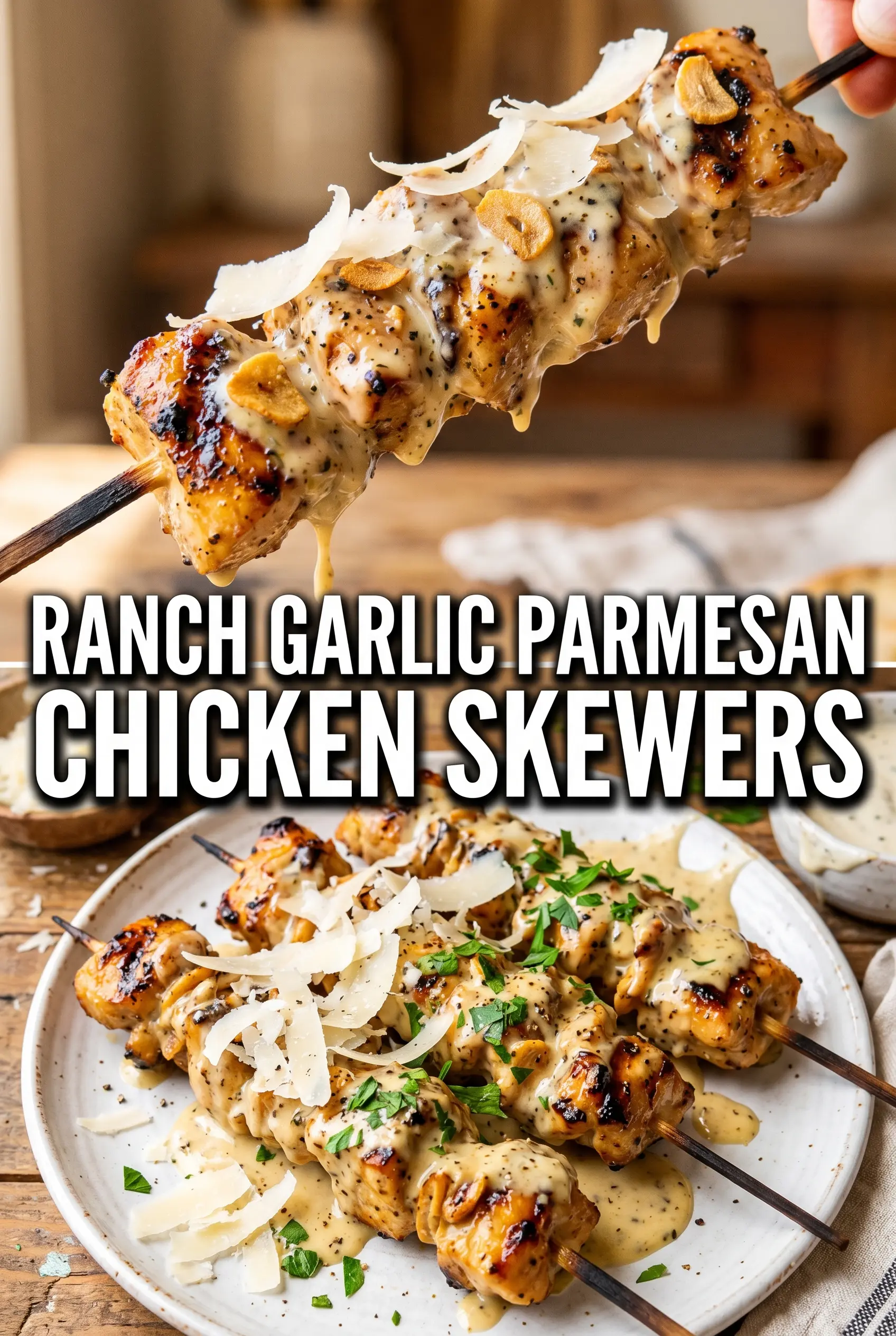
Ranch Garlic Parmesan Chicken Skewers
Ingredients
Equipment
Method
- In a bowl, mix ranch dressing, olive oil, grated Parmesan, minced garlic, ranch seasoning mix, Italian seasoning, salt, and pepper until well combined and smooth.
- Add the chicken chunks to the marinade and toss to coat every piece.
- Cover and refrigerate the chicken for 30 minutes to 2 hours so it absorbs the ranch-garlic flavor.
- Preheat your grill to medium-high heat.
- Thread the marinated chicken chunks onto soaked wooden skewers, leaving a little space between pieces.
- Grill the skewers for 5-6 minutes per side, turning once, until the chicken reaches 165°F with visible golden parmesan edges.
- Serve the skewers immediately with extra ranch for dipping, with a parmesan crust visible on the grilled surfaces and fresh herbs if desired.